 Italian Images are for illustrative purposes only, may be inaccurate, and do not guarantee the presence or absence of specific ingredients.
  Serving Images are for illustrative purposes only, may be inaccurate, and do not guarantee the presence or absence of specific ingredients.
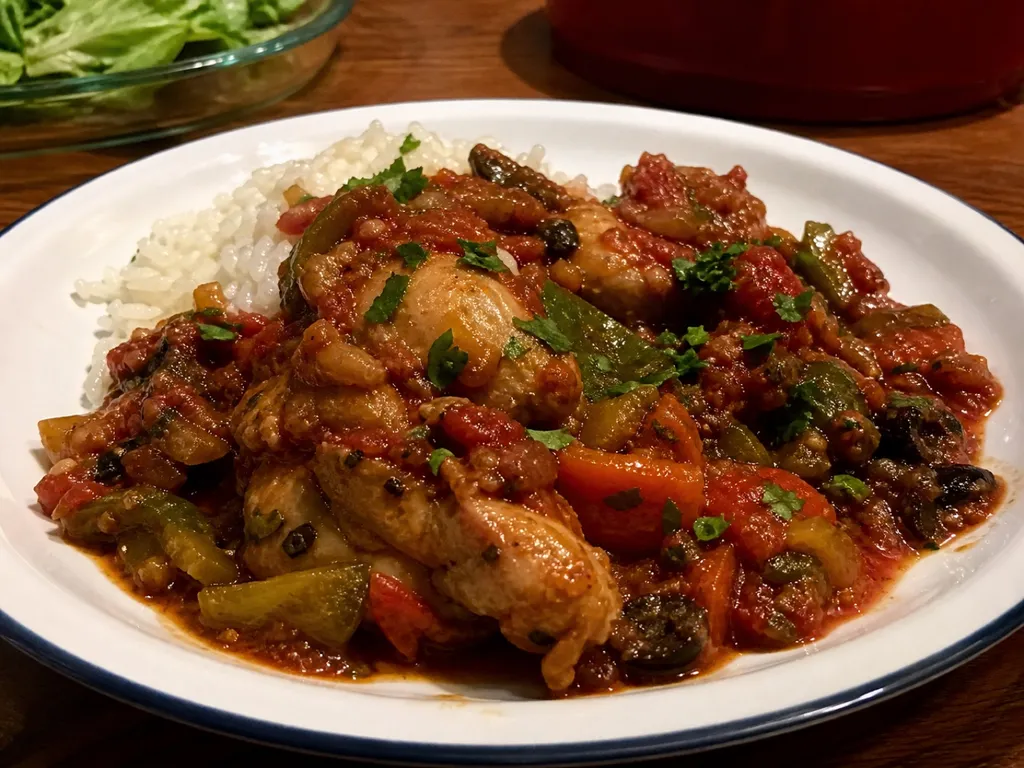
 Chicken Cacciatore
Rustic "hunter's style" braised chicken with tomatoes, peppers, and herbs.
No common allergens detected
Based on this recipe's ingredient list. Always verify with your own brands and labels.
Good to know
- One-pot
Matched from this dish's own ingredients and timing. Browse more: one-pot dinners
Instructions
6 steps- 1
Brown the Chicken: Season the thighs and brown them skin-side down in olive oil until golden. Remove and set aside.
- 2
Soften the Vegetables: In the same pot, cook the onion, bell pepper, and mushrooms until softened, then add the garlic and oregano.
- 3
Deglaze: Pour in the white wine and let it reduce for 2 minutes.
- 4
Build the Braise: Add the crushed tomatoes, rosemary, and bay leaf. Nestle the chicken back in, skin-side up.
- 5
Simmer: Cover and simmer gently for 35-40 minutes until the chicken is tender and the sauce has thickened.
- 6
Serve: Discard the bay leaf and serve over polenta, pasta, or with crusty bread.
 Images are for illustrative purposes only, may be inaccurate, and do not guarantee the presence or absence of specific ingredients.
 Listahan Family Score™
73/100
Good fit for most families
Score reflects how well this recipe fits a typical busy household. In the app, your Family Score is personalized to your household's allergens, kids, and pantry.
Nutrition
per serving710
Calories
70 g
Protein
7 g
Carbs
36 g
Fat
Estimated per serving. Actual values depend on the brands and portions you use.
Listahan cooking guide
Chef notes & practical guide
Technique notes, ingredient swaps, serve-alongside ideas, storage guidance, and equipment for this recipe.
Cultural context
Cacciatore means hunter-style, a rustic braise that evolved across Italy from the kind of one-pot meal a hunter might make with what the woods and pantry offered: chicken or game, onions, herbs, wine, and sometimes tomatoes and mushrooms. Northern versions lean on white wine while central and southern ones add tomato, so there is no single recipe, only a method. It endures as honest, warming country cooking built for a slow simmer.
Listahan note
This version braises bone-in chicken in a tomato, pepper, and herb sauce with wine for a hearty, central-Italian-style cacciatore. It leans on browning and a slow simmer rather than any single special ingredient.
Technique cues
- Brown the bone-in chicken well before braising; the rendered skin and fond give the sauce its backbone of flavor.
- Build the sauce in the same pot and return the chicken to braise low and slow so the meat turns tender and the flavors meld.
- Cook the peppers and onions down properly before the liquid goes in so they sweeten rather than stay raw and sharp.
Kitchen flow
- Parallel prep
- Slice the peppers and onions and measure the wine and tomatoes while the chicken browns so the braise builds without pause.
- Make-ahead
- Cacciatore is even better the next day; cool and refrigerate it so the flavors deepen, then reheat to serve.
- Leftover move
- Shred leftover chicken into the sauce and toss with pasta or pile over polenta for a second meal.
- Cleanup rhythm
- Use one heavy pot start to finish and deglaze with the wine, which lifts the fond and eases the wash-up.
Ingredient brief
Role, handling, and swap guidance for each key ingredient.
bone-in chicken thighs
main protein
Purpose: Bone-in, skin-on pieces stay juicy through a long braise and enrich the sauce.
Handling: Pat dry and season, then brown skin-side down until deeply golden before braising.
Adaptation: Drumsticks or a cut-up whole chicken work; boneless thighs braise faster but with less depth.
bell peppers
vegetable body
Purpose: They add sweetness and substance that define the rustic sauce.
Handling: Slice and saute until soft and lightly caramelized before adding liquid.
Adaptation: Mushrooms can stand in or join for a more northern, earthier style.
canned tomatoes
sauce base
Purpose: They form the rich braising sauce in central and southern versions.
Handling: Crush and add after the wine, then simmer until thickened.
Adaptation: Skip them and use more wine and stock for a white, northern-style cacciatore.
dry white or red wine
depth and acidity
Purpose: It deglazes the fond and adds the acidity and complexity that lift the braise.
Handling: Pour in after browning and reduce briefly before the tomatoes.
Adaptation: Stock with a splash of vinegar if cooking without wine.
fresh rosemary and oregano
aromatics
Purpose: These herbs give the dish its woodsy, hunter-style aroma.
Handling: Add sturdy herbs early in the braise and a little fresh at the end for lift.
Adaptation: Thyme and a bay leaf make a fine alternative herb profile.
Technique notes
- Brown the chicken in batches so each piece colors properly instead of steaming in a crowded pan.
- Skim excess fat from the surface near the end so the sauce is rich but not greasy.
- Finish with a scatter of fresh herbs and a drizzle of good olive oil to brighten the long-cooked flavors.
Ingredient swaps
- Weeknight shortcut
- Use boneless thighs and a shorter simmer to get a faithful version on the table in about forty minutes.
- Lower-sodium direction
- Use no-salt-added tomatoes and unsalted stock, leaning on herbs, wine, and peppers for flavor.
- Naturally gluten-free
- The braise itself is gluten-free; serve it over polenta or rice rather than pasta to keep it so.
Serve alongside
- Soft polenta
- Crusty bread for the sauce
- Buttered egg noodles
- Sauteed broccoli rabe
- A glass of Chianti
- A glass of Montepulciano
- Sparkling water with lemon
Serving suggestions only — check pairings for your household's allergens.
Storage & reheating
- Refrigerate cacciatore for up to four days; it deepens in flavor and reheats beautifully. It freezes well for up to three months in sealed containers. Reheat gently on the stove, adding a splash of stock or water to loosen the sauce, and serve over a fresh starch.
Equipment
- A heavy Dutch oven or braiser with a lid
- Tongs for browning and turning
- A wooden spoon for deglazing
- A ladle for serving the sauce
Make this household-aware
Listahan Pro checks this recipe against your household's allergens, finds pantry-aware swaps, builds the shopping list, and helps you plan the week around it.
Plan it in Listahan
Add Chicken Cacciatore to your week, check it against your household's allergens, and build the shopping list automatically.
More Italian recipes
 Italian Lens Verified Images are for illustrative purposes only, may be inaccurate, and do not guarantee the presence or absence of specific ingredients.
 Sfogliatella
Naples' iconic shell-shaped pastry with crisp, flaky layers wrapped around a sweet ricotta-semolina filling.
 Italian Lens Verified Images are for illustrative purposes only, may be inaccurate, and do not guarantee the presence or absence of specific ingredients.
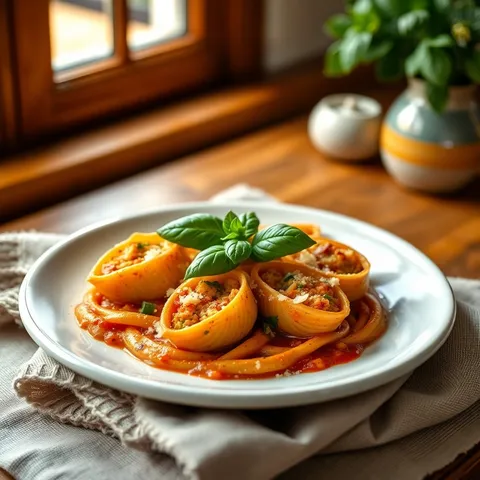
 Stuffed Shells (Conchiglioni Ripieni)
Jumbo pasta shells filled with a creamy ricotta-spinach mixture and baked in tomato sauce.
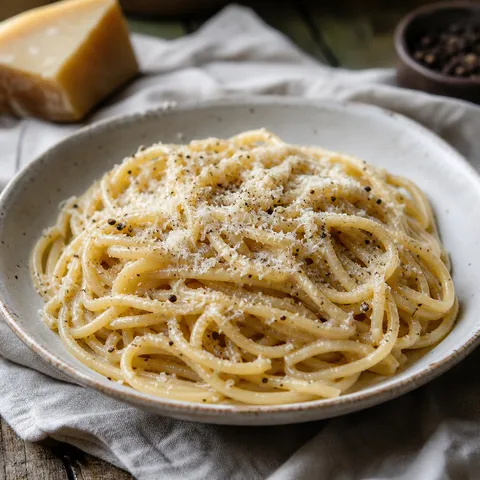 Italian Lens Verified Images are for illustrative purposes only, may be inaccurate, and do not guarantee the presence or absence of specific ingredients.
 Cacio e Pepe
A minimalist Roman pasta dish literally meaning "cheese and pepper."