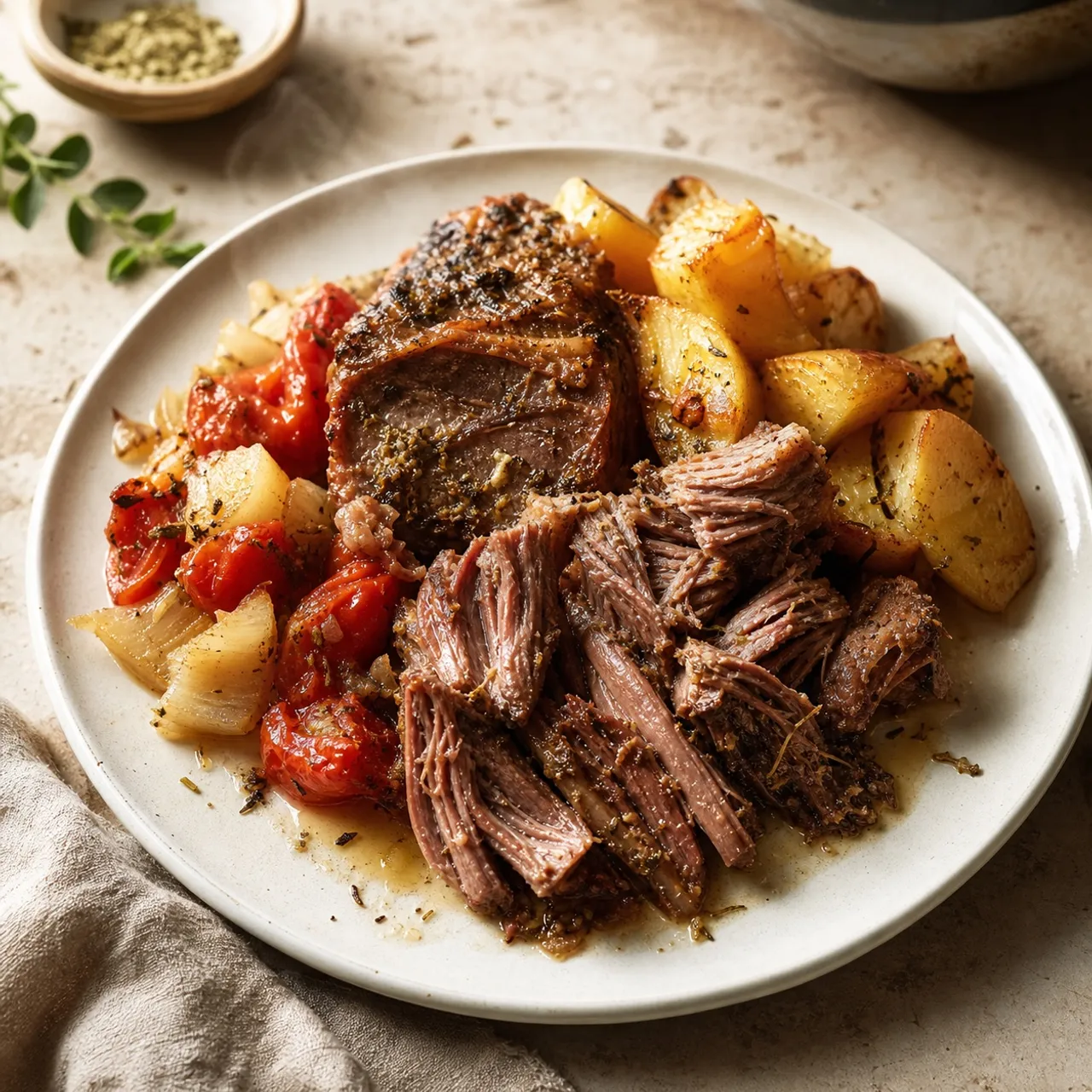
 Greek Images are for illustrative purposes only, may be inaccurate, and do not guarantee the presence or absence of specific ingredients.
 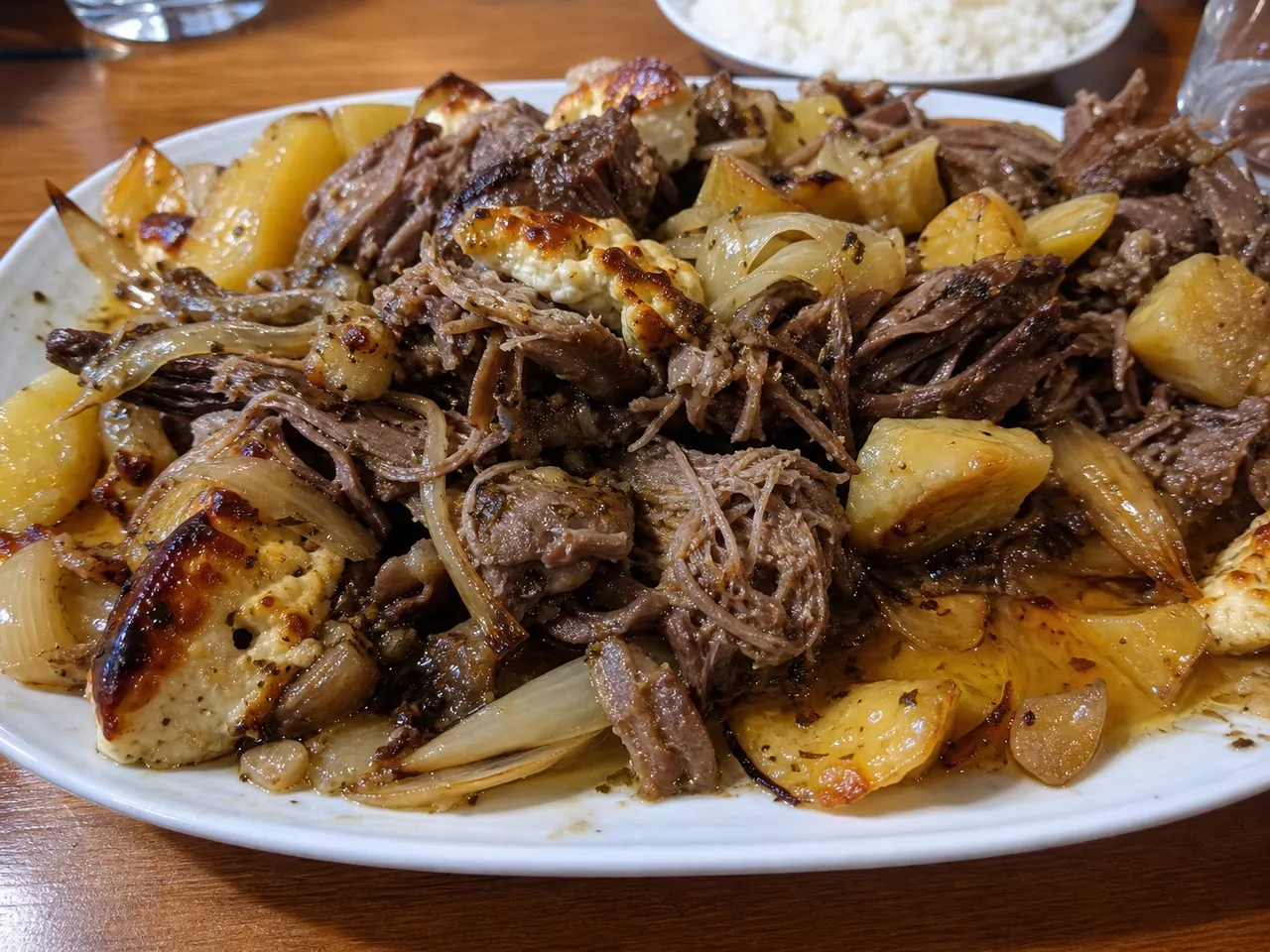 Serving Images are for illustrative purposes only, may be inaccurate, and do not guarantee the presence or absence of specific ingredients.
 Lamb Kleftiko (Slow-Roasted Lamb in Parchment)
Bone-in lamb slow-roasted with potatoes, garlic, lemon, and herbs, wrapped in parchment so it steams into fall-apart tenderness.
Contains common allergens
In the app, Listahan checks these against your household automatically.
Instructions
6 steps- 1
Cut small slits into the lamb pieces and insert the garlic slivers throughout.
- 2
In a bowl, whisk together lemon juice, lemon zest, olive oil, oregano, rosemary, salt, and pepper, and rub this marinade all over the lamb; marinate at least 1 hour or overnight.
- 3
Line a large roasting pan with a double layer of parchment paper large enough to fold over the top, and layer the potato wedges and onion slices on the bottom.
- 4
Place the marinated lamb on top of the vegetables, pour over the stock, and scatter the crumbled feta on top.
- 5
Fold the parchment over to seal tightly, then cover the whole pan with foil, sealing the edges well.
- 6
Roast at 325°F for 3 to 3.5 hours until the lamb is meltingly tender, then open the parcel and broil briefly to brown before serving.
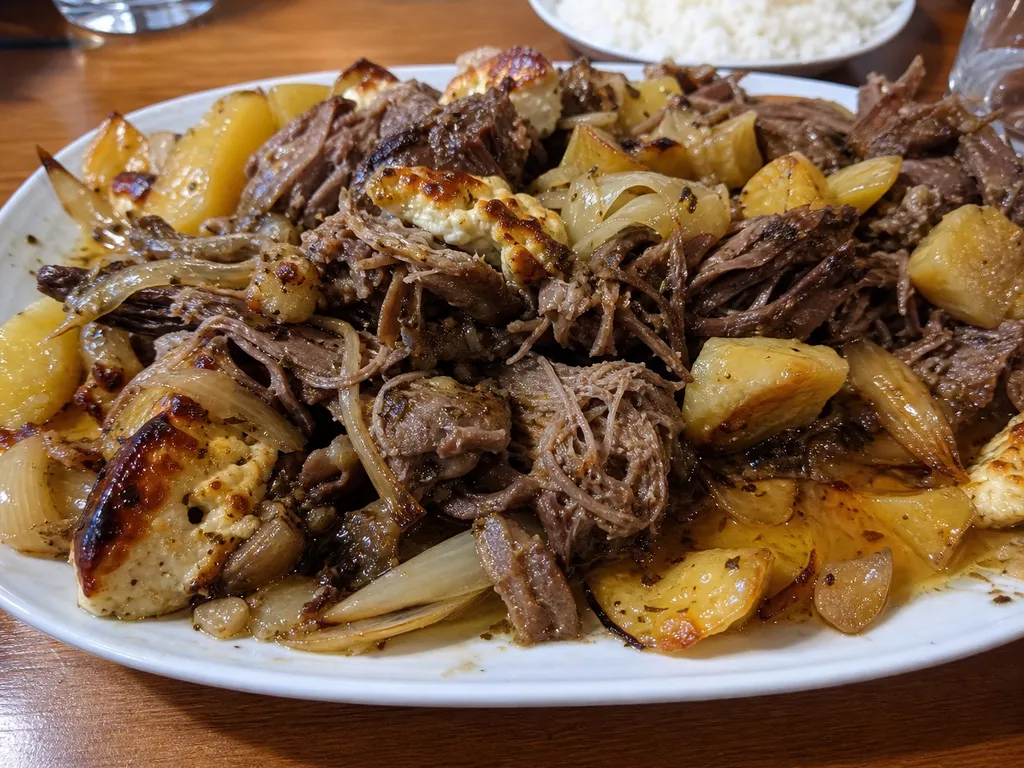 Images are for illustrative purposes only, may be inaccurate, and do not guarantee the presence or absence of specific ingredients.
 Listahan Family Score™
66/100
Works for many families
Score reflects how well this recipe fits a typical busy household. In the app, your Family Score is personalized to your household's allergens, kids, and pantry.
Nutrition
per serving1065
Calories
76 g
Protein
25 g
Carbs
73 g
Fat
Estimated per serving. Actual values depend on the brands and portions you use.
Listahan cooking guide
Chef notes & practical guide
Technique notes, ingredient swaps, serve-alongside ideas, storage guidance, and equipment for this recipe.
Cultural context
Kleftiko takes its name from the 'klephts,' Greek mountain rebels who resisted Ottoman rule by hiding in the hills; legend holds they slow-cooked stolen lamb in sealed earth pits to hide the cooking smoke and smell from patrols. The parchment-and-foil sealing method used today echoes that buried-pit cooking, trapping steam and flavor around the meat for hours until it falls off the bone.
Listahan note
This version builds the seal in two layers, parchment folded tightly then foil crimped over that, which is what actually recreates the sealed-pit effect and keeps the lamb from drying out over its long roast.
Technique cues
- Cutting slits into the lamb and inserting garlic slivers directly into the meat, rather than just rubbing garlic on the surface, gets flavor deep into the muscle over the long cook, where surface seasoning alone would stay superficial.
- The double seal of parchment folded tightly, then foil crimped over the top, is what traps the steam that makes this lamb shoulder fall-apart tender; a loose or single-layer seal lets moisture escape and the meat dries out.
- Opening the parcel and broiling briefly at the end matters because the sealed roast produces pale, steamed-looking meat and feta - the broil is what builds real color and roasted flavor on top.
Kitchen flow
- Parallel prep
- While the lamb marinates at least an hour or overnight, cut the potato wedges and slice the onion so the roasting pan can be assembled quickly.
- Make-ahead
- Marinate the lamb up to a day ahead for deeper flavor; the whole parcel can also be assembled the morning of and refrigerated until roasting time.
- Leftover move
- Shred leftover lamb and toss it with the potatoes into a warm salad, or pile it into pita with extra lemon and a drizzle of the pan juices.
- Cleanup rhythm
- Build the entire dish in one roasting pan - potatoes, onions, lamb, and feta all layer into the same vessel with the parchment and foil containing the mess of the long roast.
Ingredient brief
Role, handling, and swap guidance for each key ingredient.
bone-in lamb shoulder
main protein
Purpose: the bone and connective tissue add flavor and moisture during the long sealed roast, and the cut's marbling keeps it tender rather than drying out
Handling: cut into large pieces so each gets a fair share of marinade contact
Adaptation: leg of lamb works but is leaner, so watch the roast time to avoid drying it out
lemon, juice and zest
bright counterpoint to the rich lamb
Purpose: cuts through the fat of the shoulder and the salty feta, keeping the dish from tasting heavy
Handling: zest before juicing since it's much harder to zest a juiced lemon
Adaptation: bottled lemon juice works in a pinch, but fresh zest is worth keeping regardless
dried oregano and rosemary
herb backbone
Purpose: this pairing is classic for Greek lamb, standing up to the long roast without burning off like fresh herbs might in a shorter cook
Handling: combine into the marinade rather than sprinkling separately so they distribute evenly
Adaptation: fresh rosemary, finely chopped, can replace dried at about triple the amount
potatoes
absorb the lamb's juices during roasting
Purpose: sitting beneath the lamb, they soak up the rendered fat and stock, becoming rich and almost confit-like
Handling: cut into wedges of similar size so they cook evenly under the meat
Adaptation: waxy potatoes hold their shape better than starchy ones over the long roast
feta cheese
salty, tangy finish
Purpose: scattered on top before sealing, it partially melts and browns during the broil step, adding a distinct Greek note atypical of most slow-roasted lamb dishes
Handling: crumble by hand rather than using pre-crumbled feta for better texture
Adaptation: omit for a dairy-free version, or use a dairy-free feta alternative
Technique notes
- Seal the parchment and foil edges tightly and check partway through the roast that steam hasn't escaped from a loose corner, which would dry out the meat before it's done.
- Use a fork to test the lamb through a small opening near the end of roasting - it should shred with almost no resistance when fully done.
- Watch the broil step closely; it only takes a few minutes to brown the top and it's easy to scorch the feta if left unattended.
Ingredient swaps
- Gluten-free direction
- This dish is naturally gluten-free as written.
- Dairy-free option
- Omit the feta entirely, or use a dairy-free feta-style crumble, and rely on extra lemon and oregano for the missing salty tang.
- Weeknight shortcut
- This isn't a quick dish, but the marinating and sealing can be done the night before, leaving only the roast itself for the day you plan to serve it.
Serve alongside
- Greek salad with olives
- warm crusty bread for the pan juices
- steamed green beans with lemon
- a full-bodied Greek red like agiorgitiko
- a dry rose
Serving suggestions only — check pairings for your household's allergens.
Storage & reheating
- Refrigerate leftover lamb and potatoes together up to 3 days.
- Reheat covered in a low oven with a splash of stock to keep it moist rather than microwaving.
- The cooked lamb also freezes well for up to 2 months.
Equipment
- large roasting pan
- parchment paper
- heavy-duty foil
- sharp paring knife
Make this household-aware
Listahan Pro checks this recipe against your household's allergens, finds pantry-aware swaps, builds the shopping list, and helps you plan the week around it.
Plan it in Listahan
Add Lamb Kleftiko (Slow-Roasted Lamb in Parchment) to your week, check it against your household's allergens, and build the shopping list automatically.
More Greek recipes
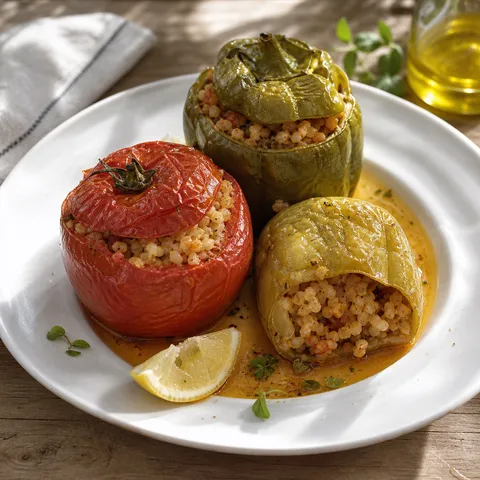 Greek Lens Verified Images are for illustrative purposes only, may be inaccurate, and do not guarantee the presence or absence of specific ingredients.
 Gemista (Stuffed Tomatoes and Peppers with Rice)
Ripe tomatoes and bell peppers hollowed out and stuffed with a savory herbed rice filling, then baked until tender and caramelized.
 Greek Lens Verified Images are for illustrative purposes only, may be inaccurate, and do not guarantee the presence or absence of specific ingredients.
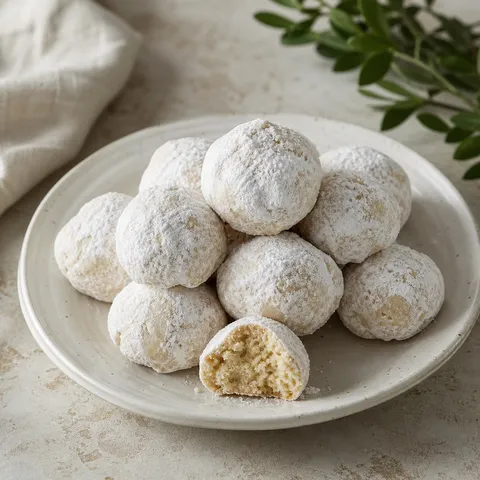
 Kourabiedes (Greek Almond Butter Cookies)
Buttery, crumbly shortbread cookies studded with toasted almonds and generously dusted with powdered sugar.
 Greek Lens Verified Images are for illustrative purposes only, may be inaccurate, and do not guarantee the presence or absence of specific ingredients.
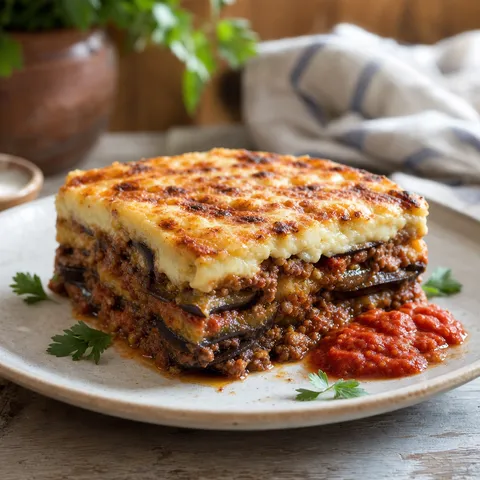
 Classic Moussaka
A rich, layered Greek casserole featuring roasted eggplant, a hearty spiced meat sauce, and a thick, creamy béchamel topping.