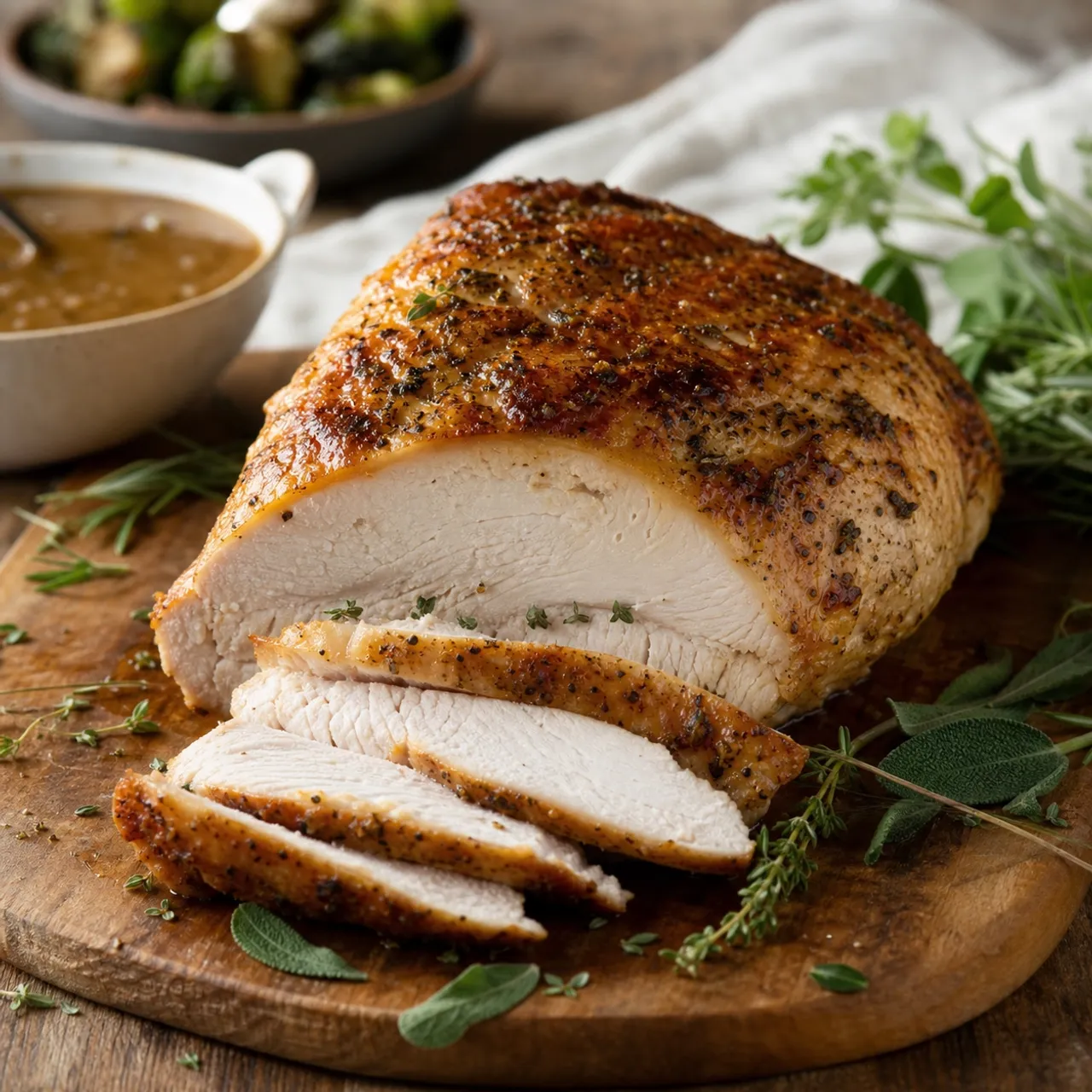
 Chicken & Poultry Images are for illustrative purposes only, may be inaccurate, and do not guarantee the presence or absence of specific ingredients.
 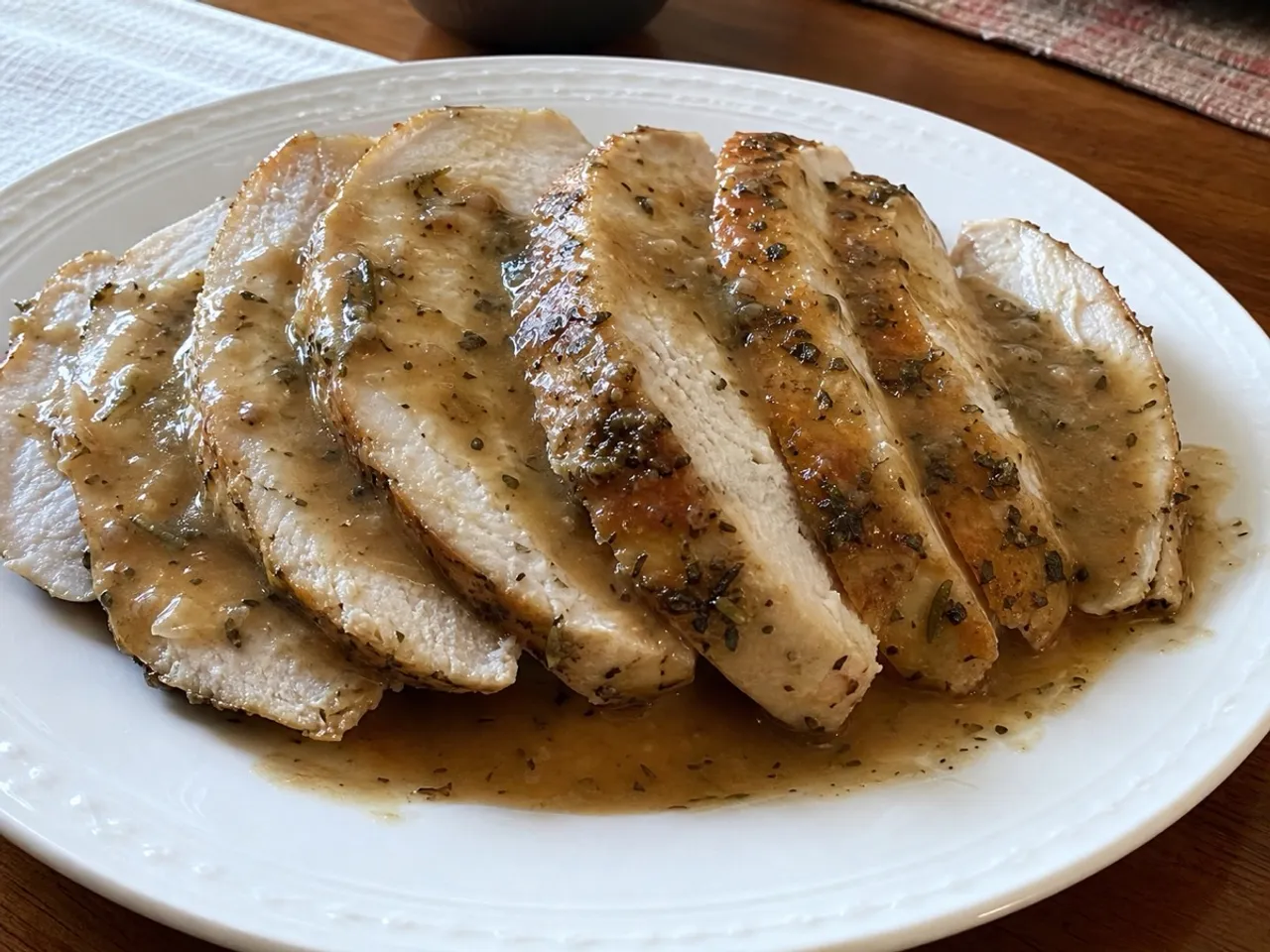 Serving Images are for illustrative purposes only, may be inaccurate, and do not guarantee the presence or absence of specific ingredients.
 Roast Turkey Breast with Herb Gravy
A juicy boneless turkey breast roasted with butter and herbs, served with a savory pan gravy.
Contains common allergens
In the app, Listahan checks these against your household automatically.
Instructions
8 steps- 1
Preheat oven to 350°F (175°C).
- 2
Mix softened butter with garlic, rosemary, thyme, salt, and pepper.
- 3
Rub the herb butter all over the turkey breast, including under the skin if possible.
- 4
Place turkey breast in a roasting pan and pour chicken broth into the bottom of the pan.
- 5
Roast 75-90 minutes, basting occasionally, until internal temperature reaches 165°F (74°C).
- 6
Remove turkey and let rest 15 minutes; reserve pan drippings.
- 7
Whisk flour into the pan drippings over medium heat on the stovetop, then gradually whisk in milk until gravy thickens, about 5 minutes.
- 8
Slice turkey and serve with the herb gravy.
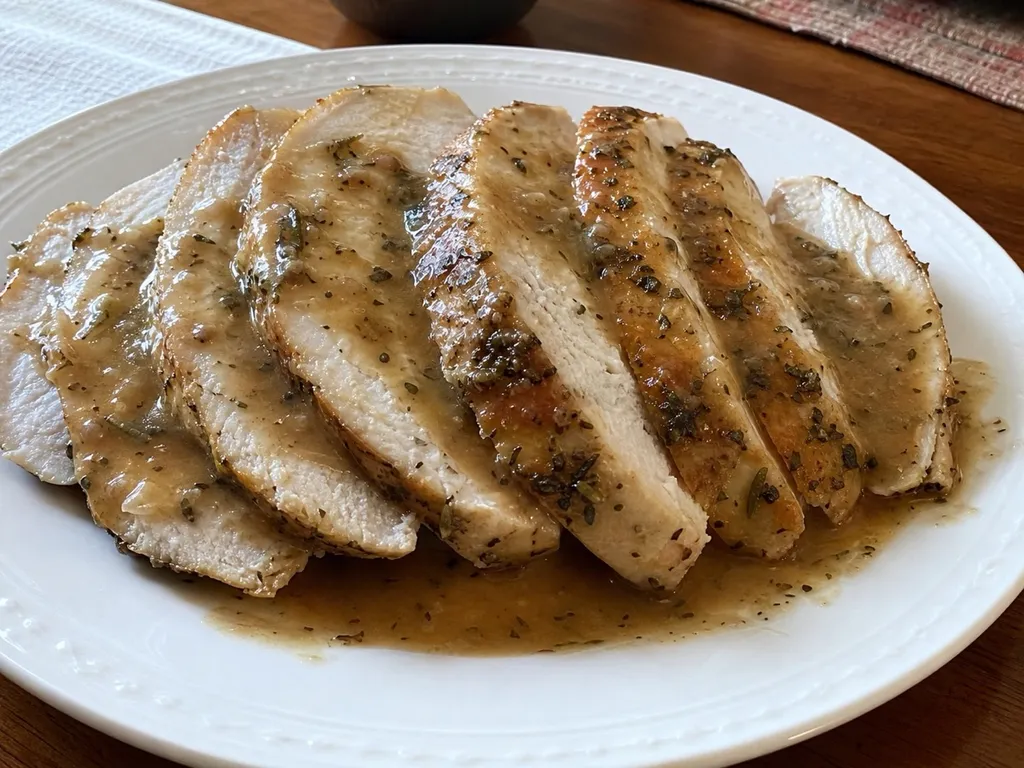 Images are for illustrative purposes only, may be inaccurate, and do not guarantee the presence or absence of specific ingredients.
 Listahan Family Score™
66/100
Works for many families
Score reflects how well this recipe fits a typical busy household. In the app, your Family Score is personalized to your household's allergens, kids, and pantry.
Nutrition
per serving95
Calories
2 g
Protein
4 g
Carbs
9 g
Fat
Estimated per serving. Actual values depend on the brands and portions you use.
Listahan cooking guide
Chef notes & practical guide
Technique notes, ingredient swaps, serve-alongside ideas, storage guidance, and equipment for this recipe.
Cultural context
Roast turkey with gravy sits firmly in North American holiday cooking, especially Thanksgiving and Christmas tables, where the pan drippings are treated almost as important as the bird itself. A boneless turkey breast is a smaller-household adaptation of the whole roast turkey: easier to carve, faster to roast, and focused on clean slices rather than a dramatic centerpiece.
Listahan note
This version keeps the roast manageable and puts the flavor into herb butter and a simple milk gravy. It prioritizes moist slices, useful pan drippings, and a gravy that can be made in the same roasting pan without a long stock-making step.
Technique cues
- Softened butter carries the rosemary, thyme, garlic, salt, and pepper across the surface of the turkey so the seasoning does not sit in dry patches.
- Chicken broth in the bottom of the roasting pan protects the drippings from scorching and gives you a better base for gravy.
- Resting before slicing matters because boneless turkey breast can lose a lot of juice if it is carved straight from the oven.
Kitchen flow
- Parallel prep
- Mix the herb butter while the oven preheats, then measure the flour and milk before the turkey comes out so the gravy can start as soon as the roast rests.
- Make-ahead
- Mix the herb butter a day ahead and refrigerate it; bring it back to a spreadable texture before rubbing it on the turkey.
- Leftover move
- Layer thin slices into hot turkey sandwiches with extra gravy, or chop the meat into a pot pie filling with peas and carrots.
- Cleanup rhythm
- Whisk the gravy in the roasting pan while the drippings are still warm, then soak the pan after serving so the browned bits release more easily.
Ingredient brief
Role, handling, and swap guidance for each key ingredient.
Boneless turkey breast
Main roast
Purpose: It gives neat slices and cooks more evenly than a whole bird, but it can dry out if treated too aggressively.
Handling: Pat the surface dry, loosen the skin if there is one, and rub the butter over the outside and under the skin where possible.
Adaptation: Bone-in turkey breast brings more roasted flavor, but it usually needs a longer cook time and a larger pan.
Unsalted butter
Fat and flavor carrier
Purpose: Butter helps the herbs cling to the turkey and encourages a lightly browned, savory surface.
Handling: Let it soften fully before mixing so the garlic and herbs spread evenly.
Adaptation: Olive oil works for a simpler rub, but the finished gravy will taste less rich.
Garlic
Aromatic base
Purpose: Minced garlic gives the roast and gravy a familiar savory depth without needing many extra seasonings.
Handling: Mince it finely so it blends into the butter instead of forming large pieces that can darken too quickly.
Adaptation: Garlic powder can stand in when needed; use a lighter hand because it disperses strongly through the butter.
Fresh rosemary
Woody herb note
Purpose: Rosemary gives turkey a piney, roast-dinner aroma that stands up well to butter and gravy.
Handling: Chop it finely so the needles do not feel tough on the finished slices.
Adaptation: Dried rosemary can work, but crush it before mixing and use less because it is more concentrated.
Fresh thyme
Soft herb note
Purpose: Thyme rounds out the rosemary with a gentler, earthy flavor that fits the pan gravy.
Handling: Strip the leaves from the stems before chopping or stirring into the butter.
Adaptation: Dried thyme is a practical backup; use a smaller amount and give it a minute in the butter to hydrate.
All-purpose flour
Gravy thickener
Purpose: Flour turns the pan drippings, broth, and milk into a spoonable gravy instead of a thin pan sauce.
Handling: Whisk it into the hot drippings until no dry pockets remain before adding milk gradually.
Adaptation: Cornstarch slurry thickens more quickly and gives a glossier gravy, but it will not have the same roux-like body.
Technique notes
- Use a roasting pan that can go on the stovetop if possible; it lets you capture the browned bits directly in the gravy.
- Baste lightly rather than constantly opening the oven. Too much checking slows the roast and does not make up for overcooking.
- When adding milk to the flour and drippings, pour slowly and whisk the whole time so the gravy thickens smoothly instead of clumping.
Ingredient swaps
- Gluten-free direction
- Use a gluten-free all-purpose flour blend or a cornstarch slurry for the gravy; flour blend gives more traditional body, while cornstarch makes a smoother, glossier sauce.
- Dairy-free option
- Use olive oil or plant-based butter for the rub and an unsweetened plain dairy-free milk in the gravy; the flavor will be lighter and less buttery.
- Weeknight shortcut
- Use turkey breast cutlets with the same herb butter and make a quick skillet gravy from broth, flour, and milk after searing.
- Herb backup
- Use dried rosemary and dried thyme when fresh herbs are not available, but reduce the amount and crush them before mixing into the butter.
Serve alongside
- Garlic mashed potatoes
- Green bean casserole
- Roasted Brussels sprouts with lemon
- Cranberry-orange relish
- Dry hard cider
- Unsweetened iced tea
- Chardonnay
Serving suggestions only — check pairings for your household's allergens.
Storage & reheating
- Refrigerate sliced turkey with some gravy in a sealed container so the meat stays moist.
- Reheat gently in a covered skillet or baking dish with a splash of broth or gravy until warmed through.
- Freeze sliced turkey and gravy separately when possible, then thaw overnight in the refrigerator and reheat slowly so the gravy comes back together.
Equipment
- Roasting pan
- Instant-read thermometer
- Whisk
- Carving knife
Make this household-aware
Listahan Pro checks this recipe against your household's allergens, finds pantry-aware swaps, builds the shopping list, and helps you plan the week around it.
Plan it in Listahan
Add Roast Turkey Breast with Herb Gravy to your week, check it against your household's allergens, and build the shopping list automatically.
More Chicken & Poultry recipes
 Chicken & Poultry Lens Verified Images are for illustrative purposes only, may be inaccurate, and do not guarantee the presence or absence of specific ingredients.
 Chicken and Green Chili Casserole
A hearty layered Tex-Mex casserole of tender chicken, tortillas, green chilies, and melted cheese in a creamy sauce.
 Chicken & Poultry Lens Verified Images are for illustrative purposes only, may be inaccurate, and do not guarantee the presence or absence of specific ingredients.
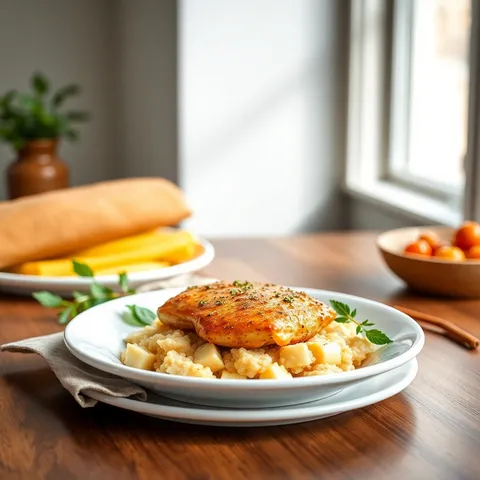
 Garlicky Baked Chicken
Tender baked chicken in a quick, garlicky mayonnaise marinade with a hint of Italian herbs.
 Chicken & Poultry Lens Verified Images are for illustrative purposes only, may be inaccurate, and do not guarantee the presence or absence of specific ingredients.
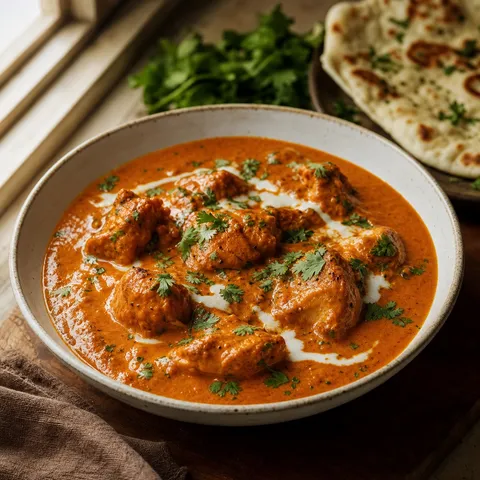
 Butter Chicken (Murgh Makhani)
Tender marinated chicken simmered in a rich, spiced tomato-butter cream sauce, a beloved Indian restaurant classic.