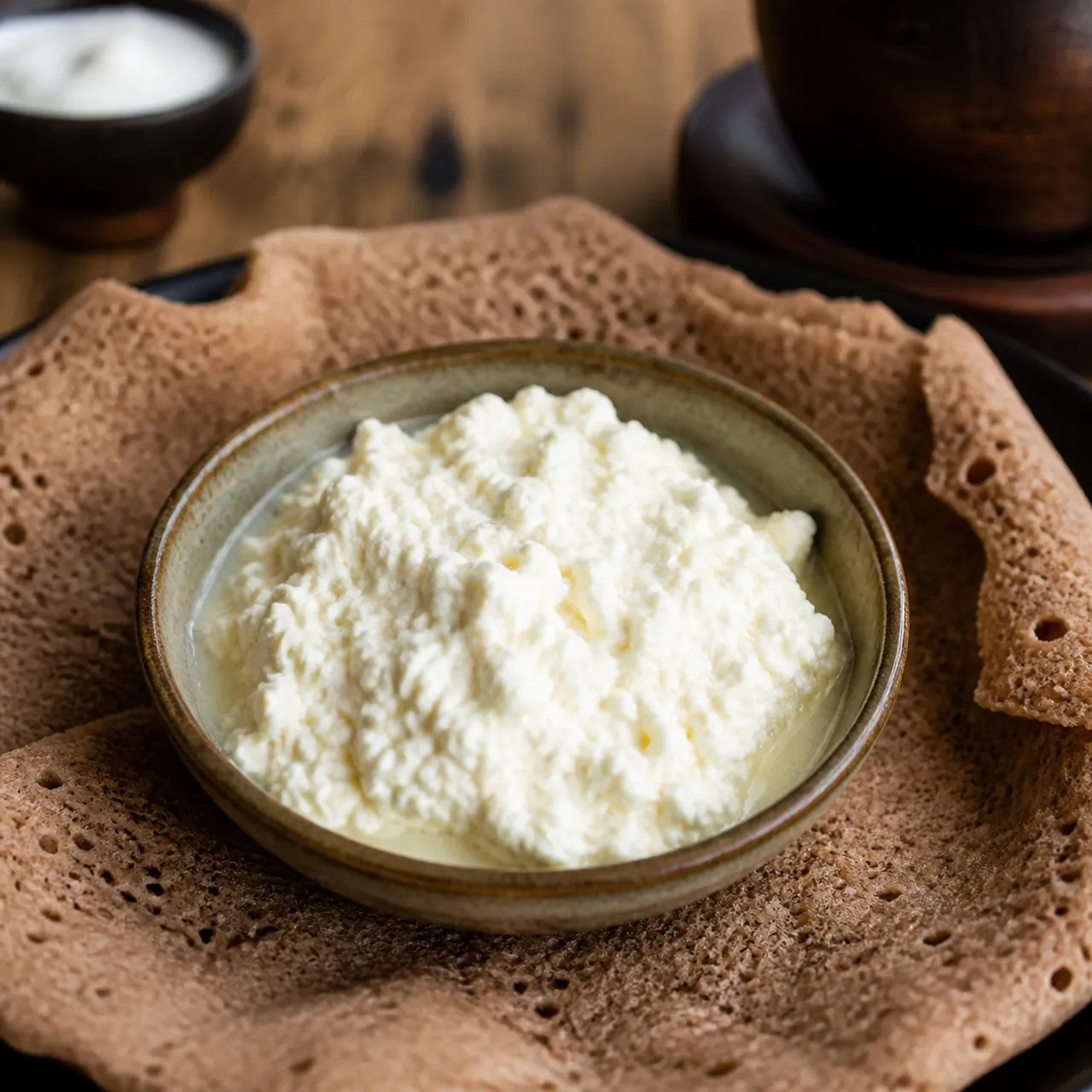
 East African Images are for illustrative purposes only, may be inaccurate, and do not guarantee the presence or absence of specific ingredients.
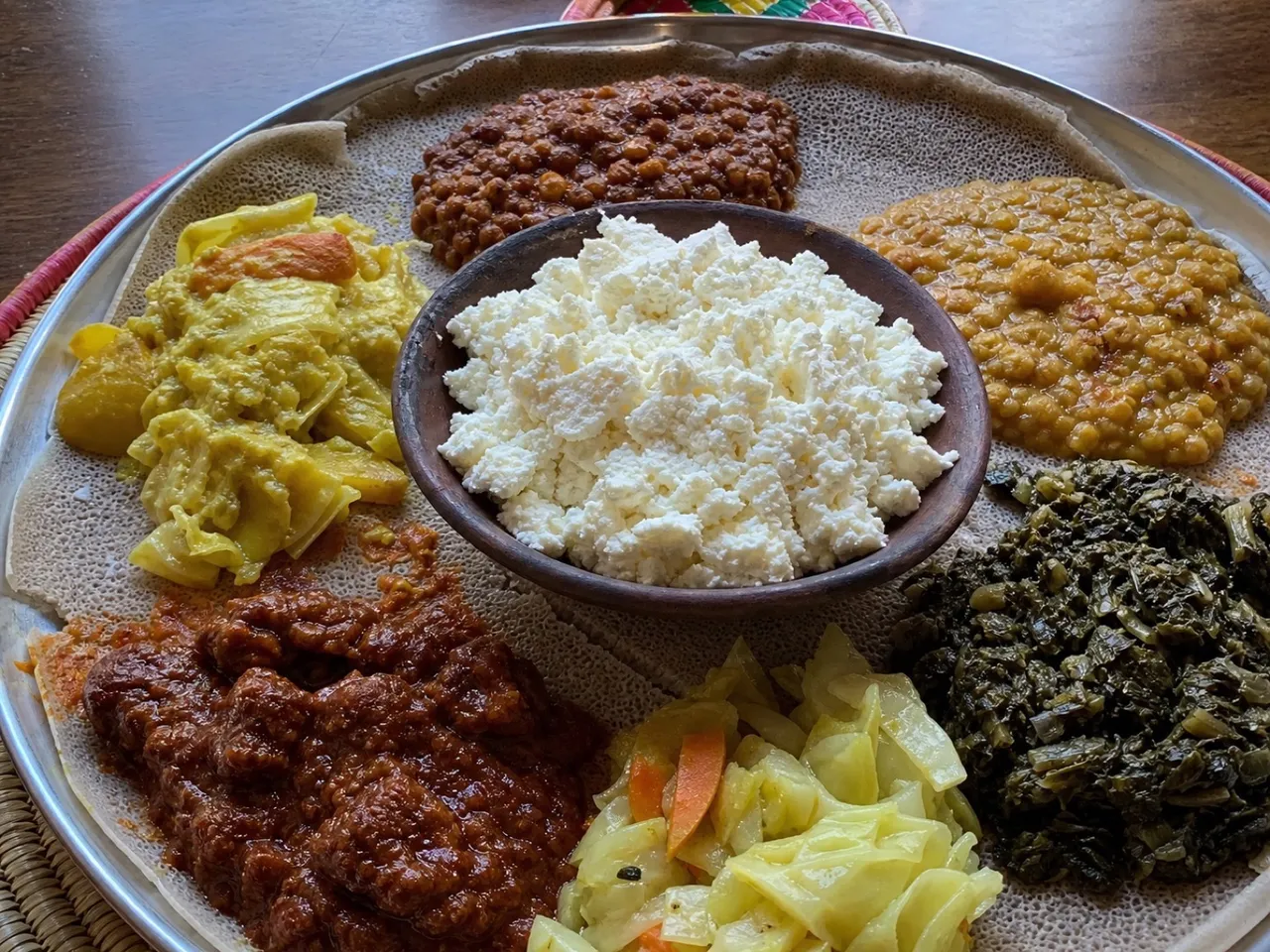 Serving Images are for illustrative purposes only, may be inaccurate, and do not guarantee the presence or absence of specific ingredients.
Ayib
Mild, creamy Ethiopian fresh cheese with a gentle tang, crumbled over spicy stews to cool the heat and add a soft, dairy richness to every bite.
Contains common allergens
In the app, Listahan checks these against your household automatically.
Good to know
- One-pot
Matched from this dish's own ingredients and timing. Browse more: one-pot dinners
Instructions
6 steps- 1
Pour the milk into a heavy-bottomed pot and heat over medium heat, stirring occasionally, until it reaches a gentle simmer (small bubbles around the edge, about 180 F / 82 C); do not let it come to a rolling boil.
- 2
Remove from the heat and stir in the lemon juice or yogurt. Let it sit undisturbed for 5 to 10 minutes; the milk will separate into soft white curds and a thin yellowish whey.
- 3
Line a colander with a double layer of cheesecloth and set it over a bowl. Gently ladle the curds and whey into the lined colander.
- 4
Let the curds drain for 15 to 20 minutes for a soft, spreadable ayib, or gather the cheesecloth and gently squeeze for a firmer texture.
- 5
Transfer the drained curds to a bowl, stir in the salt if using, and break up any large clumps with a fork until the cheese is soft and crumbly.
- 6
Serve fresh, traditionally alongside gomen (collard greens) or as part of a combination platter with other Ethiopian dishes.
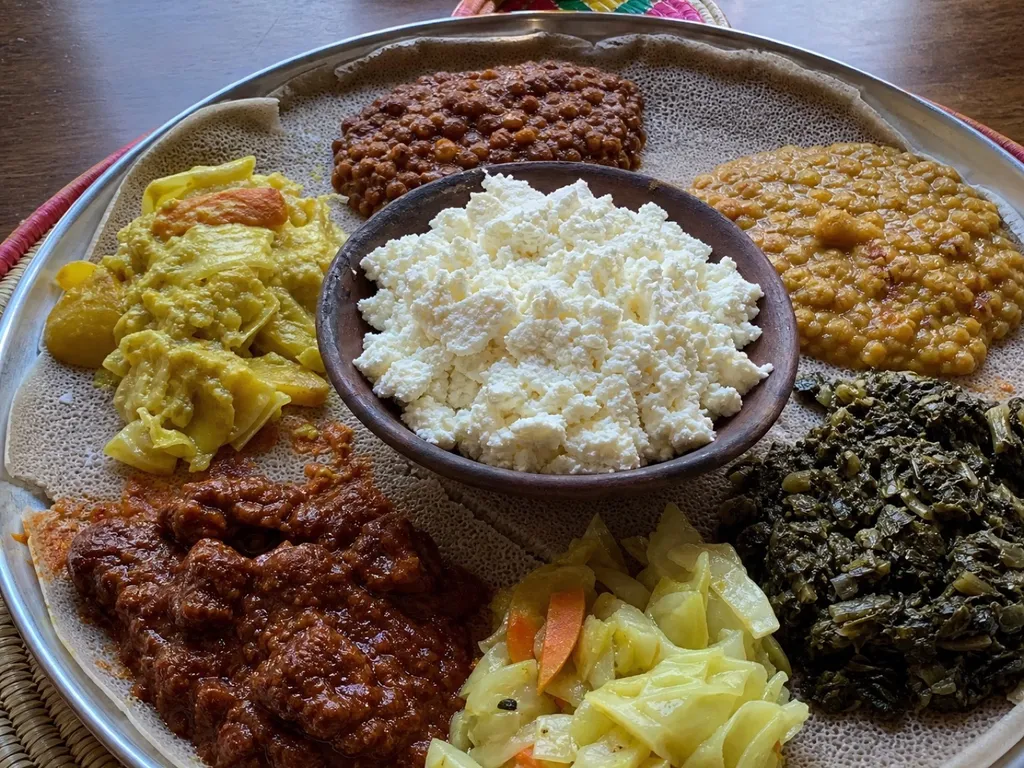 Images are for illustrative purposes only, may be inaccurate, and do not guarantee the presence or absence of specific ingredients.
Listahan Family Score™
68/100
Works for many families
Score reflects how well this recipe fits a typical busy household. In the app, your Family Score is personalized to your household's allergens, kids, and pantry.
Nutrition
per serving150
Calories
8 g
Protein
12 g
Carbs
8 g
Fat
Estimated per serving. Actual values depend on the brands and portions you use.
Listahan cooking guide
Chef notes & practical guide
Technique notes, ingredient swaps, serve-alongside ideas, storage guidance, and equipment for this recipe.
Cultural context
Ayib is Ethiopia's traditional fresh cheese, made by acidifying warm milk with a souring agent — traditionally yogurt whey or lemon juice — and hanging the curds in cloth to drain until they form a crumbly, mild cheese with a fresh, slightly tangy flavor. It occupies the same culinary role as queso fresco or Indian paneer, providing dairy richness and cooling relief alongside intensely spiced stews. Ayib appears on most traditional Ethiopian platters, especially beyaynetu, and is also served as a standalone breakfast with a drizzle of honey or mixed with gomen for a classic pairing.
Listahan note
This version uses lemon juice as the souring agent for reliability and speed, producing a fresh ayib that is ready to serve in about an hour and does not require specialized cultures or aging.
Technique cues
- Heat the milk to just below a simmer — visible steam rising and tiny bubbles forming at the edges, around 185-190F — before adding the lemon juice; too cool and the acid will not cause rapid curdling, too hot and the protein structure breaks down and the curds become rubbery.
- Once the acid is added, stir gently once to distribute and then leave the milk completely undisturbed for 5-10 minutes; stirring during curdling breaks the forming curds into smaller pieces, resulting in a fine, wet texture rather than the larger crumbles traditional ayib is known for.
- The draining time determines the final texture: 30 minutes of draining in cheesecloth produces a moist, spreadable ayib; 2-3 hours of draining produces a drier, crumbly version better suited for crumbling over stews.
Kitchen flow
- Parallel prep
- Set up the draining station — a colander lined with cheesecloth over a large bowl — before you begin heating the milk so it is ready the moment the curds form.
- Make-ahead
- Ayib can be made up to 3 days ahead and stored refrigerated; the flavor mellows slightly and becomes less sharp after the first day.
- Leftover move
- Leftover ayib can be mixed with a little honey and eaten as a dessert, stirred into gomen (collard greens), or crumbled over injera with berbere.
- Cleanup rhythm
- Rinse the cheesecloth in cold water immediately after draining — hot water sets the milk protein and makes the cloth difficult to clean; the pot rinses easily while still warm.
Ingredient brief
Role, handling, and swap guidance for each key ingredient.
Milk
primary ingredient
Purpose: Whole milk provides the fat content necessary for a creamy, tender curd; lower-fat milks produce drier, less flavorful curds with less yield.
Handling: Use whole milk at refrigerator temperature; heat slowly over medium heat, stirring occasionally to prevent scorching on the bottom of the pot.
Adaptation: Goat milk produces a slightly tangier, more traditional flavor close to what highland Ethiopians would use; do not use UHT/shelf-stable milk as it does not curdle reliably.
lemon juice or yogurt
acidifying agent
Purpose: Acid lowers the pH of the warm milk below the point where milk proteins (casein) can stay in suspension, causing them to coagulate and separate from the whey.
Handling: Use freshly squeezed lemon juice at room temperature; cold lemon juice can slow curdling; for yogurt, use plain full-fat yogurt whey drained from the top of the container.
Adaptation: White vinegar works as a substitute for lemon juice; use slightly less (2 teaspoons per cup of milk) as it is more acidic.
Salt
Seasoning and preservation
Purpose: A small amount of salt added after draining enhances the mild flavor of the curd and helps draw out any remaining whey, firming the texture.
Handling: Add salt after the curd has fully drained and cooled; adding it while hot can make the curd too wet.
Adaptation: Herb salt or a pinch of dried thyme can be added alongside for a flavored version served alongside meat dishes.
Technique notes
- The retained whey is nutritious and full of flavor; use it in place of water when cooking lentils or grains, or add it to smoothies.
- If the curds are very fine and wet after initial draining, gather the cheesecloth at the top and gently squeeze to accelerate moisture removal without applying so much pressure that you compact the curds into a dense block.
- A pinch of salt added after draining and before serving rounds out the flavor; traditional ayib is lightly salted but the amount varies by region and personal preference.
Ingredient swaps
- Dairy-free option
- Commercially available firm tofu, pressed and crumbled, approximates the texture of ayib on a platter though the flavor is quite different; season with a pinch of salt and lemon juice.
- Ready-made substitute
- Ricotta cheese or queso fresco can stand in for homemade ayib with minimal flavor difference; queso fresco is the closer match in texture and saltiness.
- Flavored version
- Stir fresh herbs (chopped chives or flat-leaf parsley) and a pinch of black pepper into the drained ayib for a version closer to a fresh European herbed cheese.
Serve alongside
- misir wat for contrasting heat and creaminess
- gomen (collard greens) mixed directly with the ayib, a classic pairing
- injera with a drizzle of honey for a sweet breakfast pairing
- Ethiopian spiced tea
- cold whole milk
Serving suggestions only — check pairings for your household's allergens.
Storage & reheating
- Store in an airtight container submerged in a little of the reserved whey or cold water to keep it moist; refrigerate for up to 4 days.
- Do not freeze — freezing causes the protein structure to break down and the cheese becomes grainy and waterlogged when thawed.
- If the cheese becomes slightly sour after 3-4 days, it is still safe to eat and the increased acidity can be pleasant in cooked applications.
Equipment
- medium heavy-bottomed saucepan
- fine cheesecloth or a thin clean kitchen towel
- colander
- large bowl to catch the whey
- instant-read thermometer (optional but helpful)
Make this household-aware
Listahan Pro checks this recipe against your household's allergens, finds pantry-aware swaps, builds the shopping list, and helps you plan the week around it.
Plan it in Listahan
Add Ayib to your week, check it against your household's allergens, and build the shopping list automatically.
More East African recipes
 East African Lens Verified Images are for illustrative purposes only, may be inaccurate, and do not guarantee the presence or absence of specific ingredients.
Viazi Karai
A Zanzibari street favorite of soft boiled potatoes coated in a turmeric-yellow batter and deep-fried until crackling, served with fiery tamarind sauce.
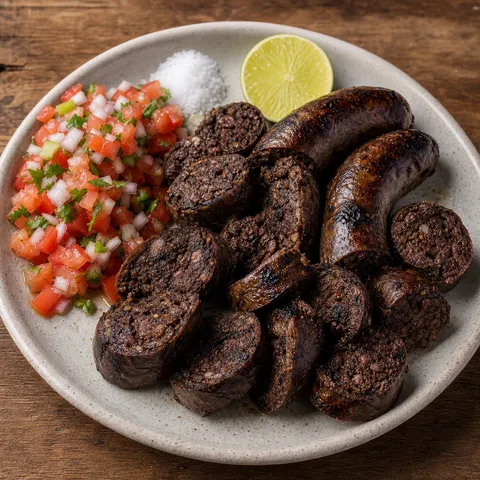 East African Lens Verified Images are for illustrative purposes only, may be inaccurate, and do not guarantee the presence or absence of specific ingredients.
Mutura
Kenyan spiced blood sausage stuffed with meat, onion, and herbs, then grilled until the casing crisps and snaps — a bold, smoky roadside delicacy.
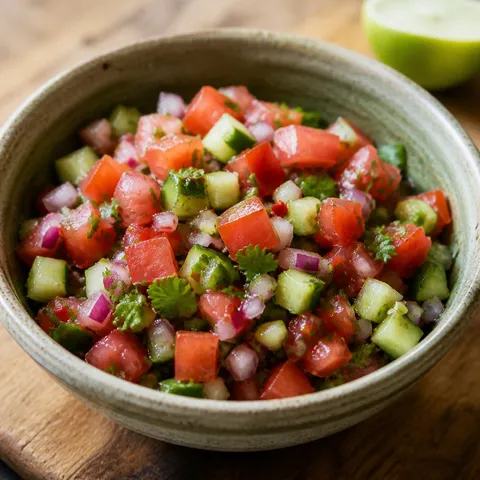 East African Lens Verified Images are for illustrative purposes only, may be inaccurate, and do not guarantee the presence or absence of specific ingredients.
Kachumbari
Bright, refreshing salad of ripe tomatoes and sharp raw onion, spiked with chili and lime — the cool, crisp counterpoint to rich East African grills.