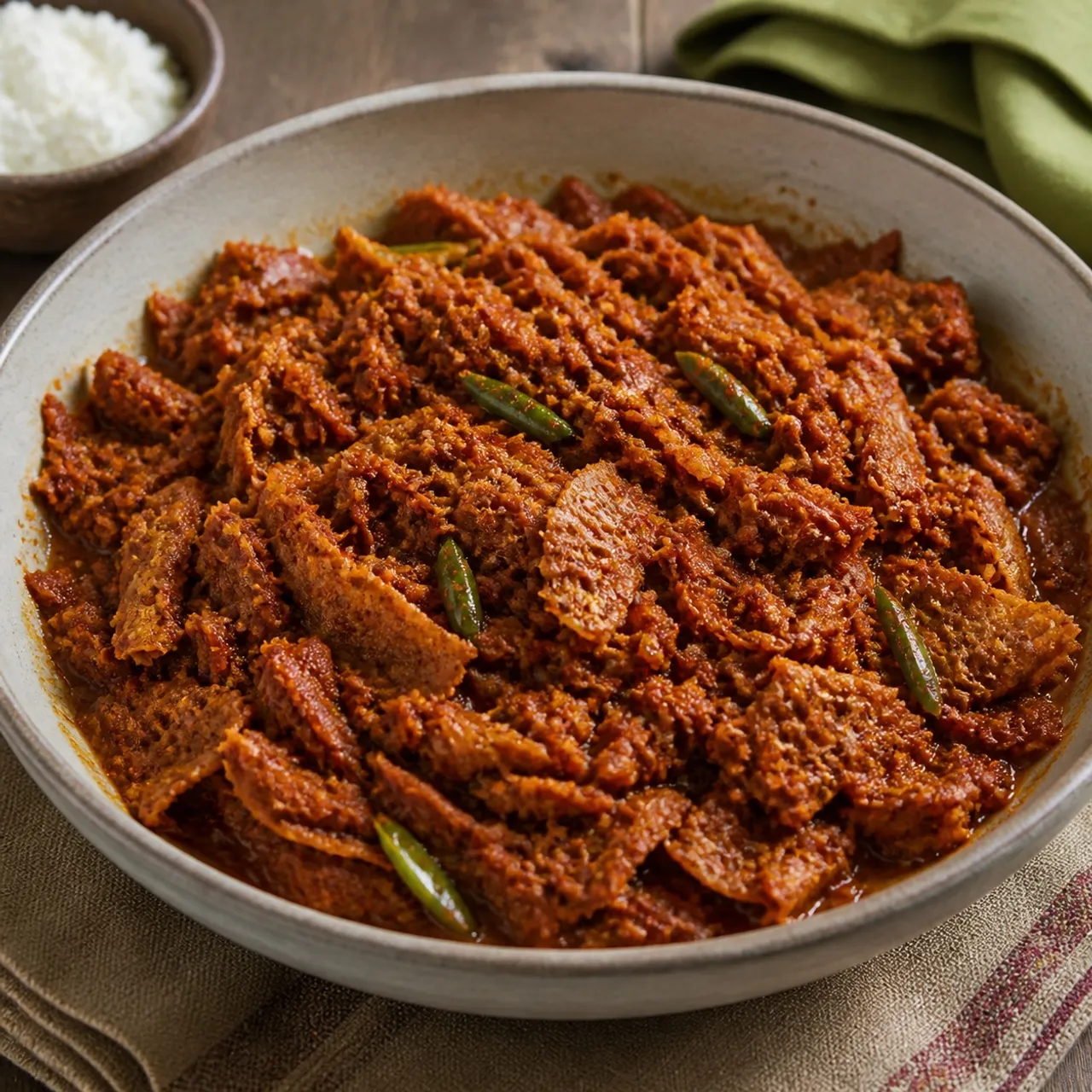
 East African Images are for illustrative purposes only, may be inaccurate, and do not guarantee the presence or absence of specific ingredients.
 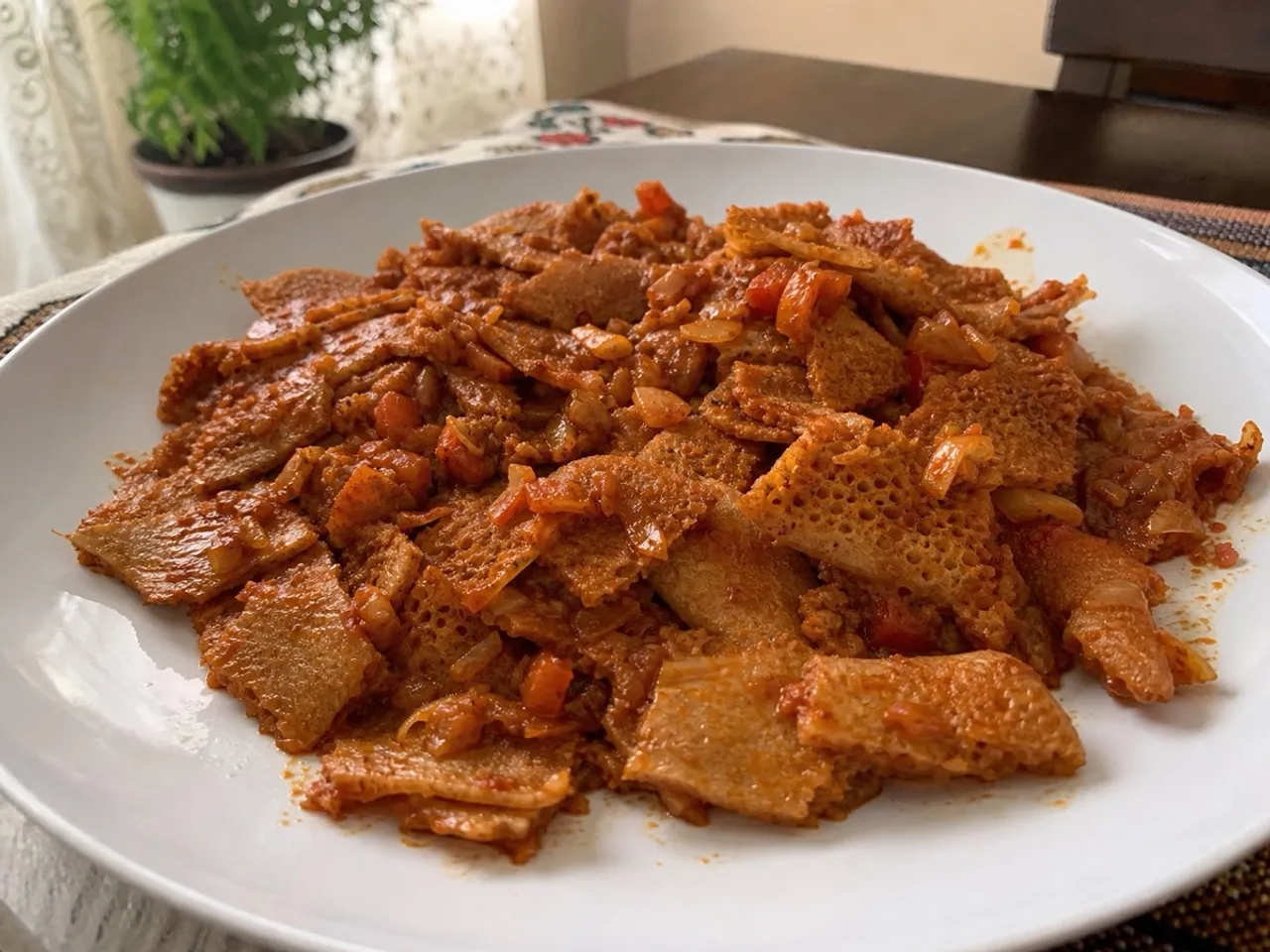 Serving Images are for illustrative purposes only, may be inaccurate, and do not guarantee the presence or absence of specific ingredients.
 Firfir
Leftover injera torn and tossed with spicy berbere-spiked stew, soaking up every drop of sauce until warm, tangy, and satisfying. Ethiopia's best breakfast.
Contains common allergens
In the app, Listahan checks these against your household automatically.
Good to know
- Ready in under 30 minutes
Matched from this dish's own ingredients and timing. Browse more: 30-minute meals
Instructions
6 steps- 1
Melt the niter kibbeh in a wide skillet over medium heat. Add the diced onion and cook, stirring often, until softened and golden, about 5 minutes.
- 2
Stir in the garlic and cook for 30 seconds until fragrant, then whisk in the berbere spice, letting it toast in the fat for about 1 minute.
- 3
Pour in the water or broth and bring to a simmer, scraping up any browned bits, until the sauce is smooth and slightly thickened, 3 to 4 minutes.
- 4
Add the torn injera pieces to the skillet and toss gently to coat every piece in the sauce, letting it soak in for 1 to 2 minutes.
- 5
Continue tossing over low heat until the injera has absorbed most of the sauce and is warmed through but not mushy, about 2 more minutes.
- 6
Season with salt to taste and serve warm, traditionally for breakfast alongside a dollop of ayib or a fried egg.
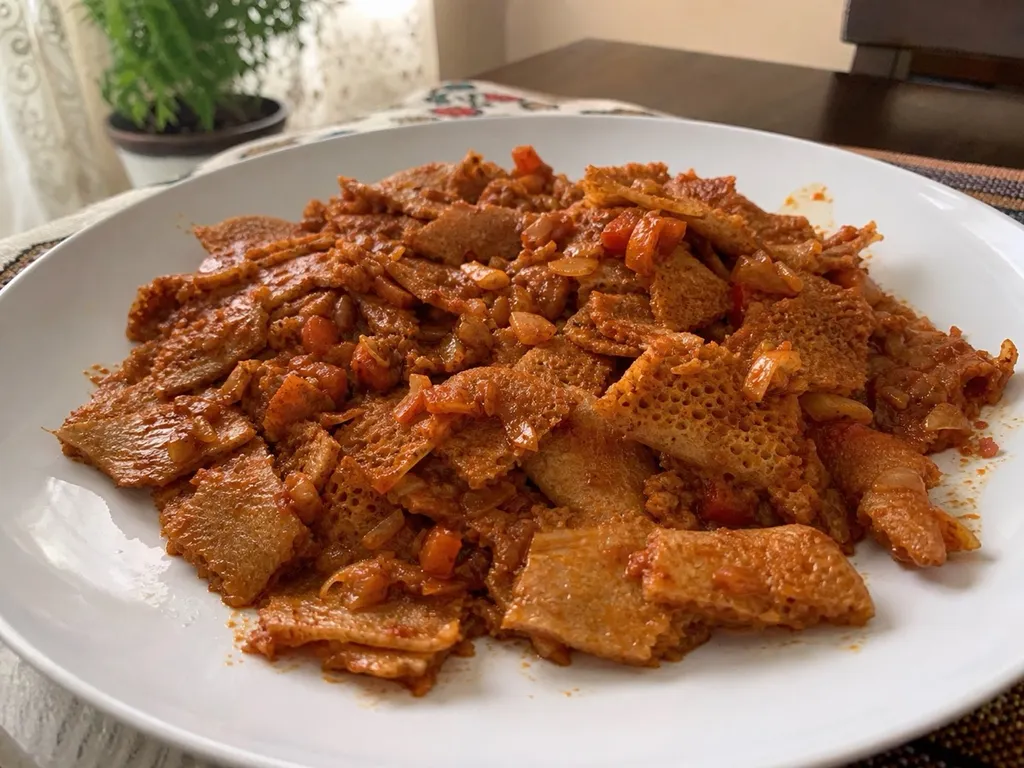 Images are for illustrative purposes only, may be inaccurate, and do not guarantee the presence or absence of specific ingredients.
 Listahan Family Score™
73/100
Good fit for most families
Score reflects how well this recipe fits a typical busy household. In the app, your Family Score is personalized to your household's allergens, kids, and pantry.
Listahan cooking guide
Chef notes & practical guide
Technique notes, ingredient swaps, serve-alongside ideas, storage guidance, and equipment for this recipe.
Cultural context
Firfir is an Ethiopian breakfast staple born out of practical frugality: day-old injera, which grows sour and slightly stiff overnight, is torn and sauteed with berbere and niter kibbeh to become something more satisfying than fresh injera ever could be. The word 'firfir' refers to the action of shredding or tearing, and the dish appears in both humble home kitchens and traditional restaurants across Addis Ababa. It is commonly served on fasting days in a vegan form with just berbere and oil, or enriched with spiced butter and sometimes eggs for a heartier morning meal.
Listahan note
This version uses niter kibbeh to build a deeply aromatic base before the injera goes in, letting the spiced butter coat every piece rather than pooling at the bottom of the pan.
Technique cues
- Day-old injera is non-negotiable: fresh injera will turn to mush in the pan, while injera that has sat overnight develops a firmer sponge that absorbs the berbere-butter sauce without losing its texture.
- Toast the berbere in the dry pan for 30 seconds before adding the niter kibbeh — this brief heat releases the fat-soluble aromatics in the spice blend and prevents a raw-spice sharpness in the finished dish.
- Add the torn injera off the heat or over very low flame and toss quickly, using the residual pan heat to warm it through; prolonged direct heat will make the injera gummy and cause it to stick in clumps.
Kitchen flow
- Parallel prep
- Tear the injera while the onion cooks down; mince the garlic and chop the tomato so everything is ready before the berbere goes in — the spice stage moves fast.
- Make-ahead
- The onion-berbere base can be made up to 2 days ahead and refrigerated; reheat the base and toss in the injera fresh to order for the best texture.
- Leftover move
- Leftover firfir reheats well in a covered skillet with a splash of water over low heat; top with a fried egg to turn it into a more substantial meal.
- Cleanup rhythm
- Deglaze the pan with the tomato juice while it is still hot to release any berbere crust, which makes washing the skillet much easier.
Ingredient brief
Role, handling, and swap guidance for each key ingredient.
3 sheets day-old injera (torn into bite-sized pieces)
structural base and sauce carrier
Purpose: The porous, fermented sponge of injera soaks up the spiced butter and berbere, becoming the body of the dish rather than a side accompaniment.
Handling: Tear by hand into roughly 2-inch pieces; uneven shapes are traditional and help create contrast between crisp edges and soft centers.
Adaptation: In a pinch, use leftover Ethiopian flatbread or even thin crepes, though the fermented tang of injera is central to the flavor.
3 tbsp niter kibbeh (spiced butter)
aromatic fat and flavor foundation
Purpose: Niter kibbeh carries cardamom, turmeric, fenugreek, and other spices infused into clarified butter, doing the seasoning work of a spice blend and a cooking fat simultaneously.
Handling: Use at room temperature so it melts quickly and evenly when it hits the hot pan.
Adaptation: Ghee mixed with a pinch of turmeric and cardamom approximates the color and warmth; plain butter works but lacks the complexity.
2 tbsp berbere spice blend
heat and depth
Purpose: Berbere provides the dish's characteristic red color and its layered heat from chiles alongside warm spices like fenugreek, coriander, and allspice.
Handling: Use a commercially available Ethiopian berbere or make your own dry blend; the quality of the berbere determines most of the dish's character.
Adaptation: A mix of smoked paprika, cayenne, coriander, and a pinch of fenugreek can stand in, though the result will be less complex.
1 onion (finely diced)
aromatic base
Purpose: A long-cooked onion forms the sweet, jammy foundation that mellows the sharpness of berbere and binds the sauce to the injera pieces.
Handling: Dice finely so the onion cooks down into the sauce within about 10 minutes over medium heat.
Adaptation: Shallots work well and cook faster; use 3-4 large shallots in place of one onion.
2 cloves garlic (minced)
aromatic depth
Purpose: Garlic adds a pungent undertone that bridges the spiced butter and the berbere without dominating either.
Handling: Mince finely or grate on a microplane so it melts into the sauce rather than appearing as distinct pieces.
Adaptation: Half a teaspoon of garlic powder stirred in with the berbere works if fresh garlic is unavailable.
Technique notes
- The onion must be cooked until completely soft and beginning to brown before the berbere is added; underdone onion leaves a sharp raw flavor that berbere amplifies rather than covers.
- If the sauce looks dry after adding the injera, a tablespoon of water stirred in will loosen everything without making the injera soggy — do this off the heat.
- Serve immediately after tossing: firfir continues to absorb liquid as it sits, and a dish that looks perfectly sauced at the stove will be drier by the time it reaches the table if you delay more than a minute or two.
Ingredient swaps
- Vegan direction
- Replace niter kibbeh with a good-quality coconut oil or vegan ghee; add a pinch of turmeric and ground cardamom to approximate the spiced depth.
- Lower heat
- Reduce berbere to 1 tablespoon and supplement with sweet smoked paprika for color and mild warmth without significant chile heat.
- Protein boost
- Stir in 2 scrambled eggs at the end of cooking, or serve alongside a soft-boiled egg, to make firfir a more filling breakfast.
Serve alongside
- plain yogurt or ayib (Ethiopian fresh cheese) to cool the heat
- sliced ripe tomatoes with a squeeze of lemon
- hot Ethiopian tea with cardamom and sugar
- Ethiopian spiced tea (shai with cardamom)
- strong black coffee, Ethiopian style
Serving suggestions only — check pairings for your household's allergens.
Storage & reheating
- Best eaten immediately; leftovers keep refrigerated for up to 2 days in an airtight container.
- Reheat in a covered skillet over low heat with a tablespoon of water to restore moisture; do not microwave as it makes the injera rubbery.
- The berbere-onion base alone freezes for up to 1 month; thaw and add freshly torn injera when ready to serve.
Equipment
- large cast-iron or stainless skillet
- wooden spoon or silicone spatula
- sharp knife and cutting board
Make this household-aware
Listahan Pro checks this recipe against your household's allergens, finds pantry-aware swaps, builds the shopping list, and helps you plan the week around it.
Plan it in Listahan
Add Firfir to your week, check it against your household's allergens, and build the shopping list automatically.
More East African recipes
 East African Lens Verified Images are for illustrative purposes only, may be inaccurate, and do not guarantee the presence or absence of specific ingredients.
 Viazi Karai
A Zanzibari street favorite of soft boiled potatoes coated in a turmeric-yellow batter and deep-fried until crackling, served with fiery tamarind sauce.
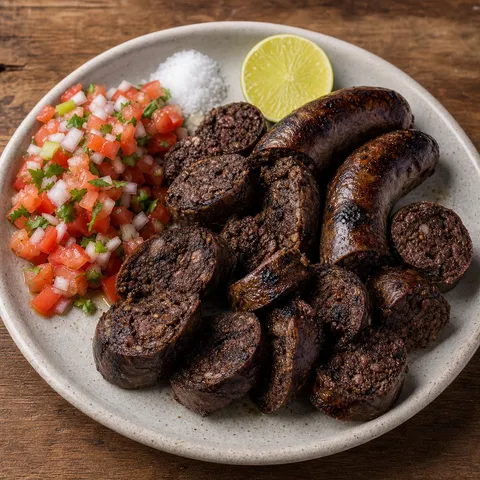 East African Lens Verified Images are for illustrative purposes only, may be inaccurate, and do not guarantee the presence or absence of specific ingredients.
 Mutura
Kenyan spiced blood sausage stuffed with meat, onion, and herbs, then grilled until the casing crisps and snaps — a bold, smoky roadside delicacy.
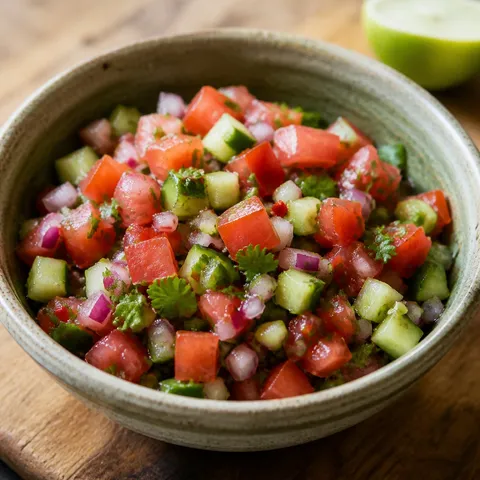 East African Lens Verified Images are for illustrative purposes only, may be inaccurate, and do not guarantee the presence or absence of specific ingredients.
 Kachumbari
Bright, refreshing salad of ripe tomatoes and sharp raw onion, spiked with chili and lime — the cool, crisp counterpoint to rich East African grills.