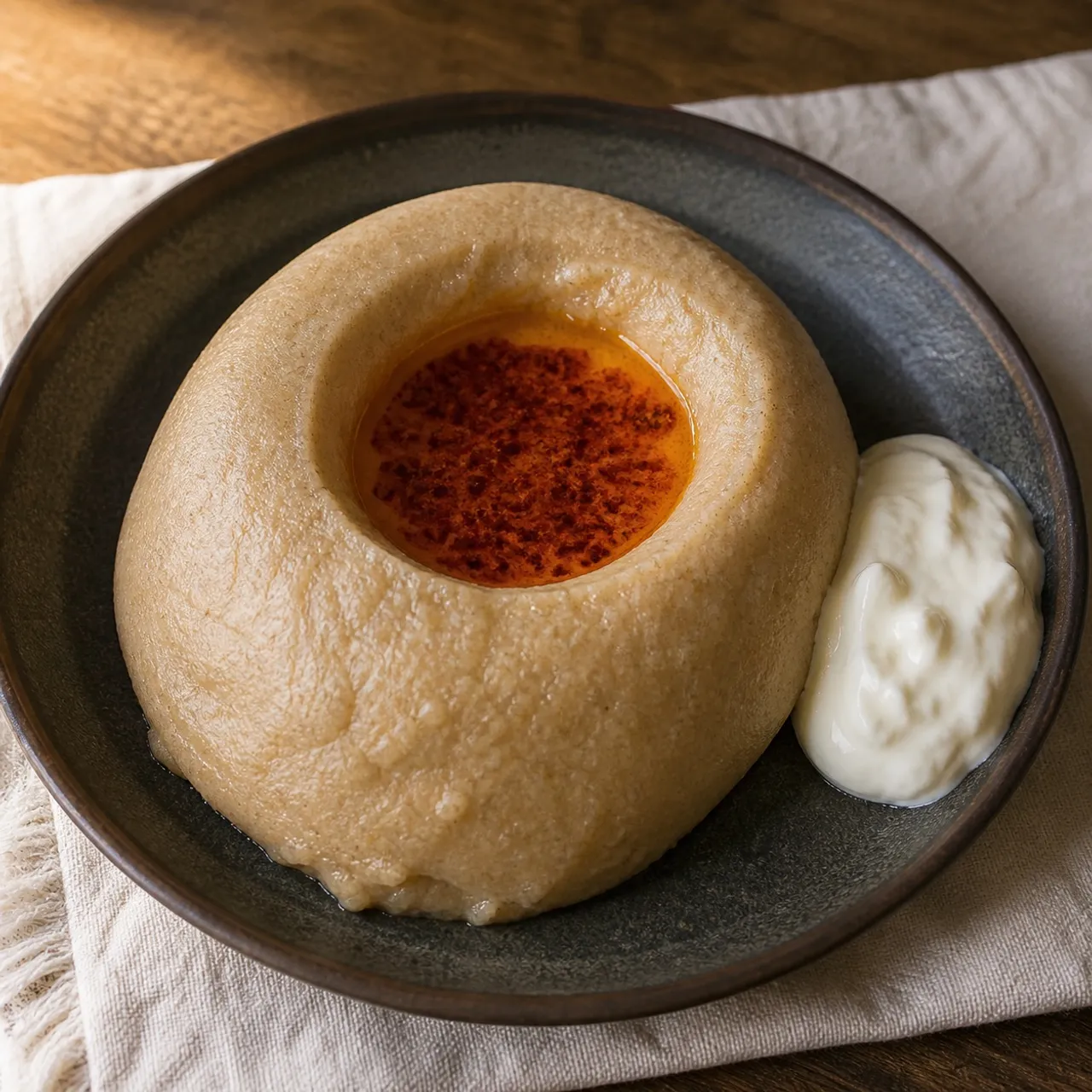
 East African Images are for illustrative purposes only, may be inaccurate, and do not guarantee the presence or absence of specific ingredients.
 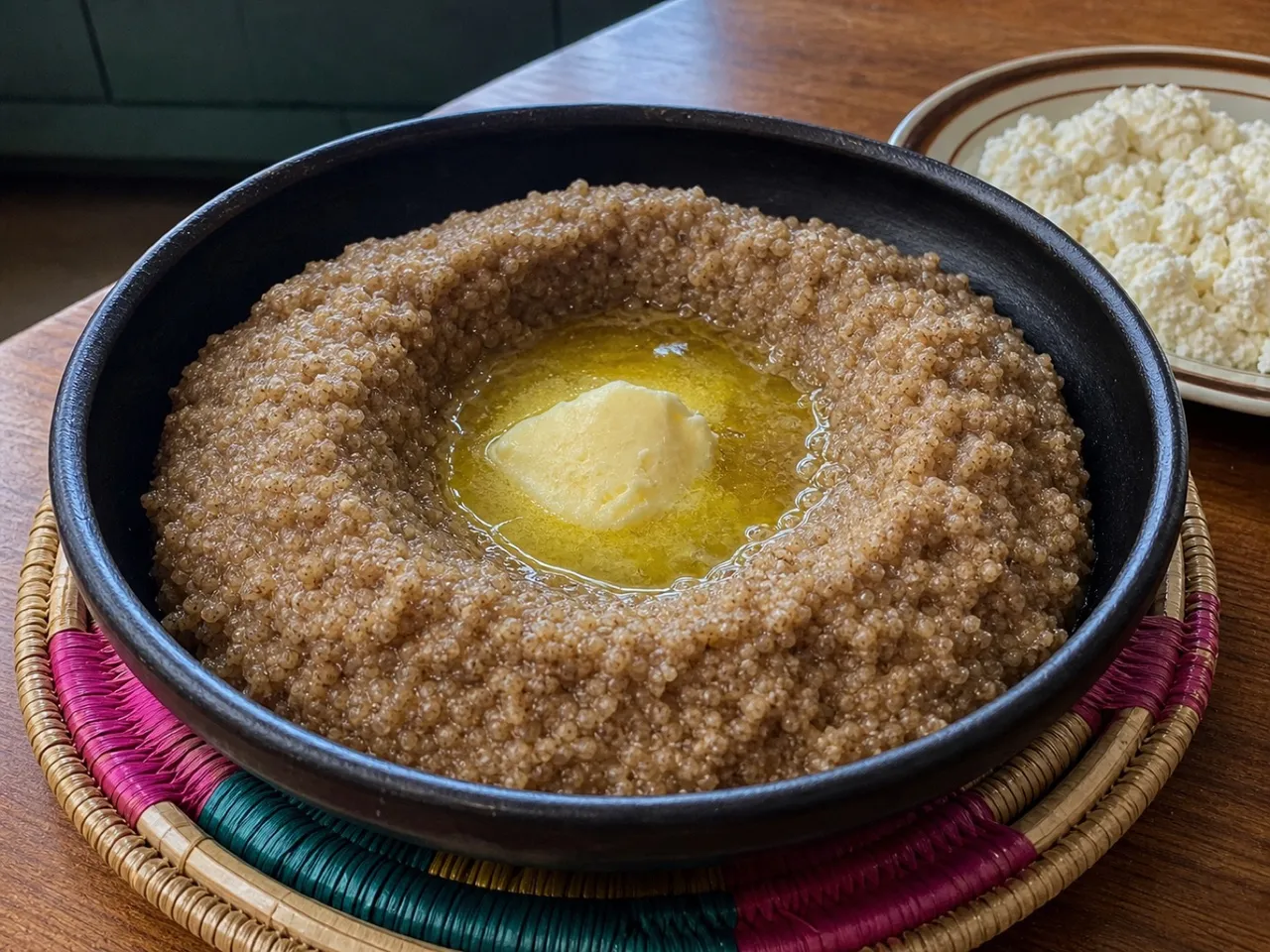 Serving Images are for illustrative purposes only, may be inaccurate, and do not guarantee the presence or absence of specific ingredients.
 Genfo
Ethiopian stiff porridge made from barley or wheat flour, served with a well of warm spiced butter and berbere in the center — earthy, dense, and deeply nourishing.
Contains common allergens
In the app, Listahan checks these against your household automatically.
Good to know
- Ready in under 30 minutes
Matched from this dish's own ingredients and timing. Browse more: 30-minute meals
Instructions
7 steps- 1
Bring the water to a boil in a heavy saucepan with the salt.
- 2
Reduce heat to medium-low and gradually whisk in the flour in a steady stream, stirring constantly to prevent lumps.
- 3
Switch to a wooden spoon as the mixture thickens, and continue stirring and pressing the porridge against the sides of the pot for 8 to 10 minutes until it forms a very stiff, smooth, cohesive mass that pulls away from the pot.
- 4
Wet your hands or a spoon with cold water and shape the porridge into a smooth dome in the center of a serving bowl.
- 5
Use the back of a spoon to press a deep well into the top and sides of the dome.
- 6
Melt the niter kibbeh in a small pan, stir in the berbere, and cook for 1 minute until fragrant, then pour the spiced butter into the well.
- 7
Add dollops of yogurt around the dome and serve immediately, with each bite dipped into the pooled spiced butter.
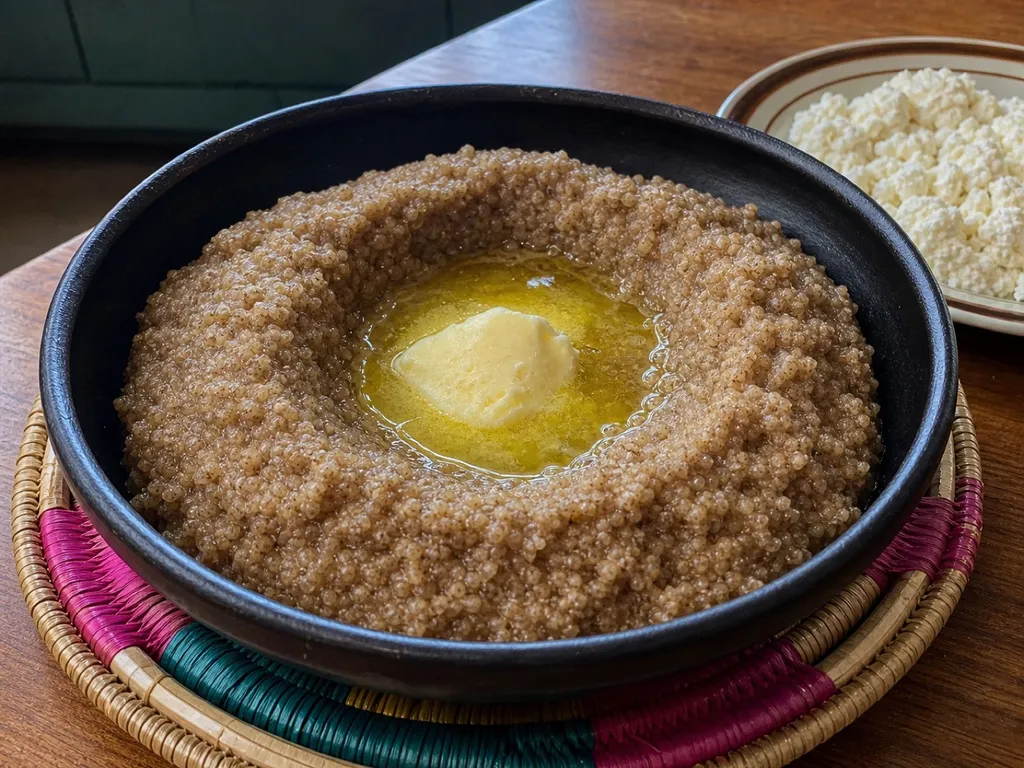 Images are for illustrative purposes only, may be inaccurate, and do not guarantee the presence or absence of specific ingredients.
 Listahan Family Score™
70/100
Good fit for most families
Score reflects how well this recipe fits a typical busy household. In the app, your Family Score is personalized to your household's allergens, kids, and pantry.
Nutrition
per serving325
Calories
11 g
Protein
67 g
Carbs
2 g
Fat
Estimated per serving. Actual values depend on the brands and portions you use.
Listahan cooking guide
Chef notes & practical guide
Technique notes, ingredient swaps, serve-alongside ideas, storage guidance, and equipment for this recipe.
Cultural context
Genfo is a thick Ethiopian porridge eaten across highland communities for thousands of years, valued for its dense caloric content and the way it sustains manual laborers through long mornings. It is the traditional first food given to women recovering after childbirth, served with niter kibbeh pooled in a well at the center and berbere or mitmita dusted over the butter. Made from barley, wheat, oat, or sorghum flour depending on the region, genfo represents the Ethiopian highlands' grain culture in its simplest and most elemental form.
Listahan note
This version uses barley or wheat flour stirred vigorously over steady heat to produce a smooth, stiff porridge without lumps, finished with a crater of spiced butter at the center for each person to mix in as they eat.
Technique cues
- The key to lump-free genfo is constant, vigorous stirring with a wooden spoon or dowel from the moment the flour hits the boiling water — any pause allows the starch to set unevenly and lumps form almost instantly.
- Genfo should be stiff enough to hold a well pressed into its surface with a spoon; if it slumps back within a few seconds, cook it another 2-3 minutes over medium-low heat, continuing to stir to prevent scorching on the bottom.
- Barley flour produces a slightly nuttier, earthier genfo than wheat flour; toasting the flour in a dry pan for 2-3 minutes before adding water deepens the grain flavor significantly.
Kitchen flow
- Parallel prep
- Measure and sift the flour before boiling the water; soften the niter kibbeh on the counter while you cook so it is ready to portion immediately.
- Make-ahead
- Genfo is best made fresh; it stiffens considerably as it cools and does not reheat well without becoming gluey.
- Leftover move
- Leftover genfo can be sliced when cold, pan-fried in a little butter until a crust forms, and eaten as a savory cake alongside eggs.
- Cleanup rhythm
- Soak the cooking pot in hot water immediately after serving — genfo starch sets like cement once cold and is very difficult to remove from a dry pot.
Ingredient brief
Role, handling, and swap guidance for each key ingredient.
2 cups barley or wheat flour
starchy base
Purpose: The finely milled grain flour thickens in boiling water through starch gelatinization to form the dense, smooth porridge that defines the dish.
Handling: Sift the flour before adding to prevent clumping; for deeper flavor, dry-toast in the pot for 2 minutes before adding water.
Adaptation: Teff flour or oat flour can be used for a different nutritional profile; the texture will be slightly softer with oat flour.
3 tbsp niter kibbeh (spiced butter)
finishing fat and flavor center
Purpose: Niter kibbeh is not stirred into the genfo but placed in a well on top, melting into an aromatic golden pool that each person mixes into their portion as they eat.
Handling: Soften at room temperature so it pools quickly in the hot porridge rather than sitting as a cold solid.
Adaptation: Ghee with a pinch of turmeric and cardamom provides a similar aromatic quality; plain butter works for a milder dish.
1 tbsp berbere spice blend
heat and color garnish
Purpose: Berbere dusted over the butter well adds heat, color, and the complex spice backdrop that makes genfo more than a plain starch dish.
Handling: Use as a finishing garnish rather than stirring into the porridge, preserving its vivid color and raw-spice fragrance.
Adaptation: Mitmita (Ethiopian ground chile blend) is the traditional alternative for those who prefer a different heat profile.
Technique notes
- Use a heavy-bottomed pot and medium heat throughout cooking; thin pots create hot spots that scorch the genfo on the bottom before the top is fully cooked.
- A traditional wooden stirring stick (called a genfo mesob) with a flat end works better than a round-handled spoon for the vigorous constant stirring this dish requires.
- Portion genfo into individual bowls immediately after cooking; once it sets in a communal pot it becomes very difficult to portion cleanly without tearing.
Ingredient swaps
- Vegan direction
- Replace niter kibbeh with coconut oil or good-quality vegan ghee; add cardamom and turmeric to approximate the spiced warmth.
- Gluten-free direction
- Use teff flour or certified gluten-free oat flour in place of barley or wheat flour; the texture will be slightly softer.
- Lower heat
- Omit berbere and finish with a drizzle of honey and a pinch of cinnamon for a sweet breakfast version popular with children.
Serve alongside
- ayib (Ethiopian fresh cheese) on the side to cool the palate
- plain yogurt stirred with a pinch of salt
- hard-boiled egg, peeled and halved
- Ethiopian spiced tea with cardamom
- warm whole milk
Serving suggestions only — check pairings for your household's allergens.
Storage & reheating
- Best eaten immediately after cooking; genfo stiffens as it cools.
- If storing, press plastic wrap directly onto the surface to prevent a skin from forming; refrigerate up to 1 day.
- Reheat in a pot over low heat with a splash of water, stirring constantly — it will not return to its original smooth consistency but is still edible.
Equipment
- heavy-bottomed medium saucepan or pot
- long wooden spoon or flat-ended stirring stick
- deep individual bowls for serving
Make this household-aware
Listahan Pro checks this recipe against your household's allergens, finds pantry-aware swaps, builds the shopping list, and helps you plan the week around it.
Plan it in Listahan
Add Genfo to your week, check it against your household's allergens, and build the shopping list automatically.
More East African recipes
 East African Lens Verified Images are for illustrative purposes only, may be inaccurate, and do not guarantee the presence or absence of specific ingredients.
 Viazi Karai
A Zanzibari street favorite of soft boiled potatoes coated in a turmeric-yellow batter and deep-fried until crackling, served with fiery tamarind sauce.
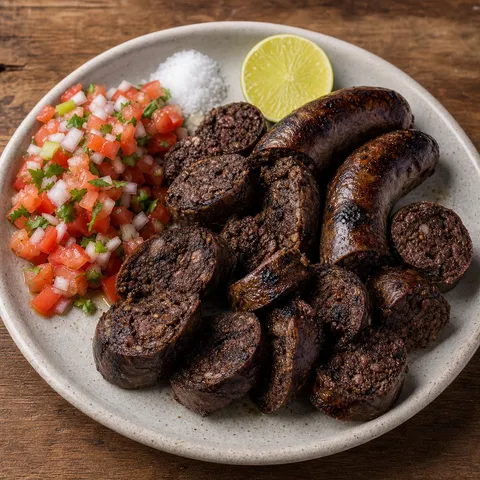 East African Lens Verified Images are for illustrative purposes only, may be inaccurate, and do not guarantee the presence or absence of specific ingredients.
 Mutura
Kenyan spiced blood sausage stuffed with meat, onion, and herbs, then grilled until the casing crisps and snaps — a bold, smoky roadside delicacy.
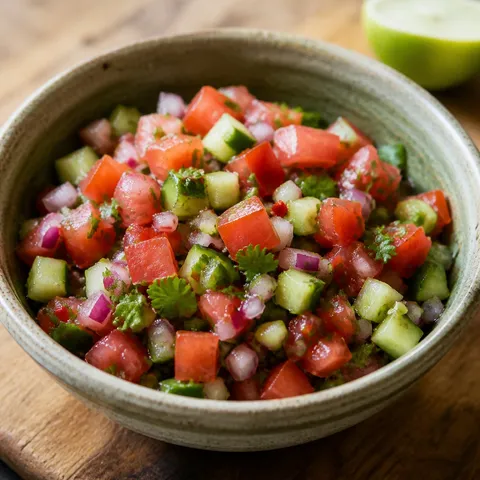 East African Lens Verified Images are for illustrative purposes only, may be inaccurate, and do not guarantee the presence or absence of specific ingredients.
 Kachumbari
Bright, refreshing salad of ripe tomatoes and sharp raw onion, spiked with chili and lime — the cool, crisp counterpoint to rich East African grills.