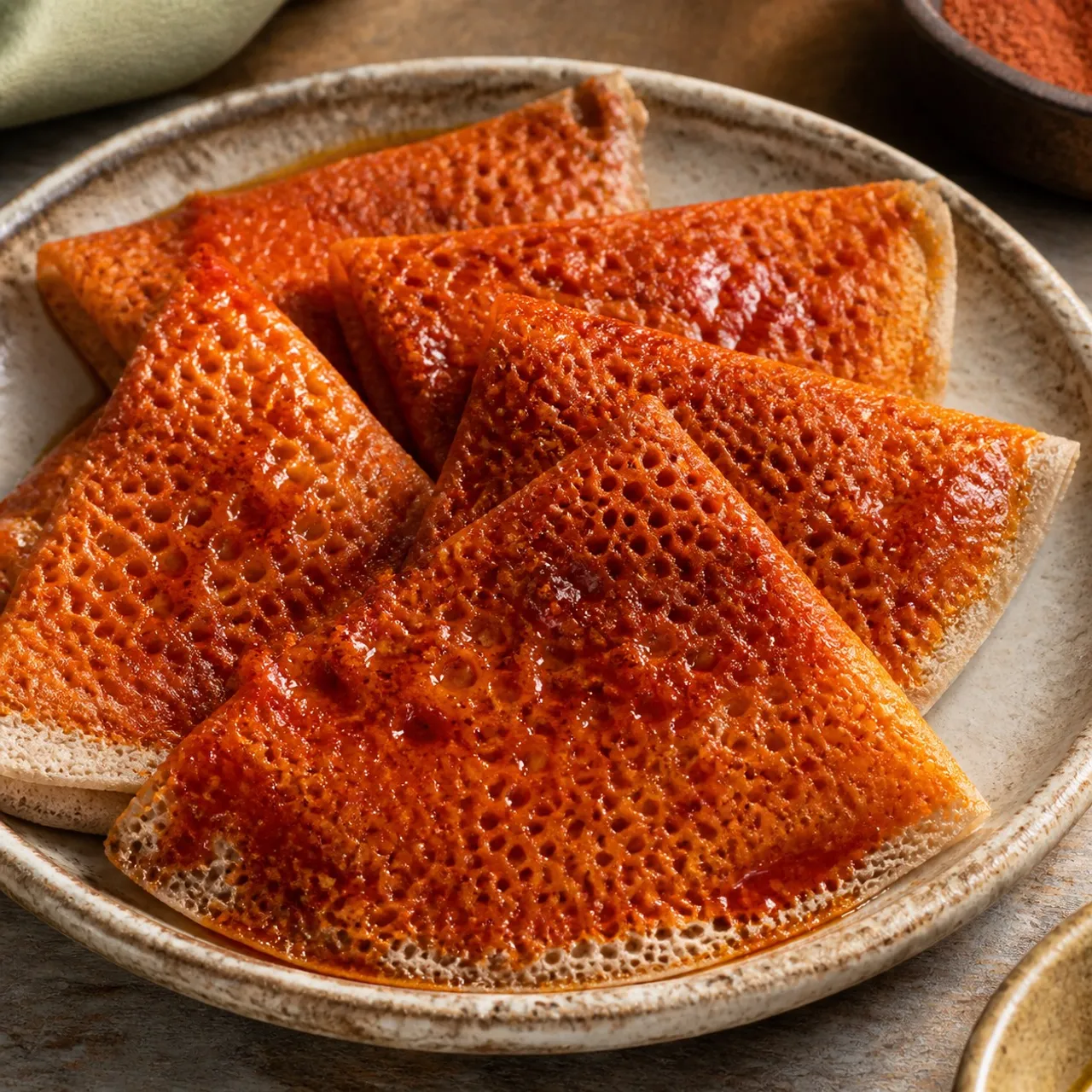
 East African Images are for illustrative purposes only, may be inaccurate, and do not guarantee the presence or absence of specific ingredients.
 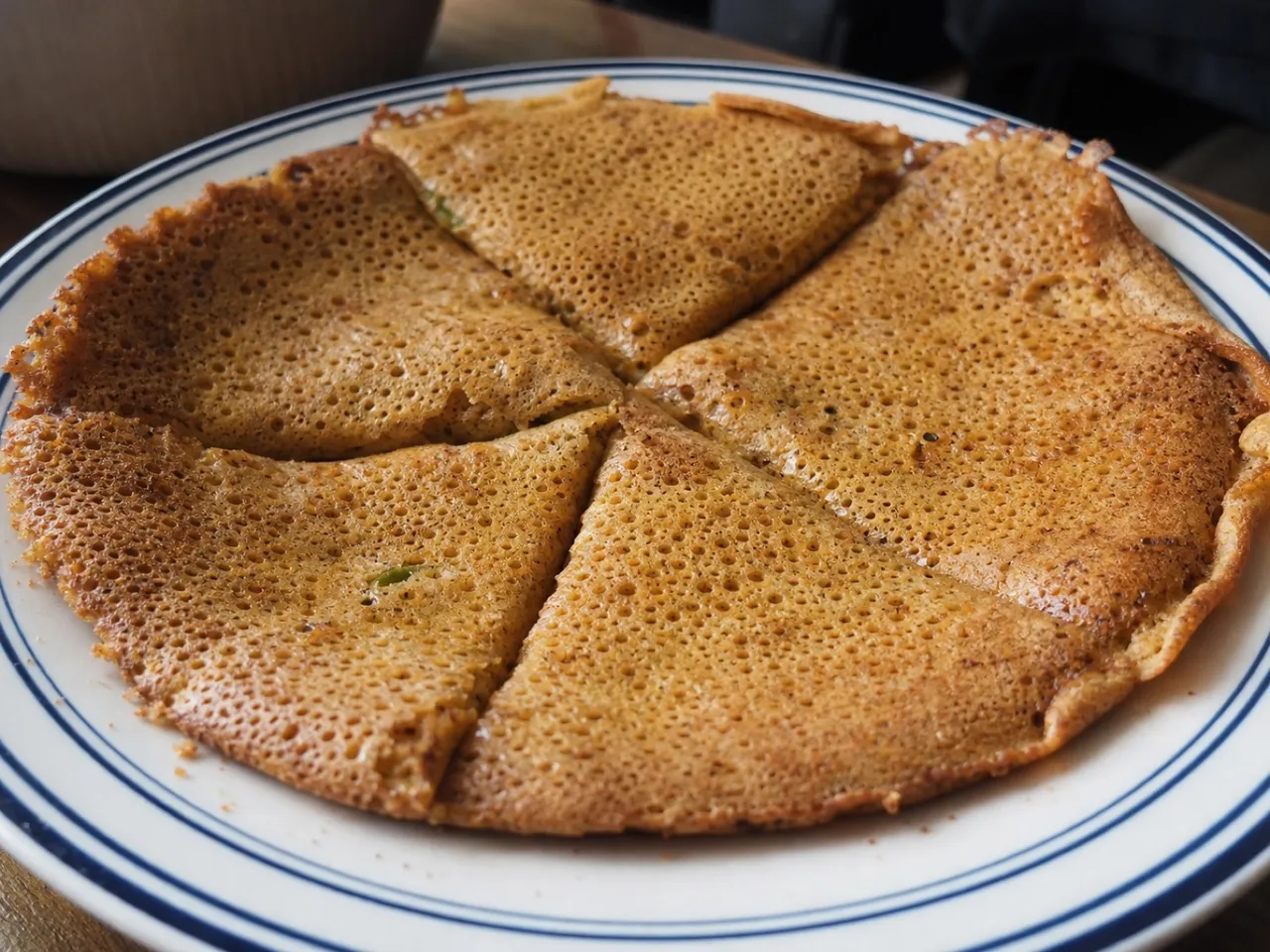 Serving Images are for illustrative purposes only, may be inaccurate, and do not guarantee the presence or absence of specific ingredients.
 Kategna
Injera toasted over flame, brushed with spiced niter kibbeh and berbere until crispy-edged and deeply fragrant — Ethiopia's addictive, buttery flatbread snack.
Contains common allergens
In the app, Listahan checks these against your household automatically.
Good to know
- Crispy
- Ready in under 30 minutes
Matched from this dish's own ingredients and timing. Browse more: crispy recipes30-minute meals
Instructions
7 steps- 1
Melt the niter kibbeh in a small saucepan over low heat, stir in the berbere and mitmita if using, along with a pinch of salt, and cook for 1 minute until fragrant and glossy.
- 2
Heat a dry skillet or griddle over medium-high heat, or use an open flame if available.
- 3
Toast each piece of injera directly on the hot surface for 1 to 2 minutes per side until the edges crisp and curl and light char marks appear.
- 4
While each injera is still hot, brush it generously on one side with the spiced niter kibbeh.
- 5
Fold or roll the injera in quarters, pressing lightly so the spiced butter soaks in.
- 6
Return the folded injera briefly to the hot pan for 30 seconds per side to crisp the edges further.
- 7
Serve immediately while hot and crackly, torn into pieces by hand as a snack or side.
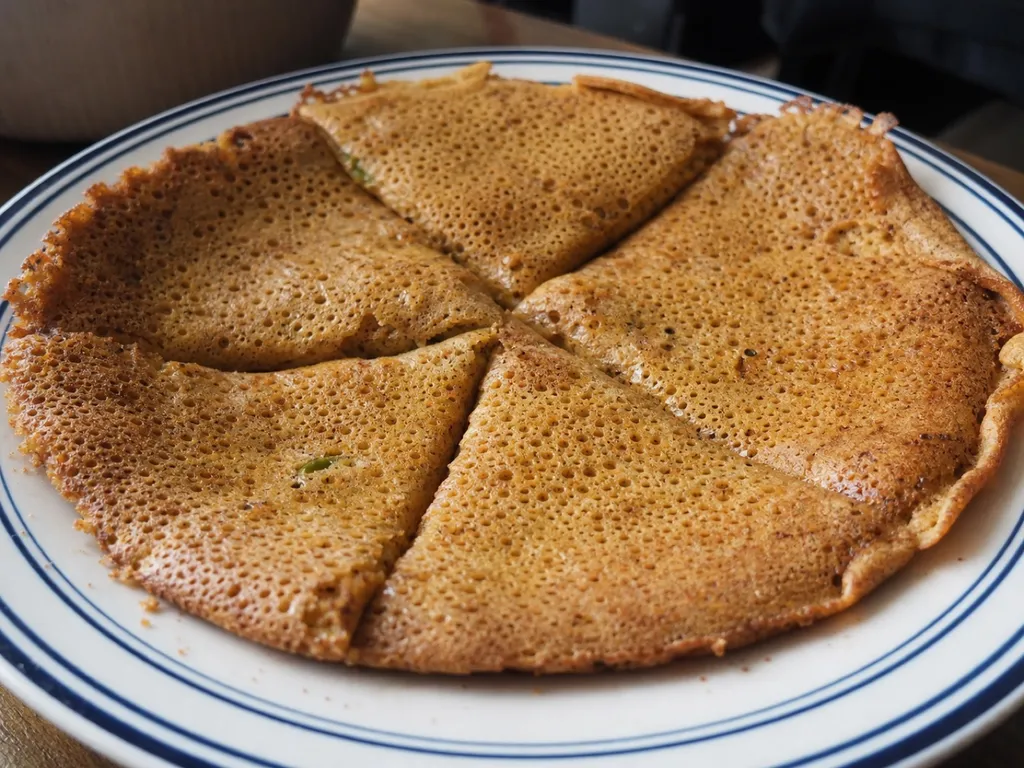 Images are for illustrative purposes only, may be inaccurate, and do not guarantee the presence or absence of specific ingredients.
 Listahan Family Score™
70/100
Good fit for most families
Score reflects how well this recipe fits a typical busy household. In the app, your Family Score is personalized to your household's allergens, kids, and pantry.
Listahan cooking guide
Chef notes & practical guide
Technique notes, ingredient swaps, serve-alongside ideas, storage guidance, and equipment for this recipe.
Cultural context
Kategna is an Ethiopian snack or side dish born from the injera tradition, making use of leftover flatbread by toasting it with niter kibbeh and berbere. It is common in Addis Ababa cafes and homes as a breakfast accompaniment or between-meal bite. The name itself roughly translates to 'toasted injera,' and it reflects the Ethiopian habit of finding full flavor in simple, thrifty preparations.
Listahan note
This version relies on generous niter kibbeh absorption into the injera before toasting, so the flatbread crisps at the edges while staying chewy in the center.
Technique cues
- Niter kibbeh is spiced clarified butter made with onion, garlic, ginger, and warm spices like turmeric and fenugreek; using plain butter or ghee will work but loses the aromatic depth that defines this dish.
- Toast the injera in a dry skillet over medium heat rather than under a broiler; direct pan contact crisps the underside while the top stays pliable, creating the textural contrast that makes kategna satisfying.
- Berbere heat intensifies with direct heat, so if using a store-bought blend with high chili content, start with a lighter hand and add more at the table rather than overloading the flatbread before toasting.
Kitchen flow
- Parallel prep
- Warm the niter kibbeh in a small pan while the skillet preheats so both are ready at the same time.
- Make-ahead
- Toasted kategna holds for about an hour at room temperature without losing too much crispness; reheat briefly in a dry skillet to restore texture.
- Leftover move
- Break cold leftover kategna into pieces and use as a crunchy topping over scrambled eggs or a lentil soup.
- Cleanup rhythm
- One skillet is all that is needed; wipe it out between batches with a folded paper towel held with tongs.
Ingredient brief
Role, handling, and swap guidance for each key ingredient.
Injera
base flatbread
Purpose: The sour, porous injera soaks up the niter kibbeh and berbere, then crisps when toasted to create the defining texture of this dish.
Handling: Use day-old injera if possible, as it holds its structure better during toasting than fresh.
Adaptation: A thin sourdough crepe or large flour tortilla can stand in, though neither has the teff sourness of true injera.
niter kibbeh
spiced fat carrier
Purpose: Niter kibbeh carries its aromatic spices directly into the injera as it melts, providing the savory backbone of the dish.
Handling: Warm the niter kibbeh until just liquid before brushing or spreading it over the injera surface evenly.
Adaptation: Plain ghee or clarified butter works as a neutral substitute; add a pinch of turmeric and cumin to approximate the flavor.
berbere
spice crust
Purpose: Berbere provides the complex heat and color that distinguishes kategna from plain toasted bread.
Handling: Dust berbere evenly over the buttered injera before toasting so it blooms in the fat rather than sitting dry on top.
Adaptation: A mix of smoked paprika, cayenne, cumin, and a pinch of allspice creates a rough approximation for those without berbere.
Technique notes
- Press the injera lightly with a spatula while it toasts so the entire surface makes contact with the pan rather than bubbling up in spots.
- Cut the finished kategna into triangles or strips with kitchen shears rather than a knife to avoid tearing the soft center.
- A squeeze of lemon or a small dish of plain yogurt on the side cuts the richness of the niter kibbeh and the heat of the berbere.
Ingredient swaps
- Dairy-free option
- Use refined coconut oil spiced with turmeric, fenugreek, and a little onion powder in place of niter kibbeh.
- Lower heat
- Swap berbere for a mild paprika-cumin blend and add heat gradually at the table with hot sauce.
Serve alongside
- scrambled eggs with tomato and onion
- plain whole-milk yogurt with a drizzle of honey
- simple lentil soup with lemon
- Ethiopian spiced tea (chai-style with cardamom)
- strong black coffee in the Ethiopian style
Serving suggestions only — check pairings for your household's allergens.
Storage & reheating
- Store cooled kategna loosely wrapped at room temperature for up to 1 day; it softens overnight.
- Reheat in a dry skillet over medium heat for 1-2 minutes per side to restore crispness.
- Freezing is not recommended as the injera becomes gummy when thawed.
Equipment
- 10- or 12-inch cast iron or nonstick skillet
- pastry brush or small offset spatula for spreading niter kibbeh
- kitchen shears for cutting
Make this household-aware
Listahan Pro checks this recipe against your household's allergens, finds pantry-aware swaps, builds the shopping list, and helps you plan the week around it.
Plan it in Listahan
Add Kategna to your week, check it against your household's allergens, and build the shopping list automatically.
More East African recipes
 East African Lens Verified Images are for illustrative purposes only, may be inaccurate, and do not guarantee the presence or absence of specific ingredients.
 Viazi Karai
A Zanzibari street favorite of soft boiled potatoes coated in a turmeric-yellow batter and deep-fried until crackling, served with fiery tamarind sauce.
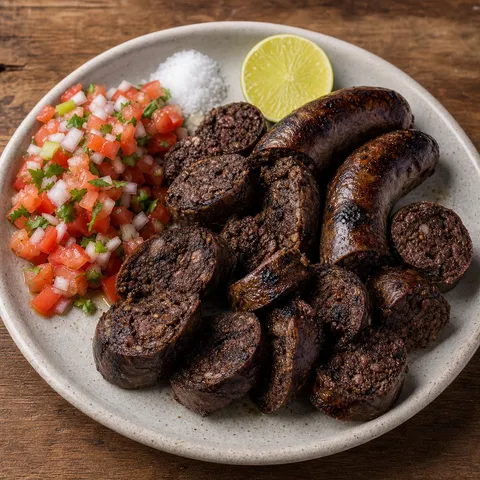 East African Lens Verified Images are for illustrative purposes only, may be inaccurate, and do not guarantee the presence or absence of specific ingredients.
 Mutura
Kenyan spiced blood sausage stuffed with meat, onion, and herbs, then grilled until the casing crisps and snaps — a bold, smoky roadside delicacy.
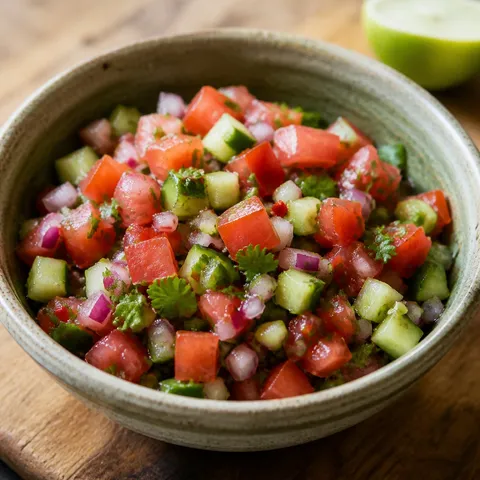 East African Lens Verified Images are for illustrative purposes only, may be inaccurate, and do not guarantee the presence or absence of specific ingredients.
 Kachumbari
Bright, refreshing salad of ripe tomatoes and sharp raw onion, spiked with chili and lime — the cool, crisp counterpoint to rich East African grills.