 East African Images are for illustrative purposes only, may be inaccurate, and do not guarantee the presence or absence of specific ingredients.
  Serving Images are for illustrative purposes only, may be inaccurate, and do not guarantee the presence or absence of specific ingredients.
 Kitfo
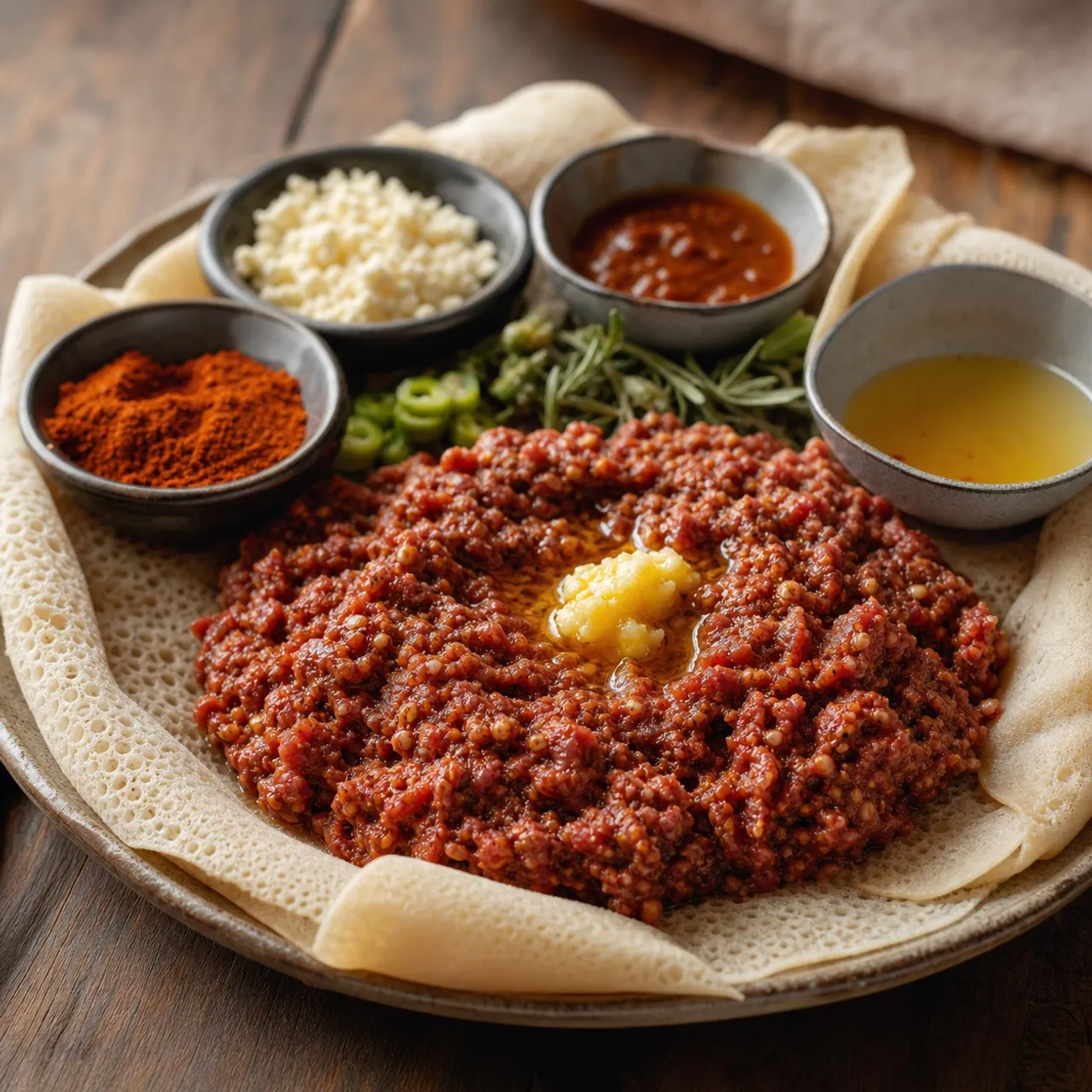
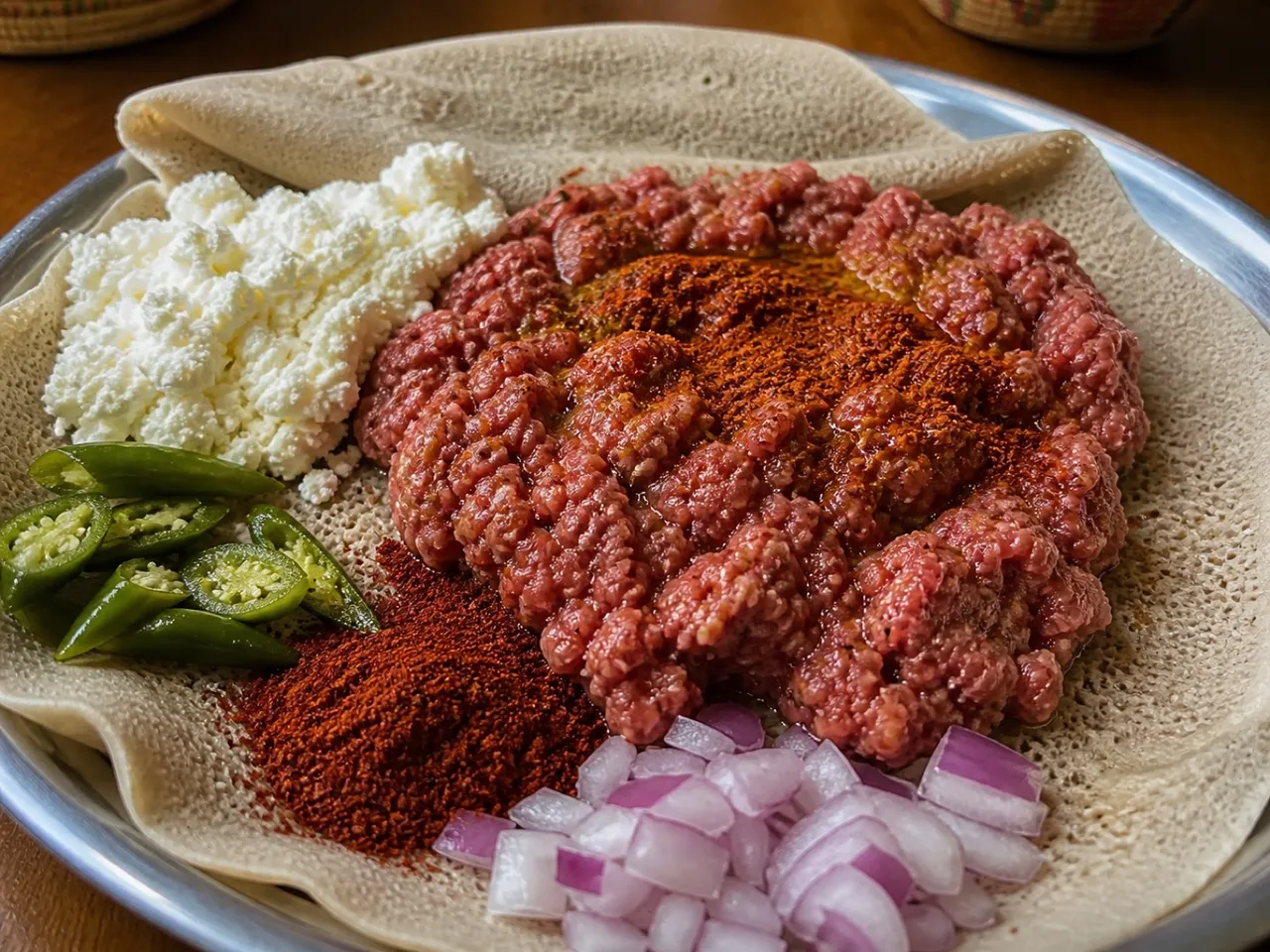
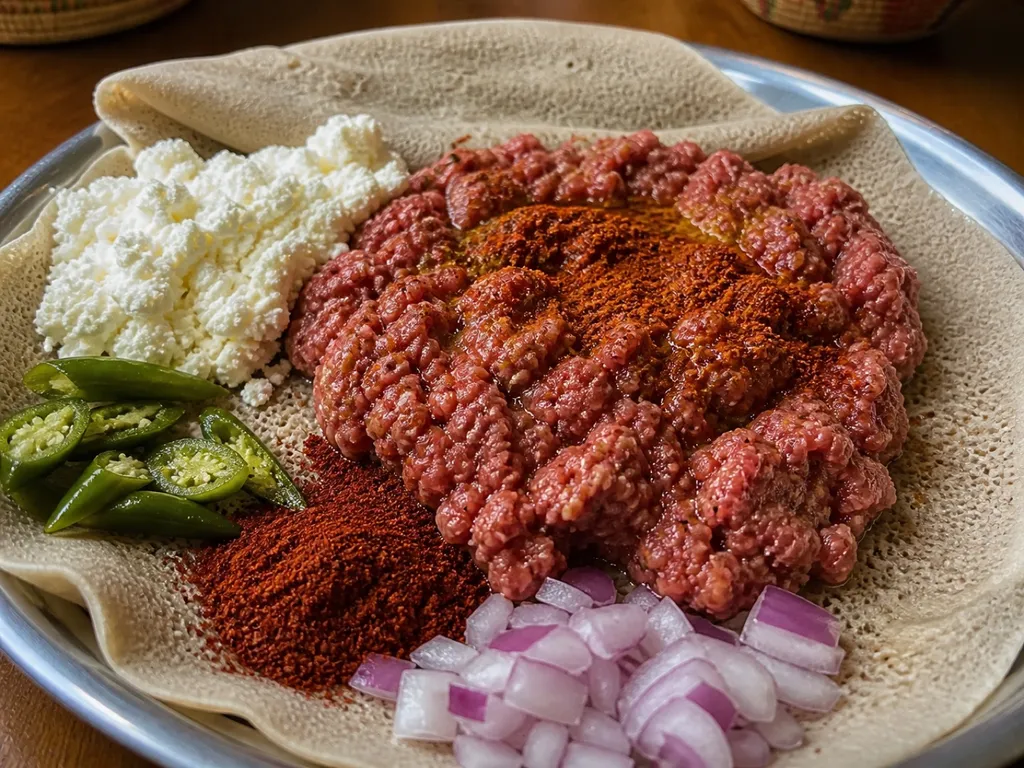
Ethiopia's celebrated tartare — finely minced raw beef tossed in mitmita chili and niter kibbeh, intensely spiced, buttery, and rich. Bold, ceremonial, unforgettable.
Contains common allergens
In the app, Listahan checks these against your household automatically.
Good to know
- Ready in under 30 minutes
Matched from this dish's own ingredients and timing. Browse more: 30-minute meals
Instructions
6 steps- 1
Trim the beef of all visible fat and silverskin. Ensure your knife and cutting board are immaculately clean.
- 2
Using a very sharp knife, finely mince the beef by hand until it resembles a coarse paste. (Do not use a food processor).
- 3
In a small pan, gently melt the niter kibbeh over low heat. Stir in the mitmita, cardamom, and salt.
- 4
Remove the warm spiced butter mixture from the heat and let it cool slightly.
- 5
Place the minced beef in a clean bowl and pour the warm spiced butter over it. Mix thoroughly with your hands or a fork.
- 6
Serve immediately. For *leb leb* (slightly cooked) style, toss the mixture briefly in a warm pan for 1 minute before serving.
 Images are for illustrative purposes only, may be inaccurate, and do not guarantee the presence or absence of specific ingredients.
 Listahan Family Score™
66/100
Works for many families
Score reflects how well this recipe fits a typical busy household. In the app, your Family Score is personalized to your household's allergens, kids, and pantry.
Nutrition
per serving380
Calories
39 g
Protein
0 g
Carbs
23 g
Fat
Estimated per serving. Actual values depend on the brands and portions you use.
Listahan cooking guide
Chef notes & practical guide
Technique notes, ingredient swaps, serve-alongside ideas, storage guidance, and equipment for this recipe.
Cultural context
Kitfo is a celebrated dish of the Gurage people of central Ethiopia — a preparation of raw or lightly warmed finely minced beef seasoned with niter kibbeh and mitmita, a fiery powdered spice blend of African bird's eye chili, cardamom, and cloves. It is often described as Ethiopian steak tartare, though its cultural lineage predates any European influence; it is a dish of high ceremony, historically associated with cattle-owning highland communities where beef was a mark of prosperity and the freshness of the animal was paramount. In Ethiopia, kitfo is served raw (lebleb), medium-warm (ye-betam lebleb), or fully cooked (kebekebe), giving diners a choice of doneness.
Listahan note
This version is designed to be served lightly warmed (lebleb) rather than raw, which is the safer option for a North American kitchen without access to same-day butchered beef — the warm niter kibbeh gently heats the meat to safe handling without cooking it through.
Technique cues
- The quality and freshness of the beef is the entire dish — kitfo requires the finest, freshest beef you can source, ideally from a butcher who can confirm the grind date; pre-packaged supermarket ground beef is not suitable because the surface-to-air ratio from industrial grinding accelerates bacterial growth.
- Mitmita is distinct from berbere: it is a drier, finer, hotter powder built on African bird's eye chili with cardamom and cloves, producing floral heat rather than the complex warm depth of berbere — the two are not interchangeable in kitfo.
- Mince the beef yourself using a sharp knife rather than buying pre-ground: hand-mincing produces a coarser, more varied texture that holds the niter kibbeh in the crevices rather than forming a dense paste, and it allows you to confirm the freshness of the beef by cutting it yourself.
Kitchen flow
- Parallel prep
- Prepare the injera and side dishes first — kitfo is assembled in under 5 minutes and must be served immediately, so everything else must be ready before you begin mincing.
- Make-ahead
- Kitfo cannot be made ahead — it is a same-moment dish; the only advance prep is softening the niter kibbeh to room temperature and having the mitmita measured and ready.
- Leftover move
- Leftover kitfo (if any remains) should be cooked through immediately — sear in a hot pan with a splash of niter kibbeh to produce a fast Ethiopian beef hash; do not store it raw for later use.
- Cleanup rhythm
- Cutting board and knife require immediate washing with hot soapy water after mincing raw beef; the mixing bowl needs only a rinse since no heat was applied.
Ingredient brief
Role, handling, and swap guidance for each key ingredient.
1 lb top round or tenderloin beef (extremely fresh; zero fat)
primary ingredient and focal point
Purpose: Lean, fresh beef is essential because fat turns rancid quickly in raw preparations and produces an unpleasant texture in a dish meant to be eaten immediately.
Handling: Chill the beef in the freezer for 20 minutes to firm it slightly, then hand-mince with a sharp heavy knife into very fine pieces — do not use a food processor, which will puree the meat into a paste.
Adaptation: No appropriate substitute — kitfo is a beef dish by definition; attempting it with another protein produces a different dish entirely.
4 tbsp niter kibbeh (clarified spiced butter)
fat, flavor, and gentle cooking medium
Purpose: Warm niter kibbeh coats the minced beef, distributes the spice, and provides the richness that makes this more than seasoned raw meat.
Handling: Warm the niter kibbeh to liquid but not sizzling before mixing into the beef — it should feel warm to the touch, not hot.
Adaptation: Plain ghee plus cardamom is the nearest substitute; unsalted butter does not have the right flavor or clarity for this application.
1 tbsp mitmita (spiced chili powder)
signature spice
Purpose: Mitmita provides the characteristic floral heat that distinguishes kitfo from all other raw beef preparations.
Handling: Add gradually and taste as you go — mitmita varies significantly in heat level between brands; start with 1 teaspoon and build up.
Adaptation: A blend of cayenne pepper and ground cardamom (2:1 ratio) approximates the heat and floral note but lacks the complexity of true mitmita.
1/2 tsp cardamom
supplementary spice
Purpose: Cardamom amplifies the floral quality of the mitmita and reinforces the spice profile of the niter kibbeh.
Handling: Use freshly ground cardamom if possible — the pre-ground version loses its volatile aromatics quickly.
Adaptation: No substitute needed if the mitmita already contains cardamom; reduce or omit to avoid over-spicing.
Technique notes
- For the lebleb (lightly warmed) version, mix the warm niter kibbeh into the minced beef and let it rest in a warm bowl for 2-3 minutes — the fat gently brings the meat above room temperature without cooking it, creating the intended texture.
- Ayib (Ethiopian fresh cheese, similar to cottage cheese) served alongside is not optional decoration — its mild, cooling dairy quality is specifically designed to temper the mitmita heat and cleanse the palate between bites of injera.
- Serve immediately after assembly on a room-temperature plate, never a cold plate — a cold surface will cause the niter kibbeh to solidify unevenly and the beef to seize slightly, producing a greasy rather than glossy texture.
Ingredient swaps
- Food safety note
- For immunocompromised individuals, pregnant people, young children, or elderly diners, cook the kitfo fully through (kebekebe) by sauteing in the niter kibbeh over medium heat until no pink remains.
- Dairy-free direction
- Substitute refined coconut oil blended with a pinch each of turmeric, cardamom, and fenugreek for the niter kibbeh; the result is lighter and less complex but still carries the spice.
- Gluten-free direction
- Already gluten-free; verify your mitmita brand contains no fillers with gluten.
Serve alongside
- Injera (Ethiopian sourdough flatbread)
- ayib (Ethiopian fresh cheese, served alongside as a cooling counterpoint)
- gomen (braised collard greens with garlic and niter kibbeh)
- kocho (false banana flatbread, traditional Gurage accompaniment)
- tej (Ethiopian honey wine) — the traditional pairing
- cold dry red wine such as an Ethiopian Rift Valley Cabernet
Serving suggestions only — check pairings for your household's allergens.
Storage & reheating
- Kitfo must be eaten immediately after preparation — do not refrigerate or hold raw minced beef after seasoning.
- If not served within 20 minutes of preparation, cook the kitfo through completely in a hot pan before refrigerating and use within 24 hours.
- Do not freeze raw or cooked kitfo — the texture is destroyed by freezing.
Equipment
- Sharp heavy chef's knife for hand-mincing the beef
- Sturdy cutting board (wood or composite, dedicated to raw meat)
- Small saucepan for warming the niter kibbeh
- Mixing bowl large enough to fold the beef and butter together gently
Make this household-aware
Listahan Pro checks this recipe against your household's allergens, finds pantry-aware swaps, builds the shopping list, and helps you plan the week around it.
Plan it in Listahan
Add Kitfo to your week, check it against your household's allergens, and build the shopping list automatically.
More East African recipes
 East African Lens Verified Images are for illustrative purposes only, may be inaccurate, and do not guarantee the presence or absence of specific ingredients.
 Viazi Karai
A Zanzibari street favorite of soft boiled potatoes coated in a turmeric-yellow batter and deep-fried until crackling, served with fiery tamarind sauce.
 East African Lens Verified Images are for illustrative purposes only, may be inaccurate, and do not guarantee the presence or absence of specific ingredients.
 Mutura
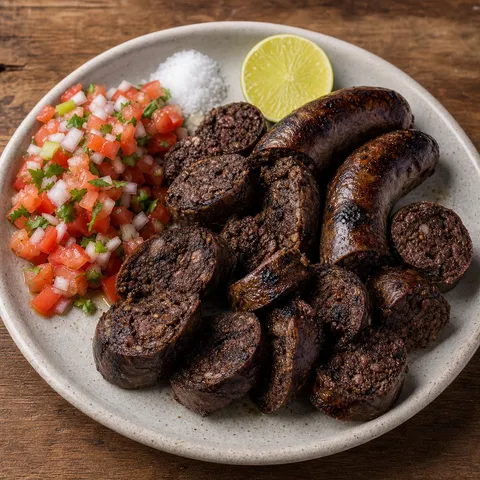
Kenyan spiced blood sausage stuffed with meat, onion, and herbs, then grilled until the casing crisps and snaps — a bold, smoky roadside delicacy.
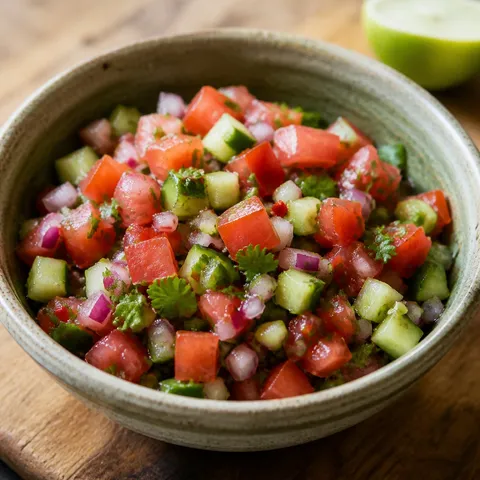 East African Lens Verified Images are for illustrative purposes only, may be inaccurate, and do not guarantee the presence or absence of specific ingredients.
 Kachumbari
Bright, refreshing salad of ripe tomatoes and sharp raw onion, spiked with chili and lime — the cool, crisp counterpoint to rich East African grills.