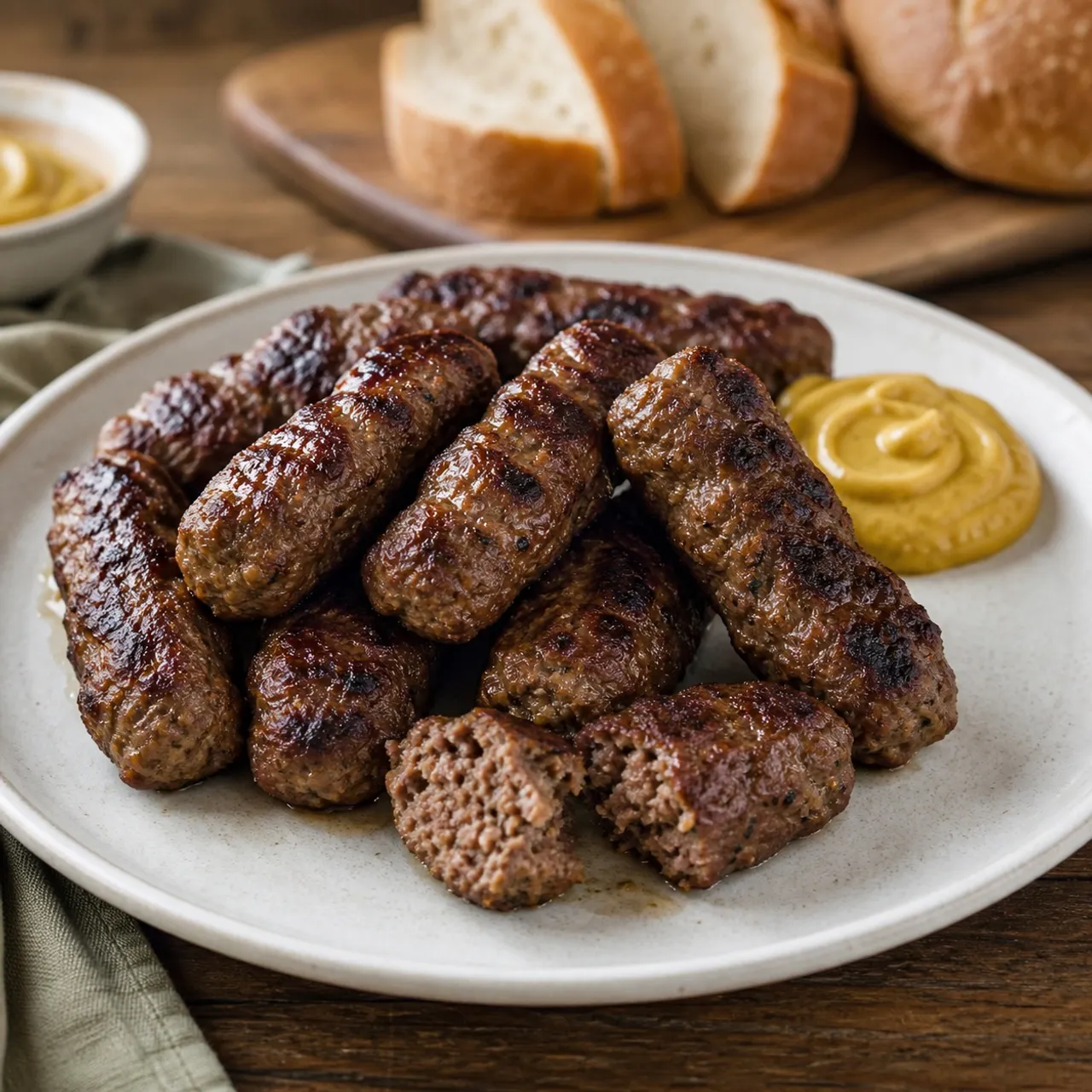
 Eastern European Images are for illustrative purposes only, may be inaccurate, and do not guarantee the presence or absence of specific ingredients.
 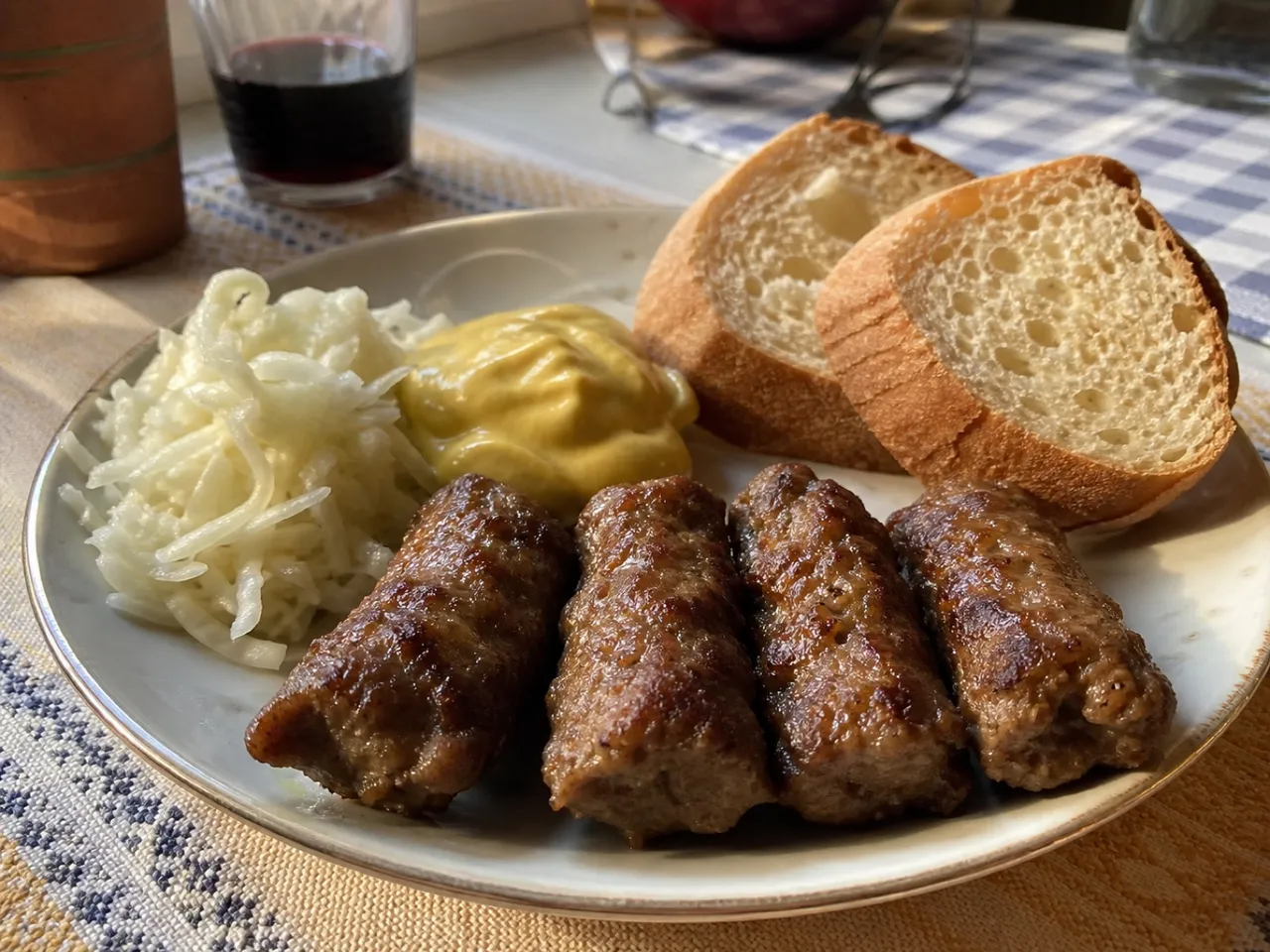 Serving Images are for illustrative purposes only, may be inaccurate, and do not guarantee the presence or absence of specific ingredients.
 Mici
Romania's beloved skinless grilled sausages — a smoky, garlicky blend of beef, pork, and lamb with a hint of baking soda for a uniquely springy, charred bite.
No common allergens detected
Based on this recipe's ingredient list. Always verify with your own brands and labels.
Good to know
- Ready in under 30 minutes
Matched from this dish's own ingredients and timing. Browse more: 30-minute meals
Instructions
8 steps- 1
In a small bowl, dissolve the baking soda in a few tablespoons of the cold beef broth and set aside.
- 2
In a large bowl, combine the ground beef, pork, and lamb with the garlic paste, paprika, thyme, allspice, salt, and pepper.
- 3
Mix in the baking soda mixture, then gradually work in the remaining cold broth, kneading the meat with your hands for several minutes until it becomes sticky and springy.
- 4
Cover and refrigerate the mixture for at least 4 hours, or overnight, to let the flavors meld and the texture firm up.
- 5
With wet hands, shape the mixture into skinless finger-shaped sausages about 3 inches long and 1 inch thick.
- 6
Heat a charcoal or gas grill to medium-high and oil the grates well.
- 7
Grill the mici, turning frequently, until well charred on the outside and cooked through, about 10 to 12 minutes total.
- 8
Serve hot off the grill with mustard, pickled vegetables, and crusty bread.
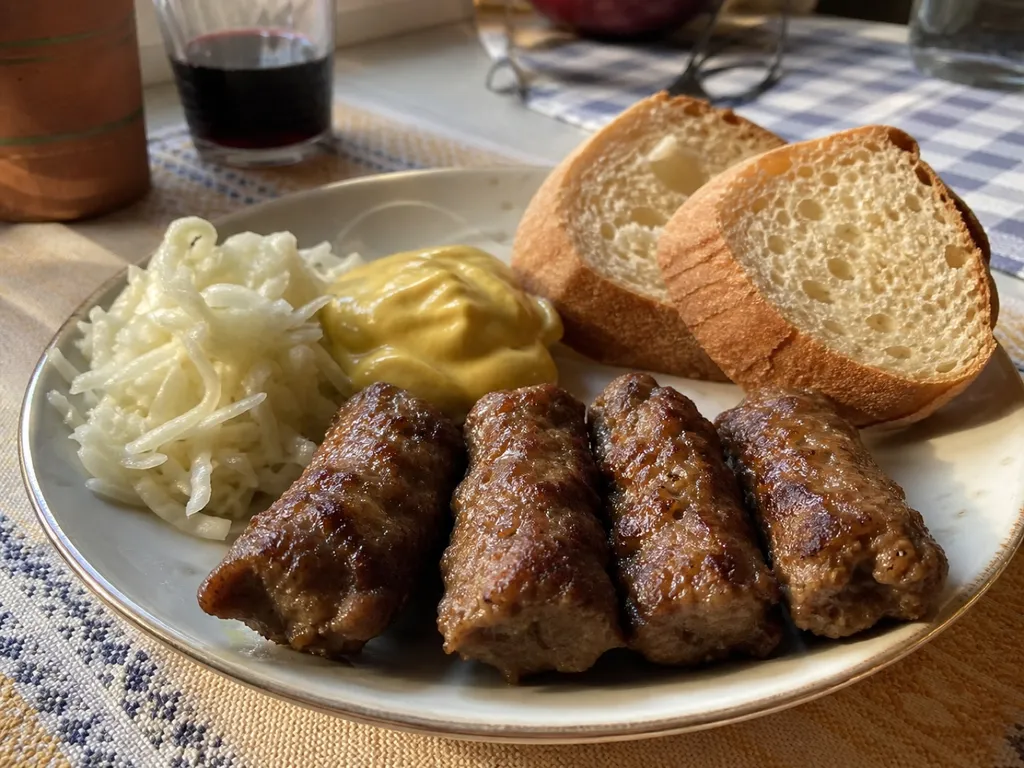 Images are for illustrative purposes only, may be inaccurate, and do not guarantee the presence or absence of specific ingredients.
 Listahan Family Score™
70/100
Good fit for most families
Score reflects how well this recipe fits a typical busy household. In the app, your Family Score is personalized to your household's allergens, kids, and pantry.
Nutrition
per serving430
Calories
44 g
Protein
1 g
Carbs
26 g
Fat
Estimated per serving. Actual values depend on the brands and portions you use.
Listahan cooking guide
Chef notes & practical guide
Technique notes, ingredient swaps, serve-alongside ideas, storage guidance, and equipment for this recipe.
Cultural context
Mici (pronounced MEE-ch, also called mititei meaning 'little ones') are Romanian skinless grilled sausages with a flavor profile shaped by the country's crossroads position between Ottoman and Central European culinary traditions. Unlike cased sausages, mici are formed by hand into finger-length cylinders and cooked directly on a grill, which allows the fat to render directly onto the grate and the exterior to develop a deeply caramelized crust. They are the defining street food of Romanian summers, sold from roadside grills throughout Bucharest and in backyards across the country on warm weekends.
Listahan note
This version uses a mix of beef and lamb for authenticity, with baking soda as the traditional leavening agent that gives the interior a uniquely light, almost spongy texture -- a quality that surprises most first-time mici eaters who expect a dense sausage.
Technique cues
- Baking soda is not optional in mici -- it reacts with the fat and proteins during cooking to create gas bubbles that give the interior that characteristic airy, juicy texture; without it you simply get a dense grilled meat cylinder.
- Mix the meat mixture thoroughly by hand for a full two minutes and then refrigerate it for at least two hours (overnight is better) before shaping; this rest allows the spices to hydrate fully and the baking soda to distribute evenly, which is what gives mici their distinctive flavor and lift.
- Grill over high direct heat and resist the urge to move them for the first two minutes -- mici need to release naturally from the grate once a proper sear has formed, and forcing them early tears the exterior and loses the crust that makes them worth eating.
Kitchen flow
- Parallel prep
- Shape the mici while the grill preheats to high -- they should go on a fully hot grate so the exterior sears immediately on contact rather than sticking during a slow heat-up.
- Make-ahead
- The meat mixture MUST rest in the refrigerator for at least two hours and ideally overnight before shaping -- this is not optional; the rest is what develops the flavor and allows the baking soda to work properly.
- Leftover move
- Slice cold mici and pan-fry the rounds in a little oil to reheat -- they caramelize on the cut face and make an excellent filling for flatbread with mustard and pickled onion.
- Cleanup rhythm
- Oil the grill grates just before adding the mici (not ahead of time) using a folded paper towel dipped in oil; clean grates while still hot after cooking to prevent the fat from hardening.
Ingredient brief
Role, handling, and swap guidance for each key ingredient.
ground beef
primary protein
Purpose: Beef provides the fat and iron richness that forms the base flavor of mici and holds the sausage together during the high-heat grill.
Handling: Use ground beef with at least 20 percent fat content; lean beef produces dry, crumbly mici that lack the characteristic juiciness.
Adaptation: All-pork mici are common in northern Romania; a 50-50 beef-pork blend gives excellent results for anyone avoiding lamb.
ground lamb
secondary protein and flavor
Purpose: Lamb contributes a slightly gamey, herbal depth that defines authentic mici and distinguishes them from generic grilled beef sausage.
Handling: Mix directly with the beef without pre-processing; the two fats combine during the hand-mixing step.
Adaptation: Ground pork can replace the lamb entirely for a milder-flavored mici that is more accessible to lamb-averse eaters.
garlic
primary seasoning
Purpose: Raw garlic is the dominant aromatic in mici, providing a pungent backbone that mellows and sweetens on the grill without disappearing.
Handling: Mince very finely or press through a garlic press so no large pieces remain -- chunks of garlic scorch on the grill and turn bitter.
Adaptation: Roasted garlic mashed to a paste gives a sweeter, less sharp flavor for those who find raw garlic too aggressive.
baking soda
textural leavening
Purpose: Baking soda creates gas expansion during cooking that gives the interior of mici its signature light, slightly spongy texture -- the element that makes them unique among grilled sausages.
Handling: Dissolve in two tablespoons of sparkling water or cold water before adding to the meat so it disperses evenly rather than leaving alkaline pockets.
Adaptation: There is no true substitute; omitting it gives a denser result that is still tasty but is not authentically mici.
dried thyme
herbal seasoning
Purpose: Thyme and the spice blend (often including coriander, black pepper, and caraway) give mici their herbaceous, slightly earthy aroma that is distinct from Italian or North African spiced sausages.
Handling: Rub between your fingers before adding to release the volatile oils and maximize the herb's contribution to the resting meat mixture.
Adaptation: Fresh thyme (use double the amount) gives a brighter, more floral note that works well in summer when fresh herbs are available.
Technique notes
- Wetting your hands with cold water before shaping each mici prevents the fat from sticking to your palms and allows you to roll a smooth, even cylinder -- dry hands make lumpy, uneven shapes that cook inconsistently.
- Brush the mici with a little mustard thinned with water (the Romanian grill tradition) during the last 30 seconds on the grate rather than using a sweet glaze; the mustardy char note is a defining element of the experience.
- If you do not have a grill, a cast-iron grill pan preheated until smoking and brushed with oil gives excellent results -- the goal is very high direct contact heat, which a pan can deliver indoors as effectively as a grill outdoors.
Ingredient swaps
- Gluten-free direction
- Mici are naturally gluten-free -- check that your mustard and any condiments served alongside are certified gluten-free.
- Lower-fat direction
- Use a 90-percent lean beef blend plus a tablespoon of olive oil to partially compensate; the mici will be less juicy but still hold together, and the baking soda still provides the characteristic texture lift.
- Allergen-direction (lamb-free)
- Replace the ground lamb with ground pork; the flavor is milder and slightly sweeter but still produces a well-seasoned, juicy grilled sausage that non-lamb eaters will enjoy.
Serve alongside
- Romanian mustard (mustar) or spicy yellow mustard for dipping
- Pickled peppers and sliced white onion
- Fresh white bread or flatbread to wrap or mop juices
- Cold Romanian beer or any light lager
- Sparkling water with lemon
Serving suggestions only — check pairings for your household's allergens.
Storage & reheating
- Raw shaped mici can be refrigerated on a tray covered with plastic wrap for up to 24 hours before grilling; beyond that the baking soda continues reacting and the texture of the cooked sausage becomes unpleasantly spongy.
- Cooked mici keep refrigerated for up to three days and reheat well in a pan or oven; they also freeze raw (before the overnight rest) for up to one month -- thaw in the refrigerator overnight and allow the full rest time before cooking.
Equipment
- Charcoal or gas grill, or cast-iron grill pan for high direct heat
- Long-handled tongs for turning without piercing the sausage
- Mixing bowl large enough to knead the meat mixture thoroughly by hand
- Instant-read thermometer to verify an internal temperature of 160 F
Make this household-aware
Listahan Pro checks this recipe against your household's allergens, finds pantry-aware swaps, builds the shopping list, and helps you plan the week around it.
Plan it in Listahan
Add Mici to your week, check it against your household's allergens, and build the shopping list automatically.
More Eastern European recipes
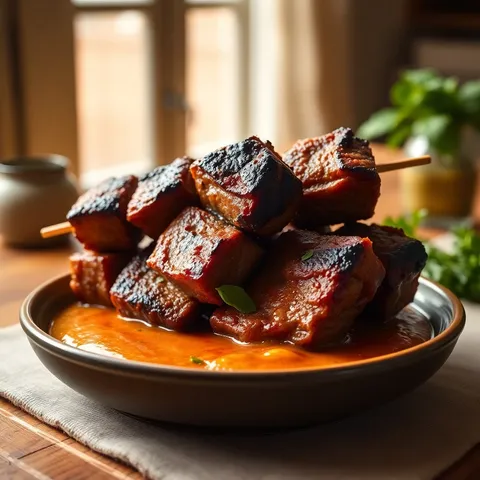 Eastern European Lens Verified Images are for illustrative purposes only, may be inaccurate, and do not guarantee the presence or absence of specific ingredients.
 Shashlik
Smoky, charred cubes of marinated lamb or pork threaded on skewers and grilled over embers — Central Asia's festive open-fire classic, fragrant with onion and spice.
 Eastern European Lens Verified Images are for illustrative purposes only, may be inaccurate, and do not guarantee the presence or absence of specific ingredients.
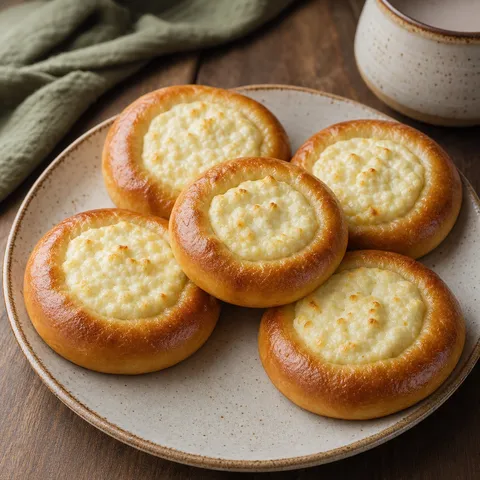
 Vatrushka
Soft, pillowy Russian buns filled with a sweetened quark or farmer's cheese center — lightly golden and gently sweet, perfect alongside tea or coffee.
 Eastern European Lens Verified Images are for illustrative purposes only, may be inaccurate, and do not guarantee the presence or absence of specific ingredients.
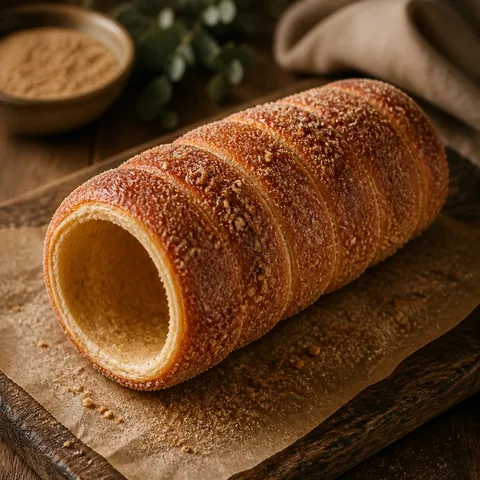
 Kurtosh Kalach
Hungary's iconic chimney cake — sweet yeast dough spiraled around a spit, rolled in cinnamon sugar, and roasted until the outside caramelizes into a crackly, warm shell.