 German Images are for illustrative purposes only, may be inaccurate, and do not guarantee the presence or absence of specific ingredients.
  Serving Images are for illustrative purposes only, may be inaccurate, and do not guarantee the presence or absence of specific ingredients.
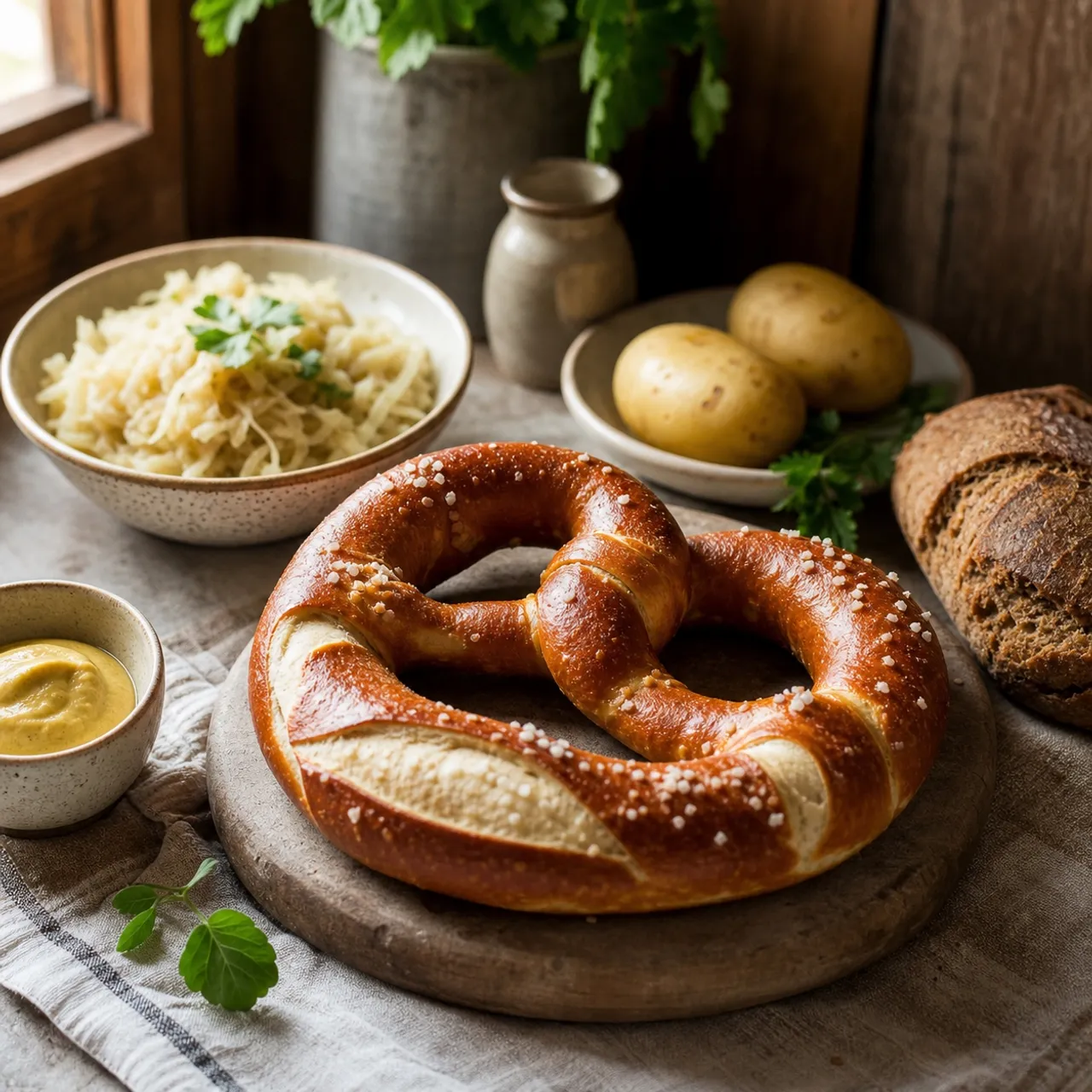
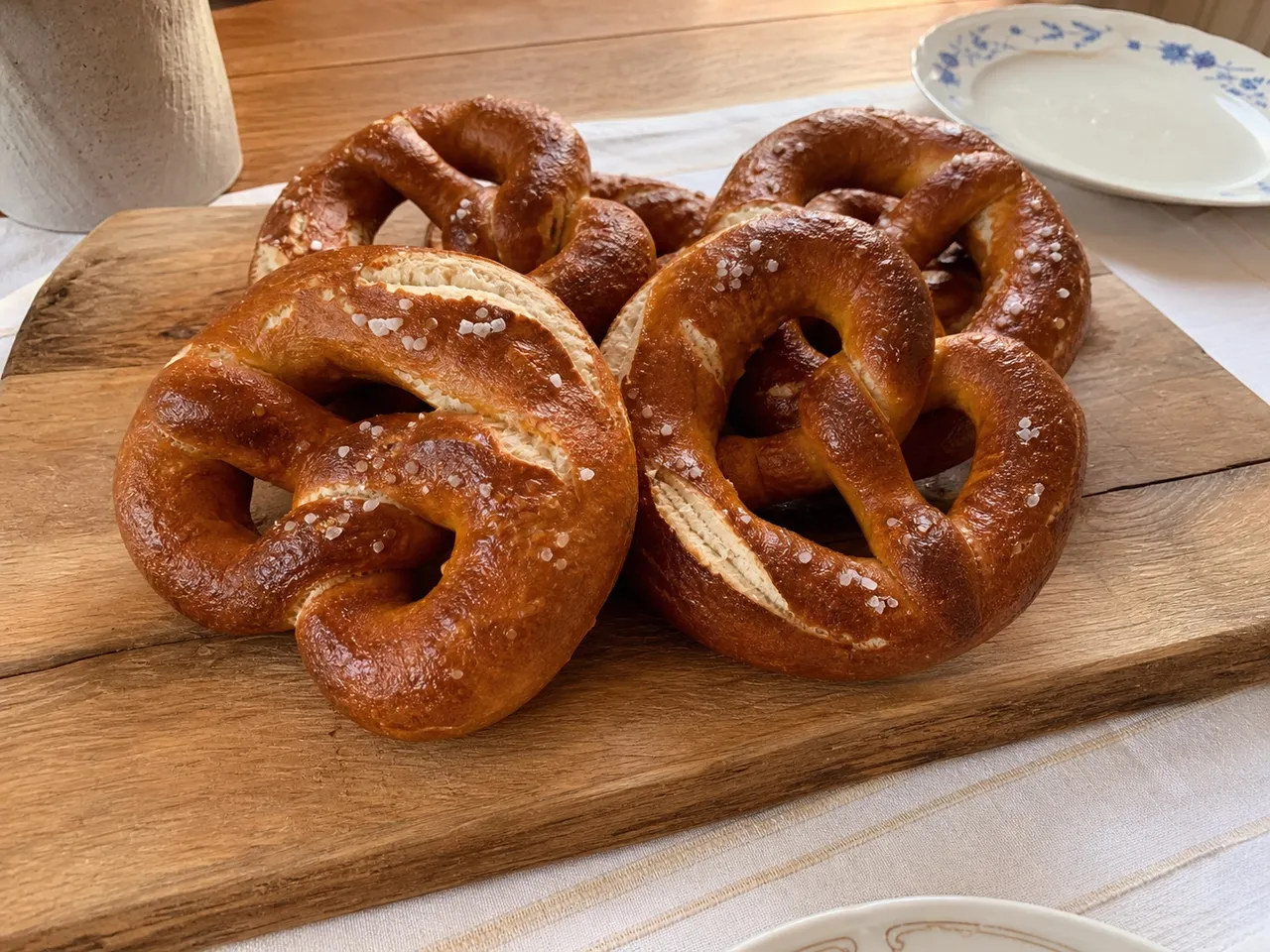
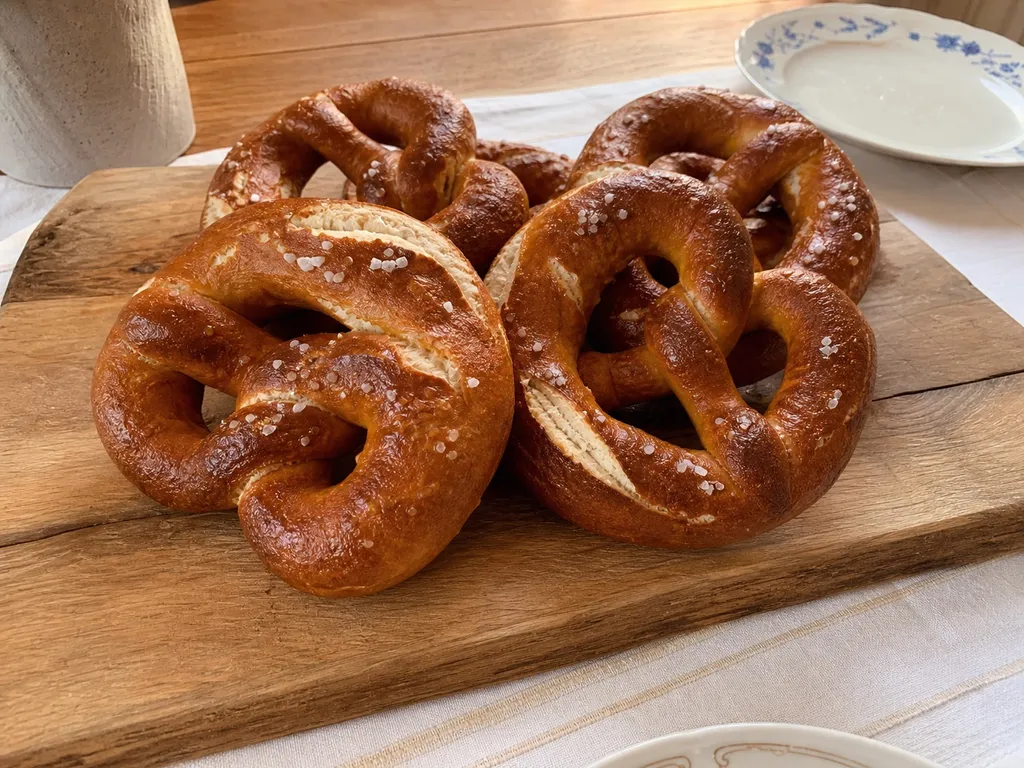
 Brezel (Bavarian Soft Pretzels)
Chewy, glossy Bavarian soft pretzels with a deep mahogany crust and a generous sprinkle of coarse salt.
Contains common allergens
In the app, Listahan checks these against your household automatically.
Instructions
7 steps- 1
Combine flour, warm water, yeast, sugar, and salt in a bowl, then knead in the softened butter until a smooth, elastic dough forms, about 8 minutes.
- 2
Cover and let the dough rise in a warm place for 1 hour until doubled.
- 3
Divide the dough into 8 pieces, roll each into a long rope, and shape into the classic pretzel twist.
- 4
Bring water and baking soda to a boil in a wide pot.
- 5
Boil each pretzel for 20-30 seconds per side, then transfer to a parchment-lined baking sheet.
- 6
Brush with egg wash, sprinkle generously with coarse salt, and score a slash across the thick part of each pretzel.
- 7
Bake at 220°C (425°F) for 12-15 minutes until deep golden brown.
 Images are for illustrative purposes only, may be inaccurate, and do not guarantee the presence or absence of specific ingredients.
 Listahan Family Score™
76/100
Good fit for most families
Score reflects how well this recipe fits a typical busy household. In the app, your Family Score is personalized to your household's allergens, kids, and pantry.
Nutrition
per serving280
Calories
7 g
Protein
49 g
Carbs
6 g
Fat
Estimated per serving. Actual values depend on the brands and portions you use.
Listahan cooking guide
Chef notes & practical guide
Technique notes, ingredient swaps, serve-alongside ideas, storage guidance, and equipment for this recipe.
Cultural context
The soft pretzel is a Bavarian and southern German bakery icon, sold from carts, beer halls, and Oktoberfest tents with mustard on the side. Its deep mahogany crust and distinctive chew come from an alkaline bath before baking, traditionally food-grade lye, which sets it apart from any ordinary bread roll.
Listahan note
This version uses a baking soda bath instead of lye, a safer, more accessible swap for a home kitchen that still gets you most of the way to that signature dark, shiny crust.
Technique cues
- The alkaline bath, whether lye or baking soda, is what gives pretzels their brown, glossy skin and slightly chewy crust; skipping it leaves you with a plain bread roll shape.
- Boil briefly, only 20 to 30 seconds per side. Longer boiling makes the crust tough instead of tender underneath.
- Score the thick part of each pretzel before baking so it splits open naturally instead of tearing randomly as it bakes.
Kitchen flow
- Parallel prep
- Bring the baking soda water to a boil while the shaped pretzels finish their second rise so both are ready together.
- Make-ahead
- Shape and boil the pretzels a few hours ahead, then chill unbaked; bring to room temperature before egg-washing and baking.
- Leftover move
- Split day-old pretzels and toast them, then use as a base for a quick ham and cheese melt.
- Cleanup rhythm
- Wipe down the pot used for the baking soda bath right away; residue can dry into a stubborn film if left.
Ingredient brief
Role, handling, and swap guidance for each key ingredient.
Bread flour
Structure
Purpose: The higher protein content gives the dough enough strength to hold its twisted shape through boiling and baking.
Handling: Knead until the dough is smooth and elastic, about 8 minutes by hand.
Adaptation: All-purpose flour works but yields a slightly softer, less chewy pretzel.
Instant yeast
Leavening
Purpose: Yeast gives the dough enough lift to stay soft inside while the crust turns dark and firm.
Handling: Dissolve into the warm water before mixing in the flour so it activates evenly.
Adaptation: Active dry yeast works if proofed in the warm water for a few minutes first.
Baking soda
Alkaline bath
Purpose: Simmering the shaped pretzels in a baking soda solution is what produces the characteristic dark, shiny, slightly rubbery crust.
Handling: Dissolve fully into boiling water before adding the pretzels so it doesn't clump on the surface.
Adaptation: Food-grade lye gives a more authentic deep color and flavor but requires gloves and careful handling; baking soda is the safer home version.
Unsalted butter
Richness
Purpose: A small amount of butter kneaded into the dough keeps the crumb soft under the crisp crust.
Handling: Soften to room temperature so it incorporates smoothly during kneading.
Adaptation: Neutral oil works in a pinch but gives a slightly less tender crumb.
Egg (for egg wash)
Crust color and shine
Purpose: A light egg wash before baking helps the salt stick and adds extra shine and browning.
Handling: Beat well and brush a thin, even layer over each pretzel.
Adaptation: Skip the egg wash for an egg-free version; the crust will be slightly less glossy.
Technique notes
- Work with the dough while it's still slightly tacky when shaping the rope, since over-floured dough won't hold the twist shape well.
- Use a slotted spoon or spider to lift each pretzel out of the boiling water so it doesn't tear.
- Bake at a high, consistent oven temperature; a cooler oven gives a paler crust without the deep color this bread depends on.
Ingredient swaps
- Egg-free direction
- Skip the egg wash and brush with melted butter instead after boiling; the crust will be slightly less shiny but still salts well.
- Dairy-free direction
- Use a neutral oil in place of the butter and a plant-based egg wash substitute like plant milk with a little maple syrup.
- Soft roll shortcut
- Shape the dough into rolls instead of the classic twist if you want a faster shape with less handling, keeping the same boil and bake steps.
Serve alongside
- Obatzda cheese spread
- Sweet Bavarian mustard
- Butter for spreading
- Radish slices
- German wheat beer (Hefeweizen)
- Sparkling water
- Apple spritzer
Serving suggestions only — check pairings for your household's allergens.
Storage & reheating
- Store at room temperature in a paper bag for up to 2 days; plastic softens the crust.
- Refresh in a hot oven for 3 to 4 minutes before serving to bring back the crisp exterior.
- Freeze baked pretzels for up to 1 month; thaw and reheat directly from frozen in the oven.
Equipment
- Stand mixer or strong hands for kneading
- Wide pot for the baking soda bath
- Slotted spoon or spider
- Parchment-lined baking sheet
Make this household-aware
Listahan Pro checks this recipe against your household's allergens, finds pantry-aware swaps, builds the shopping list, and helps you plan the week around it.
Plan it in Listahan
Add Brezel (Bavarian Soft Pretzels) to your week, check it against your household's allergens, and build the shopping list automatically.
More German recipes
 German Lens Verified Images are for illustrative purposes only, may be inaccurate, and do not guarantee the presence or absence of specific ingredients.
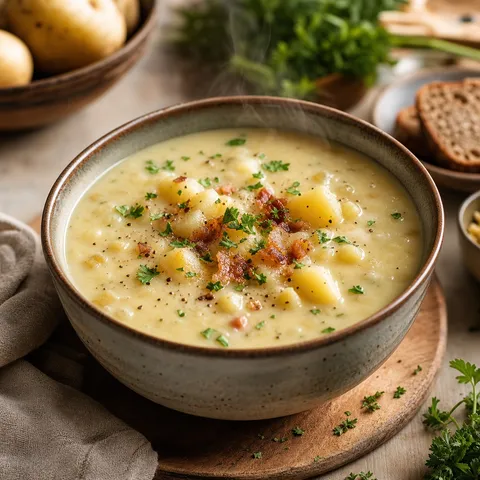
 Kartoffelsuppe (Creamy German Potato Soup)
A creamy, comforting German potato soup with leeks, carrots, and a smoky finish of fried sausage or bacon.
 German Lens Verified Images are for illustrative purposes only, may be inaccurate, and do not guarantee the presence or absence of specific ingredients.
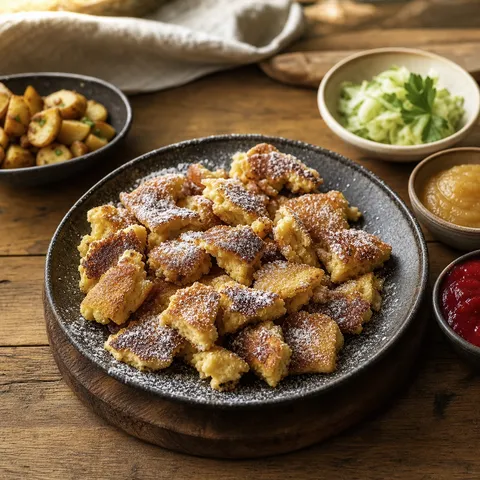
 Kaiserschmarrn (Shredded Sugared Pancake)
A fluffy shredded pancake dusted with powdered sugar and studded with golden raisins, torn into rustic pieces and served with stewed fruit compote.
 German Lens Verified Images are for illustrative purposes only, may be inaccurate, and do not guarantee the presence or absence of specific ingredients.
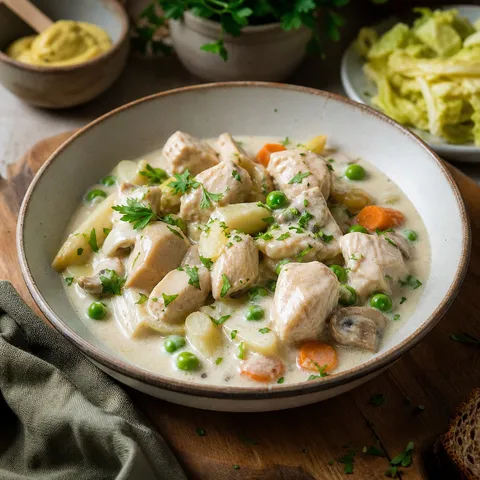
 Hühnerfrikassee (German Chicken Fricassee)
A comforting German chicken fricassee in a silky lemon-cream sauce studded with mushrooms, peas, and capers.