 German Images are for illustrative purposes only, may be inaccurate, and do not guarantee the presence or absence of specific ingredients.
  Serving Images are for illustrative purposes only, may be inaccurate, and do not guarantee the presence or absence of specific ingredients.
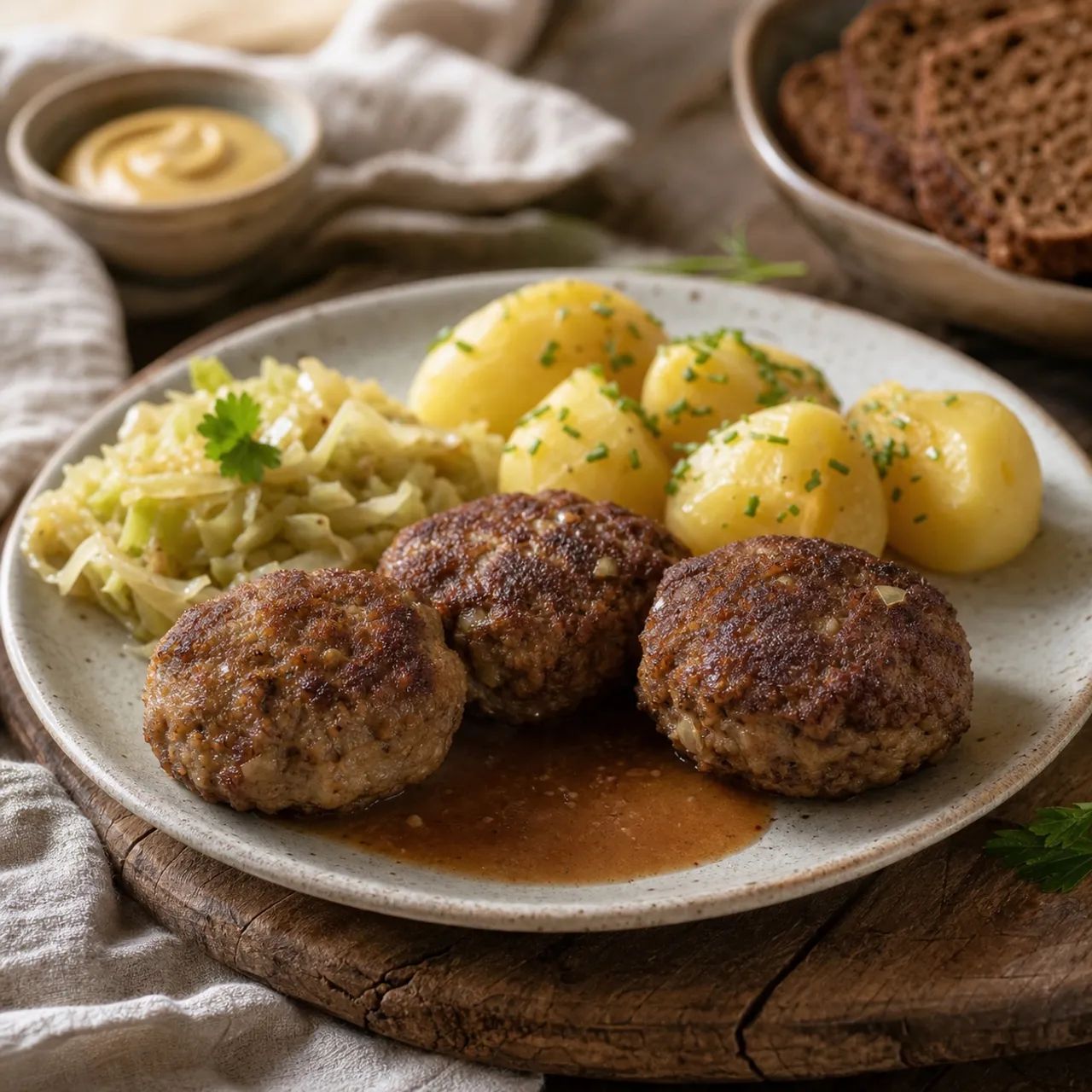
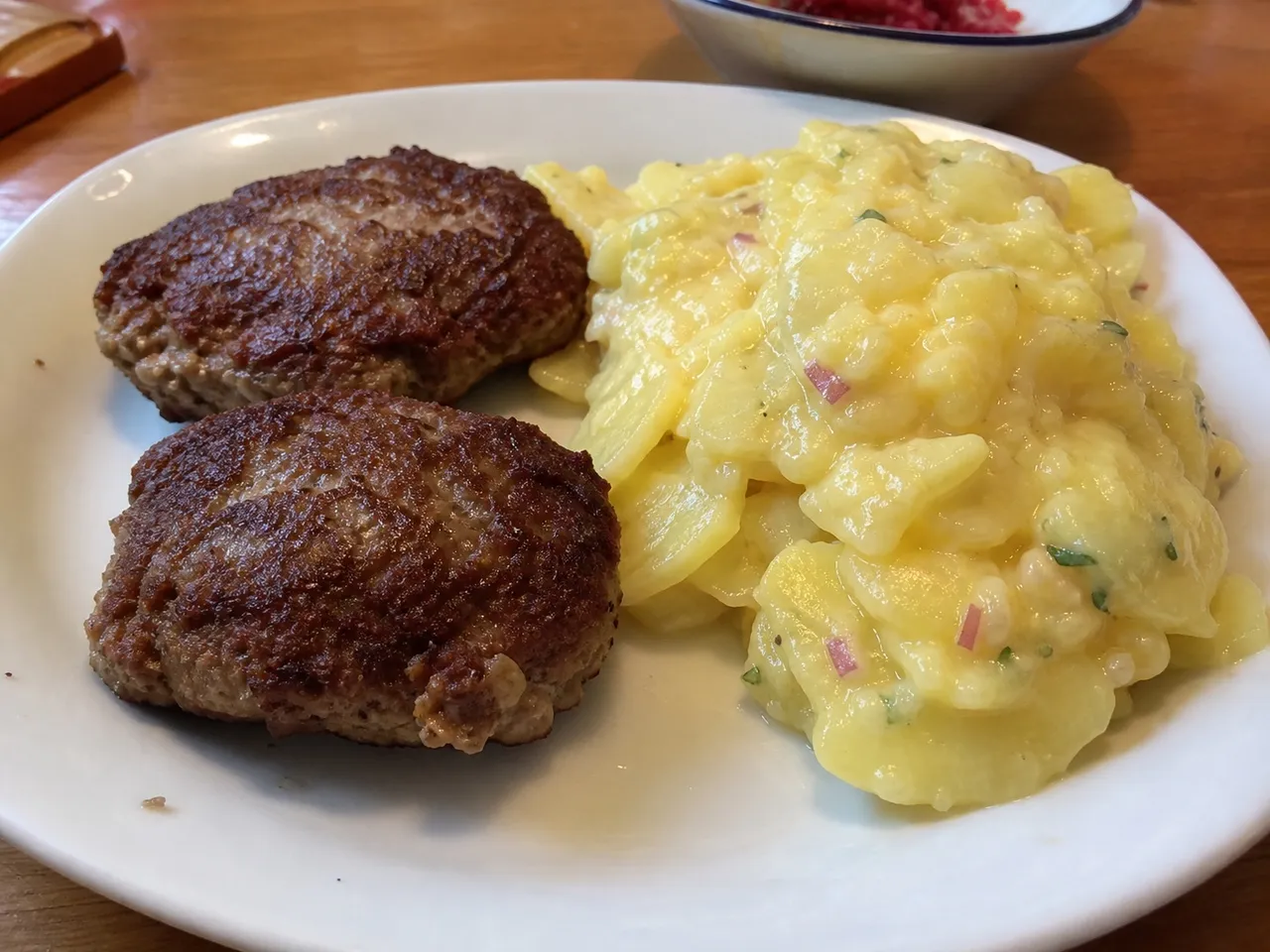
 Frikadellen (German Pan-Fried Meatballs)
Crisp, golden pan-fried meatballs (also called Buletten) made from a mix of ground beef and pork, a beloved everyday German staple.
Contains common allergens
In the app, Listahan checks these against your household automatically.
Good to know
- Crispy
- Ready in under 30 minutes
Matched from this dish's own ingredients and timing. Browse more: crispy recipes30-minute meals
Instructions
6 steps- 1
In a large bowl, combine ground meat, soaked bread, onion, egg, mustard, and parsley.
- 2
Season generously with salt and pepper and mix until well combined.
- 3
Shape the mixture into 8 flattened patties about 2 cm thick.
- 4
Heat oil in a large skillet over medium heat.
- 5
Fry the patties for 5-6 minutes per side until deeply browned and cooked through.
- 6
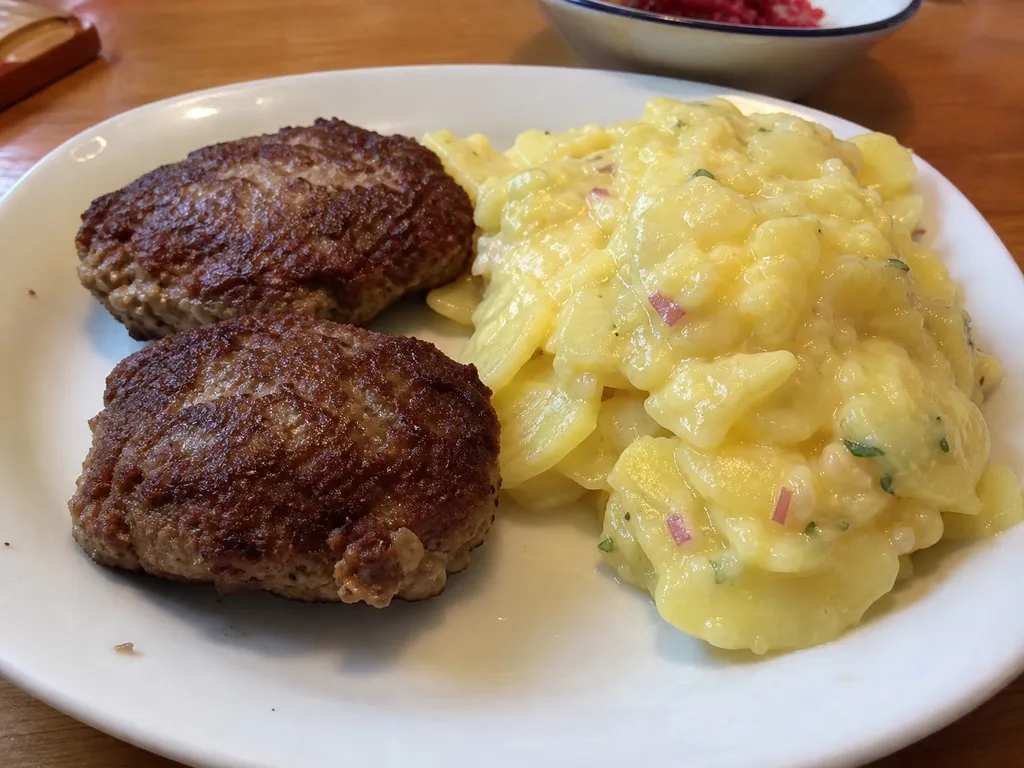
Drain briefly on paper towels and serve warm with potato salad or bread rolls.
 Images are for illustrative purposes only, may be inaccurate, and do not guarantee the presence or absence of specific ingredients.
 Listahan Family Score™
76/100
Good fit for most families
Score reflects how well this recipe fits a typical busy household. In the app, your Family Score is personalized to your household's allergens, kids, and pantry.
Nutrition
per serving455
Calories
35 g
Protein
6 g
Carbs
31 g
Fat
Estimated per serving. Actual values depend on the brands and portions you use.
Listahan cooking guide
Chef notes & practical guide
Technique notes, ingredient swaps, serve-alongside ideas, storage guidance, and equipment for this recipe.
Cultural context
Frikadellen are the everyday pan-fried meat patties found in home kitchens and butcher-shop counters across Germany, distinct from the poached, sauced meatballs of dishes like Königsberger Klopse. They're built to be eaten warm or cold, often packed for lunch, and the combination of soaked bread, egg, and mustard in the mix is what keeps them tender rather than dense despite the hard sear.
Listahan note
This version shapes the patties a bit thicker and flatter than a typical meatball, the way they're usually served in Germany, and leans on a hot pan and a long enough sear per side to build real color before checking for doneness.
Technique cues
- Mix the meat and binder ingredients just until combined; overmixing packs the proteins too tight and makes the patties dense instead of tender.
- A medium-hot, not screaming-hot, pan lets the patties develop a deep brown crust in the full 5-6 minutes per side without burning before the center cooks through.
- Let the patties rest a couple minutes after frying before cutting in, so the juices redistribute instead of running out immediately.
Kitchen flow
- Parallel prep
- Mix and shape all the patties before heating the oil, so they go into a properly hot pan back to back.
- Make-ahead
- The mixed patties can be shaped and refrigerated a few hours ahead, uncooked, so all that's left is frying at mealtime.
- Leftover move
- Cold Frikadellen make an excellent sandwich filling the next day, sliced and layered with mustard and pickle.
- Cleanup rhythm
- Fry in one skillet, draining patties on paper towels as they finish, so there's a single pan to wipe out afterward.
Ingredient brief
Role, handling, and swap guidance for each key ingredient.
Ground beef and pork mix
Main protein
Purpose: The combination gives more flavor and moisture than beef or pork alone.
Handling: Handle gently when mixing and shaping so the patties stay tender.
Adaptation: All beef or all pork both work, though the mix gives the most balanced flavor.
Bread roll soaked in milk
Binder and moisture
Purpose: Keeps the patties from turning dense or dry once fried.
Handling: Squeeze out the milk thoroughly before adding to the meat.
Adaptation: A couple slices of white bread soaked briefly in milk substitute well.
Onion
Aromatic
Purpose: Adds sweetness and moisture throughout the patty.
Handling: Chop very finely so it distributes evenly and cooks through in the short frying time.
Adaptation: Grated onion blends in even more seamlessly if a very fine texture is preferred.
Dijon mustard
Flavor base
Purpose: Adds a subtle sharpness that runs through the whole patty rather than sitting on top.
Handling: Mix in evenly with the other binder ingredients.
Adaptation: A milder yellow mustard works if Dijon's sharpness is too much.
Egg
Binder
Purpose: Helps hold the meat mixture together through shaping and frying.
Handling: Whisk lightly before folding in so it distributes evenly.
Adaptation: One egg is usually enough for this quantity; add a second only if the mixture feels loose.
Technique notes
- Flatten the patties to about 2 cm thick as called for; thicker patties look generous but the center struggles to cook through before the crust overbrowns.
- Resist pressing down on the patties while they fry; pressing squeezes out the juices that keep them moist.
- Test one patty by cutting into the thickest part before pulling the batch, since exact timing depends on the pan and patty thickness.
Ingredient swaps
- Gluten-free direction
- Use a gluten-free bread roll for soaking, and double check the mustard label for gluten-free certification.
- Dairy-free direction
- Soak the bread in a dairy-free milk alternative instead of milk; the texture result is nearly identical.
Serve alongside
- German potato salad
- Crusty bread rolls
- Braised red cabbage
- Simple cucumber salad
- Cold Pilsner
- Sparkling apple juice
- Dry Riesling
Serving suggestions only — check pairings for your household's allergens.
Storage & reheating
- Refrigerate cooked patties for up to 3 days.
- Reheat in a skillet over medium heat to keep the crust from turning soggy, rather than microwaving.
- Freeze cooked patties for up to 2 months; thaw in the fridge before reheating in a skillet.
Equipment
- Large mixing bowl
- Large skillet for frying
- Spatula for flipping
- Paper towels for draining
Make this household-aware
Listahan Pro checks this recipe against your household's allergens, finds pantry-aware swaps, builds the shopping list, and helps you plan the week around it.
Plan it in Listahan
Add Frikadellen (German Pan-Fried Meatballs) to your week, check it against your household's allergens, and build the shopping list automatically.
More German recipes
 German Lens Verified Images are for illustrative purposes only, may be inaccurate, and do not guarantee the presence or absence of specific ingredients.
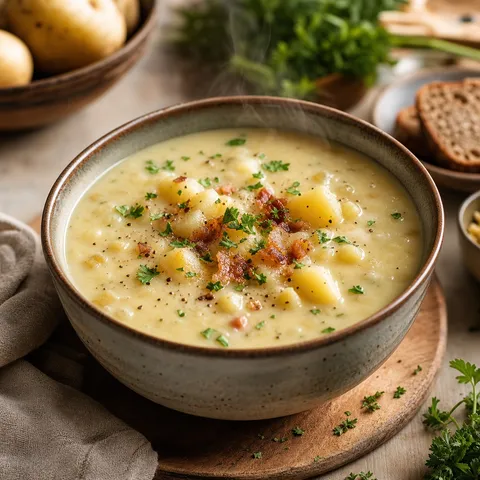
 Kartoffelsuppe (Creamy German Potato Soup)
A creamy, comforting German potato soup with leeks, carrots, and a smoky finish of fried sausage or bacon.
 German Lens Verified Images are for illustrative purposes only, may be inaccurate, and do not guarantee the presence or absence of specific ingredients.
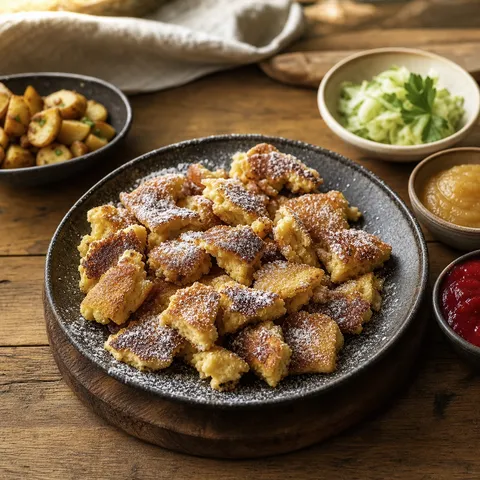
 Kaiserschmarrn (Shredded Sugared Pancake)
A fluffy shredded pancake dusted with powdered sugar and studded with golden raisins, torn into rustic pieces and served with stewed fruit compote.
 German Lens Verified Images are for illustrative purposes only, may be inaccurate, and do not guarantee the presence or absence of specific ingredients.
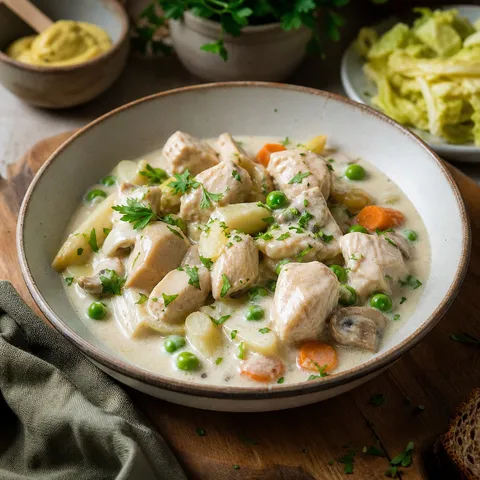
 Hühnerfrikassee (German Chicken Fricassee)
A comforting German chicken fricassee in a silky lemon-cream sauce studded with mushrooms, peas, and capers.