 German Images are for illustrative purposes only, may be inaccurate, and do not guarantee the presence or absence of specific ingredients.
  Serving Images are for illustrative purposes only, may be inaccurate, and do not guarantee the presence or absence of specific ingredients.
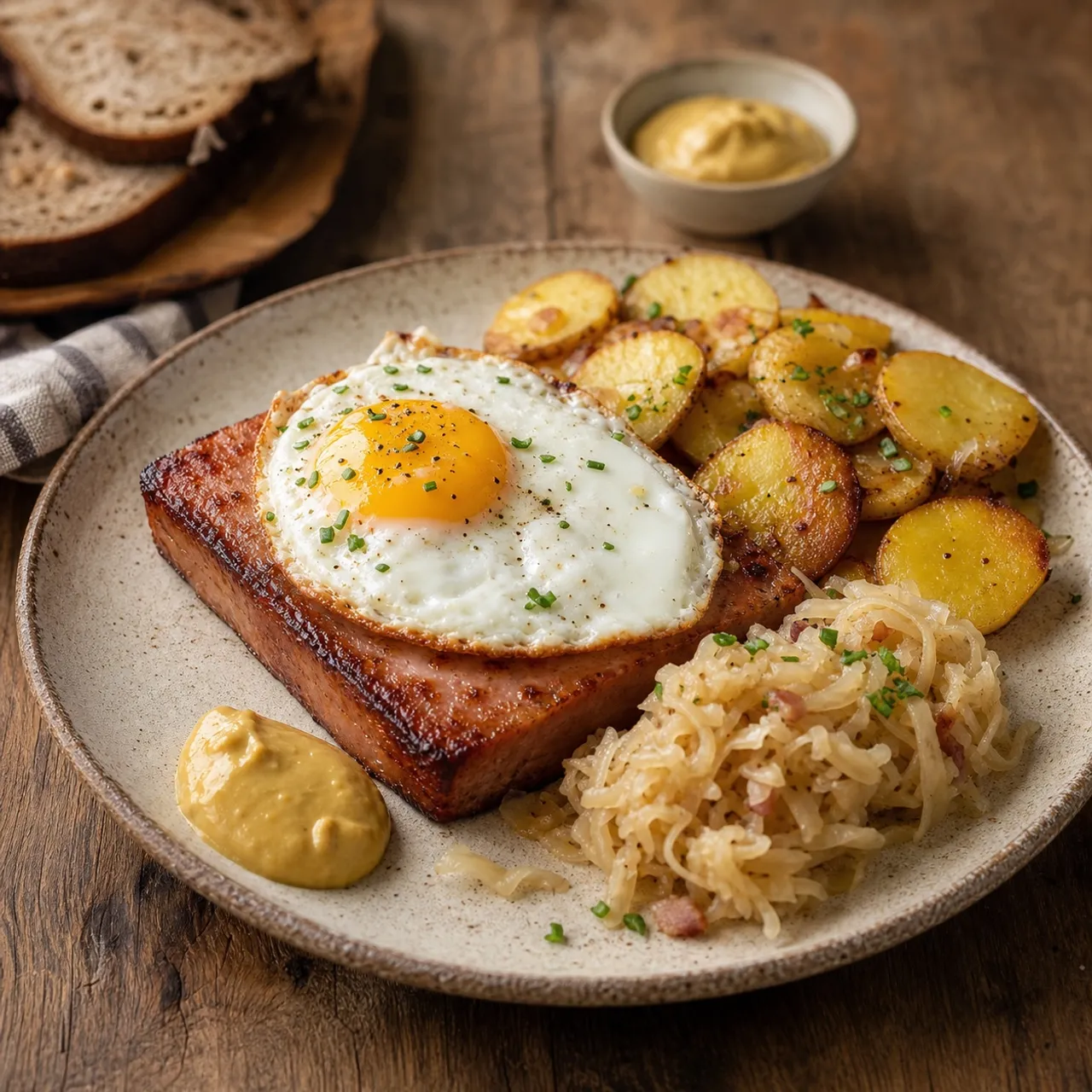
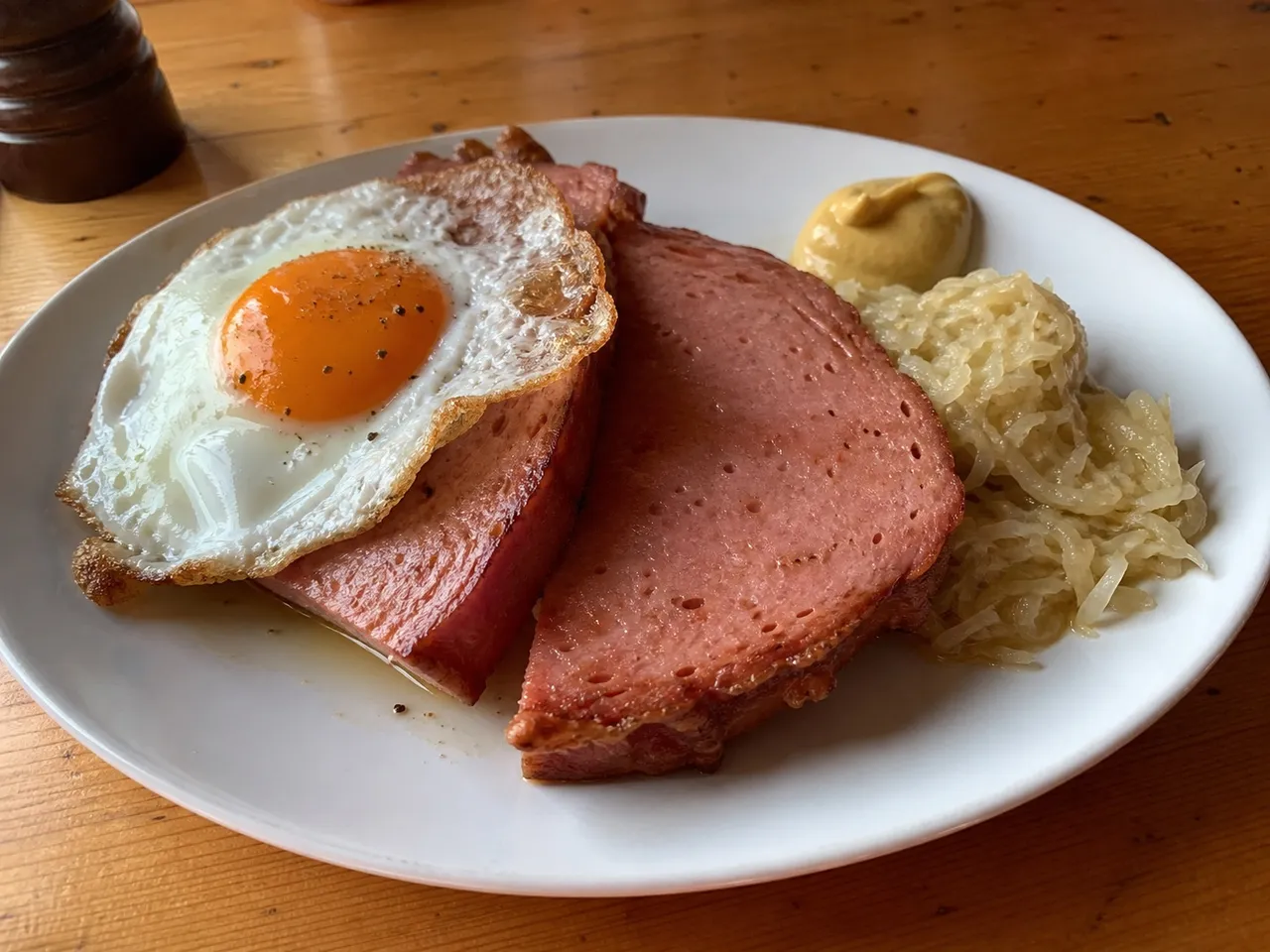
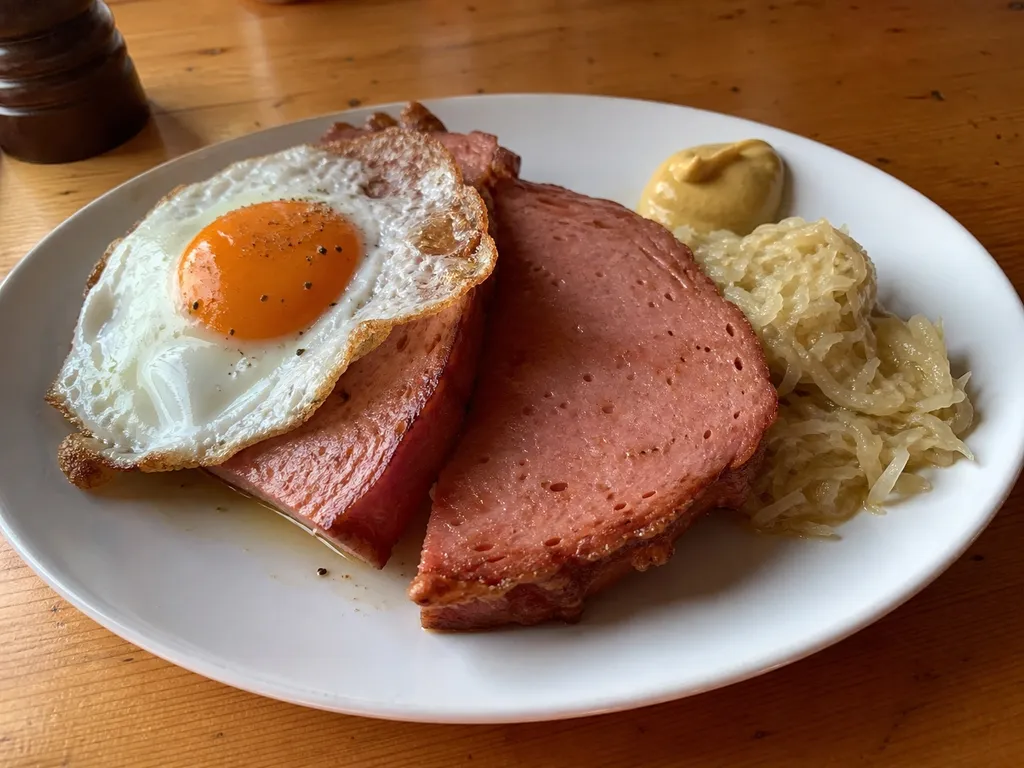
 Leberkäse (Bavarian Meatloaf with Fried Egg)
A smooth, savory Bavarian meatloaf of finely ground beef and pork, baked to a crisp golden crust and classically served in a bread roll with a fried egg on top.
Contains common allergens
In the app, Listahan checks these against your household automatically.
Good to know
- Crispy
Matched from this dish's own ingredients and timing. Browse more: crispy recipes
Instructions
6 steps- 1
In a food processor, blend ground beef, pork, and back fat with onion and garlic until very smooth and paste-like.
- 2
Add mace, paprika, white pepper, and salt, then blend in the ice-cold water until the mixture is silky and emulsified.
- 3
Preheat oven to 180°C (350°F) and grease a loaf pan with butter.
- 4
Press the meat mixture firmly into the pan, smoothing the top.
- 5
Bake for 70-80 minutes until the top is deep golden brown and a crust has formed.
- 6
Let rest for 10 minutes, then slice thickly and serve in bread rolls, topped with a fried egg if desired.
 Images are for illustrative purposes only, may be inaccurate, and do not guarantee the presence or absence of specific ingredients.
 Listahan Family Score™
64/100
Works for many families
Score reflects how well this recipe fits a typical busy household. In the app, your Family Score is personalized to your household's allergens, kids, and pantry.
Nutrition
per serving540
Calories
52 g
Protein
16 g
Carbs
28 g
Fat
Estimated per serving. Actual values depend on the brands and portions you use.
Listahan cooking guide
Chef notes & practical guide
Technique notes, ingredient swaps, serve-alongside ideas, storage guidance, and equipment for this recipe.
Cultural context
Leberkäse is a Bavarian specialty whose name is misleading on both counts: most versions contain neither liver nor cheese. It's a finely emulsified loaf of beef, pork, and back fat blended until smooth, then baked until a deep golden crust forms, and it's most commonly sold sliced from a butcher counter or eaten as Leberkäse Semmel, a warm slice tucked into a bread roll with mustard.
Listahan note
This version blends the meat in a food processor until genuinely smooth and emulsified, the way a butcher's Leberkäse is made, because a coarser grind gives a texture closer to regular meatloaf rather than the signature silky, sliceable crumb.
Technique cues
- Blend the meat mixture until it turns pale, smooth, and paste-like; a Leberkäse that still looks like ground meat hasn't been processed long enough to emulsify properly.
- Adding the ice-cold water gradually while blending helps keep the fat from separating out, which is what gives the finished loaf its silky, uniform texture.
- Bake until the top forms a deep golden-brown crust; that crust is a textural contrast to the soft interior and is a sign the loaf is properly done.
Kitchen flow
- Parallel prep
- Preheat the oven and prepare the loaf pan while the meat mixture blends, so the mixture goes straight into the oven once it's smooth.
- Make-ahead
- Leberkäse keeps well and is traditionally sliced cold from the fridge or reheated; bake it a day or two ahead and slice as needed.
- Leftover move
- Fry leftover slices in a hot pan until the edges crisp, then tuck into a roll with mustard for a classic Leberkäse Semmel.
- Cleanup rhythm
- Clean the food processor bowl right after blending, before the fat has a chance to cool and stick to the sides.
Ingredient brief
Role, handling, and swap guidance for each key ingredient.
Ground beef
Main protein
Purpose: Provides the primary flavor base for the emulsified loaf.
Handling: Blend with the pork and fat until smooth rather than just combining.
Adaptation: All pork can be used if beef isn't available, giving a slightly milder flavor.
Ground pork
Secondary protein
Purpose: Balances the beef with more fat and a milder flavor.
Handling: Blend alongside the beef so the two meats emulsify together evenly.
Adaptation: Ground veal can partially replace the pork for a finer texture.
Pork back fat
Emulsifying fat
Purpose: This is what gives Leberkäse its signature silky, spreadable-when-warm texture.
Handling: Chop finely before blending so it incorporates smoothly rather than leaving visible chunks.
Adaptation: Finely chopped bacon fat can substitute in a pinch, though the flavor will be smokier.
Ice-cold water
Emulsion binder
Purpose: Cold water helps bind the fat and protein into a smooth, stable emulsion as it blends.
Handling: Add gradually while the processor runs, keeping everything cold throughout.
Adaptation: Ice-cold stock can replace some of the water for extra flavor.
Ground mace
Signature spice
Purpose: Mace's warm, slightly sweet spice note is a classic Leberkäse seasoning.
Handling: Blend in with the other spices before the final smoothing.
Adaptation: Ground nutmeg is the closest substitute, using slightly less since it's more assertive.
Eggs for serving
Classic topping
Purpose: A fried egg on top turns sliced Leberkäse into a full lunch plate.
Handling: Fry sunny-side up just before serving so the yolk stays runny.
Adaptation: Serve without the egg for a simpler presentation; the loaf holds its own on a bread roll alone.
Technique notes
- Keep the meat and fat cold throughout blending; if the mixture warms up, the fat can separate instead of emulsifying, giving a greasy rather than silky texture.
- Press the mixture firmly into the loaf pan and smooth the top, since air pockets show up as pale gaps once sliced.
- Let the loaf rest 10 minutes after baking before slicing; cutting immediately causes the delicate emulsion to crumble instead of holding a clean slice.
Ingredient swaps
- Gluten-free direction
- This recipe is naturally gluten-free as written; just serve without the bread roll or with a gluten-free roll instead.
- Lighter direction
- Reduce the back fat slightly and add a bit more ice water; the texture will be a touch less silky but still holds together for slicing.
Serve alongside
- Toasted bread rolls
- German potato salad
- Sweet Bavarian mustard
- Pretzel rolls
- Cold Helles lager
- Sparkling water
- Radler (beer and lemonade)
Serving suggestions only — check pairings for your household's allergens.
Storage & reheating
- Refrigerate sliced or whole for up to 4 days.
- Reheat slices in a hot skillet until the edges crisp, or eat cold straight from the fridge, which is traditional.
- Freeze the whole loaf, well wrapped, for up to 2 months; thaw in the fridge before slicing and reheating.
Equipment
- Food processor for emulsifying the meat
- Loaf pan
- Instant-read thermometer
- Sharp knife for clean slicing
Make this household-aware
Listahan Pro checks this recipe against your household's allergens, finds pantry-aware swaps, builds the shopping list, and helps you plan the week around it.
Plan it in Listahan
Add Leberkäse (Bavarian Meatloaf with Fried Egg) to your week, check it against your household's allergens, and build the shopping list automatically.
More German recipes
 German Lens Verified Images are for illustrative purposes only, may be inaccurate, and do not guarantee the presence or absence of specific ingredients.
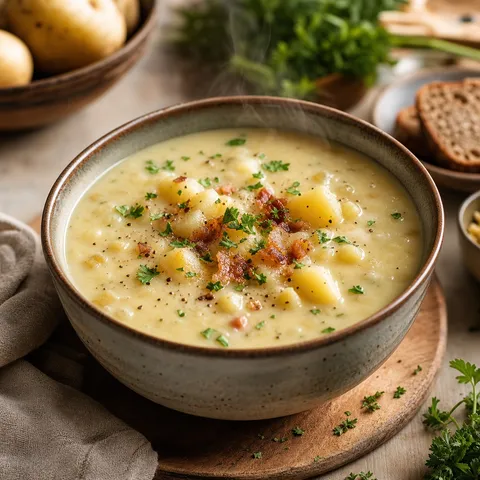
 Kartoffelsuppe (Creamy German Potato Soup)
A creamy, comforting German potato soup with leeks, carrots, and a smoky finish of fried sausage or bacon.
 German Lens Verified Images are for illustrative purposes only, may be inaccurate, and do not guarantee the presence or absence of specific ingredients.
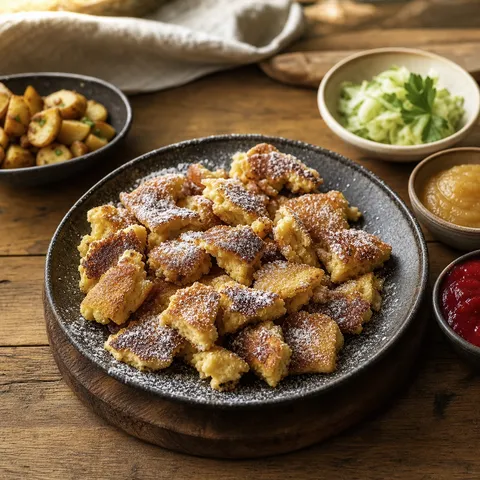
 Kaiserschmarrn (Shredded Sugared Pancake)
A fluffy shredded pancake dusted with powdered sugar and studded with golden raisins, torn into rustic pieces and served with stewed fruit compote.
 German Lens Verified Images are for illustrative purposes only, may be inaccurate, and do not guarantee the presence or absence of specific ingredients.
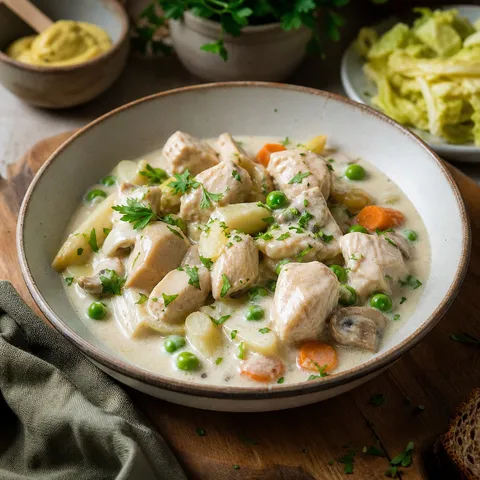
 Hühnerfrikassee (German Chicken Fricassee)
A comforting German chicken fricassee in a silky lemon-cream sauce studded with mushrooms, peas, and capers.