 German Images are for illustrative purposes only, may be inaccurate, and do not guarantee the presence or absence of specific ingredients.
  Serving Images are for illustrative purposes only, may be inaccurate, and do not guarantee the presence or absence of specific ingredients.
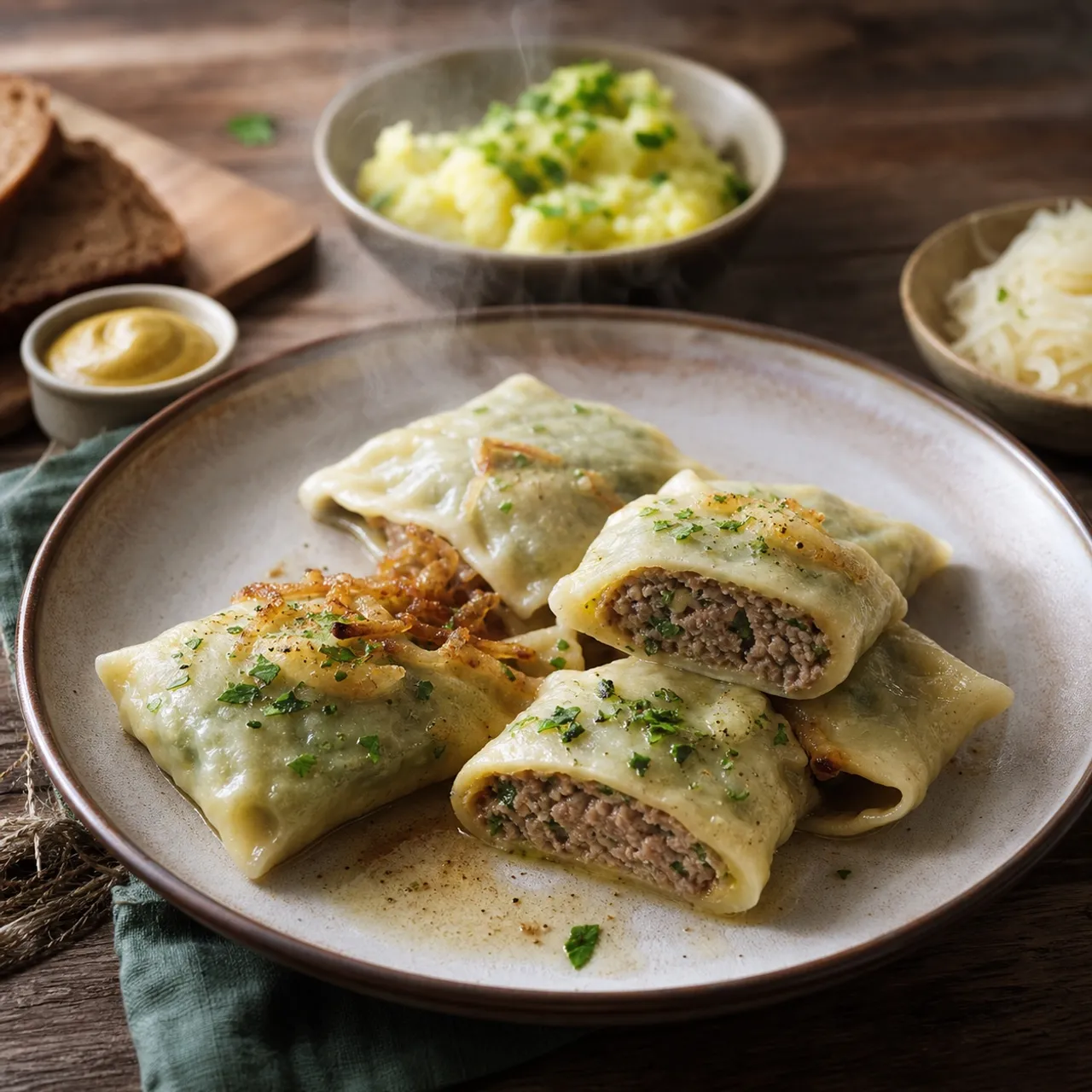
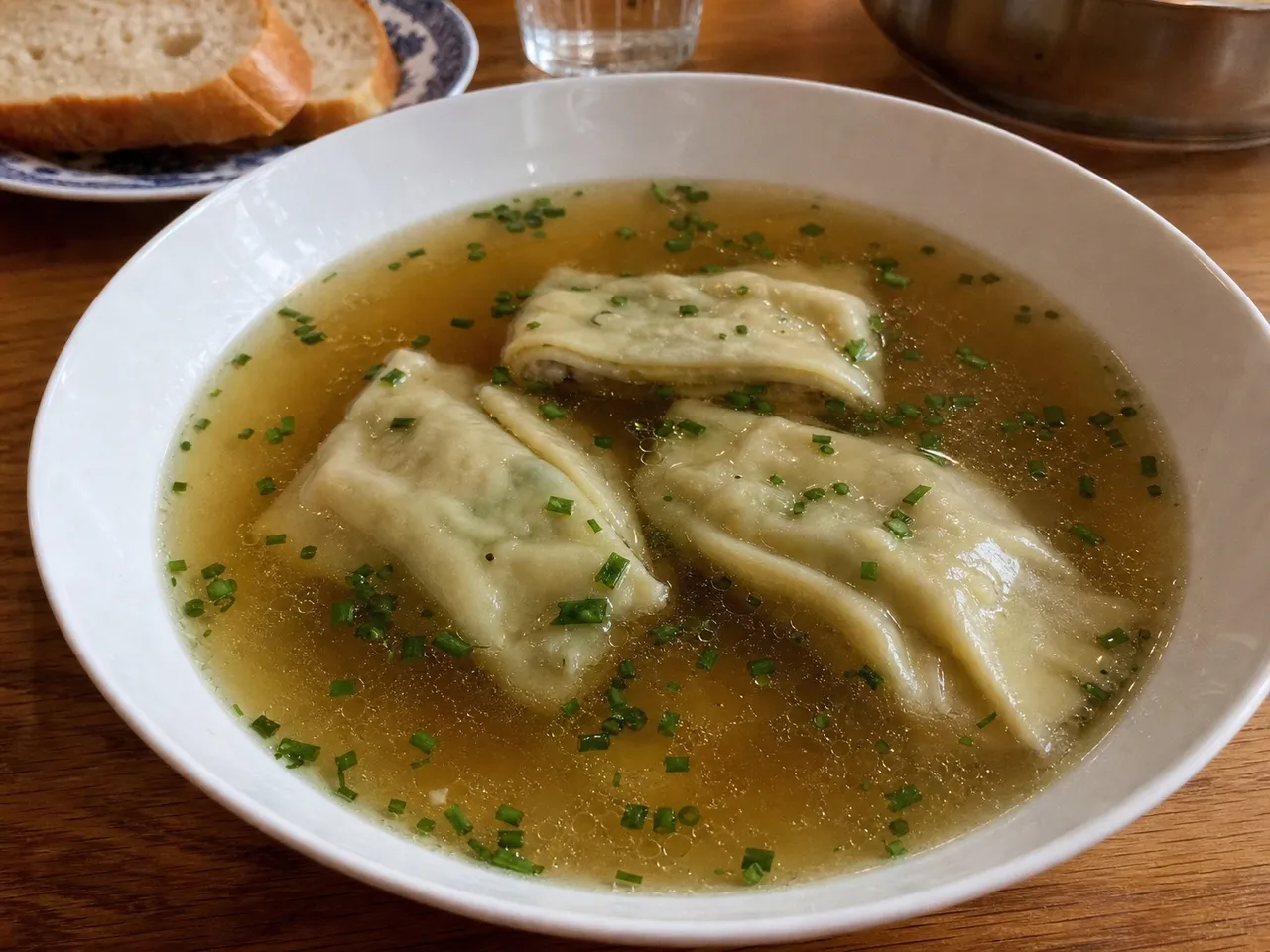
 Maultaschen (German Meat-Filled Dumplings)
Large Swabian pasta pockets filled with a savory mix of ground meat, spinach, and onion, often called German ravioli and served in broth or pan-fried with onions.
Contains common allergens
In the app, Listahan checks these against your household automatically.
Instructions
6 steps- 1
Combine flour, eggs, olive oil, and salt, and knead into a smooth pasta dough; wrap and rest for 30 minutes.
- 2
Mix ground pork, wilted spinach, sautéed onion, bacon, soaked bread, and the egg in a bowl, and season with salt, pepper, and nutmeg.
- 3
Roll the pasta dough out thinly into large sheets.
- 4
Spread the filling over half of each sheet, fold the dough over, and press to seal, then cut into large square pockets.
- 5
Bring a large pot of salted water or broth to a gentle simmer and poach the Maultaschen for 10-12 minutes until they float.
- 6
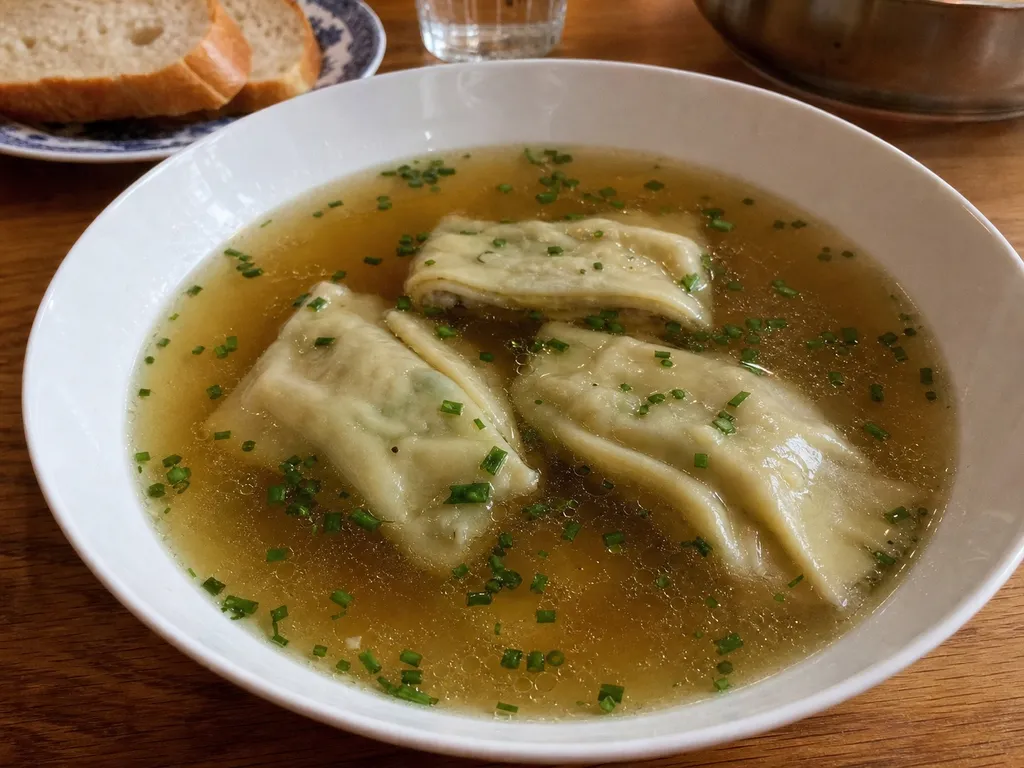
Serve the pockets in bowls of hot beef broth, or pan-fry sliced leftovers with onions until golden.
 Images are for illustrative purposes only, may be inaccurate, and do not guarantee the presence or absence of specific ingredients.
 Listahan Family Score™
66/100
Works for many families
Score reflects how well this recipe fits a typical busy household. In the app, your Family Score is personalized to your household's allergens, kids, and pantry.
Nutrition
per serving700
Calories
43 g
Protein
68 g
Carbs
28 g
Fat
Estimated per serving. Actual values depend on the brands and portions you use.
Listahan cooking guide
Chef notes & practical guide
Technique notes, ingredient swaps, serve-alongside ideas, storage guidance, and equipment for this recipe.
Cultural context
Maultaschen come from the Swabian region of southwestern Germany and carry the affectionate nickname Herrgottsbscheisserle, roughly little cheat on God, because during Lent, when meat was forbidden, cooks hid ground meat inside the pasta dough so it could not be seen. They're traditionally eaten on Good Friday and remain a Swabian Sunday-dinner staple.
Listahan note
This version serves the dumplings simply in hot beef broth, the most traditional way, with a note on pan-frying leftovers, which is the other classic way Swabian households finish the dish.
Technique cues
- Rest the pasta dough before rolling; skipping the rest makes it spring back and tear when stretched into thin sheets.
- Wring the soaked bread roll completely dry before mixing it into the filling, since excess moisture makes the filling loose and hard to seal.
- Poach gently at a bare simmer rather than a rolling boil; a hard boil can burst the dumplings open at the seams.
Kitchen flow
- Parallel prep
- Make the filling while the pasta dough rests, so both are ready to combine at the same time.
- Make-ahead
- Assembled, uncooked Maultaschen freeze well; poach straight from frozen, adding a few extra minutes to the cooking time.
- Leftover move
- Slice leftover dumplings and pan-fry with onions until golden, the classic Swabian way to use up extras.
- Cleanup rhythm
- Flour the work surface lightly rather than heavily; too much loose flour makes for a messier cleanup and can toughen the sealed edges.
Ingredient brief
Role, handling, and swap guidance for each key ingredient.
All-purpose flour
Pasta dough base
Purpose: Combined with eggs, flour forms the sturdy pasta sheets that need to hold a generous filling without tearing.
Handling: Knead until smooth, then wrap and rest so the gluten relaxes before rolling.
Adaptation: A mix of flour and semolina gives a slightly firmer, more traditional pasta texture.
Ground pork
Main filling protein
Purpose: Ground pork gives the filling its savory richness and traditional Swabian character.
Handling: Mix gently with the other filling ingredients; overworking makes the texture dense.
Adaptation: A mix of ground pork and beef, or all beef, both work well.
Fresh spinach
Filling vegetable
Purpose: Wilted spinach adds moisture, color, and a slight earthiness that balances the richness of the meat and bacon.
Handling: Wilt and squeeze out excess water before chopping and mixing in.
Adaptation: Frozen spinach, thawed and well-drained, works just as well.
Bread roll (soaked in milk)
Filling binder
Purpose: The soaked bread, an old-fashioned panade, keeps the filling tender and helps it hold together rather than turning dense.
Handling: Soak until soft, then squeeze out as much milk as possible before crumbling into the filling.
Adaptation: Fresh breadcrumbs soaked briefly in milk work as a substitute for a whole roll.
Beef broth
Serving liquid
Purpose: Serving the dumplings in hot beef broth is the classic presentation and keeps them warm and moist at the table.
Handling: Bring to a gentle simmer just before serving so it's hot without overcooking the dumplings further.
Adaptation: Vegetable broth works if a lighter, meat-free serving liquid is preferred.
Technique notes
- Seal the edges firmly and press out any trapped air before cutting; air pockets can cause dumplings to split while poaching.
- Roll the pasta sheets thin enough to see your hand through them, but sturdy enough to hold the filling without tearing.
- Watch for the dumplings to float to the surface as the doneness cue rather than timing alone, since size can vary.
Ingredient swaps
- Egg-free direction
- This dish relies on eggs in both the pasta dough and filling, so a true egg-free version would need a tested egg-replacer pasta recipe rather than a simple swap.
- Vegetarian direction
- Replace the pork and bacon with sauteed mushrooms and extra spinach, and use vegetable broth for serving.
- Lighter filling direction
- Use ground turkey instead of pork and skip the bacon for a leaner, milder filling.
Serve alongside
- Simple green salad
- Sauteed onions on top
- Crusty bread for the broth
- Trollinger red wine (a Swabian specialty)
- Light German lager
- Sparkling water
Serving suggestions only — check pairings for your household's allergens.
Storage & reheating
- Refrigerate cooked, drained dumplings separately from the broth for up to 3 days.
- Reheat gently in simmering broth or pan-fry sliced leftovers until warmed through and golden.
- Freeze uncooked, assembled dumplings for up to 2 months; poach directly from frozen.
Equipment
- Rolling pin or pasta machine
- Large pot for poaching
- Sharp knife or pastry cutter for sealing and cutting
Make this household-aware
Listahan Pro checks this recipe against your household's allergens, finds pantry-aware swaps, builds the shopping list, and helps you plan the week around it.
Plan it in Listahan
Add Maultaschen (German Meat-Filled Dumplings) to your week, check it against your household's allergens, and build the shopping list automatically.
More German recipes
 German Lens Verified Images are for illustrative purposes only, may be inaccurate, and do not guarantee the presence or absence of specific ingredients.
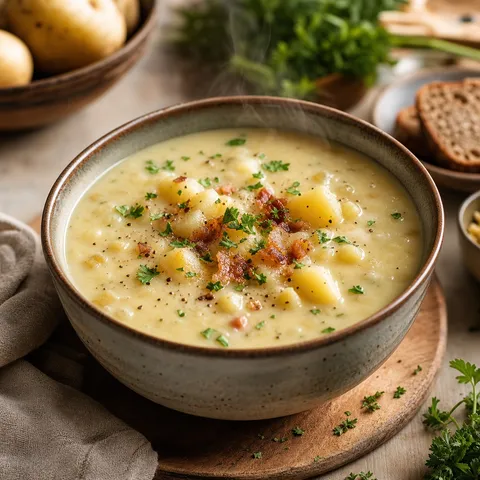
 Kartoffelsuppe (Creamy German Potato Soup)
A creamy, comforting German potato soup with leeks, carrots, and a smoky finish of fried sausage or bacon.
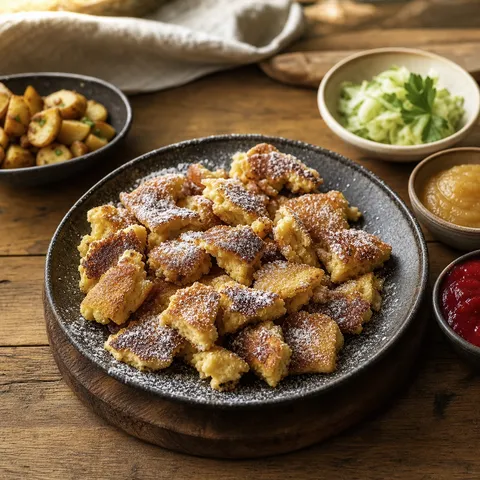 German Lens Verified Images are for illustrative purposes only, may be inaccurate, and do not guarantee the presence or absence of specific ingredients.
 Kaiserschmarrn (Shredded Sugared Pancake)
A fluffy shredded pancake dusted with powdered sugar and studded with golden raisins, torn into rustic pieces and served with stewed fruit compote.
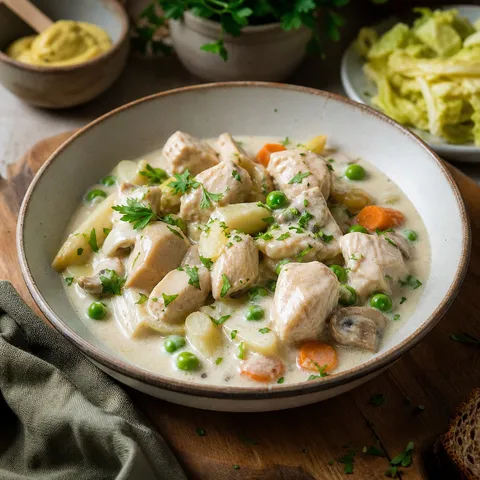 German Lens Verified Images are for illustrative purposes only, may be inaccurate, and do not guarantee the presence or absence of specific ingredients.
 Hühnerfrikassee (German Chicken Fricassee)
A comforting German chicken fricassee in a silky lemon-cream sauce studded with mushrooms, peas, and capers.