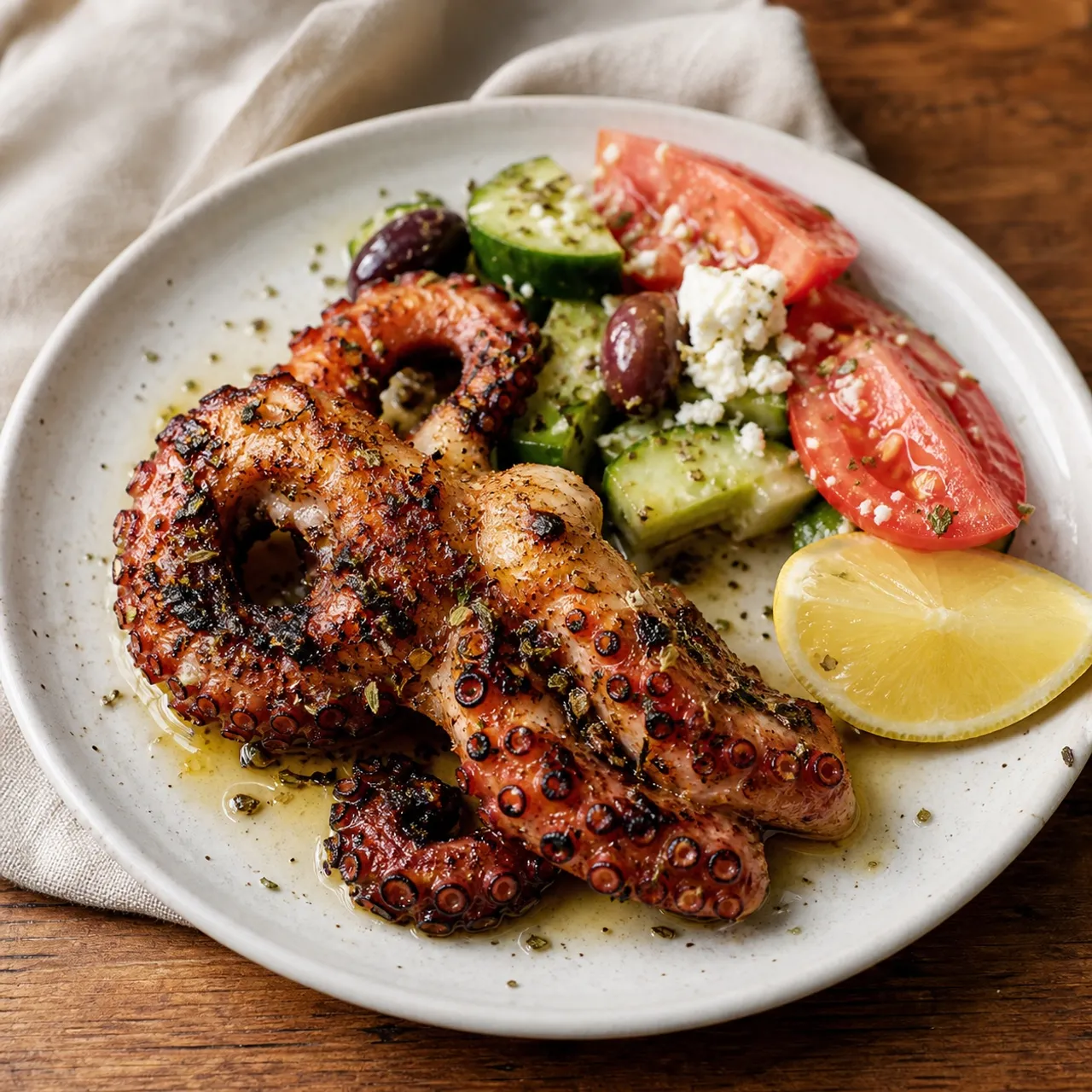
 Greek Images are for illustrative purposes only, may be inaccurate, and do not guarantee the presence or absence of specific ingredients.
 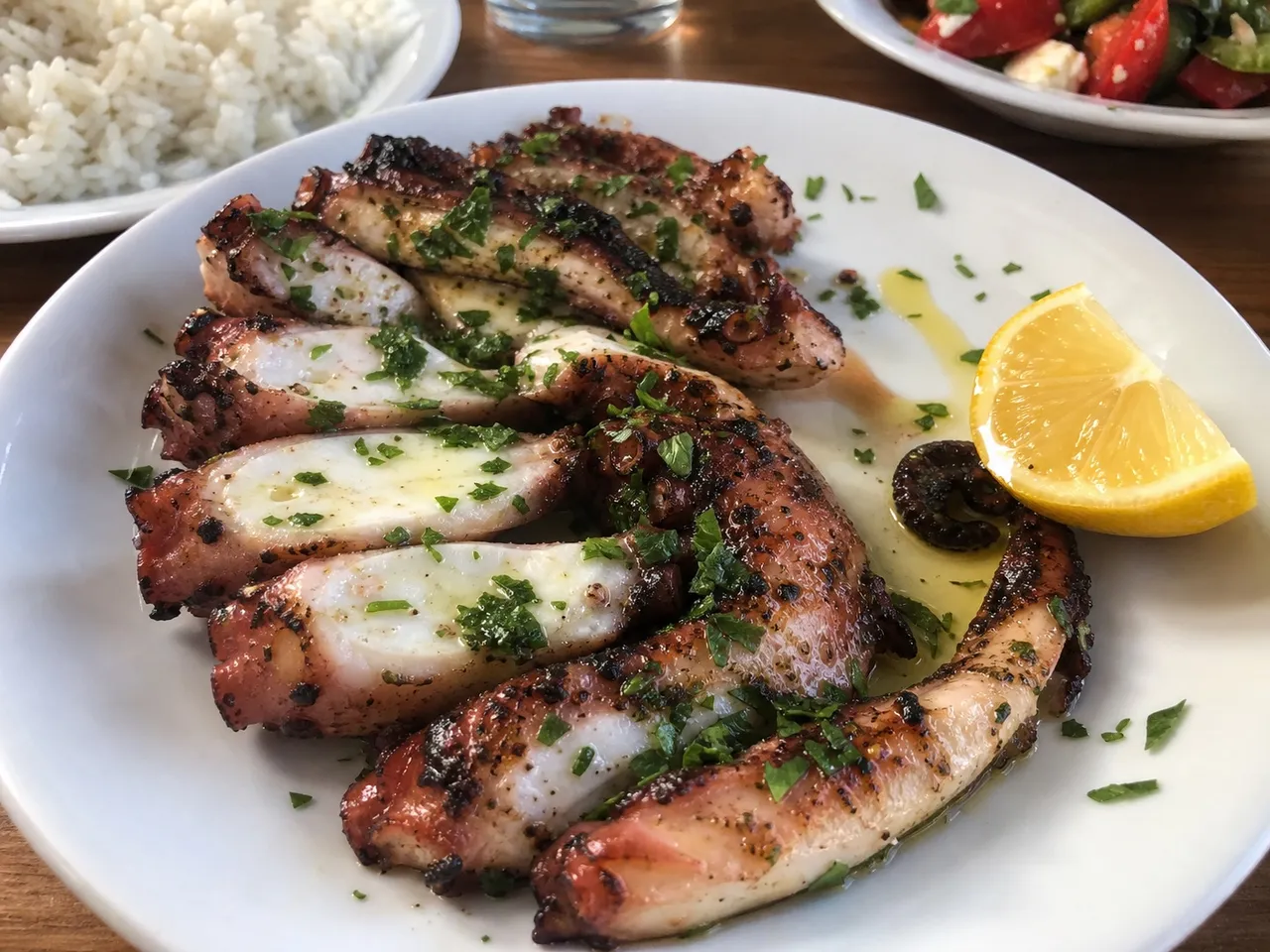 Serving Images are for illustrative purposes only, may be inaccurate, and do not guarantee the presence or absence of specific ingredients.
 Grilled Octopus with Lemon and Olive Oil (Htapodi Sxaras)
Tender braised octopus finished on the grill for a smoky char, dressed simply with olive oil, lemon, and oregano.
Contains common allergens
In the app, Listahan checks these against your household automatically.
Instructions
6 steps- 1
Place the octopus in a large pot with bay leaves and peppercorns, cover with water, and bring to a gentle simmer.
- 2
Simmer uncovered for 60-75 minutes, until the octopus is very tender when pierced with a knife, then remove and let cool slightly.
- 3
Whisk together olive oil, red wine vinegar, lemon juice, oregano, and salt to make a marinade, and toss the cooked octopus in it for at least 20 minutes.
- 4
Preheat a grill or grill pan to high heat and lightly oil the grates.
- 5
Grill the octopus tentacles for 2-3 minutes per side, until charred and slightly crisp on the edges.
- 6
Slice into pieces, drizzle with extra olive oil and lemon juice, sprinkle with parsley, and serve with lemon wedges.
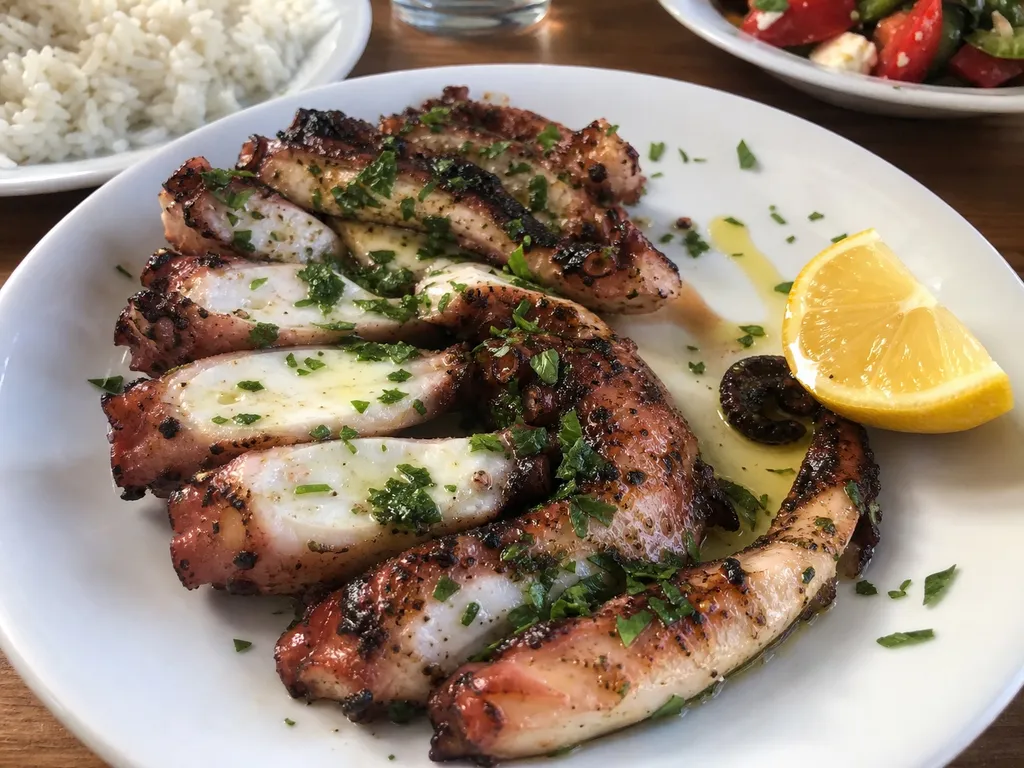 Images are for illustrative purposes only, may be inaccurate, and do not guarantee the presence or absence of specific ingredients.
 Listahan Family Score™
66/100
Works for many families
Score reflects how well this recipe fits a typical busy household. In the app, your Family Score is personalized to your household's allergens, kids, and pantry.
Nutrition
per serving515
Calories
60 g
Protein
2 g
Carbs
27 g
Fat
Estimated per serving. Actual values depend on the brands and portions you use.
Listahan cooking guide
Chef notes & practical guide
Technique notes, ingredient swaps, serve-alongside ideas, storage guidance, and equipment for this recipe.
Cultural context
Htapodi sxaras is a taverna staple across Greek islands, especially in fishing communities like the Cyclades and Ionian islands, where octopus was traditionally caught, then beaten against rocks to break down its dense muscle fibers before grilling. Today most cooks simmer the octopus first, a shortcut that achieves the same tenderizing effect without the dockside ritual, then finish it over hot coals for the char that makes the dish.
Listahan note
This version simmers the octopus low and slow before marinating it in olive oil, vinegar, and lemon, so the grill's only job is to add char and crisp the tentacle tips, not to cook the octopus through.
Technique cues
- Simmering octopus at a bare simmer rather than a rolling boil keeps the collagen converting to gelatin gradually; a hard boil toughens the flesh before it has a chance to relax.
- Marinating the already-tender octopus in acid (vinegar and lemon) for at least 20 minutes seasons it through and gives the surface sugars something to caramelize on the grill.
- A very hot, quick grill of 2-3 minutes per side produces the crisp, blistered edges without drying out the interior, since the octopus is already fully cooked by that point.
Kitchen flow
- Parallel prep
- While the octopus simmers for over an hour, mix the marinade and preheat the grill so both are ready the moment the octopus comes off the heat.
- Make-ahead
- The octopus can be simmered and marinated up to two days ahead and refrigerated, which deepens the flavor; grill it fresh right before serving.
- Leftover move
- Chop leftover grilled octopus and fold it into a lemony orzo salad or over greens the next day.
- Cleanup rhythm
- Wipe down the simmering pot right after draining while it is still warm, since cooled octopus liquid can leave a fishy film.
Ingredient brief
Role, handling, and swap guidance for each key ingredient.
whole octopus, cleaned
main protein
Purpose: tentacles hold the connective tissue that turns silky once slow-simmered
Handling: simmer whole with bay leaves and peppercorns until a knife slides in easily
Adaptation: frozen octopus (thawed) works just as well, and freezing itself is thought to help tenderize the flesh
red wine vinegar
marinade acid
Purpose: brightens the rich, fatty grilled flavor and seasons the octopus after cooking
Handling: whisk into the olive oil and lemon juice before tossing in the warm octopus
Adaptation: sherry vinegar gives a slightly nuttier, less sharp edge
olive oil
marinade base and finishing oil
Purpose: carries the oregano and lemon flavor into the octopus and adds richness after grilling
Handling: use a good fruity extra-virgin for the final drizzle since it is tasted raw
Adaptation: a milder oil works in the marinade but loses some of the peppery finish on top
dried oregano
signature herb
Purpose: coarse dried Greek oregano is more pungent than fresh and holds up to grilling
Handling: crumble between your fingers as you add it to release the oils
Adaptation: fresh oregano can replace it but use three times as much and add only at the end since fresh burns and turns bitter on the grill
lemon juice and wedges
acid and garnish
Purpose: cuts the richness of the olive oil and grilled char
Handling: reserve some wedges for squeezing tableside so the last bit of acid stays bright
Adaptation: a splash of white wine vinegar can stand in if lemons are unavailable
Technique notes
- Adding bay leaves and whole peppercorns to the poaching liquid perfumes the octopus without needing to season the flesh itself, since salt in the poaching water can toughen it.
- Test doneness with a paring knife at the thickest part of a tentacle; it should slide in with almost no resistance, similar to a well-cooked potato.
- Let the octopus cool just enough to handle before slicing into the marinade so the interior stays warm and absorbs the vinegar and oil more readily.
Ingredient swaps
- Gluten-free direction
- The dish is naturally gluten-free as written; just confirm any side bread served alongside is swapped for a gluten-free loaf or skipped.
- Weeknight shortcut
- Use a stovetop cast-iron grill pan instead of an outdoor grill for the same char in a smaller footprint.
- Lower-sodium direction
- Skip added salt in the marinade and season only at the table, since the olives or feta often served alongside already carry a lot of sodium.
Serve alongside
- Horiatiki salata (Greek village salad)
- Fava (yellow split pea puree)
- Grilled bread rubbed with garlic
- Lemon roasted potatoes
- Chilled Assyrtiko from Santorini, which cuts through the richness
- Ouzo with a splash of water as a traditional aperitif
Serving suggestions only — check pairings for your household's allergens.
Storage & reheating
- Refrigerate cooked octopus up to 3 days in an airtight container
- Reheat gently in a dry skillet just to warm through, since the microwave can turn it rubbery
- Freeze the simmered, unmarinated octopus for up to 2 months and thaw overnight in the fridge before marinating and grilling
Equipment
- Large stockpot for simmering
- Outdoor grill or grill pan
- Tongs for turning tentacles
- Sharp knife for slicing
Make this household-aware
Listahan Pro checks this recipe against your household's allergens, finds pantry-aware swaps, builds the shopping list, and helps you plan the week around it.
Plan it in Listahan
Add Grilled Octopus with Lemon and Olive Oil (Htapodi Sxaras) to your week, check it against your household's allergens, and build the shopping list automatically.
More Greek recipes
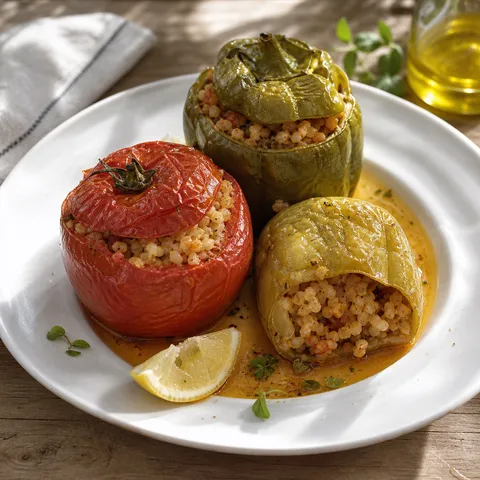 Greek Lens Verified Images are for illustrative purposes only, may be inaccurate, and do not guarantee the presence or absence of specific ingredients.
 Gemista (Stuffed Tomatoes and Peppers with Rice)
Ripe tomatoes and bell peppers hollowed out and stuffed with a savory herbed rice filling, then baked until tender and caramelized.
 Greek Lens Verified Images are for illustrative purposes only, may be inaccurate, and do not guarantee the presence or absence of specific ingredients.
 Kourabiedes (Greek Almond Butter Cookies)
Buttery, crumbly shortbread cookies studded with toasted almonds and generously dusted with powdered sugar.
 Greek Lens Verified Images are for illustrative purposes only, may be inaccurate, and do not guarantee the presence or absence of specific ingredients.
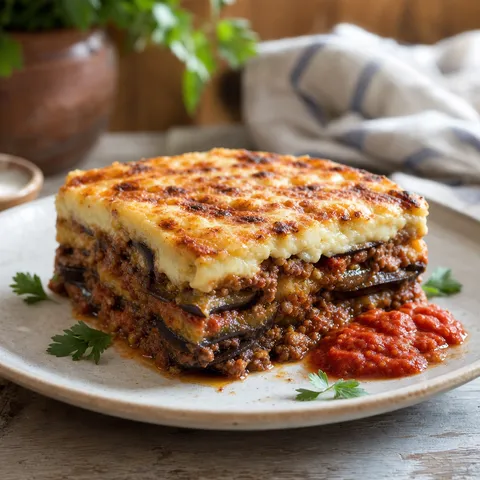
 Classic Moussaka
A rich, layered Greek casserole featuring roasted eggplant, a hearty spiced meat sauce, and a thick, creamy béchamel topping.