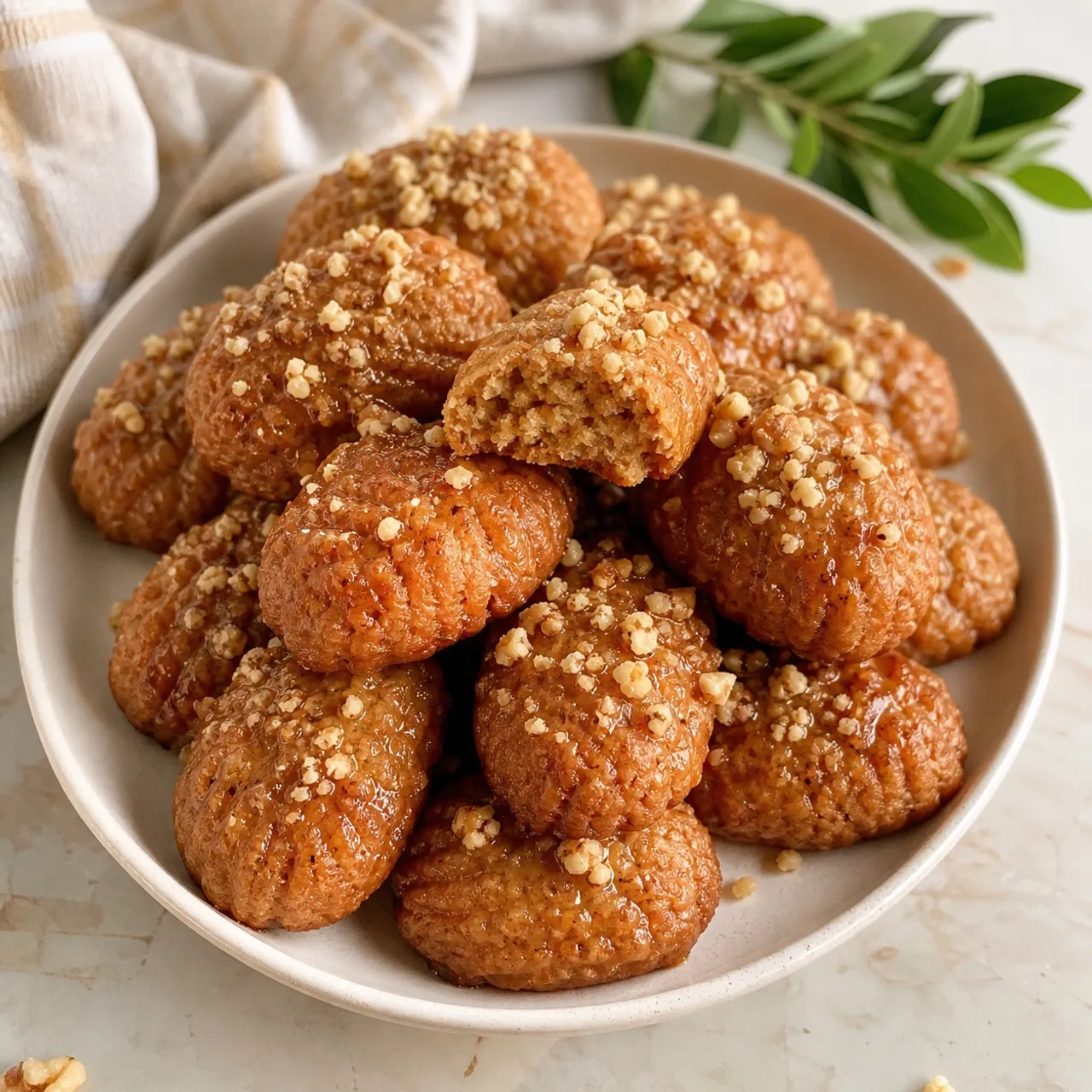
 Greek Images are for illustrative purposes only, may be inaccurate, and do not guarantee the presence or absence of specific ingredients.
 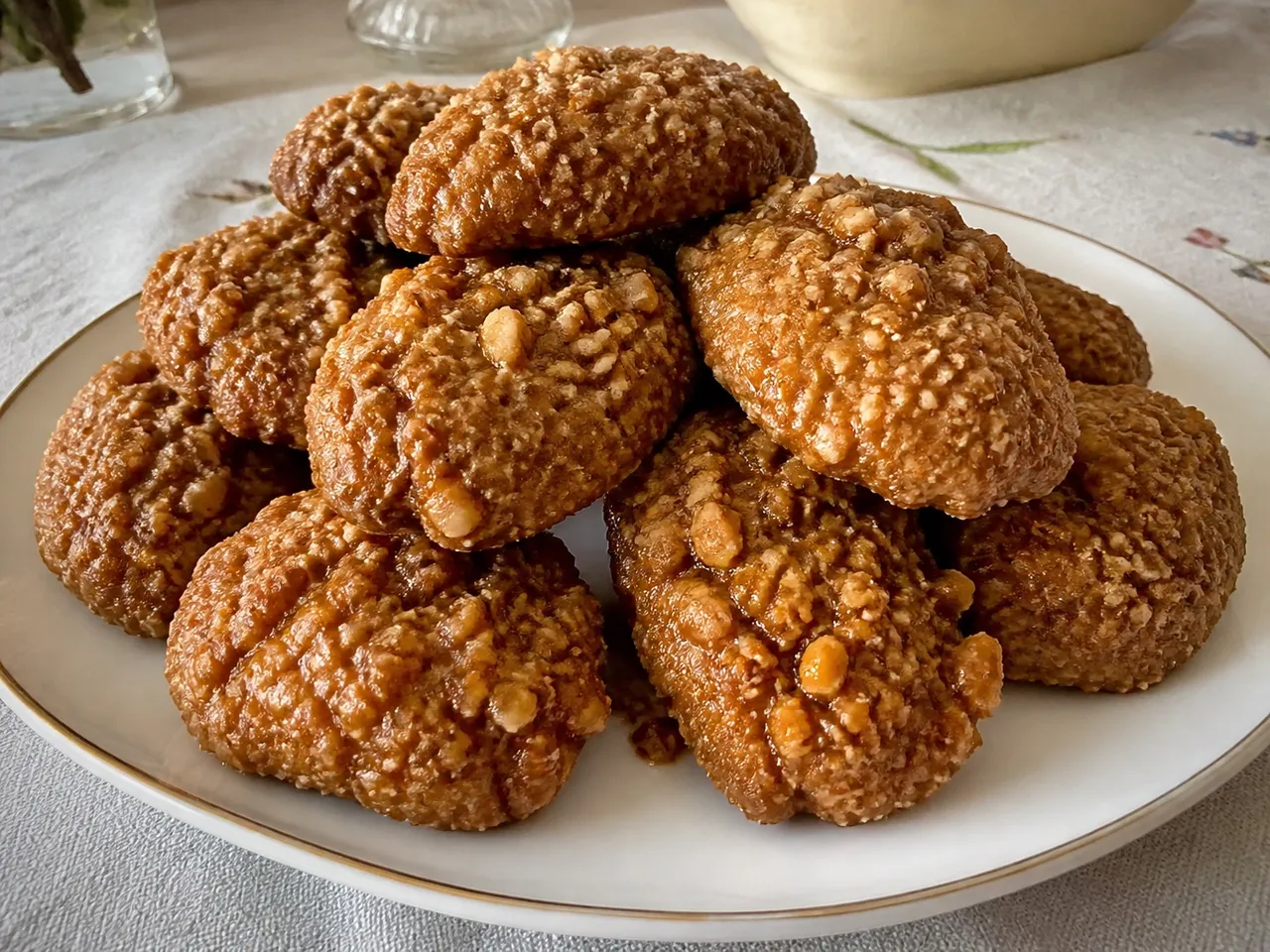 Serving Images are for illustrative purposes only, may be inaccurate, and do not guarantee the presence or absence of specific ingredients.
 Melomakarona (Honey-Dipped Spiced Cookies)
Soft, spiced olive oil cookies flavored with orange and dipped in a fragrant honey syrup, finished with chopped walnuts.
Contains common allergens
In the app, Listahan checks these against your household automatically.
Instructions
7 steps- 1
In a large bowl, whisk together olive oil, sugar, orange juice, orange zest, and brandy.
- 2
In a separate bowl, combine flour, baking powder, baking soda, cinnamon, and cloves, then gradually fold into the wet ingredients to form a soft dough.
- 3
Shape the dough into small oval cookies and place on a parchment-lined baking sheet.
- 4
Bake at 350°F for 20-22 minutes, until lightly golden and firm to the touch.
- 5
While the cookies bake, simmer honey and water together for 5 minutes to make a syrup.
- 6
Dip the warm cookies briefly into the hot syrup, letting them soak for a few seconds on each side, then place on a serving tray.
- 7
Sprinkle with chopped walnuts while still sticky and let cool before serving.
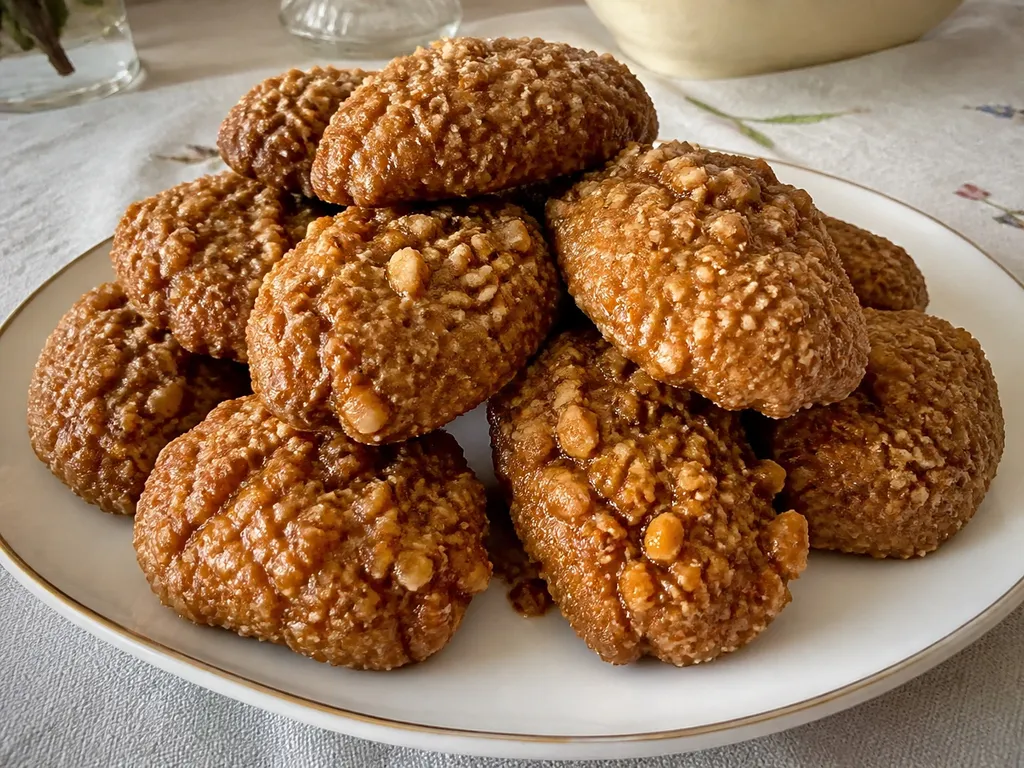 Images are for illustrative purposes only, may be inaccurate, and do not guarantee the presence or absence of specific ingredients.
 Listahan Family Score™
62/100
Works for many families
Score reflects how well this recipe fits a typical busy household. In the app, your Family Score is personalized to your household's allergens, kids, and pantry.
Nutrition
per serving225
Calories
2 g
Protein
31 g
Carbs
11 g
Fat
Estimated per serving. Actual values depend on the brands and portions you use.
Listahan cooking guide
Chef notes & practical guide
Technique notes, ingredient swaps, serve-alongside ideas, storage guidance, and equipment for this recipe.
Cultural context
Melomakarona are one of the two essential Greek Christmas cookies, alongside kourabiedes, and their name combines meli (honey) with makarona, an old word once used for a type of pasta-shaped sweet. Unlike butter-based Western holiday cookies, melomakarona are made with olive oil, which was historically the more available fat in Greek households and is part of why the cookies became a holiday-season fixture.
Listahan note
This version uses olive oil rather than butter for the dough, before the honey syrup and walnuts go on.
Technique cues
- Using olive oil instead of butter as the fat gives the dough a slightly different, more tender crumb and is the traditional approach, since these cookies developed as a dairy-free treat eaten around fasting periods.
- Dipping the cookies into hot syrup while they are still warm from the oven, and letting them sit in the syrup for a few seconds per side, is what allows the syrup to soak into the cookie rather than just glaze the surface.
- Shaping the cookies into small, slightly flattened ovals rather than round balls matters because it increases the surface area exposed to the syrup, giving a better syrup-to-cookie ratio in every bite.
Kitchen flow
- Parallel prep
- While the cookies bake, simmer the honey syrup so it is hot and ready the moment the cookies come out of the oven.
- Make-ahead
- These cookies actually improve after a day or two as the syrup settles into the dough; make them at least a day before serving if possible.
- Leftover move
- Store any extra cookies in a single layer separated by parchment, since stacking sticky, syrup-coated cookies can cause them to stick together.
- Cleanup rhythm
- Dip cookies into the syrup pot one at a time with a fork, letting excess drip off before setting on the tray, to keep the workspace from getting overly sticky.
Ingredient brief
Role, handling, and swap guidance for each key ingredient.
olive oil
primary fat
Purpose: replaces butter entirely, giving the dough its traditional character and a slightly fruity background note
Handling: whisk it with the sugar, juice, and zest until well combined before adding dry ingredients
Adaptation: a neutral vegetable oil can be used but loses the subtle fruity flavor that a good olive oil contributes
orange juice and zest
citrus flavor
Purpose: bright citrus is a classic pairing with the honey syrup and warm spices
Handling: zest the orange before juicing it, since it is much harder to zest once the fruit is cut
Adaptation: use freshly squeezed juice rather than bottled for a fresher flavor, but the zest is not really replaceable with anything else
honey
syrup base
Purpose: the defining feature of the cookie, giving it its name and signature sticky-sweet finish
Handling: simmer with water just until it thins into a pourable syrup, not longer, or it can turn too thick and hard once cooled on the cookie
Adaptation: a portion of the honey can be replaced with simple syrup for a milder sweetness, though the flavor will be less distinctly honeyed
ground cinnamon and cloves
warm spice blend
Purpose: this spice pairing is the traditional flavor base for melomakarona, distinguishing it from other honey cookies
Handling: mix into the dry ingredients so the spice distributes evenly through the dough
Adaptation: allspice can substitute for the cloves in a smaller amount if cloves are not on hand
walnuts
finishing topping
Purpose: their earthy crunch is the traditional finish, sprinkled on while the honey coating is still sticky
Handling: chop finely and press on while the cookies are still warm and syrup-coated so they adhere
Adaptation: pistachios are sometimes used regionally, though walnuts are far more traditional
Technique notes
- Do not over-mix the dough once the flour goes in; melomakarona dough should be soft but should not be worked like a bread dough, or the cookies will turn tough rather than tender.
- Dip warm cookies into hot syrup, not the reverse, since cold cookies in hot syrup absorb unevenly and can turn soggy on the outside while staying dry in the center.
- Let the dipped cookies rest on a rack or tray for at least 20 minutes before serving so the syrup coating sets slightly rather than remaining wet to the touch.
Ingredient swaps
- Dairy-free direction
- The recipe is naturally dairy-free as written since it uses olive oil rather than butter.
- Tree-nut-free direction
- Omit the walnuts and finish with a light dusting of extra cinnamon instead for a nut-free version.
- Alcohol-free direction
- Omit the brandy and replace with an extra tablespoon of orange juice; the dough will be slightly less complex in flavor but the texture holds up fine.
Serve alongside
- A plate of kourabiedes for a classic Christmas cookie spread
- Fresh orange slices
- Greek coffee
- A glass of Mavrodafne, a sweet Greek dessert wine
Serving suggestions only — check pairings for your household's allergens.
Storage & reheating
- Store at room temperature in an airtight container up to 1 week
- No reheating needed, best enjoyed at room temperature
- Freeze un-syruped baked cookies up to 2 months, then dip in fresh hot syrup after thawing
Equipment
- Two mixing bowls
- Baking sheet
- Small saucepan for syrup
- Fork or slotted spoon for dipping
Make this household-aware
Listahan Pro checks this recipe against your household's allergens, finds pantry-aware swaps, builds the shopping list, and helps you plan the week around it.
Plan it in Listahan
Add Melomakarona (Honey-Dipped Spiced Cookies) to your week, check it against your household's allergens, and build the shopping list automatically.
More Greek recipes
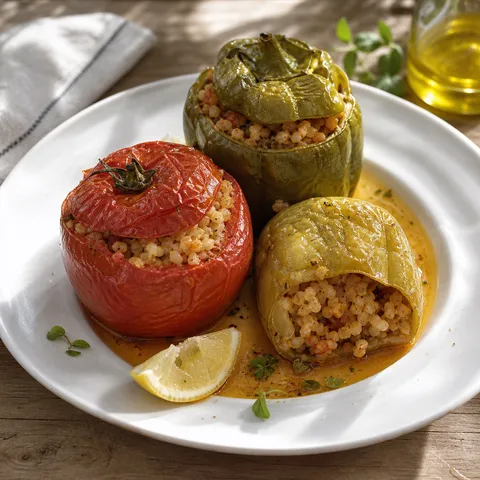 Greek Lens Verified Images are for illustrative purposes only, may be inaccurate, and do not guarantee the presence or absence of specific ingredients.
 Gemista (Stuffed Tomatoes and Peppers with Rice)
Ripe tomatoes and bell peppers hollowed out and stuffed with a savory herbed rice filling, then baked until tender and caramelized.
 Greek Lens Verified Images are for illustrative purposes only, may be inaccurate, and do not guarantee the presence or absence of specific ingredients.
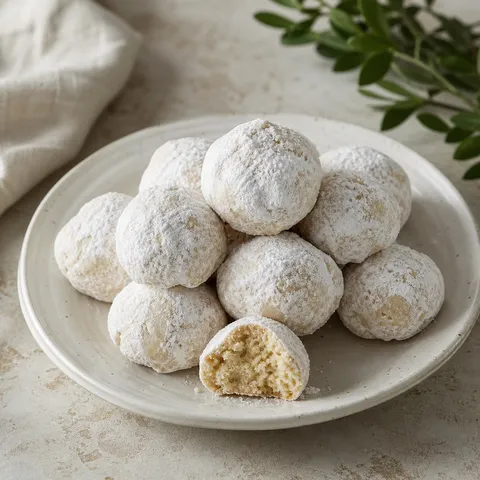
 Kourabiedes (Greek Almond Butter Cookies)
Buttery, crumbly shortbread cookies studded with toasted almonds and generously dusted with powdered sugar.
 Greek Lens Verified Images are for illustrative purposes only, may be inaccurate, and do not guarantee the presence or absence of specific ingredients.
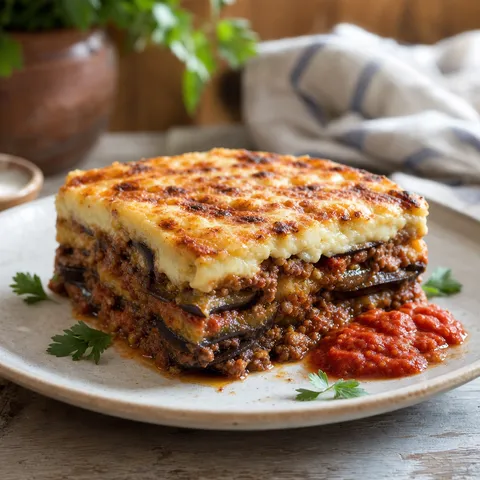
 Classic Moussaka
A rich, layered Greek casserole featuring roasted eggplant, a hearty spiced meat sauce, and a thick, creamy béchamel topping.