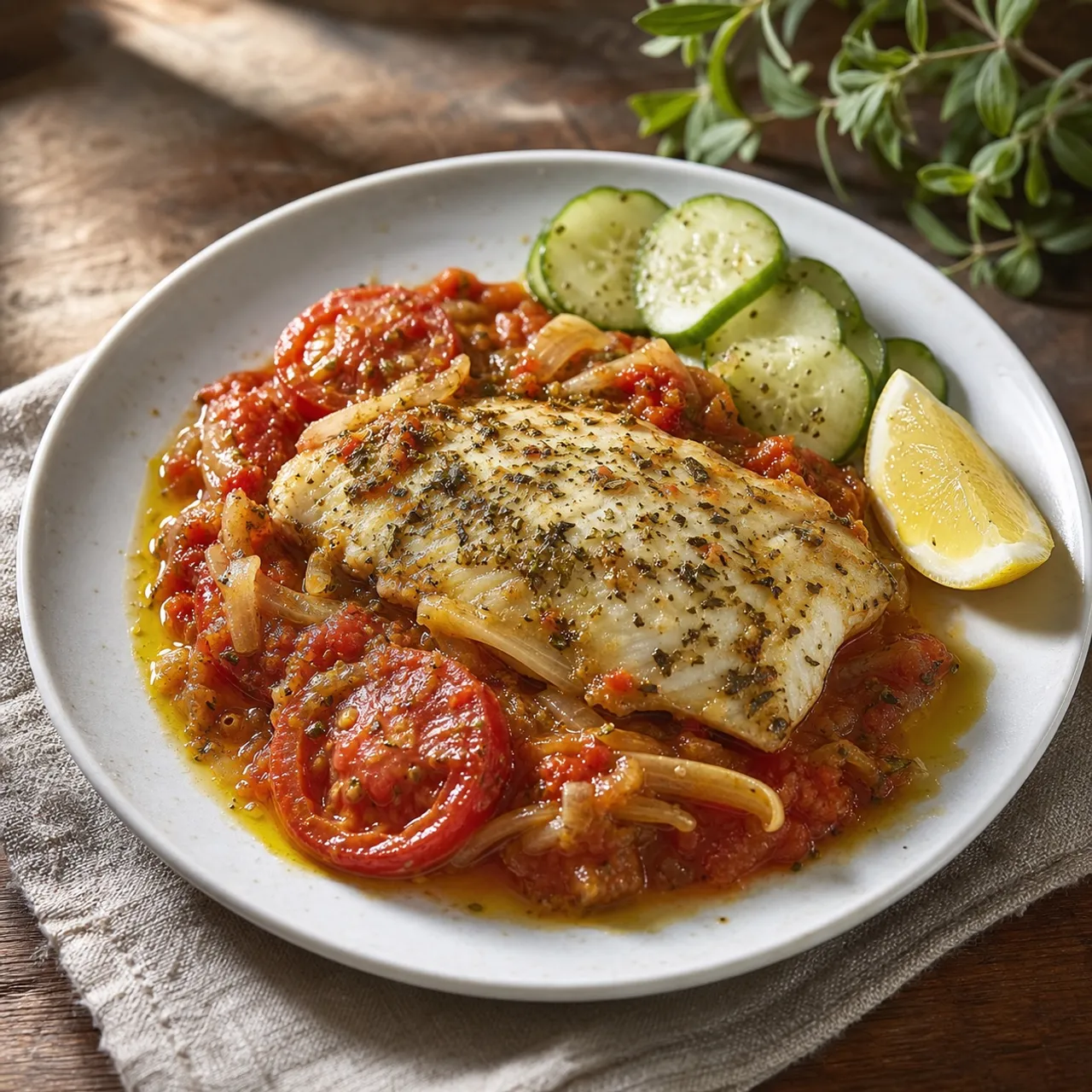
 Greek Images are for illustrative purposes only, may be inaccurate, and do not guarantee the presence or absence of specific ingredients.
 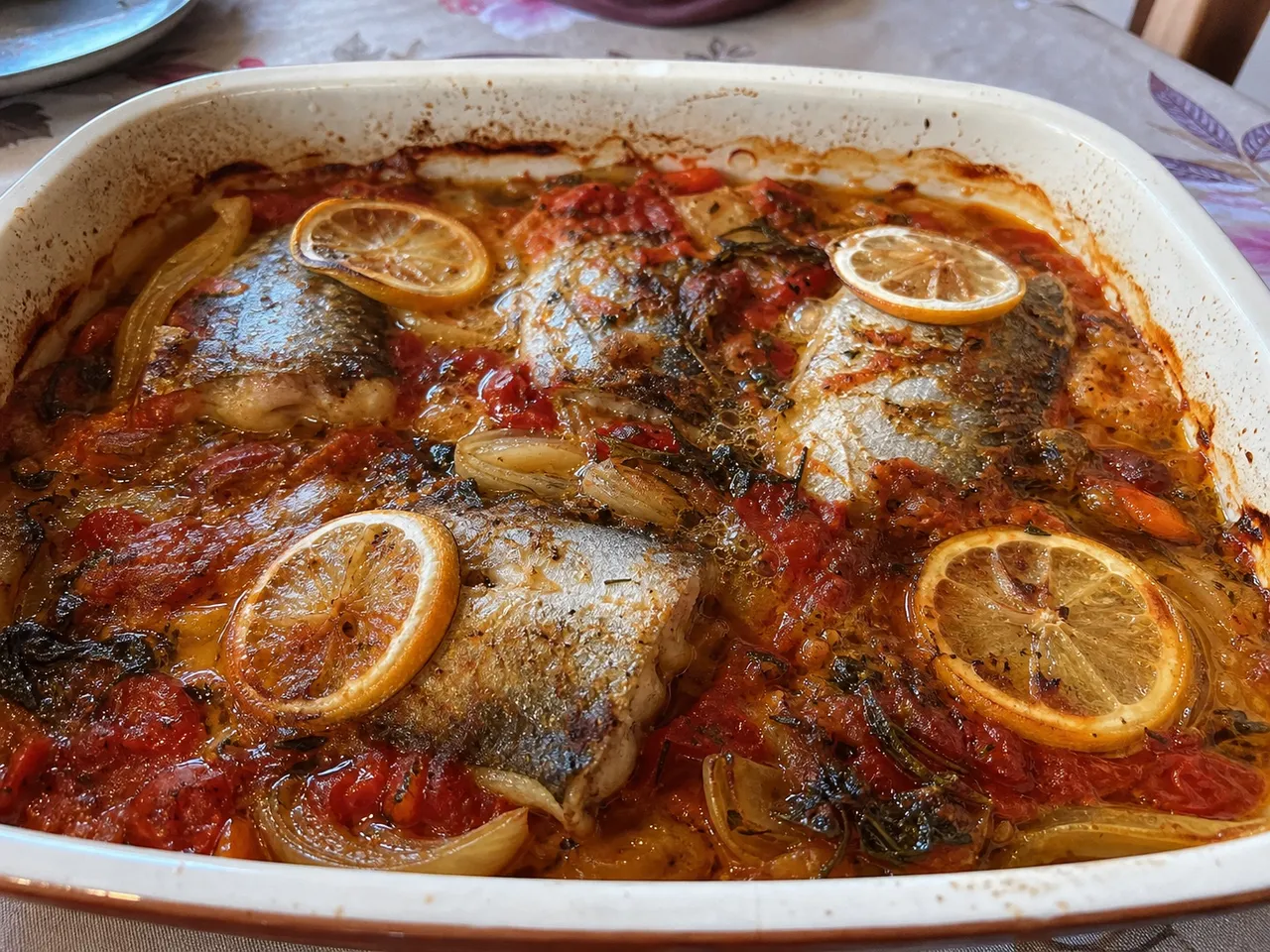 Serving Images are for illustrative purposes only, may be inaccurate, and do not guarantee the presence or absence of specific ingredients.
 Psari Plaki (Baked Fish with Tomatoes and Vegetables)
Whole fish fillets baked over a bed of tomatoes, onions, and potatoes in an herbed olive oil sauce until flaky and fragrant.
Contains common allergens
In the app, Listahan checks these against your household automatically.
Instructions
6 steps- 1
Preheat the oven to 375°F and lightly oil a large baking dish.
- 2
Layer the sliced potatoes and onion in the bottom of the dish, season with salt and pepper, drizzle with half the olive oil, and bake for 20 minutes.
- 3
Whisk together the remaining olive oil, white wine, tomato paste, garlic, and oregano.
- 4
Remove the dish from the oven, arrange the fish fillets on top of the partially cooked potatoes, and cover with the tomato slices.
- 5
Pour the tomato-wine mixture over the fish and vegetables, top with lemon slices, and season with salt and pepper.
- 6
Bake for another 20-25 minutes, until the fish flakes easily and the potatoes are tender, then garnish with parsley before serving.
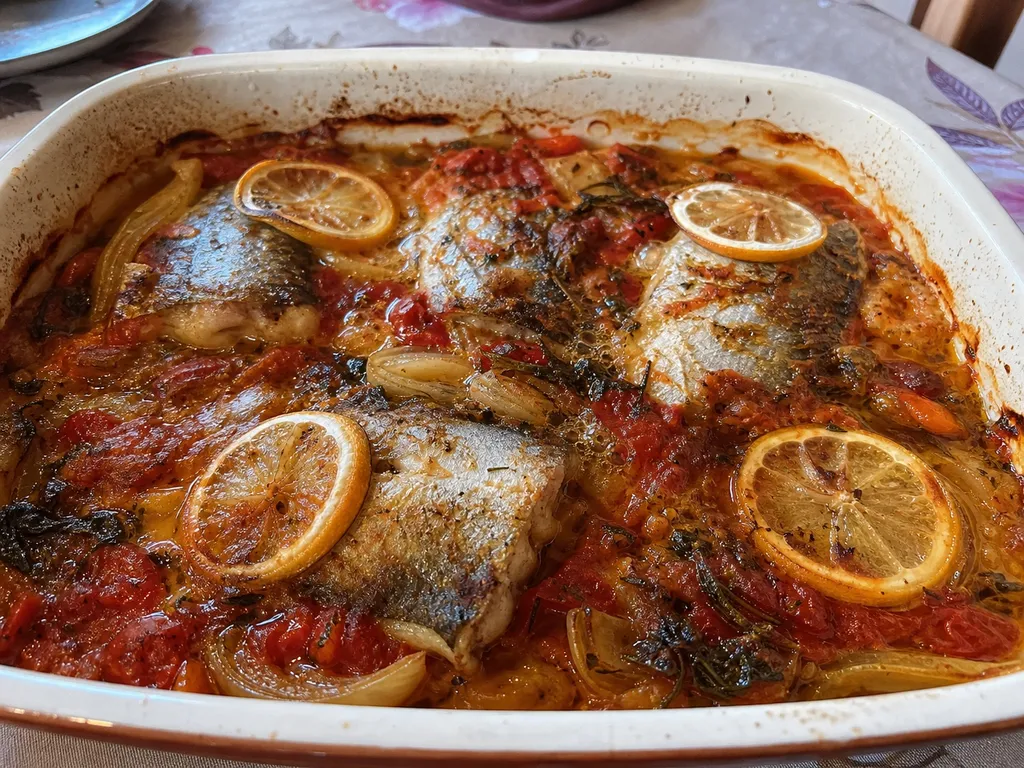 Images are for illustrative purposes only, may be inaccurate, and do not guarantee the presence or absence of specific ingredients.
 Listahan Family Score™
67/100
Works for many families
Score reflects how well this recipe fits a typical busy household. In the app, your Family Score is personalized to your household's allergens, kids, and pantry.
Nutrition
per serving270
Calories
3 g
Protein
23 g
Carbs
18 g
Fat
Estimated per serving. Actual values depend on the brands and portions you use.
Listahan cooking guide
Chef notes & practical guide
Technique notes, ingredient swaps, serve-alongside ideas, storage guidance, and equipment for this recipe.
Cultural context
Plaki refers to a Greek method of slow-baking fish or vegetables together in a tomato-and-olive-oil sauce, a technique that spread through Mediterranean trading ports and became a Lenten-season staple since it required no meat or dairy. Coastal families historically used whatever whitefish came in that day, layering it over potatoes to stretch a modest catch into a full meal.
Listahan note
This version pre-bakes the potatoes and onions before adding the fish, so the vegetables are fully tender by the time the fish is done rather than underbaked and starchy.
Technique cues
- Par-baking the potato and onion layer before the fish goes in matters because fish cooks much faster than raw potato slices; without the head start you end up with tough fish and crunchy potatoes.
- Whisking the tomato paste into the olive oil and wine before pouring it over the fish creates a thin sauce that clings and reduces in the oven rather than pooling thin and watery.
- Choosing a firm white fish like cod or snapper matters here because the fillets need to hold together through a second, longer bake; a delicate fish like sole would fall apart.
Kitchen flow
- Parallel prep
- Slice the potatoes and onion and get the first bake started, then use that 20 minutes to mix the tomato-wine sauce and prep the fish and garlic.
- Make-ahead
- The potato-onion base can be par-baked a few hours ahead and held at room temperature; add the fish and finish baking closer to serving time.
- Leftover move
- Flake leftover fish and potatoes into a warm salad with extra lemon juice and olive oil rather than reheating the fillets whole, which can dry them out.
- Cleanup rhythm
- Line the baking dish with a bit of extra oil before the first potato layer so the tomato sauce does not bake on and stick to the dish.
Ingredient brief
Role, handling, and swap guidance for each key ingredient.
white fish fillets (cod or snapper)
main protein
Purpose: firm flesh holds up to the second bake without disintegrating
Handling: pat dry before laying over the potatoes so the sauce does not turn watery
Adaptation: haddock or halibut work well, but avoid thin, flaky fillets like tilapia which can overcook and shred
potatoes
base layer and starch
Purpose: they soak up the tomato-wine juices and turn the dish into a full one-pan meal
Handling: slice thin and even so they finish par-baking uniformly
Adaptation: waxy potatoes like Yukon Gold hold their shape better than starchy russets, which can go mushy
tomato paste
sauce backbone
Purpose: concentrates tomato flavor quickly without adding excess liquid the way canned tomatoes would
Handling: whisk it into the wine and oil first so it dissolves smoothly rather than clumping
Adaptation: a tablespoon of sun-dried tomato paste adds a deeper, slightly sweeter note
white wine
sauce liquid and acid
Purpose: deglazes the pan flavor into the sauce and balances the richness of the olive oil
Handling: use a dry white you would actually drink, since its flavor concentrates as it reduces
Adaptation: replace with fish stock plus a splash of lemon juice for a non-alcoholic version
dried oregano
aromatic
Purpose: the classic herb in Greek fish preparations, pairing naturally with tomato and lemon
Handling: add it to the sauce mixture rather than directly on the fish so it distributes evenly
Adaptation: fresh thyme is a reasonable regional stand-in
Technique notes
- Arrange the fish fillets in a single layer without overlapping so each piece gets even contact with the tomato sauce and cooks at the same rate.
- The dish is done when the fish flakes easily with a fork at its thickest point, usually right around the 20-25 minute mark in the second bake, not before.
- Resting the dish for five minutes after it comes out of the oven lets the sauce settle and thicken slightly before serving, rather than running thin on the plate.
Ingredient swaps
- Dairy-free option
- The recipe is naturally dairy-free; no adjustment needed.
- Lower-sodium direction
- Use low-sodium or no-salt-added canned tomato paste and season at the table instead of during cooking.
- Weeknight shortcut
- Use pre-sliced potatoes from the produce section and skip the par-bake, adding 10 extra minutes to the final bake to compensate.
Serve alongside
- Horiatiki salata
- Steamed wild greens (horta) with lemon
- Crusty village bread
- Rice pilaf
- A crisp Greek white like Moschofilero
- Sparkling water with lemon for a lighter pairing
Serving suggestions only — check pairings for your household's allergens.
Storage & reheating
- Refrigerate in an airtight container up to 2 days
- Reheat gently in a 300F oven covered with foil to avoid drying the fish
- Not recommended for freezing, since the potatoes turn grainy after thawing
Equipment
- Large baking dish
- Sharp knife for thin potato slices
- Whisk for the sauce
- Fish spatula for serving
Make this household-aware
Listahan Pro checks this recipe against your household's allergens, finds pantry-aware swaps, builds the shopping list, and helps you plan the week around it.
Plan it in Listahan
Add Psari Plaki (Baked Fish with Tomatoes and Vegetables) to your week, check it against your household's allergens, and build the shopping list automatically.
More Greek recipes
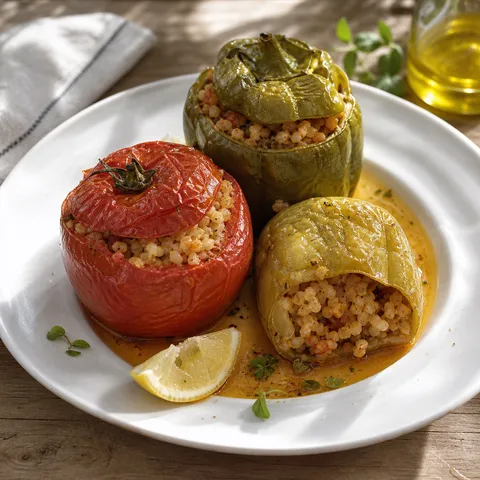 Greek Lens Verified Images are for illustrative purposes only, may be inaccurate, and do not guarantee the presence or absence of specific ingredients.
 Gemista (Stuffed Tomatoes and Peppers with Rice)
Ripe tomatoes and bell peppers hollowed out and stuffed with a savory herbed rice filling, then baked until tender and caramelized.
 Greek Lens Verified Images are for illustrative purposes only, may be inaccurate, and do not guarantee the presence or absence of specific ingredients.
 Kourabiedes (Greek Almond Butter Cookies)
Buttery, crumbly shortbread cookies studded with toasted almonds and generously dusted with powdered sugar.
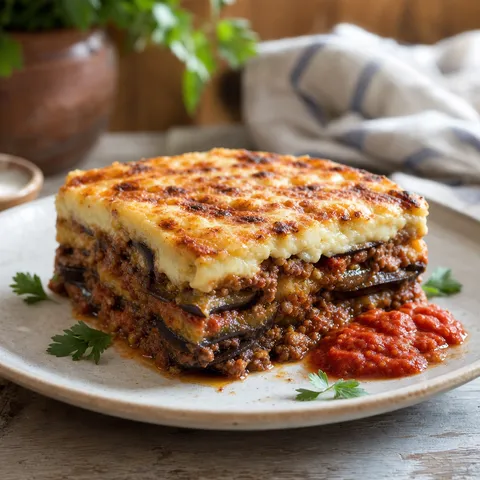 Greek Lens Verified Images are for illustrative purposes only, may be inaccurate, and do not guarantee the presence or absence of specific ingredients.
 Classic Moussaka
A rich, layered Greek casserole featuring roasted eggplant, a hearty spiced meat sauce, and a thick, creamy béchamel topping.