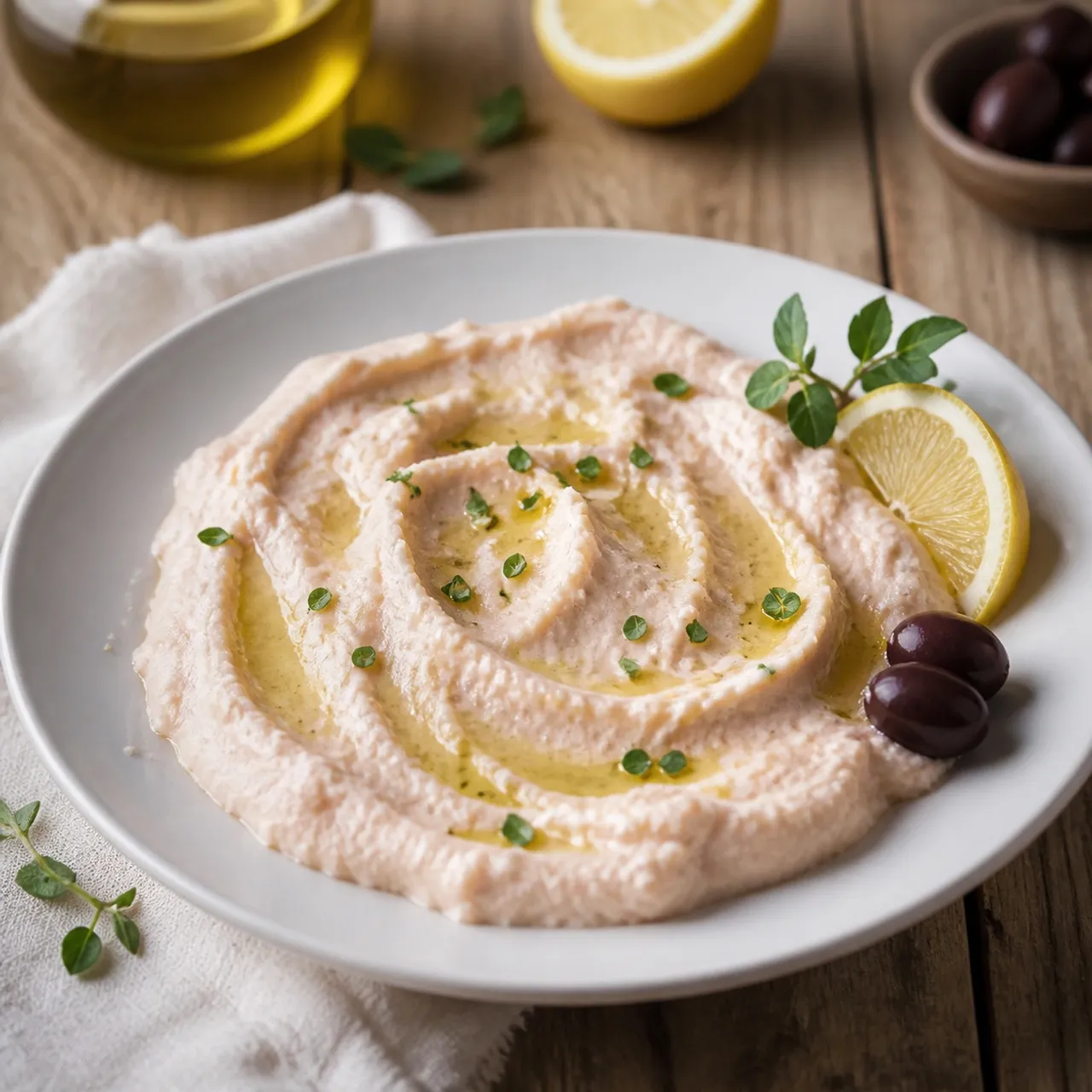
 Greek Images are for illustrative purposes only, may be inaccurate, and do not guarantee the presence or absence of specific ingredients.
 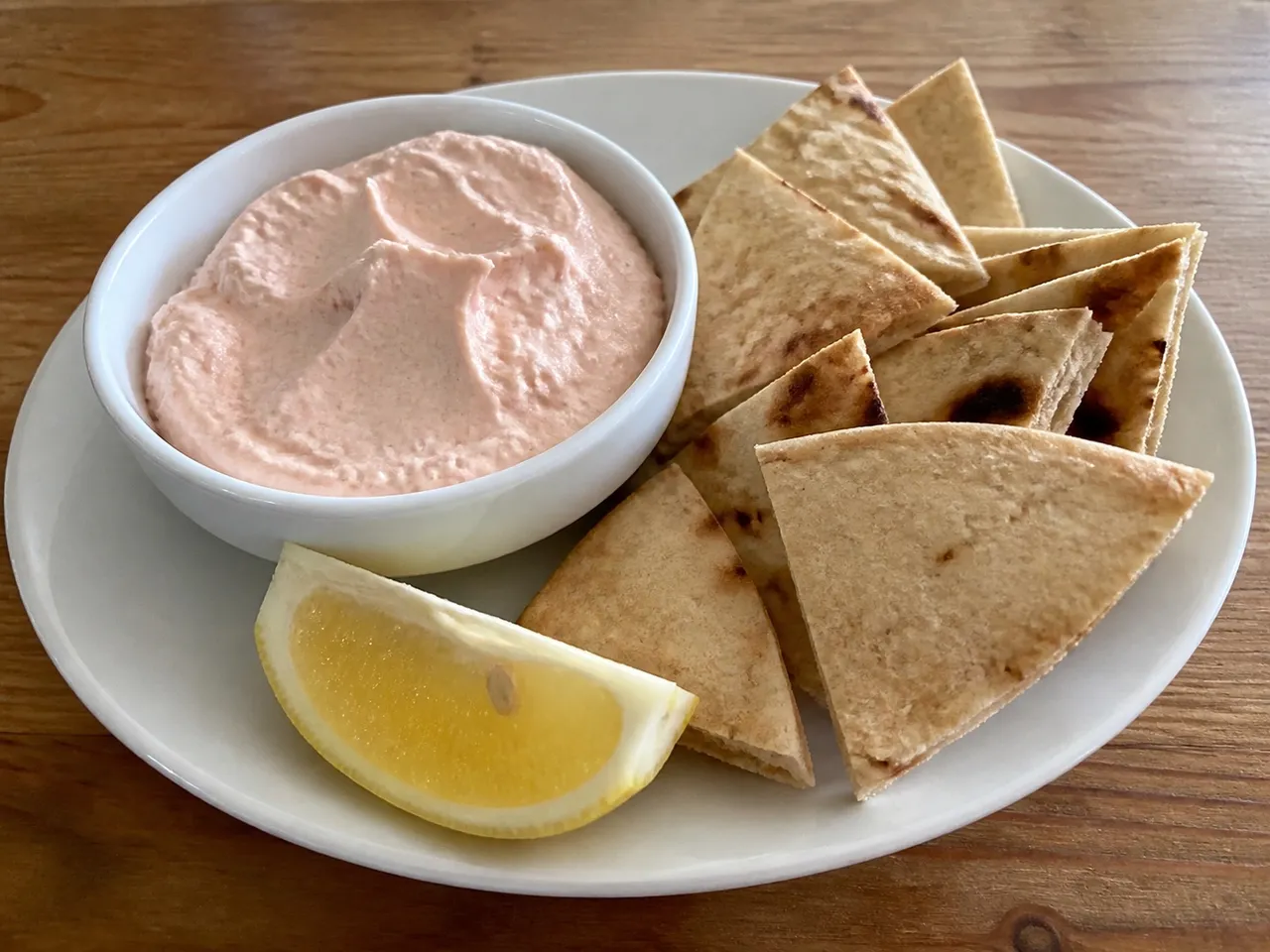 Serving Images are for illustrative purposes only, may be inaccurate, and do not guarantee the presence or absence of specific ingredients.
 Taramosalata (Greek Fish Roe Dip)
A pale pink, creamy dip made from cured fish roe blended with bread, lemon, and olive oil for a briny, tangy spread.
Contains common allergens
In the app, Listahan checks these against your household automatically.
Good to know
- Ready in under 30 minutes
Matched from this dish's own ingredients and timing. Browse more: 30-minute meals
Instructions
6 steps- 1
Soak the bread slices in milk for 5 minutes, then squeeze out the excess liquid.
- 2
In a food processor, combine the soaked bread, tarama, and grated onion, and blend until smooth.
- 3
With the processor running, slowly drizzle in the olive oil, alternating with the lemon juice, until the mixture is light, fluffy, and pale pink.
- 4
Add a tablespoon of water if the mixture is too thick, and blend until the desired consistency is reached.
- 5
Taste and adjust lemon juice for tanginess, then chill for at least 1 hour before serving.
- 6
Serve cold with warm pita, crusty bread, or fresh vegetables.
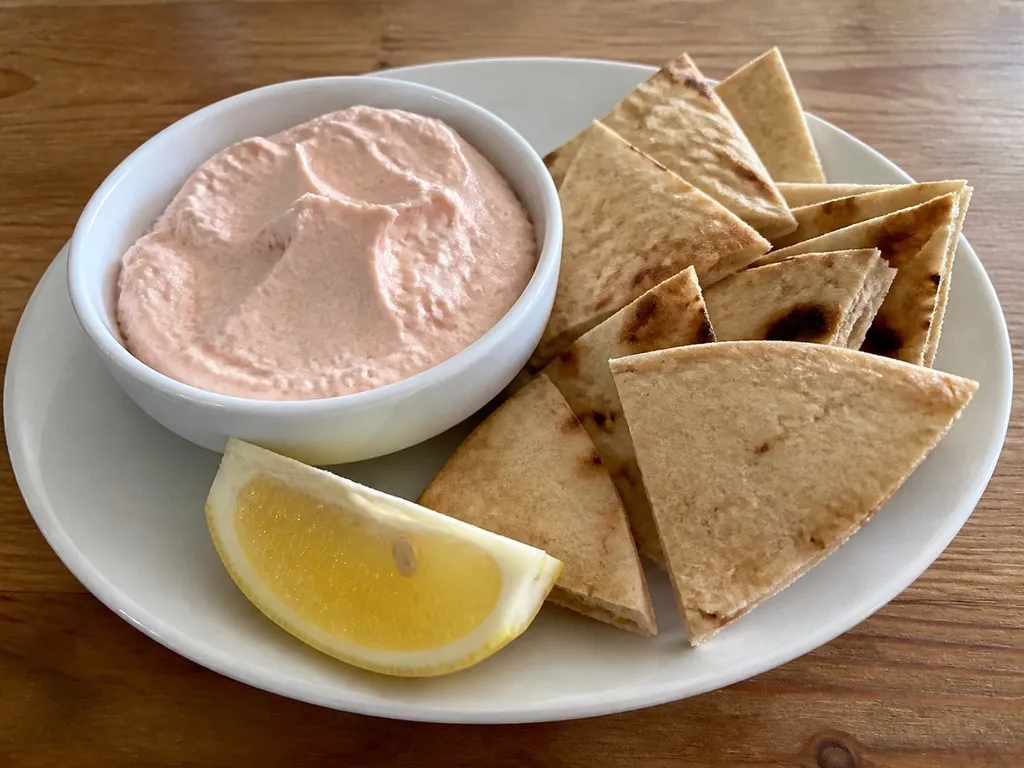 Images are for illustrative purposes only, may be inaccurate, and do not guarantee the presence or absence of specific ingredients.
 Listahan Family Score™
66/100
Works for many families
Score reflects how well this recipe fits a typical busy household. In the app, your Family Score is personalized to your household's allergens, kids, and pantry.
Nutrition
per serving225
Calories
2 g
Protein
12 g
Carbs
19 g
Fat
Estimated per serving. Actual values depend on the brands and portions you use.
Listahan cooking guide
Chef notes & practical guide
Technique notes, ingredient swaps, serve-alongside ideas, storage guidance, and equipment for this recipe.
Cultural context
Taramosalata is a centuries-old dish born from Greek Orthodox fasting traditions, when meat and dairy were off-limits but cured fish roe remained permitted, making this pale pink dip a practical way to add richness to fasting meals. The bread-soaked base, rather than a potato base used in some regional versions, reflects the more common mainland Greek preparation, producing a lighter, fluffier texture.
Listahan note
This version uses soaked white bread rather than potato as the base, which is what gives the finished dip its characteristically light, almost mousse-like texture rather than a denser, starchier consistency.
Technique cues
- Soaking the bread in milk and squeezing it dry before blending is what creates taramosalata's soft, fluffy body - using dry breadcrumbs instead would make the dip gritty rather than smooth.
- Drizzling the olive oil in slowly while the processor runs, alternating with lemon juice, is an emulsification technique similar to making mayonnaise, and it's what turns the mixture pale, light, and airy rather than a dense paste.
- Tasting and adjusting the lemon juice at the end matters because tarama varies in saltiness and intensity between brands, so the recipe's proportions are a starting point rather than a fixed rule.
Kitchen flow
- Parallel prep
- While the bread soaks in milk for 5 minutes, measure out the tarama and grate the onion so the food processor step goes quickly.
- Make-ahead
- Taramosalata keeps well and is often better after a day in the fridge once the flavors have melded; it's a good make-ahead mezze component.
- Leftover move
- Use leftover taramosalata as a spread for a fish sandwich or alongside grilled fish rather than only as a standalone dip.
- Cleanup rhythm
- Soak and squeeze the bread over a bowl to minimize mess, then blend everything in the food processor bowl directly.
Ingredient brief
Role, handling, and swap guidance for each key ingredient.
tarama, cured carp or cod roe
the entire flavor identity of the dish
Purpose: its briny, cured intensity is diluted and smoothed by the bread and oil, but it's what makes this dish taramosalata rather than a plain bread dip
Handling: use directly from the jar, no additional prep needed before blending
Adaptation: there's no substitute that preserves the dish's identity, though a smaller amount can be used for a milder version with more bread to compensate for volume
white bread
the base that gives the dip its light texture
Purpose: soaked and squeezed, it lightens and extends the tarama into a spreadable dip rather than an intensely fishy paste
Handling: remove crusts and soak just until soft, then squeeze out as much milk as possible
Adaptation: a few boiled, mashed potatoes can substitute for bread in the more rustic regional style, though the texture becomes denser
olive oil
emulsifying richness
Purpose: slowly drizzled in with the processor running, it transforms the mixture into a light, fluffy, pale pink dip rather than a dense paste
Handling: add gradually in a thin stream, never all at once, or the emulsion can break
Adaptation: a neutral vegetable oil can replace part of the olive oil for a milder flavor, though traditional versions lean fully on olive oil
lemon juice
acid balance and lightening agent
Purpose: alternated with the olive oil during blending, it thins and brightens the mixture, cutting the richness of the oil and the brine of the roe
Handling: use fresh juice and add gradually, tasting as you go since roe brands vary in saltiness
Adaptation: reduce the initial amount and add more to taste rather than following the full quantity if using a very salty or intense tarama
onion
sharp background aromatic
Purpose: grated finely and blended in, it adds a subtle bite that keeps the dip from tasting one-dimensionally rich
Handling: grate rather than chop so it blends smoothly rather than leaving distinct pieces
Adaptation: a small shallot can replace the onion for a milder, sweeter background note
Technique notes
- Drizzle the olive oil in a slow, steady stream rather than pouring it in all at once, since dumping it in can break the emulsion and leave the dip looking oily and separated rather than light and fluffy.
- If the mixture looks too thick partway through blending, add the reserved tablespoon of water gradually rather than more oil, which would make it heavier rather than lighter.
- Chill the finished dip for at least an hour before tasting for final seasoning, since cold mutes some of the tarama's saltiness and the balance shifts once fully chilled.
Ingredient swaps
- Gluten-free direction
- Use a gluten-free white bread or substitute boiled, mashed potato for the bread base entirely.
- Lower-sodium direction
- Use a smaller quantity of tarama and increase the bread slightly to dilute the sodium load, since cured roe is naturally quite salty.
- Weeknight shortcut
- Use a store-bought version if short on time, though the blender-fresh version has a notably lighter texture than most jarred taramosalata.
Serve alongside
- warm pita
- cucumber slices
- crusty bread
- a crisp Greek white wine like assyrtiko
- ouzo with water
Serving suggestions only — check pairings for your household's allergens.
Storage & reheating
- Refrigerate in an airtight container up to 5 days.
- Do not freeze, since the emulsion separates and the texture turns grainy once thawed.
- Stir well before serving if any oil has separated on top.
Equipment
- food processor
- small bowl for soaking bread
- measuring cups
Make this household-aware
Listahan Pro checks this recipe against your household's allergens, finds pantry-aware swaps, builds the shopping list, and helps you plan the week around it.
Plan it in Listahan
Add Taramosalata (Greek Fish Roe Dip) to your week, check it against your household's allergens, and build the shopping list automatically.
More Greek recipes
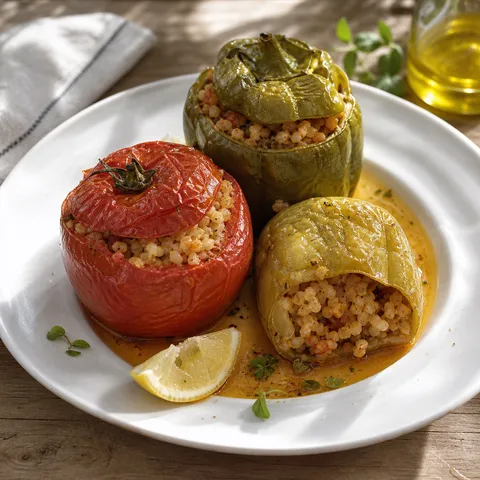 Greek Lens Verified Images are for illustrative purposes only, may be inaccurate, and do not guarantee the presence or absence of specific ingredients.
 Gemista (Stuffed Tomatoes and Peppers with Rice)
Ripe tomatoes and bell peppers hollowed out and stuffed with a savory herbed rice filling, then baked until tender and caramelized.
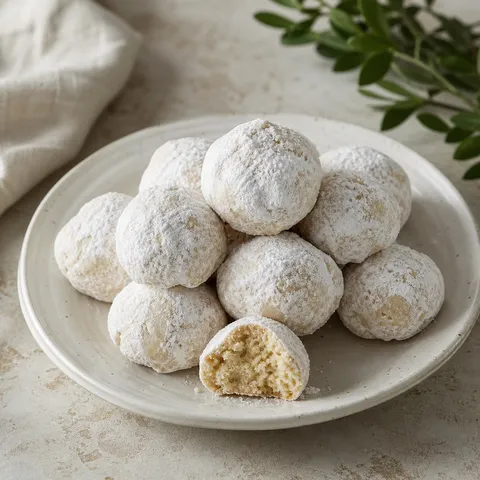 Greek Lens Verified Images are for illustrative purposes only, may be inaccurate, and do not guarantee the presence or absence of specific ingredients.
 Kourabiedes (Greek Almond Butter Cookies)
Buttery, crumbly shortbread cookies studded with toasted almonds and generously dusted with powdered sugar.
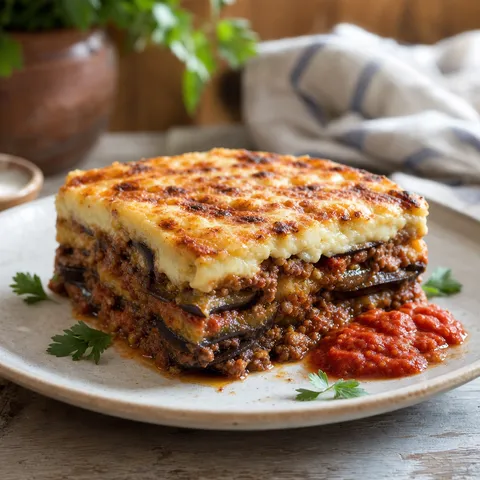 Greek Lens Verified Images are for illustrative purposes only, may be inaccurate, and do not guarantee the presence or absence of specific ingredients.
 Classic Moussaka
A rich, layered Greek casserole featuring roasted eggplant, a hearty spiced meat sauce, and a thick, creamy béchamel topping.