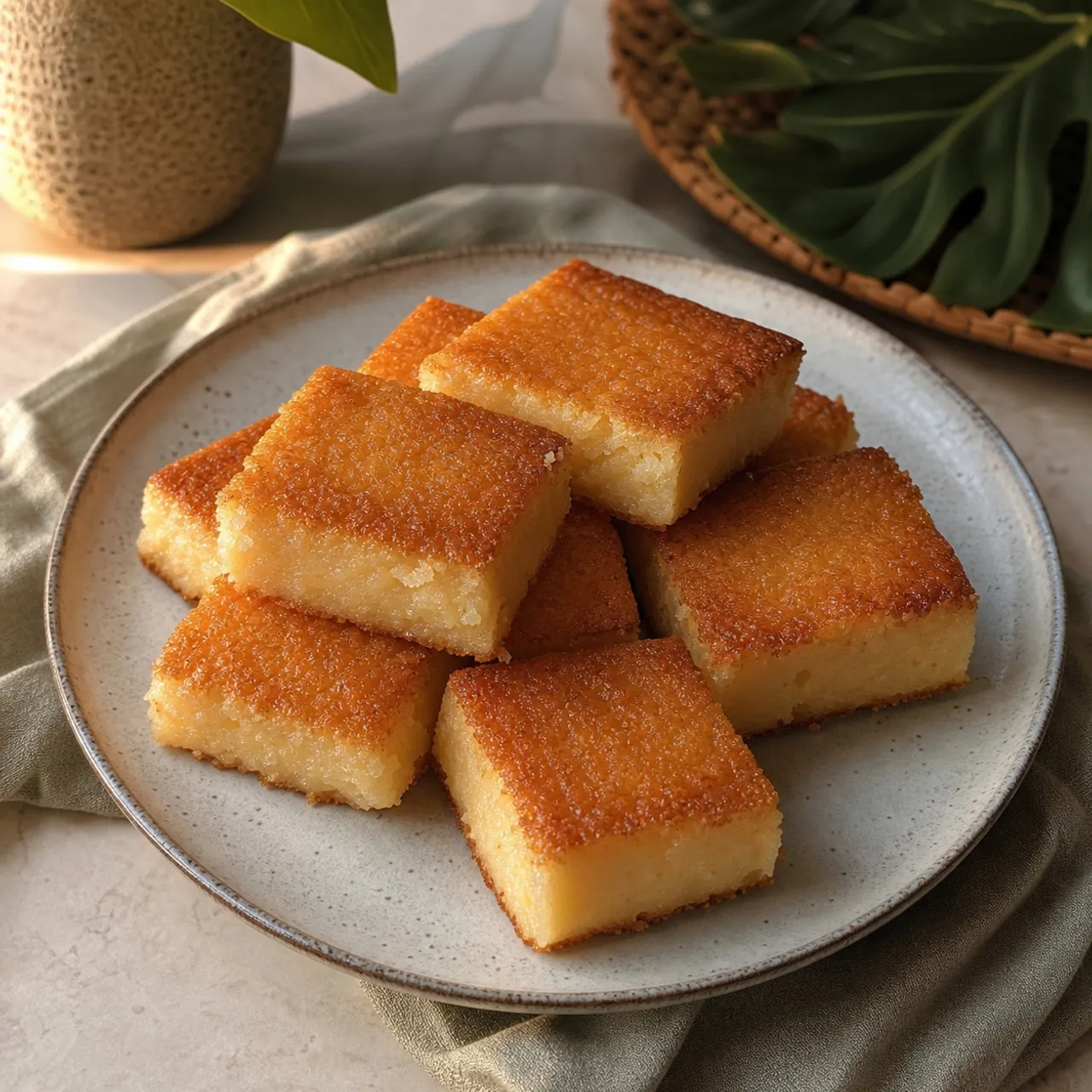
 Hawaiian Images are for illustrative purposes only, may be inaccurate, and do not guarantee the presence or absence of specific ingredients.
 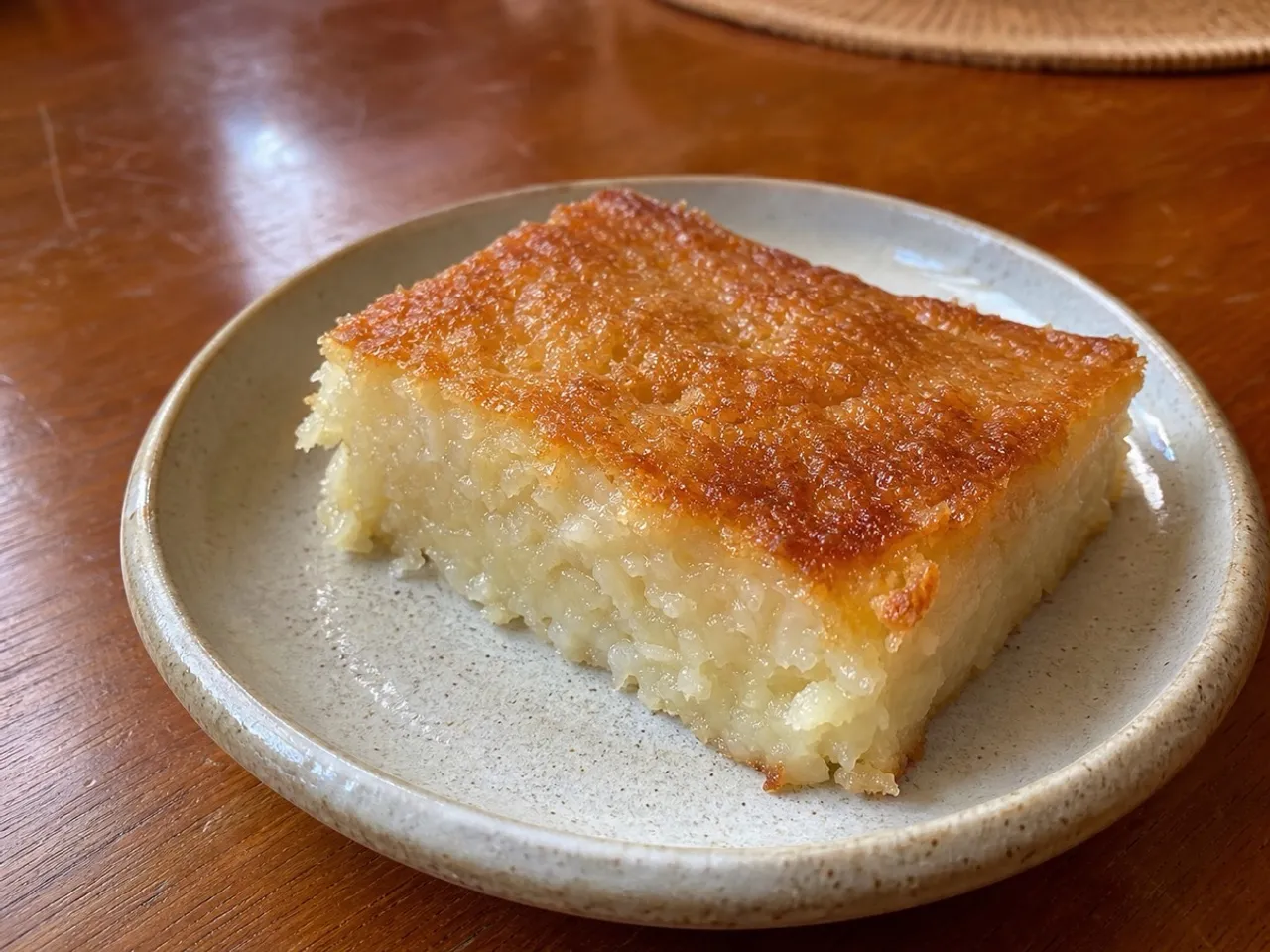 Serving Images are for illustrative purposes only, may be inaccurate, and do not guarantee the presence or absence of specific ingredients.
 Butter Mochi
Dense, chewy squares of coconut-scented mochiko rice cake with a golden butter crust — Hawaii's favorite potluck dessert, somewhere between cake and mochi.
Contains common allergens
In the app, Listahan checks these against your household automatically.
Good to know
- Ready in under 30 minutes
Matched from this dish's own ingredients and timing. Browse more: 30-minute meals
Instructions
7 steps- 1
Heat the oven to 350 F (175 C) and grease a 9x13-inch baking pan.
- 2
In a large bowl, whisk together the mochiko flour, sugar, baking powder, and salt.
- 3
In a separate bowl, whisk the coconut milk, evaporated milk, eggs, melted butter, and vanilla until smooth and well combined.
- 4
Pour the wet ingredients into the dry ingredients and whisk until no lumps remain and the batter is smooth and pourable.
- 5
Pour the batter into the prepared pan and smooth the top.
- 6
Bake for 55 to 65 minutes, until the top is deep golden brown, the edges pull slightly away from the pan, and a toothpick inserted in the center comes out mostly clean (butter mochi stays a little gooey).
- 7
Let cool completely in the pan, at least 1 hour, before cutting into squares; it firms up and slices more cleanly once cooled.
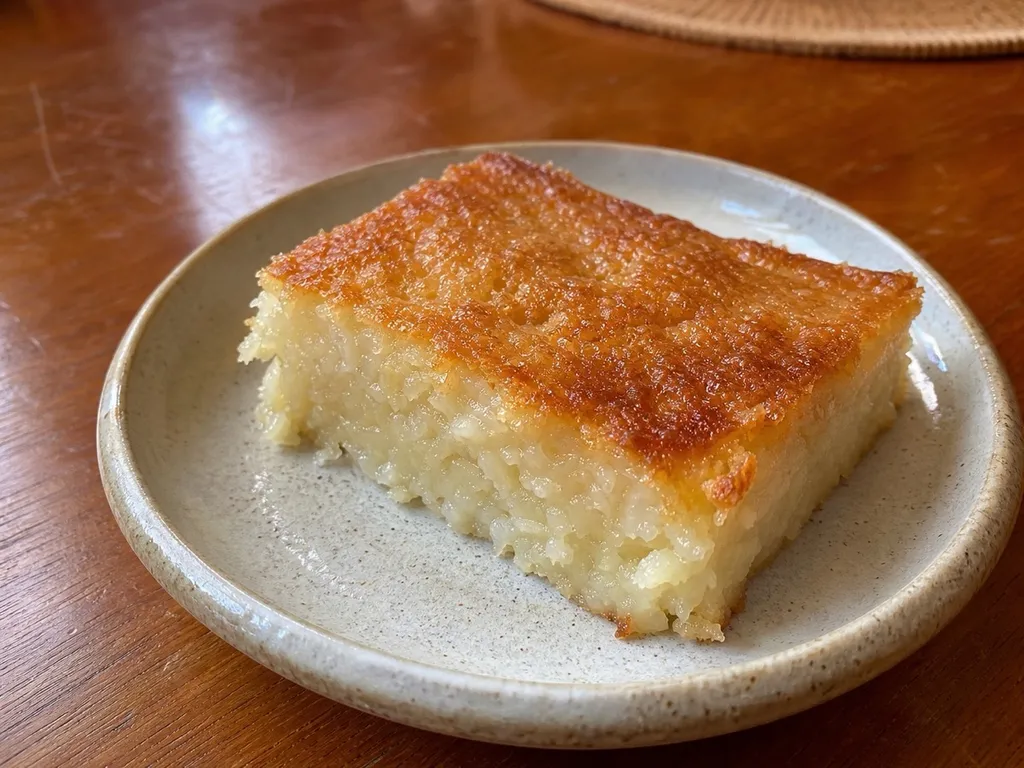 Images are for illustrative purposes only, may be inaccurate, and do not guarantee the presence or absence of specific ingredients.
 Listahan Family Score™
79/100
Good fit for most families
Score reflects how well this recipe fits a typical busy household. In the app, your Family Score is personalized to your household's allergens, kids, and pantry.
Nutrition
per serving520
Calories
7 g
Protein
46 g
Carbs
35 g
Fat
Estimated per serving. Actual values depend on the brands and portions you use.
Listahan cooking guide
Chef notes & practical guide
Technique notes, ingredient swaps, serve-alongside ideas, storage guidance, and equipment for this recipe.
Cultural context
Butter mochi is a Hawaiian-Japanese hybrid dessert built on mochiko (sweet rice flour), which arrived with Japanese plantation immigrants, combined with the butter and evaporated milk that became pantry staples across the islands' plate-lunch culture. Unlike Japanese mochi, which is pounded and hand-shaped, butter mochi is a poured, baked batter — more cake than confection, with a dense, chewy crumb closer to a custard bar.
Listahan note
This version whisks the batter until fully smooth before baking so the mochiko hydrates evenly, and bakes long enough for the center to set while staying chewy rather than gummy.
Technique cues
- Whisk the batter smooth before it goes in the pan — mochiko clumps easily, and any lumps left in the batter bake into chewy, under-hydrated knots.
- Bake the full hour; pulling it early leaves the center wet and dense instead of springy — the top should be deep golden and the middle just set.
- Cool completely, at least an hour, before cutting — warm butter mochi tears and sticks to the knife instead of slicing into clean squares.
Kitchen flow
- Parallel prep
- Grease the 9x13 dish and preheat the oven while whisking the batter — there is no rise or rest time here, so it should go straight into the oven.
- Make-ahead
- Bakes well a day ahead — the texture actually firms up nicely overnight, making it easier to cut clean squares the next day.
- Leftover move
- Keeps at room temperature in an airtight container; do not refrigerate, which makes the mochi hard rather than chewy.
- Cleanup rhythm
- Soak the baking dish right away — baked-on mochiko batter sets almost as firm as the finished dessert.
Ingredient brief
Role, handling, and swap guidance for each key ingredient.
1 box mochiko (sweet rice flour)
Structural base and chew
Purpose: Mochiko is what makes this "mochi" rather than a regular cake — it bakes into the dense, stretchy, chewy texture that plain wheat flour cannot replicate.
Handling: Whisk with the sugar and baking powder before adding any wet ingredients to break up clumps early.
Adaptation: No substitute — mochiko (glutinous rice flour) is the entire texture of this dish despite the confusing "glutinous" name; it is naturally gluten-free.
2 cups sugar
Sweetness
Purpose: Butter mochi is meant to be noticeably sweet — it functions as a dessert bar, not a lightly-sweetened bread.
Handling: Whisk into the dry mochiko mixture.
Adaptation: Can be reduced by up to a quarter without affecting the set.
1/2 cup unsalted butter, melted
Richness (the "butter" in butter mochi)
Purpose: This is the ingredient that separates butter mochi from plain steamed mochi — the fat enriches the crumb and gives it a tender, almost custardy edge against the chewy interior.
Handling: Melt and let cool slightly before whisking into the eggs so it does not scramble them.
Adaptation: Melted coconut oil or vegan butter both work for a dairy-free version.
4 large eggs
Structure and richness
Purpose: Eggs bind the batter and give it lift, keeping the crumb from being purely dense and gummy.
Handling: Whisk first, then add the melted butter, milks, and vanilla before combining with the dry ingredients.
Adaptation: No reliable egg-free substitute for this batter—it changes both structure and richness.
evaporated milk and coconut milk
Moisture and flavor
Purpose: The combination of the two milks is what gives butter mochi its round, slightly coconut-forward flavor without being overtly "coconut dessert."
Handling: Whisk in with the eggs and melted butter until fully smooth before combining with dry ingredients.
Adaptation: A second can of coconut milk in place of evaporated milk makes it fully dairy-free.
Technique notes
- Whisk the batter smooth — mochiko clumps, and lumps bake into chewy knots.
- Do not underbake; the centre should be set and springy, with golden, slightly crisp edges.
- Cool completely before cutting or it tears instead of slicing into clean squares.
Ingredient swaps
- evaporated milk
- a second can of coconut milk for a dairy-free, coconut-forward mochi - coconut is a tree nut allergen for some
- unsalted butter
- melted coconut oil or vegan butter - coconut oil is dairy-free; dairy butter contains milk
- mochiko
- no real substitute — mochiko (sweet rice) is what gives the dish its chew - mochiko is naturally gluten-free despite "glutinous" in the name
Serve alongside
- Vanilla ice cream
- Fresh mango
- Toasted coconut flakes
- Hot green tea
- Kona coffee
- Cold milk
Serving suggestions only — check pairings for your household's allergens.
Storage & reheating
- Keeps 2-3 days at room temperature in an airtight container; it firms up over time. Do not refrigerate — the cold makes it hard.
- Not recommended for freezing — the chewy texture turns rubbery after thawing.
Equipment
- 9x13-inch baking dish
- Whisk
Make this household-aware
Listahan Pro checks this recipe against your household's allergens, finds pantry-aware swaps, builds the shopping list, and helps you plan the week around it.
Plan it in Listahan
Add Butter Mochi to your week, check it against your household's allergens, and build the shopping list automatically.
More Hawaiian recipes
 Hawaiian Lens Verified Images are for illustrative purposes only, may be inaccurate, and do not guarantee the presence or absence of specific ingredients.
 Spam Fried Rice
Day-old rice stir-fried with caramelized Spam, egg, soy sauce, and green onion — a quick, satisfying island classic that turns pantry staples into something craveable.
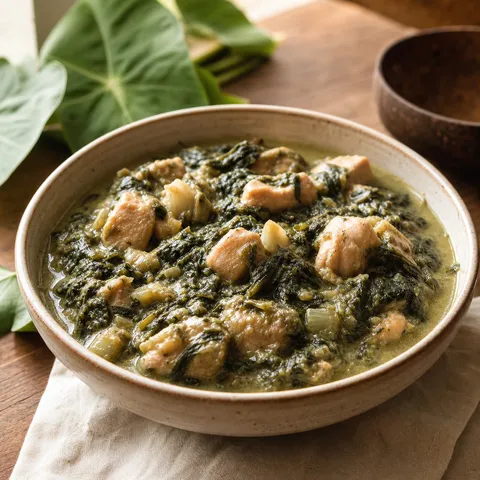 Hawaiian Lens Verified Images are for illustrative purposes only, may be inaccurate, and do not guarantee the presence or absence of specific ingredients.
 Chicken Luau
Tender chicken simmered with young taro leaves in coconut milk until velvety and earthy — a quietly comforting Hawaiian stew full of old-fashioned luau warmth.
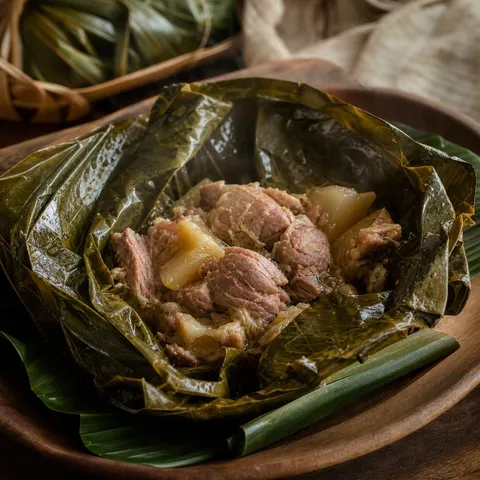 Hawaiian Lens Verified Images are for illustrative purposes only, may be inaccurate, and do not guarantee the presence or absence of specific ingredients.
 Lau Lau
Pork shoulder and butterfish bundled in layers of taro leaf and steamed until meltingly tender — earthy, rich, and deeply rooted in Native Hawaiian tradition.