 Hawaiian Images are for illustrative purposes only, may be inaccurate, and do not guarantee the presence or absence of specific ingredients.
  Serving Images are for illustrative purposes only, may be inaccurate, and do not guarantee the presence or absence of specific ingredients.
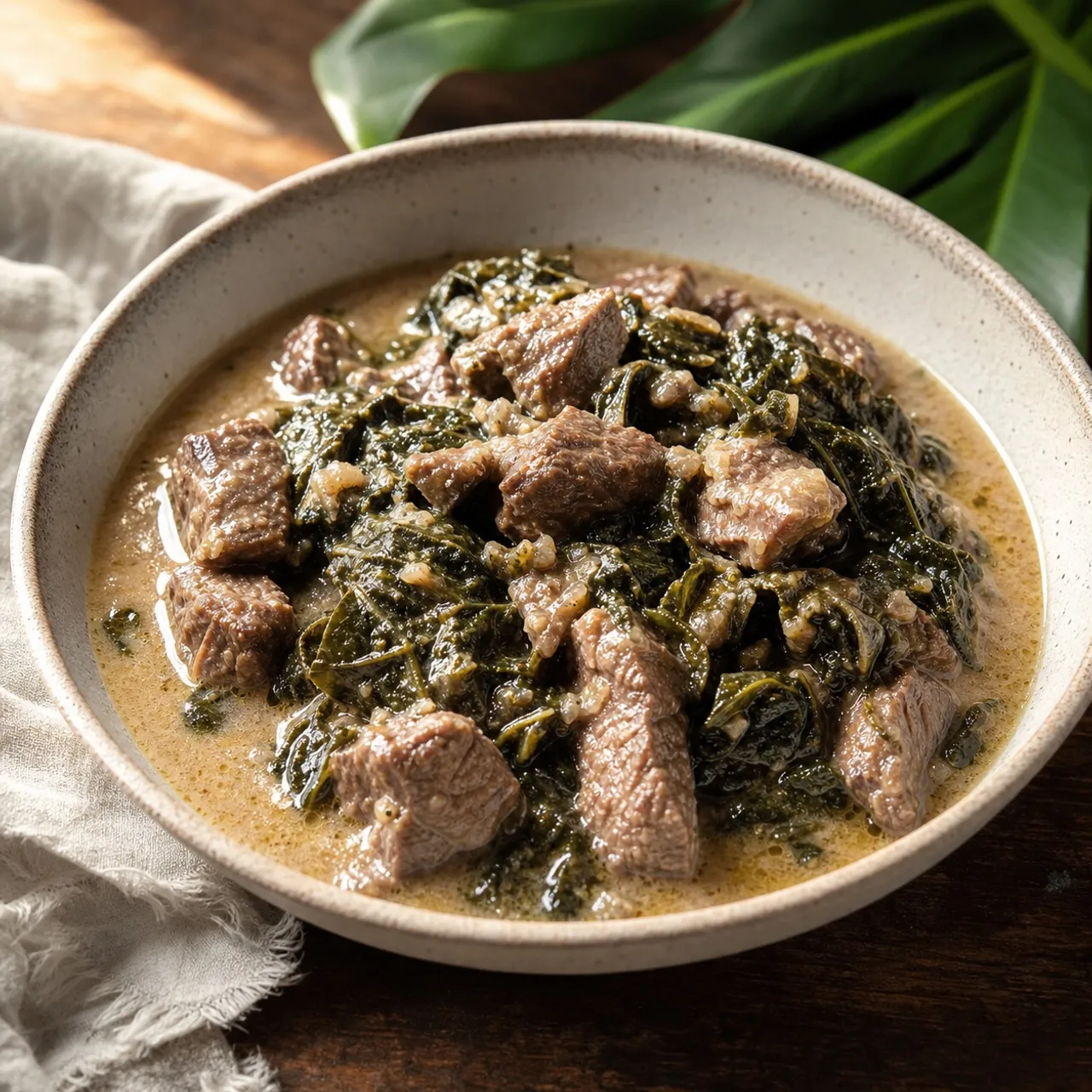
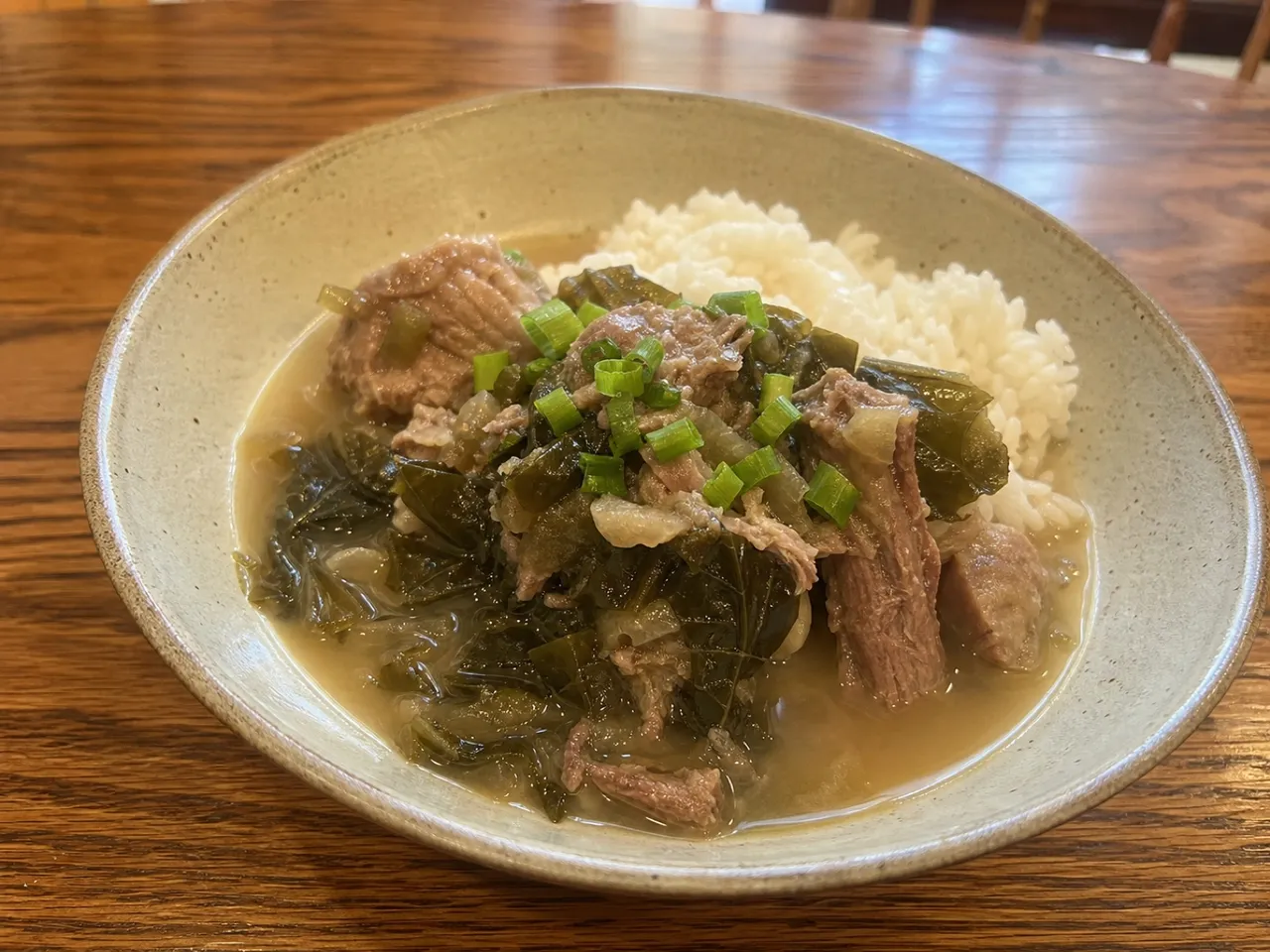
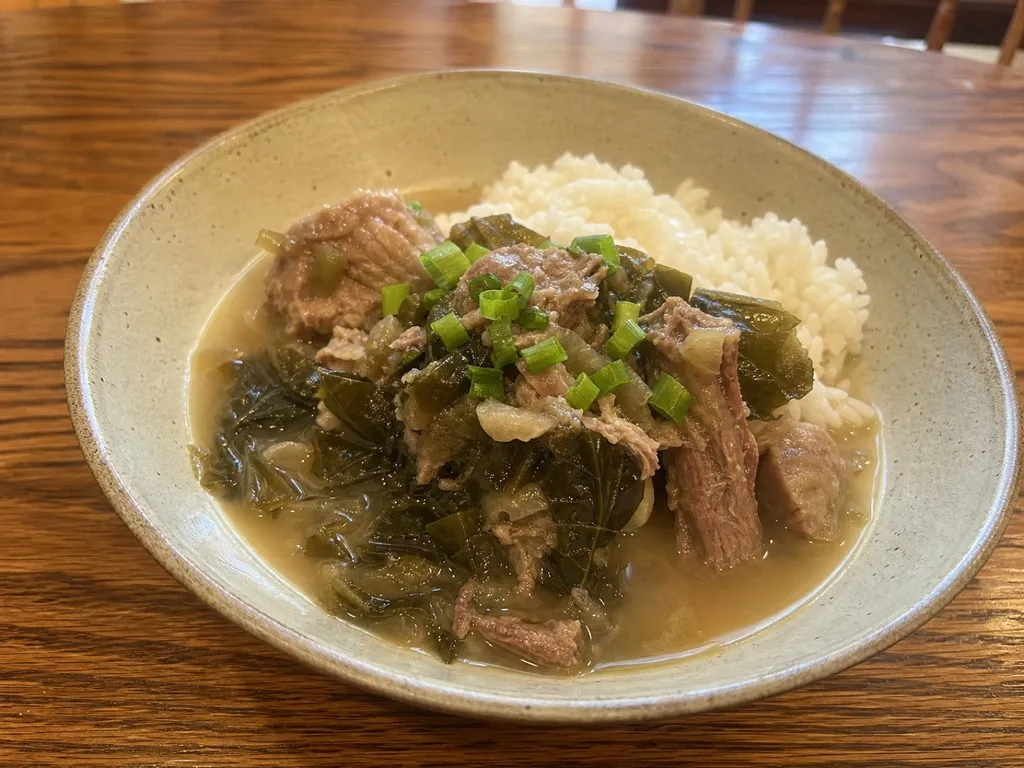
 Luau Stew
Tender chunks of beef braised with earthy taro leaves in a savory broth until everything melts together — a hearty, old-fashioned Hawaiian stew full of comfort.
Contains common allergens
In the app, Listahan checks these against your household automatically.
Good to know
- One-pot
- Ready in under 30 minutes
Matched from this dish's own ingredients and timing. Browse more: one-pot dinners30-minute meals
Instructions
6 steps- 1
Combine the beef, onion, water or broth, ginger, and salt in a large pot and bring to a boil.
- 2
Reduce to a simmer, cover, and cook until the beef is very tender, about 1.5 to 2 hours, skimming off any foam as needed.
- 3
Add the chopped taro leaves and simmer uncovered until they are fully cooked down and tender, at least another hour; undercooked taro leaves can irritate the throat, so do not shortcut this step.
- 4
Stir in the coconut milk and simmer for another 10 minutes to bring the stew together.
- 5
Taste and adjust salt.
- 6
Serve hot in bowls, traditionally alongside poi or steamed rice.
 Images are for illustrative purposes only, may be inaccurate, and do not guarantee the presence or absence of specific ingredients.
 Listahan Family Score™
71/100
Good fit for most families
Score reflects how well this recipe fits a typical busy household. In the app, your Family Score is personalized to your household's allergens, kids, and pantry.
Nutrition
per serving465
Calories
46 g
Protein
8 g
Carbs
26 g
Fat
Estimated per serving. Actual values depend on the brands and portions you use.
Listahan cooking guide
Chef notes & practical guide
Technique notes, ingredient swaps, serve-alongside ideas, storage guidance, and equipment for this recipe.
Cultural context
Luau stew takes its name from luau (taro) leaves, the same leaves used to wrap laulau, simmered here into a beef stew rather than used as a wrapper. It's a traditional Native Hawaiian dish built around taro leaves' earthy, spinach-like flavor once properly cooked — raw or undercooked taro leaves contain calcium oxalate crystals that cause a sharp itching or burning sensation, so the long pre-boil step is a genuine food-safety step, not just a texture preference.
Listahan note
This version pre-boils the taro leaves with a full water change before they go anywhere near the stew, then braises the beef separately so both components are properly cooked before they're combined for a final simmer.
Technique cues
- Never skip or shorten the taro-leaf pre-boil — the calcium oxalate in raw or undercooked taro leaves causes real, unpleasant throat and mouth irritation, not just a textural issue.
- Brown the beef in batches for a deep, savory base; crowding the pot steams the meat grey instead of developing the sear that carries the stew's flavor.
- Like most braises, this tastes even better the next day once the beef, taro leaves, and broth have had time to meld overnight.
Kitchen flow
- Parallel prep
- Pre-boil the taro leaves while the beef browns and simmers separately — both take real time and can run in parallel.
- Make-ahead
- Tastes noticeably better the next day; a genuine make-ahead braise.
- Leftover move
- Reheat gently on the stovetop with a splash of broth — the stew thickens considerably as it sits.
- Cleanup rhythm
- Use a dedicated pot for the taro-leaf pre-boil so the main stew pot stays free for browning the beef at the same time.
Ingredient brief
Role, handling, and swap guidance for each key ingredient.
1 lb taro (luau) leaves
Signature ingredient
Purpose: Taro leaves are what make this specifically "luau stew" rather than a plain beef stew — their earthy, spinach-like flavor after proper cooking is the point of the dish.
Handling: Wash, remove the tough stems, and pre-boil in plenty of water for 45 minutes, changing the water once — this step is mandatory for safety, not optional for texture.
Adaptation: Spinach or collard greens need no pre-boiling and add a similar earthiness if taro leaves are unavailable, though the flavor will be milder.
2 lbs beef chuck, cut into 1 1/2-inch chunks
Main protein
Purpose: A well-marbled cut that holds up to the roughly 2-hour combined braise-and-simmer needed to become fork-tender.
Handling: Pat dry and brown in batches before adding liquid, for a deeper flavor base.
Adaptation: Beef short ribs or pork shoulder both work, keeping a well-marbled cut for the same tenderness.
2 tbsp soy sauce
Seasoning
Purpose: Adds umami depth to the broth, a common thread across many Hawaiian braises alongside Japanese-immigrant pantry staples.
Handling: Added to the broth along with the salt once the aromatics are cooked.
Adaptation: Tamari (wheat-free) or coconut aminos (soy- and gluten-free, though coconut is a tree-nut allergen for some) both work.
1 tbsp Hawaiian sea salt
Seasoning
Purpose: Hawaiian (alaea) sea salt is traditionally used in many island dishes; here it seasons the broth alongside the soy sauce.
Handling: Add with the soy sauce and adjust to taste at the end.
Adaptation: Any coarse sea salt works if Hawaiian sea salt specifically is unavailable.
6 cups water or beef broth
Braising liquid
Purpose: Forms the simmering liquid for both the beef and the pre-boiled taro leaves to finish cooking together into a thick, cohesive stew.
Handling: Bring to a boil with the browned beef and aromatics before reducing to a simmer.
Adaptation: Beef broth gives a richer result than water; low-sodium broth lets you control the final salt level.
Technique notes
- Pre-boil the taro leaves with a water change to remove the calcium oxalate that causes itching — never skip this.
- Brown the beef in batches for a deep, savory base; crowding steams it grey.
- Like most stews, it tastes even better the next day after the flavors meld.
Ingredient swaps
- taro (luau) leaves
- spinach or collard greens - these need no pre-boiling and add similar earthiness
- beef chuck
- beef short ribs or pork shoulder - keep a well-marbled cut for tenderness
- soy sauce
- tamari or coconut aminos - tamari is wheat-free and coconut aminos is soy- and gluten-free, though coconut is a tree nut allergen for some
Serve alongside
- Steamed white rice
- Poi
- Lomi lomi salmon
- Iced tea
- Cold water
Serving suggestions only — check pairings for your household's allergens.
Storage & reheating
- Refrigerate up to 4 days or freeze up to 3 months; reheat gently on the stovetop, adding a splash of broth if thickened.
- The stew thickens as it sits — loosen with a little broth or water when reheating.
Equipment
- Heavy-bottomed pot
- A second pot for pre-boiling the taro leaves
- Slotted spoon
Make this household-aware
Listahan Pro checks this recipe against your household's allergens, finds pantry-aware swaps, builds the shopping list, and helps you plan the week around it.
Plan it in Listahan
Add Luau Stew to your week, check it against your household's allergens, and build the shopping list automatically.
More Hawaiian recipes
 Hawaiian Lens Verified Images are for illustrative purposes only, may be inaccurate, and do not guarantee the presence or absence of specific ingredients.
 Spam Fried Rice
Day-old rice stir-fried with caramelized Spam, egg, soy sauce, and green onion — a quick, satisfying island classic that turns pantry staples into something craveable.
 Hawaiian Lens Verified Images are for illustrative purposes only, may be inaccurate, and do not guarantee the presence or absence of specific ingredients.
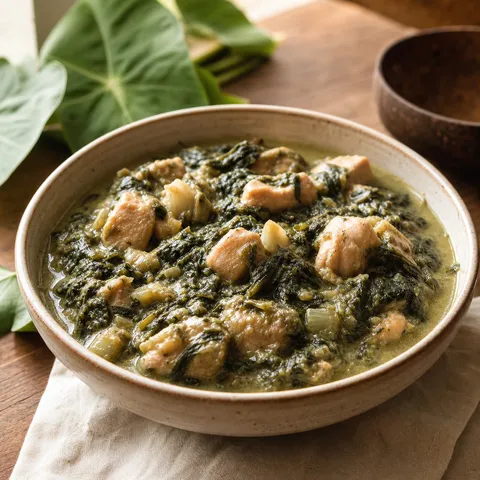
 Chicken Luau
Tender chicken simmered with young taro leaves in coconut milk until velvety and earthy — a quietly comforting Hawaiian stew full of old-fashioned luau warmth.
 Hawaiian Lens Verified Images are for illustrative purposes only, may be inaccurate, and do not guarantee the presence or absence of specific ingredients.
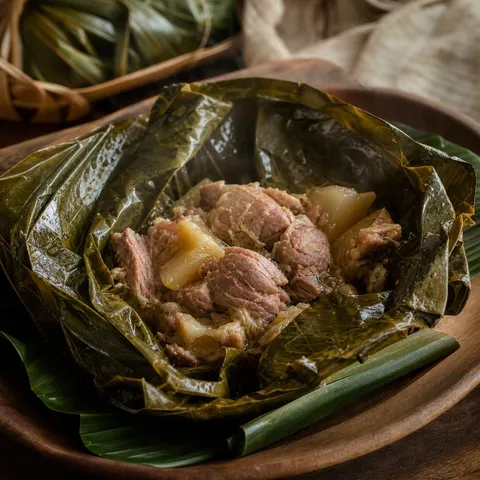
 Lau Lau
Pork shoulder and butterfish bundled in layers of taro leaf and steamed until meltingly tender — earthy, rich, and deeply rooted in Native Hawaiian tradition.