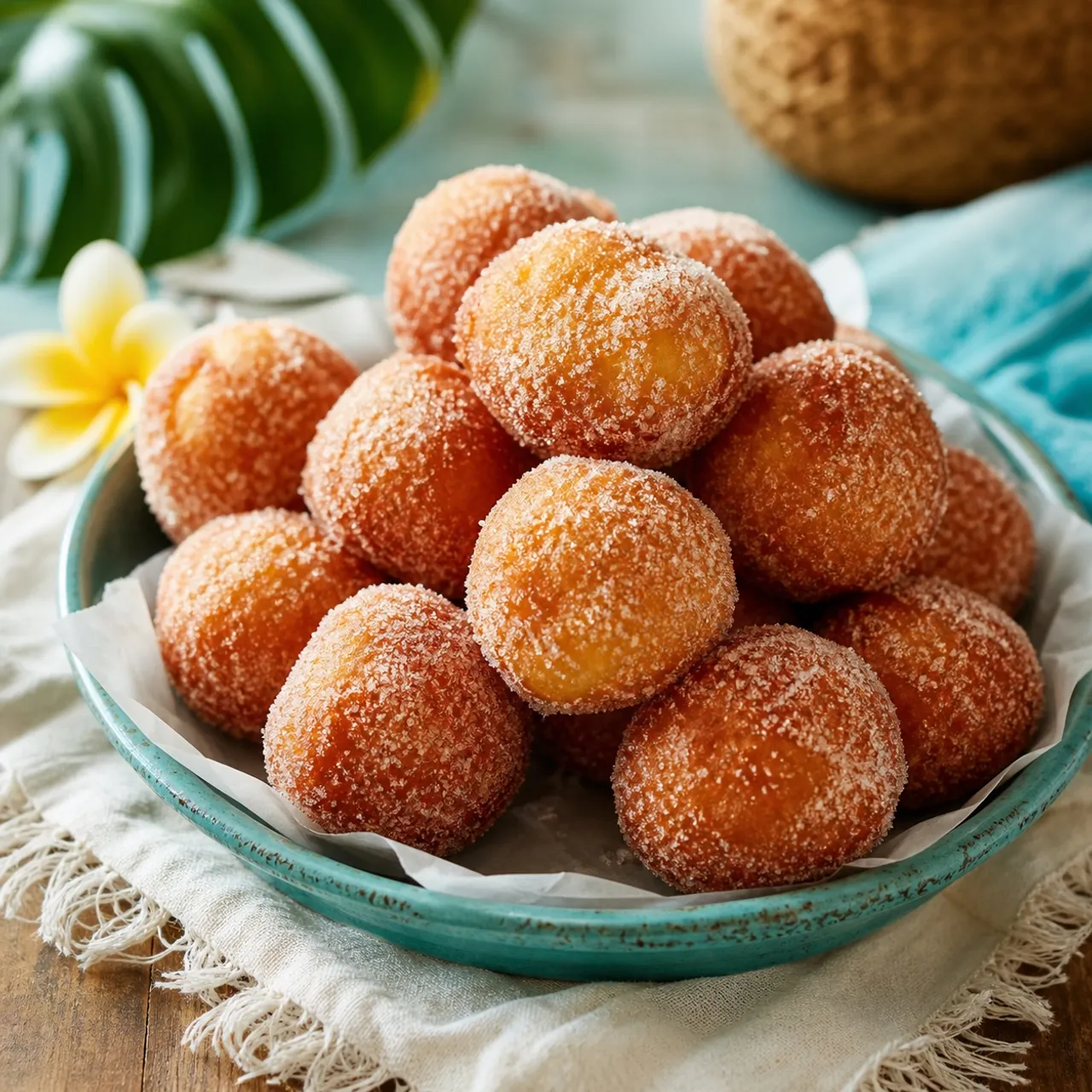
 Hawaiian Images are for illustrative purposes only, may be inaccurate, and do not guarantee the presence or absence of specific ingredients.
 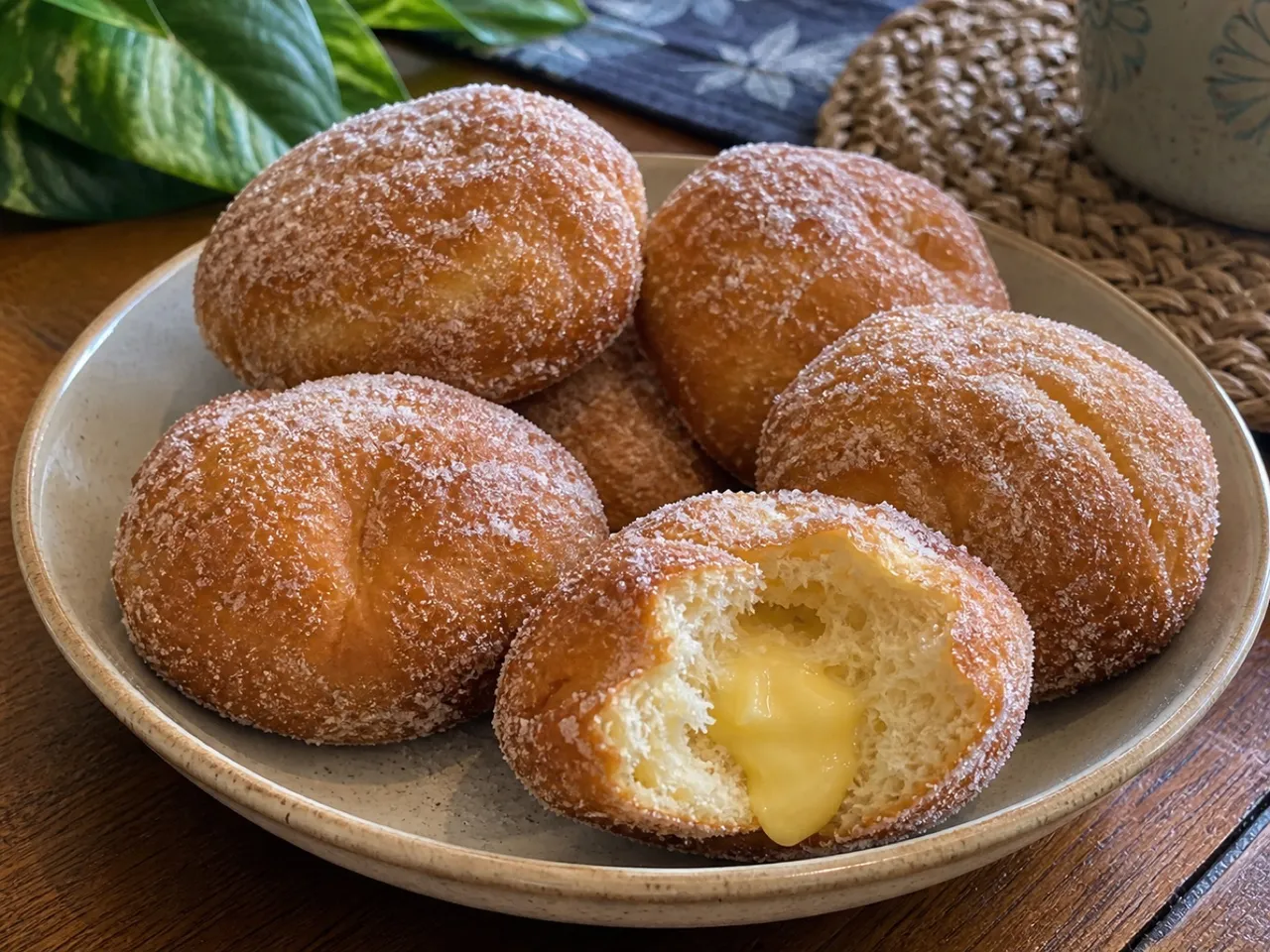 Serving Images are for illustrative purposes only, may be inaccurate, and do not guarantee the presence or absence of specific ingredients.
 Malasadas
Hawaii's Portuguese-inspired fried dough: pillowy, golden, and rolled in sugar while hot, with a soft eggy interior — best eaten fresh from the fryer.
Contains common allergens
In the app, Listahan checks these against your household automatically.
Instructions
8 steps- 1
Sprinkle the yeast over the warm water and let it stand until foamy, about 5 minutes.
- 2
In a large bowl, whisk the flour, sugar, and salt together.
- 3
Add the yeast mixture, eggs, evaporated milk, melted butter, and vanilla, and beat until you have a smooth, sticky, elastic dough.
- 4
Cover the bowl and let the dough rise in a warm place until doubled, about 1 hour.
- 5
Heat about 3 inches of oil in a heavy pot to 350 F.
- 6
Scoop golf ball-sized portions of dough with two greased spoons and carefully drop them into the hot oil, frying in batches so the pot is not crowded.
- 7
Fry, turning occasionally, until deep golden brown and cooked through, 2 to 3 minutes per batch.
- 8
Drain briefly on a rack, then roll the hot malasadas in sugar while they are still warm and serve immediately.
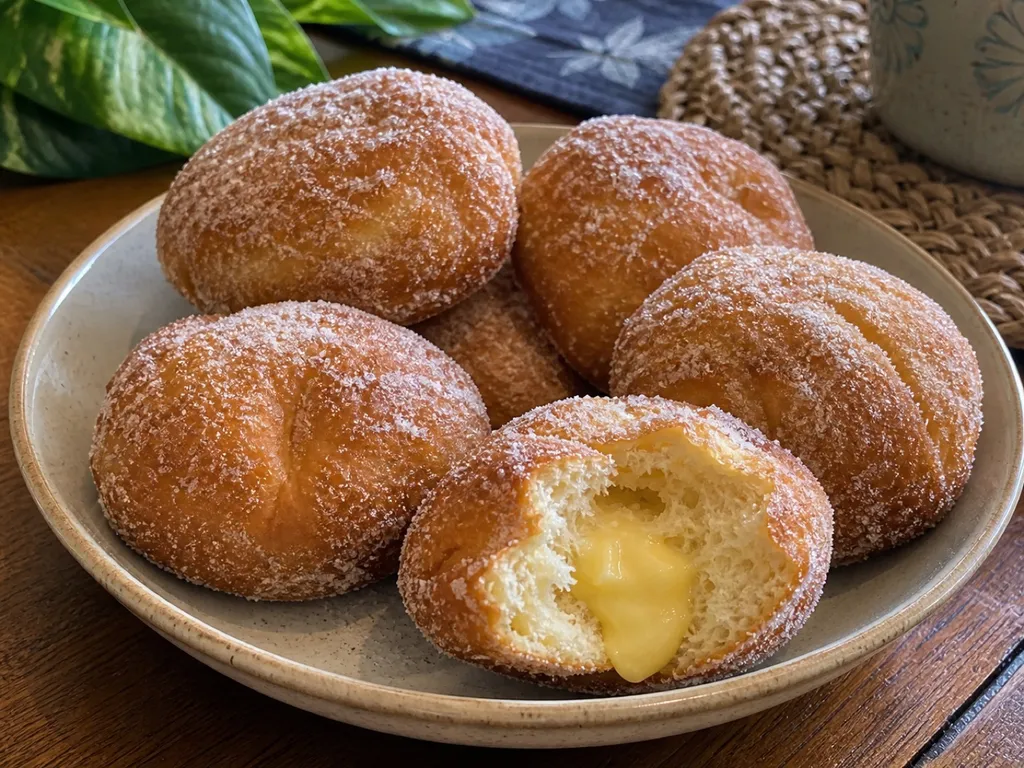 Images are for illustrative purposes only, may be inaccurate, and do not guarantee the presence or absence of specific ingredients.
 Listahan Family Score™
67/100
Works for many families
Score reflects how well this recipe fits a typical busy household. In the app, your Family Score is personalized to your household's allergens, kids, and pantry.
Nutrition
per serving295
Calories
8 g
Protein
60 g
Carbs
2 g
Fat
Estimated per serving. Actual values depend on the brands and portions you use.
Listahan cooking guide
Chef notes & practical guide
Technique notes, ingredient swaps, serve-alongside ideas, storage guidance, and equipment for this recipe.
Cultural context
Malasadas came to Hawaii with Portuguese sugar-plantation workers from Madeira and the Azores in the 1800s, who traditionally fried the eggy dough to use up lard and sugar before Lent (Fat Tuesday is still "Malasada Day" in Hawaii). Unlike a filled Portuguese malasada, the Hawaiian version is almost always plain, rolled hot in sugar, and eaten as a hand-held snack rather than a holiday pastry.
Listahan note
This version uses a rich, egg-heavy enriched dough proofed twice for a light interior, then fried in small batches at a steady temperature so the outside browns before the center over-absorbs oil.
Technique cues
- Proof until truly doubled, not just puffy — an under-proofed dough fries into a dense, greasy ball instead of a light, hollow-centered malasada.
- Keep the oil at a steady 350°F with a thermometer; frying cold makes them oil-logged, frying hot browns the outside before the center cooks through.
- Roll them in sugar the moment they come out of the oil while still glistening — sugar won't stick once they cool and the surface dries.
Kitchen flow
- Parallel prep
- Set up the frying station — oil, thermometer, slotted spoon, sugar bowl, wire rack — during the second rise so you can move fast once frying starts.
- Make-ahead
- The dough can rise slowly overnight in the fridge; bring to room temperature and let it finish rising before shaping.
- Leftover move
- Same-day only — day-old malasadas go gummy; there is no good next-day repurpose for this one.
- Cleanup rhythm
- Strain and cool the frying oil before disposing; wipe down the sugar-dusted counter while the pot is still warm so it does not harden.
Ingredient brief
Role, handling, and swap guidance for each key ingredient.
1/2 cup warm water (110°F)
Yeast activation
Purpose: Water at the right temperature wakes the yeast without killing it — too hot and the batch will not rise at all.
Handling: Check with a thermometer if unsure; it should feel warm, not hot, to the touch.
Adaptation: No substitute — this step is purely about temperature.
1 packet (2 1/4 tsp) active dry yeast
Leavening
Purpose: Yeast is what gives malasadas their light, pillowy interior — without a proper rise they fry up dense.
Handling: Bloom in the warm water with a pinch of sugar for 5-10 minutes until foamy before mixing further.
Adaptation: Instant yeast works at the same volume without the bloom step.
4 cups all-purpose flour
Structure
Purpose: Gives the dough enough gluten to trap the gas from the yeast, which is what makes the finished malasada airy rather than flat.
Handling: Whisk with the remaining sugar and salt before adding wet ingredients so everything distributes evenly.
Adaptation: A 1:1 gluten-free blend can work but the crumb will be denser and less chewy.
6 large eggs (room temperature)
Richness and structure
Purpose: Malasada dough is unusually egg-heavy compared to most fried dough — this is what gives it that tender, custardy interior rather than a plain bread texture.
Handling: Bring to room temperature first so they incorporate smoothly into the dough instead of shocking the yeast.
Adaptation: No good substitute — the egg content defines this dough; a flax-egg swap will not replicate the texture.
1/2 cup evaporated milk
Richness
Purpose: Adds fat and protein that keeps the crumb soft even after frying, where a water-only dough would fry drier.
Handling: No need to warm — mix directly with the eggs and melted butter.
Adaptation: Whole milk or oat milk both work; oat milk keeps it dairy-free.
Technique notes
- Let the dough rise until truly doubled — under-proofed malasadas fry up dense instead of pillowy.
- Keep the oil at a steady 350°F; too cool and they soak up grease, too hot and the centres stay raw.
- Roll them in sugar while still hot so it clings, and eat them the same day — malasadas wait for no one.
Ingredient swaps
- evaporated milk
- whole milk or oat milk - oat milk is dairy-free; some oats carry gluten, so choose certified if needed
- granulated sugar coating
- cinnamon-sugar or li hing mui powder
- all-purpose flour
- bread flour for extra chew - still wheat/gluten
Serve alongside
- Fresh pineapple
- Kona coffee
- Guava juice
- Hot Kona coffee
- Cold milk
- POG juice
Serving suggestions only — check pairings for your household's allergens.
Storage & reheating
- Best within hours of frying. They go stale fast; reheat briefly in a warm oven to revive the crisp if needed.
- Not recommended for freezing — the fried crust turns soggy on thaw.
Equipment
- Heavy pot or deep fryer
- Candy/frying thermometer
- Slotted spoon
Make this household-aware
Listahan Pro checks this recipe against your household's allergens, finds pantry-aware swaps, builds the shopping list, and helps you plan the week around it.
Plan it in Listahan
Add Malasadas to your week, check it against your household's allergens, and build the shopping list automatically.
More Hawaiian recipes
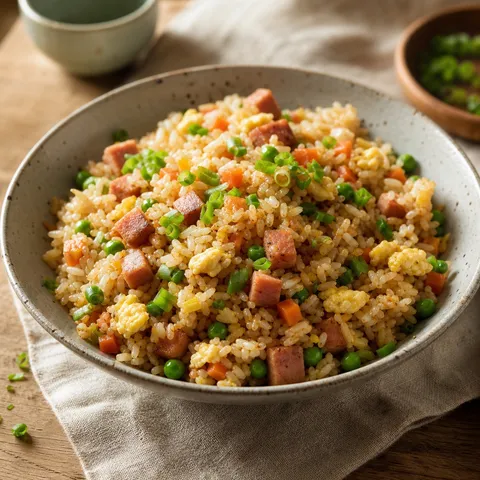 Hawaiian Lens Verified Images are for illustrative purposes only, may be inaccurate, and do not guarantee the presence or absence of specific ingredients.
 Spam Fried Rice
Day-old rice stir-fried with caramelized Spam, egg, soy sauce, and green onion — a quick, satisfying island classic that turns pantry staples into something craveable.
 Hawaiian Lens Verified Images are for illustrative purposes only, may be inaccurate, and do not guarantee the presence or absence of specific ingredients.
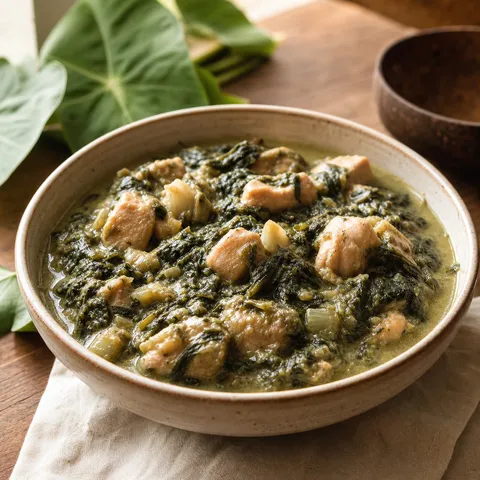
 Chicken Luau
Tender chicken simmered with young taro leaves in coconut milk until velvety and earthy — a quietly comforting Hawaiian stew full of old-fashioned luau warmth.
 Hawaiian Lens Verified Images are for illustrative purposes only, may be inaccurate, and do not guarantee the presence or absence of specific ingredients.
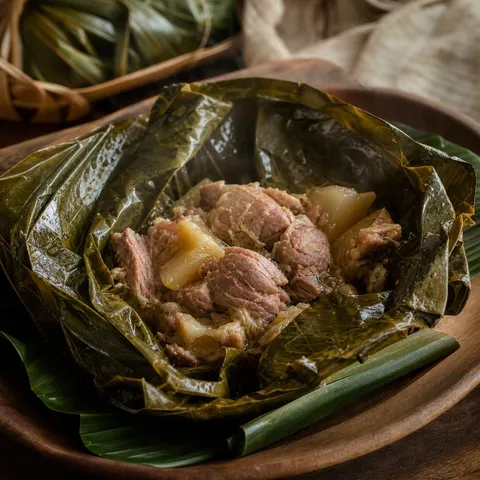
 Lau Lau
Pork shoulder and butterfish bundled in layers of taro leaf and steamed until meltingly tender — earthy, rich, and deeply rooted in Native Hawaiian tradition.