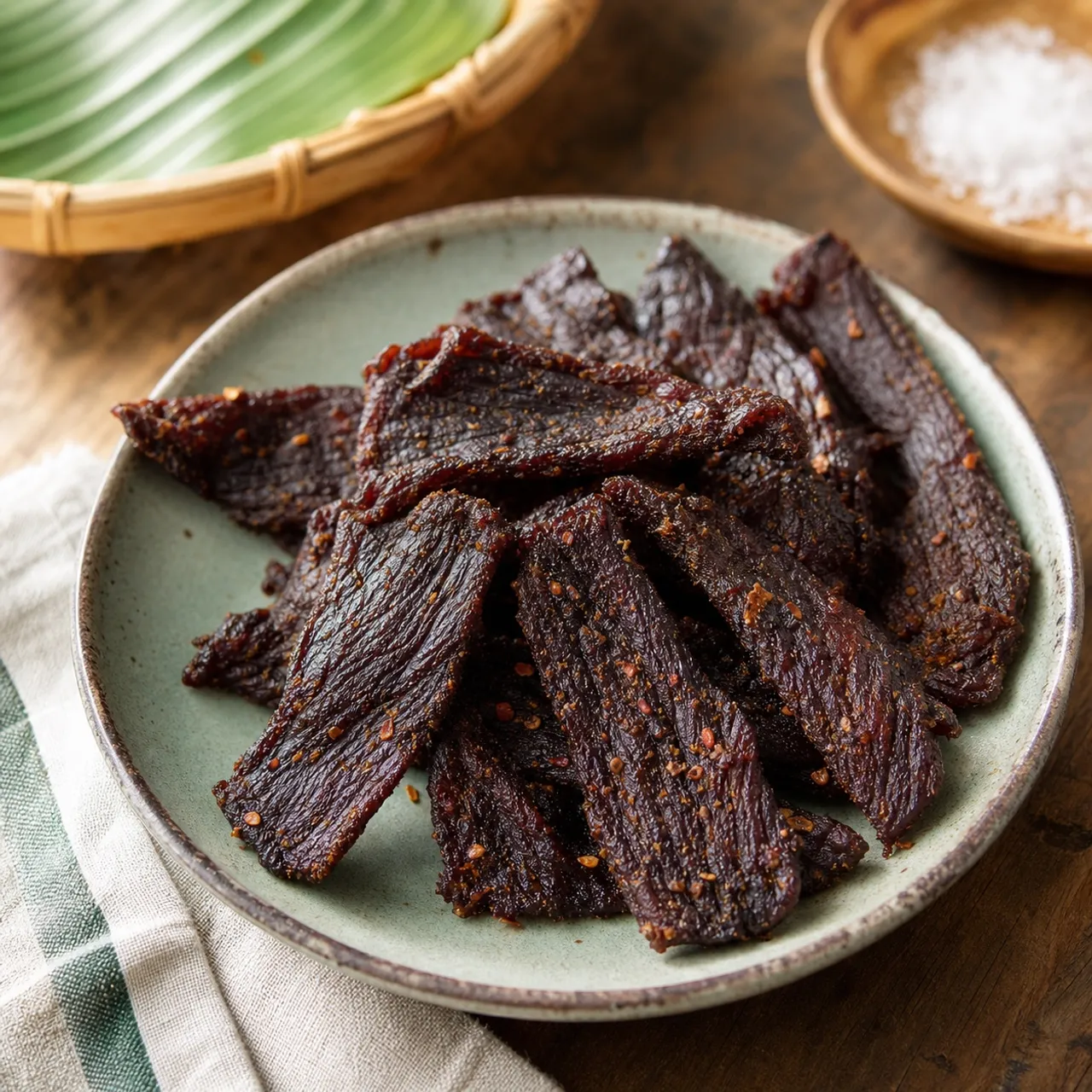
 Hawaiian Images are for illustrative purposes only, may be inaccurate, and do not guarantee the presence or absence of specific ingredients.
 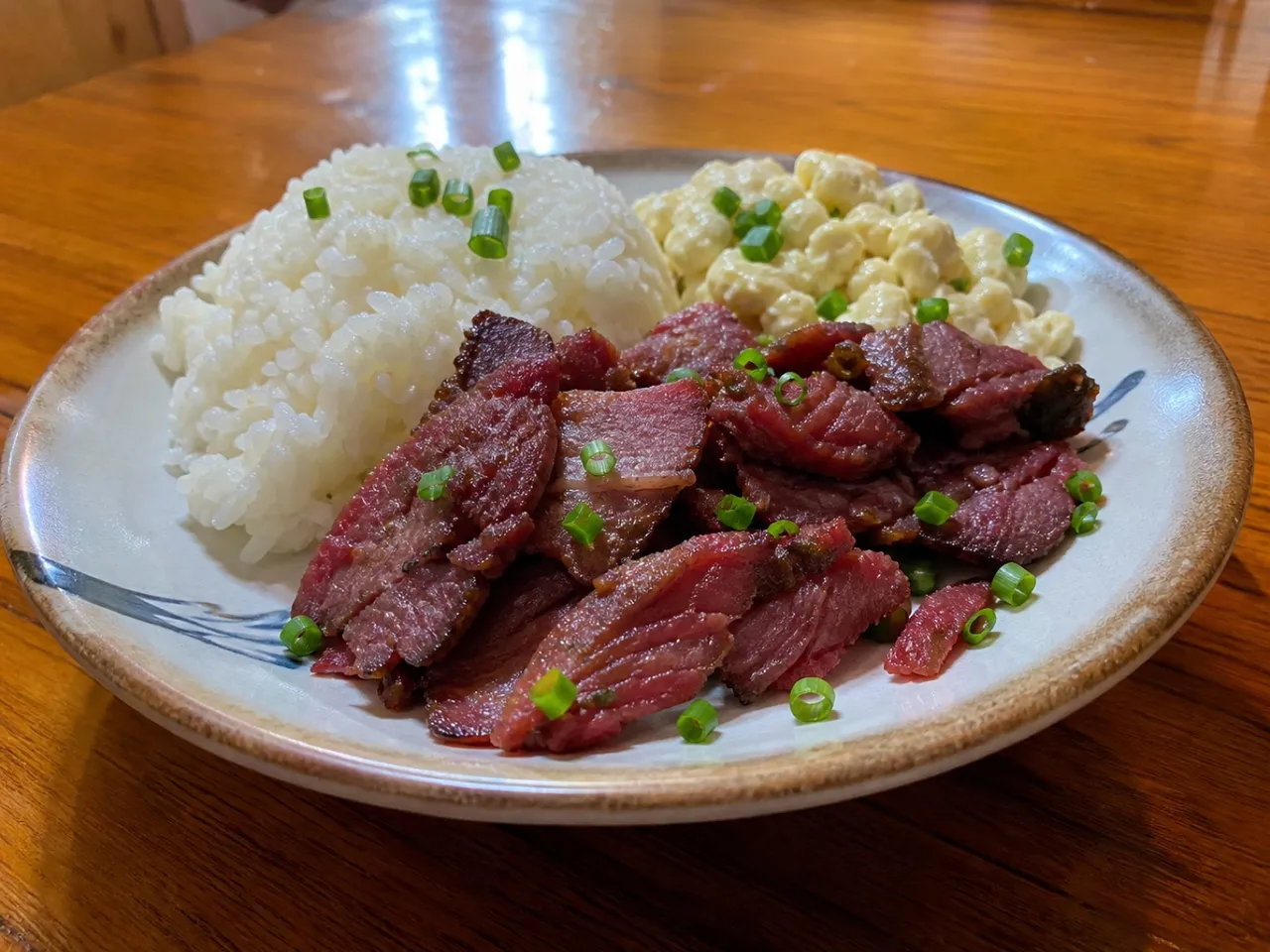 Serving Images are for illustrative purposes only, may be inaccurate, and do not guarantee the presence or absence of specific ingredients.
 Pipikaula
Hawaiian-style beef dried and cured with sea salt and soy, then broiled or grilled until richly chewy and smoky — a savory island appetizer with deep roots.
Contains common allergens
In the app, Listahan checks these against your household automatically.
Good to know
- Ready in under 30 minutes
Matched from this dish's own ingredients and timing. Browse more: 30-minute meals
Instructions
8 steps- 1
Slice the flank steak with the grain, not against it, into long strips about 1/2 inch thick; this is what gives pipikaula its signature chew.
- 2
Whisk the soy sauce, brown sugar, sea salt, garlic, ginger, black pepper, and chili flakes together in a shallow dish.
- 3
Add the steak strips and turn to coat thoroughly, then cover and marinate in the refrigerator for at least 8 hours, turning once.
- 4
Remove the strips from the marinade and pat off the excess liquid.
- 5
Hang or lay the strips on a wire rack set over a tray and let them air-dry, uncovered, in the refrigerator for 24 hours until the surface is tacky and slightly dried.
- 6
When ready to cook, broil the strips on a rack about 4 inches from the heat for 3 to 4 minutes per side, watching closely so the sugar in the marinade does not scorch.
- 7
Alternatively, grill the strips over medium-high heat, turning often, until charred at the edges and chewy throughout.
- 8
Let the pipikaula rest a few minutes, then slice thin against the grain to serve as an appetizer.
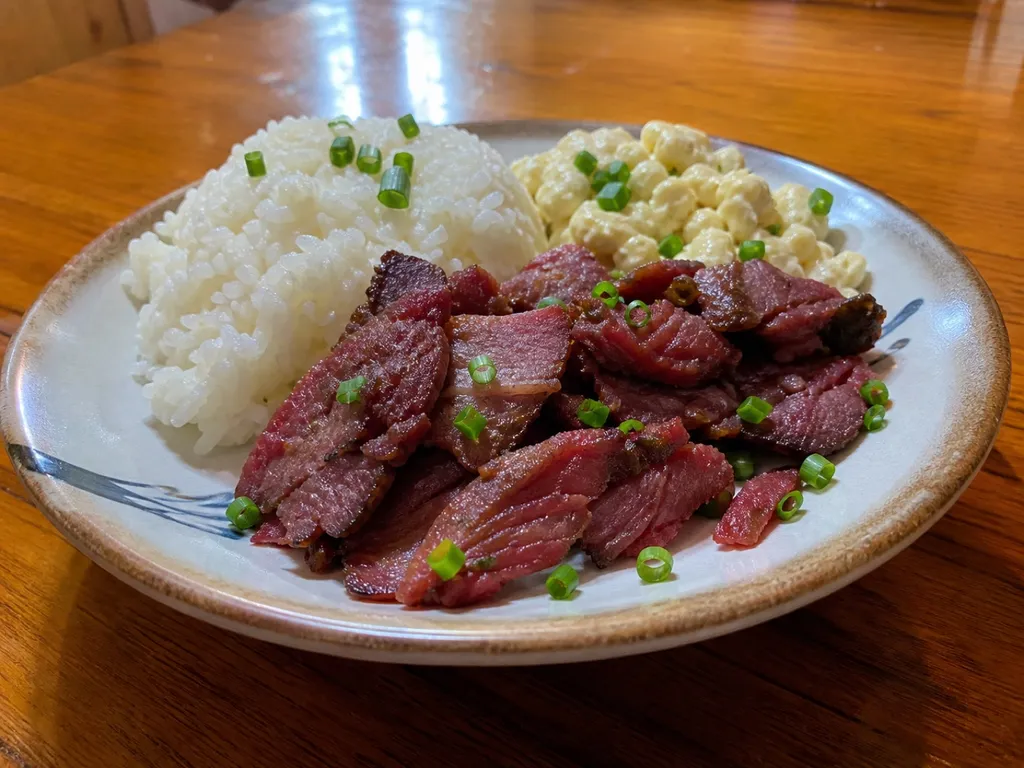 Images are for illustrative purposes only, may be inaccurate, and do not guarantee the presence or absence of specific ingredients.
 Listahan Family Score™
62/100
Works for many families
Score reflects how well this recipe fits a typical busy household. In the app, your Family Score is personalized to your household's allergens, kids, and pantry.
Nutrition
per serving495
Calories
47 g
Protein
15 g
Carbs
26 g
Fat
Estimated per serving. Actual values depend on the brands and portions you use.
Listahan cooking guide
Chef notes & practical guide
Technique notes, ingredient swaps, serve-alongside ideas, storage guidance, and equipment for this recipe.
Cultural context
Pipikaula is Hawaii's own version of beef jerky, with a heritage rooted in the ranching tradition of the islands' paniolos (Hawaiian cowboys), who arrived as skilled vaqueros from Mexico and California in the early 19th century. King Kamehameha III brought Spanish and Mexican cowboys to teach Hawaiians to manage the wild cattle that had overrun the Big Island since Captain Vancouver gifted them in 1793. The paniolos adapted their beef-drying traditions to Hawaiian pantry staples — soy sauce, ginger, salt, and sometimes chili pepper — resulting in a preparation that is distinctly Hawaiian even as it echoes the jerky traditions of the American West.
Listahan note
This version uses flank steak or beef chuck and builds a marinade from soy sauce, ginger, and a touch of Hawaiian salt that produces the signature salty-savory character without overseasoning.
Technique cues
- Slice the beef with the grain (not against it) for pipikaula — this produces longer fibers that dry without falling apart and gives the finished product its characteristic chewy-but-yielding texture.
- Dry the marinated beef slowly at low oven temperature (170 to 200 F) rather than cooking it — the goal is dehydration, not cooking, and higher heat makes the outside tough before the inside dries.
- The beef should feel dry to the touch and slightly leathery on the outside but still bend without snapping when done — snapping means it has dried too long and lost most of its moisture content.
Kitchen flow
- Parallel prep
- Marinate beef overnight in a zip-lock bag in the refrigerator; the next morning, simply lay strips on the rack and start the oven.
- Make-ahead
- Pipikaula is designed to be made ahead — it lasts at room temperature for several days and is at its best the day after drying when the flavors have settled.
- Leftover move
- Slice thin and use in fried rice or noodle dishes where the intense salty-savory flavor functions like a seasoning agent rather than just a protein addition.
- Cleanup rhythm
- Line the baking sheet beneath the wire rack with foil to catch drips; the rack itself needs a soak in hot soapy water to remove the dried marinade residue.
Ingredient brief
Role, handling, and swap guidance for each key ingredient.
beef flank steak or chuck
main protein
Purpose: Flank steak's long, defined muscle fibers make it ideal for drying into a chewy, tender strip; chuck works well for a more rustic, slightly more marbled result.
Handling: Trim any large fat pockets (fat goes rancid during drying) but leave marbling intact; slice lengthwise with the grain into 1/4-inch strips.
Adaptation: Top round or eye of round produces leaner pipikaula with less chew; avoid tender cuts like ribeye, which become dry and flavorless.
soy sauce
primary marinade flavor and salt source
Purpose: Provides umami depth and the deep savory quality that distinguishes Hawaiian pipikaula from mainland American jerky.
Handling: Combine with Hawaiian salt rather than using only soy sauce — the combination gives a more complex salt profile than either ingredient alone.
Adaptation: Tamari for gluten-free; the flavor is nearly identical.
Hawaiian sea salt or kosher salt
curing and seasoning
Purpose: The mineral quality of Hawaiian sea salt adds a distinct character that regular table salt cannot approximate; it also helps draw moisture from the meat during marinating.
Handling: Dissolve in the soy sauce before adding the meat so it distributes evenly without creating salty pockets on the beef.
Adaptation: Kosher salt in slightly smaller quantity (about 3/4 of the Hawaiian salt amount) is an adequate substitute.
fresh ginger
aromatic marinade component
Purpose: Ginger is a signature flavor note in Hawaiian-style pipikaula that distinguishes it from the chile-pepper-forward style of mainland jerky.
Handling: Grate finely on a Microplane so the juice saturates the marinade without leaving fibrous pieces that might char during drying.
Adaptation: 1/2 teaspoon ground ginger if fresh is unavailable; the character is different but still recognizable.
Technique notes
- Leave the oven door slightly propped open with a wooden spoon during drying — this allows moisture to escape and prevents the beef from steaming inside the oven, which would make it moist rather than properly dried.
- Check the strips at 2 hours and every 30 minutes after; thinner strips finish faster and need to come out before thicker ones or they will over-dry.
- Traditional pipikaula is sometimes finished over a grill or kiawe wood fire for a few minutes after drying to add a smoky char — this is optional but transforms the flavor significantly.
Ingredient swaps
- Gluten-free direction
- Use tamari instead of soy sauce; all other ingredients are naturally gluten-free.
- Lower-sodium direction
- Use low-sodium soy sauce and reduce added salt by half; the beef will still cure properly with the reduced sodium over a longer marinating time of 18 to 24 hours.
- Dehydrator direction
- Use a food dehydrator set to 155 to 160 F for 4 to 6 hours — more even airflow produces more consistent results than an oven and is the preferred method if the equipment is available.
Serve alongside
- Steamed white rice
- Poi
- Cold beer nuts
- Cold Hawaiian Kona Brewing beer
- Chilled iced tea
Serving suggestions only — check pairings for your household's allergens.
Storage & reheating
- Store in an airtight container or zip-lock bag at room temperature for up to 5 days, or refrigerate for up to 2 weeks; the low moisture content makes it shelf-stable at room temperature.
- Freeze in a vacuum-sealed bag for up to 3 months; thaw at room temperature and the texture is essentially unchanged.
Equipment
- Wire rack set over a foil-lined baking sheet (essential for airflow on all sides)
- Microplane or fine grater for ginger
- Sharp slicing knife or deli slicer for even-thickness strips
Make this household-aware
Listahan Pro checks this recipe against your household's allergens, finds pantry-aware swaps, builds the shopping list, and helps you plan the week around it.
Plan it in Listahan
Add Pipikaula to your week, check it against your household's allergens, and build the shopping list automatically.
More Hawaiian recipes
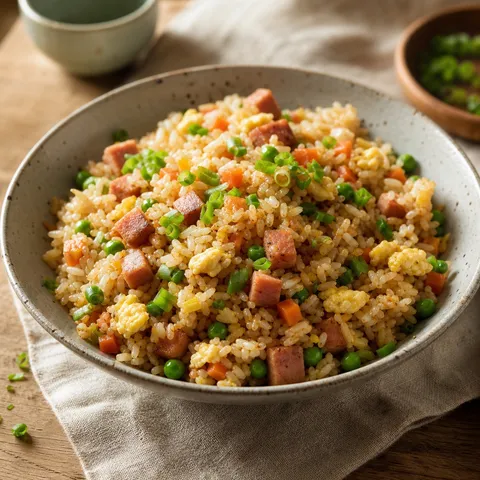 Hawaiian Lens Verified Images are for illustrative purposes only, may be inaccurate, and do not guarantee the presence or absence of specific ingredients.
 Spam Fried Rice
Day-old rice stir-fried with caramelized Spam, egg, soy sauce, and green onion — a quick, satisfying island classic that turns pantry staples into something craveable.
 Hawaiian Lens Verified Images are for illustrative purposes only, may be inaccurate, and do not guarantee the presence or absence of specific ingredients.
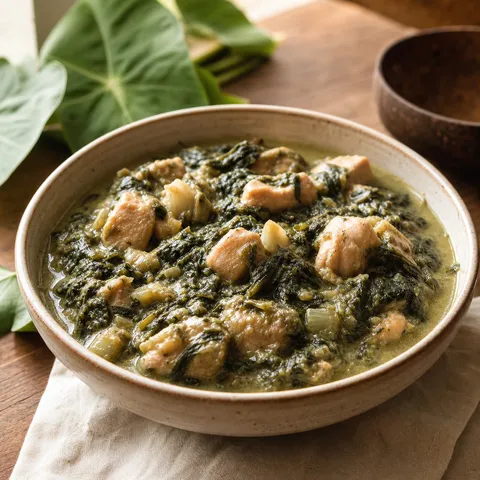
 Chicken Luau
Tender chicken simmered with young taro leaves in coconut milk until velvety and earthy — a quietly comforting Hawaiian stew full of old-fashioned luau warmth.
 Hawaiian Lens Verified Images are for illustrative purposes only, may be inaccurate, and do not guarantee the presence or absence of specific ingredients.
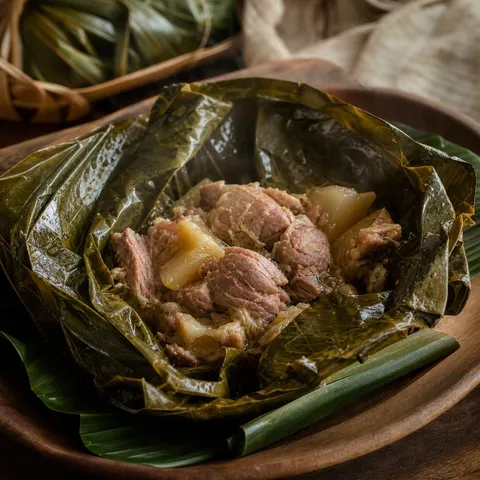
 Lau Lau
Pork shoulder and butterfish bundled in layers of taro leaf and steamed until meltingly tender — earthy, rich, and deeply rooted in Native Hawaiian tradition.