 Food Lens Images are for illustrative purposes only, may be inaccurate, and do not guarantee the presence or absence of specific ingredients.
 Food Lens · Produce
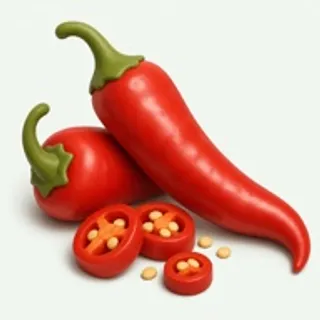
Chili peppers
Ranges from sweet and fruity to fiery and sharp depending on variety, with an underlying vegetal brightness common across the family.
Lens VerifiedFresh chili peppers are a broad category of Capsicum fruits ranging widely in heat, size, color, and flavor — from mild banana peppers to fiery bird's eye chilies. They are used raw, roasted, charred, blended into sauces, or sliced as a garnish across virtually every global cuisine. Heat comes from capsaicin concentrated in the seeds and white inner membranes, which can be removed to reduce spiciness.
Where it comes from
Chili peppers originated in the Americas and were cultivated for thousands of years before Columbus carried them to Europe, from where they spread across Asia and Africa. Today fresh varieties from jalapeños to serranos and Thai bird's eyes are kitchen staples in North America, valued for the heat and brightness they bring to countless cuisines.
Buying it
Look for firm, glossy peppers with tight, unblemished skin and a fresh green stem; softness, wrinkled skin, or dark spots indicate age. As a general rule, smaller and thinner chilies tend to be hotter than larger, thicker-walled varieties.
Storing it
Refrigerate unwashed in the crisper drawer, where most fresh chilies keep for one to two weeks. For longer storage, chilies freeze well — wash, dry, and freeze whole on a tray before transferring to a bag.
Keeps about 14 days in the fridge.
In season
Peak season is July–October, though it's available year-round.
Local fresh chilies usually peak from midsummer into early fall, while imports keep many varieties available year-round.
Out of chili peppers? Good swaps
- Dried chili flakes or dried chilies (rehydrated)
- Chili paste or sambal
- Bell pepper (for mild heat versions)
General cooking guidance — always check the labels on the products you use. Listahan’s allergen checks run automatically when you plan a recipe in the app. Not medical advice.
Recipes that use chili peppers
Common questions about chili peppers
Is chili peppers vegan?
Chili peppers is generally plant-based and suitable for a vegan diet, but brands differ — confirm on the label.
What can I use instead of chili peppers?
Good swaps include Dried chili flakes or dried chilies (rehydrated), Chili paste or sambal, Bell pepper (for mild heat versions). Each behaves a little differently — see the swaps above for notes, and always check labels for allergens.
How do I store chili peppers?
Refrigerate unwashed in the crisper drawer, where most fresh chilies keep for one to two weeks. For longer storage, chilies freeze well — wash, dry, and freeze whole on a tray before transferring to a bag. It keeps about 14 days in the fridge.
More produce
See all


Make chili peppers about your kitchen — with Listahan Pro
Everything above is free, forever. Pro adds the Household Lens — the same food, seen for your family:
-
Checked for each member
Flags chili peppers per person against your household's allergies and school rules — not just a generic "contains" tag.
-
Pantry-aware
Knows whether you already have it, what is running low, and the best swap from what is in your kitchen tonight.
-
What it costs near you
A real price from the Presyo community index, so you can plan the budget — not guess.
-
Your household memory
Who likes it, plus your own private notes — brand, where you keep it, who skips it.
Allergen safety is always free — Pro adds the automation, never the safety.
Cook with chili peppers — safely
Plan a recipe in Listahan and the household allergen check runs automatically — every plan, every swap, every lunchbox. Safety is never paywalled.