 Hawaiian Images are for illustrative purposes only, may be inaccurate, and do not guarantee the presence or absence of specific ingredients.
  Serving Images are for illustrative purposes only, may be inaccurate, and do not guarantee the presence or absence of specific ingredients.
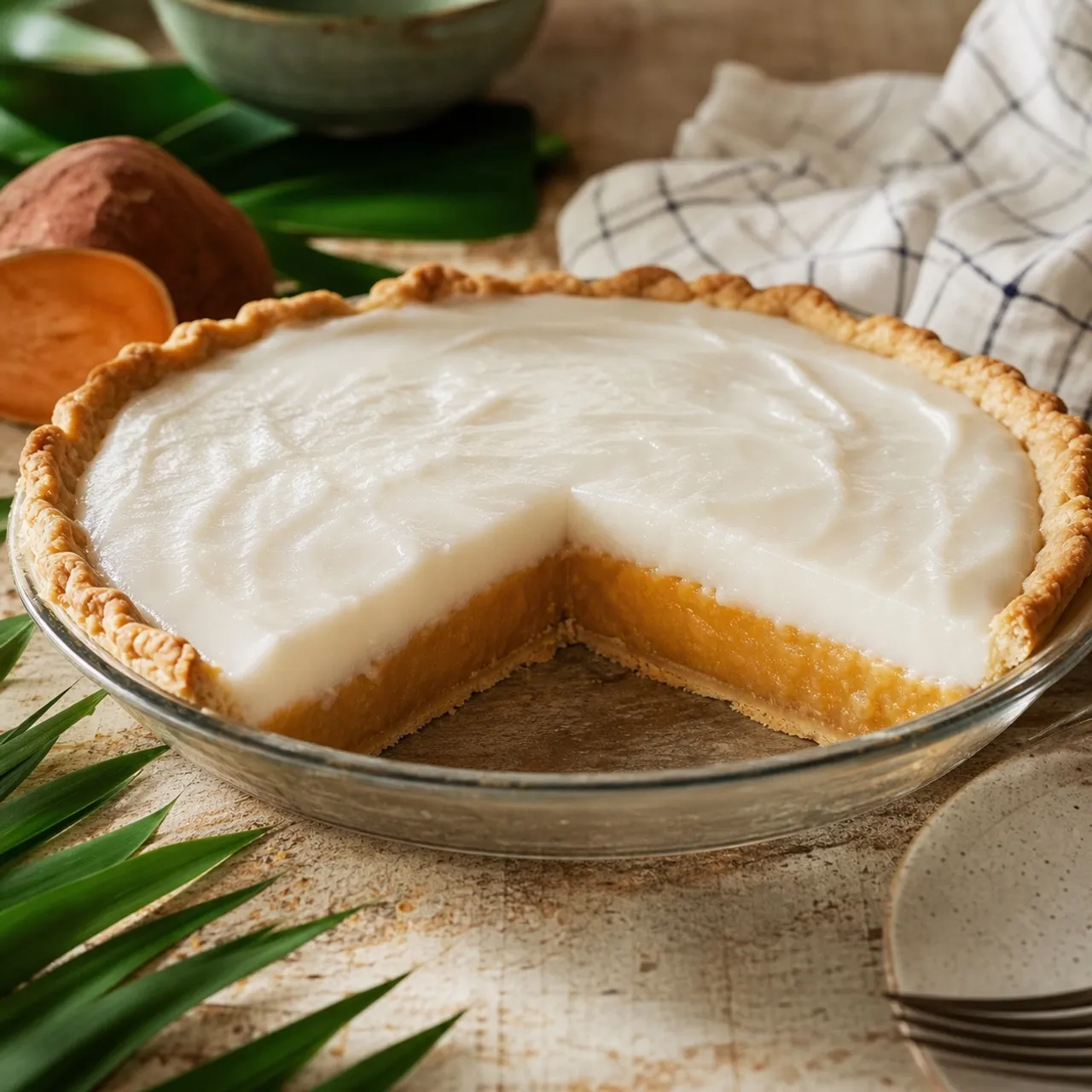
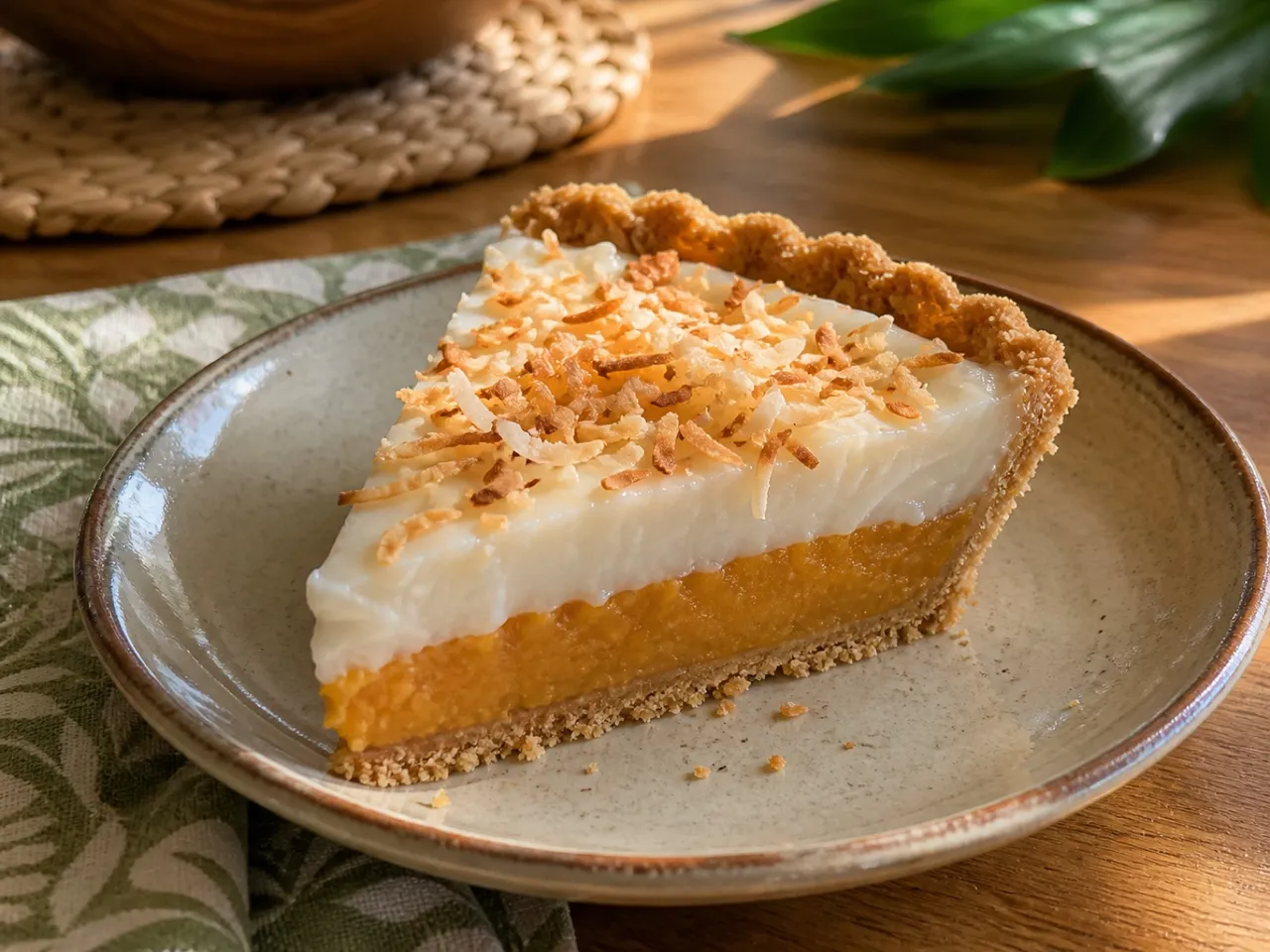
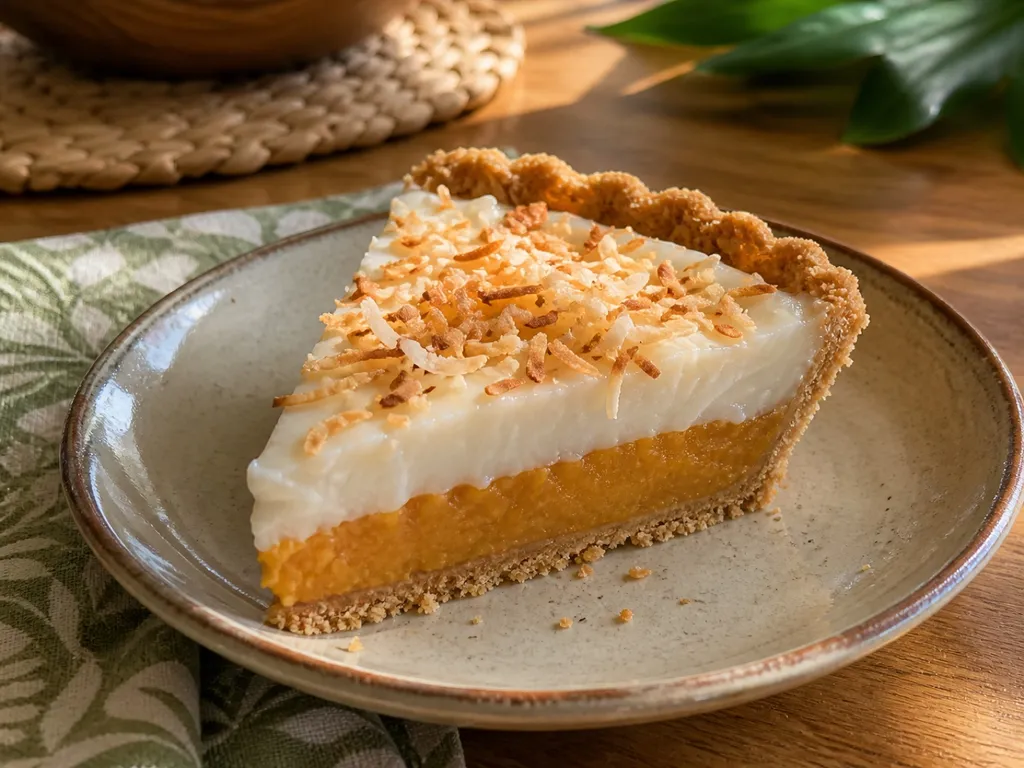
 Sweet Potato Haupia Pie
Creamy Hawaiian sweet potato filling topped with a cool, firm layer of coconut haupia — a beloved two-in-one island pie that's as stunning as it is delicious.
Contains common allergens
In the app, Listahan checks these against your household automatically.
Instructions
8 steps- 1
Preheat the oven to 375 F and blind-bake the pie crust with pie weights for 10 minutes, then remove the weights.
- 2
Beat the mashed sweet potato, 2/3 cup sugar, eggs, evaporated milk, and cinnamon together until smooth.
- 3
Pour the sweet potato filling into the crust and bake for 35 to 40 minutes, until the center is just set with a slight jiggle.
- 4
Cool the pie completely on a rack, then refrigerate until fully chilled.
- 5
For the haupia layer, whisk the coconut milk, remaining sugar, cornstarch, and salt together in a saucepan.
- 6
Cook over medium heat, whisking constantly, until the mixture thickens to a pudding-like consistency and just begins to bubble, 5 to 6 minutes.
- 7
Pour the hot haupia over the chilled sweet potato layer, spreading it into an even layer.
- 8
Refrigerate the pie at least 2 hours, until the haupia is fully set, before slicing.
 Images are for illustrative purposes only, may be inaccurate, and do not guarantee the presence or absence of specific ingredients.
 Listahan Family Score™
66/100
Works for many families
Score reflects how well this recipe fits a typical busy household. In the app, your Family Score is personalized to your household's allergens, kids, and pantry.
Nutrition
per serving100
Calories
2 g
Protein
23 g
Carbs
0 g
Fat
Estimated per serving. Actual values depend on the brands and portions you use.
Listahan cooking guide
Chef notes & practical guide
Technique notes, ingredient swaps, serve-alongside ideas, storage guidance, and equipment for this recipe.
Cultural context
Sweet potato haupia pie layers two separate Hawaiian dessert traditions into one pie — a mashed Okinawan sweet potato filling (Okinawan sweet potatoes, with their vivid purple flesh, arrived with Okinawan immigrants in the early 1900s) topped with a firm-set coconut haupia layer. It's a common local bakery item precisely because it lets a baker sell two favorite textures — dense-and-creamy, then cool-and-firm — in a single slice.
Listahan note
This version cooks the sweet potato filling separately from the haupia layer so each sets with its own distinct texture, then pours the haupia warm over the fully spread sweet potato base so the two layers bond without mixing.
Technique cues
- Steam or boil the Okinawan sweet potatoes until genuinely fork-tender — undercooked chunks leave lumps in the mash that no amount of stirring afterward will smooth out.
- Whisk the haupia's coconut milk, water, and cornstarch completely lump-free before it goes over heat, the same rule as standalone haupia.
- Pour the warm haupia over the sweet potato layer while both are still slightly warm so they bond into one sliceable pie rather than separating into two loose layers when cut.
Kitchen flow
- Parallel prep
- Cook the haupia layer while the sweet potato filling cools slightly in the crust, since it's meant to go on top while still warm.
- Make-ahead
- Needs the full 2-hour chill minimum after assembly — this is a make-ahead pie by design, best made the morning of or the day before serving.
- Leftover move
- Keeps chilled for several days; both layers hold their texture well cold, unlike some custard pies.
- Cleanup rhythm
- Rinse the haupia saucepan immediately — cooled coconut-cornstarch mixture sets almost as firm as the finished layer.
Ingredient brief
Role, handling, and swap guidance for each key ingredient.
1 1/2 lb Okinawan sweet potatoes, peeled and cubed
Base filling
Purpose: Okinawan sweet potatoes have a drier, starchier flesh and vivid purple color that's specifically what this pie is built around — orange sweet potatoes will change both the color and the texture noticeably.
Handling: Cube evenly so all pieces steam or boil at the same rate; uneven pieces leave some chunks underdone.
Adaptation: Standard orange sweet potato or Japanese purple sweet potato both work as a fallback, with a milder flavor and different color.
1/2 cup evaporated milk
Filling richness
Purpose: Mashed into the sweet potato, evaporated milk gives the filling a smooth, spreadable consistency rather than a dry mash.
Handling: Mash in while the sweet potatoes are still hot so it incorporates fully.
Adaptation: Coconut milk can replace it for a dairy-free filling, though it changes the flavor toward more coconut-forward.
1 can (13.5 oz) coconut milk (haupia layer)
Haupia base
Purpose: This is the same coconut-cornstarch haupia used as a standalone dessert, poured as a distinct top layer here instead of cut into squares on its own.
Handling: Whisk with the water and cornstarch until completely smooth before cooking.
Adaptation: Must be full-fat for a proper set; light coconut milk will not firm up the same way.
1/3 cup cornstarch (haupia layer)
Haupia setting agent
Purpose: Exactly the same role as in standalone haupia — this is what lets the top layer set firm enough to slice cleanly rather than staying a loose sauce.
Handling: Whisk into the water completely lump-free before combining with the coconut milk.
Adaptation: Arrowroot or tapioca starch work at a similar ratio.
1 baked 9-inch pie crust
Base
Purpose: A sturdy pre-baked crust needs to support two dense layers, so it should be fully baked and cooled, not just par-baked.
Handling: Bake and cool completely before adding the sweet potato filling.
Adaptation: A gluten-free pie crust works in the same size.
Technique notes
- Cook the sweet potatoes until truly fork-tender — lumps in the mash never smooth out once assembled.
- Whisk the haupia layer completely lump-free before it hits the heat, same as standalone haupia.
- Chill the full 2 hours so both layers set firm enough to slice cleanly.
Ingredient swaps
- Okinawan sweet potato
- Japanese purple sweet potato or standard orange sweet potato, with a milder flavor and different color
- evaporated milk (filling)
- coconut milk, for a fully dairy-free filling with a more coconut-forward flavor
- pie crust
- a gluten-free pie crust in the same 9-inch size
Serve alongside
- Toasted coconut flakes
- Fresh pineapple
- Whipped cream
- Kona coffee
- Hot tea
- Guava juice
Serving suggestions only — check pairings for your household's allergens.
Storage & reheating
- Refrigerate covered up to 4 days; both layers hold their texture well cold.
- Do not freeze — the haupia layer turns grainy and weeps on thawing.
Equipment
- Medium saucepan
- 9-inch pie dish
- Potato masher
Make this household-aware
Listahan Pro checks this recipe against your household's allergens, finds pantry-aware swaps, builds the shopping list, and helps you plan the week around it.
Plan it in Listahan
Add Sweet Potato Haupia Pie to your week, check it against your household's allergens, and build the shopping list automatically.
More Hawaiian recipes
 Hawaiian Lens Verified Images are for illustrative purposes only, may be inaccurate, and do not guarantee the presence or absence of specific ingredients.
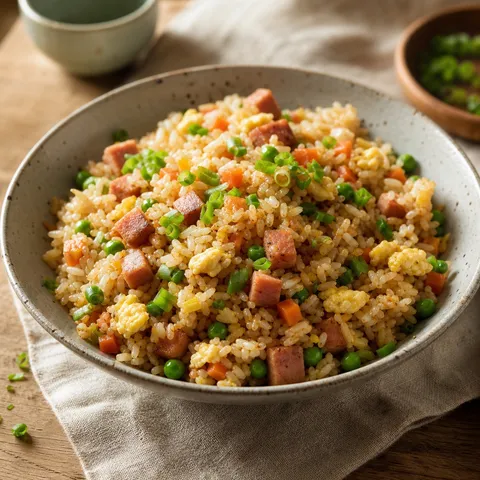
 Spam Fried Rice
Day-old rice stir-fried with caramelized Spam, egg, soy sauce, and green onion — a quick, satisfying island classic that turns pantry staples into something craveable.
 Hawaiian Lens Verified Images are for illustrative purposes only, may be inaccurate, and do not guarantee the presence or absence of specific ingredients.
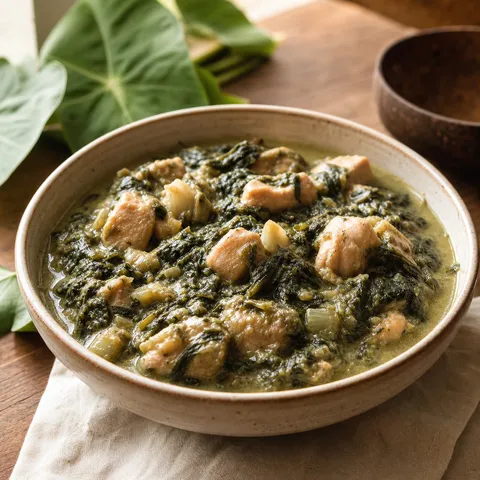
 Chicken Luau
Tender chicken simmered with young taro leaves in coconut milk until velvety and earthy — a quietly comforting Hawaiian stew full of old-fashioned luau warmth.
 Hawaiian Lens Verified Images are for illustrative purposes only, may be inaccurate, and do not guarantee the presence or absence of specific ingredients.
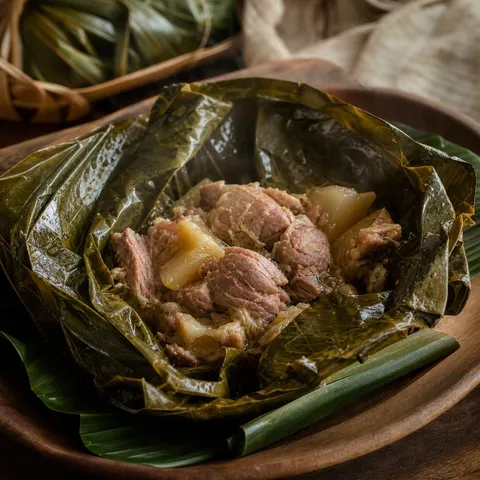
 Lau Lau
Pork shoulder and butterfish bundled in layers of taro leaf and steamed until meltingly tender — earthy, rich, and deeply rooted in Native Hawaiian tradition.