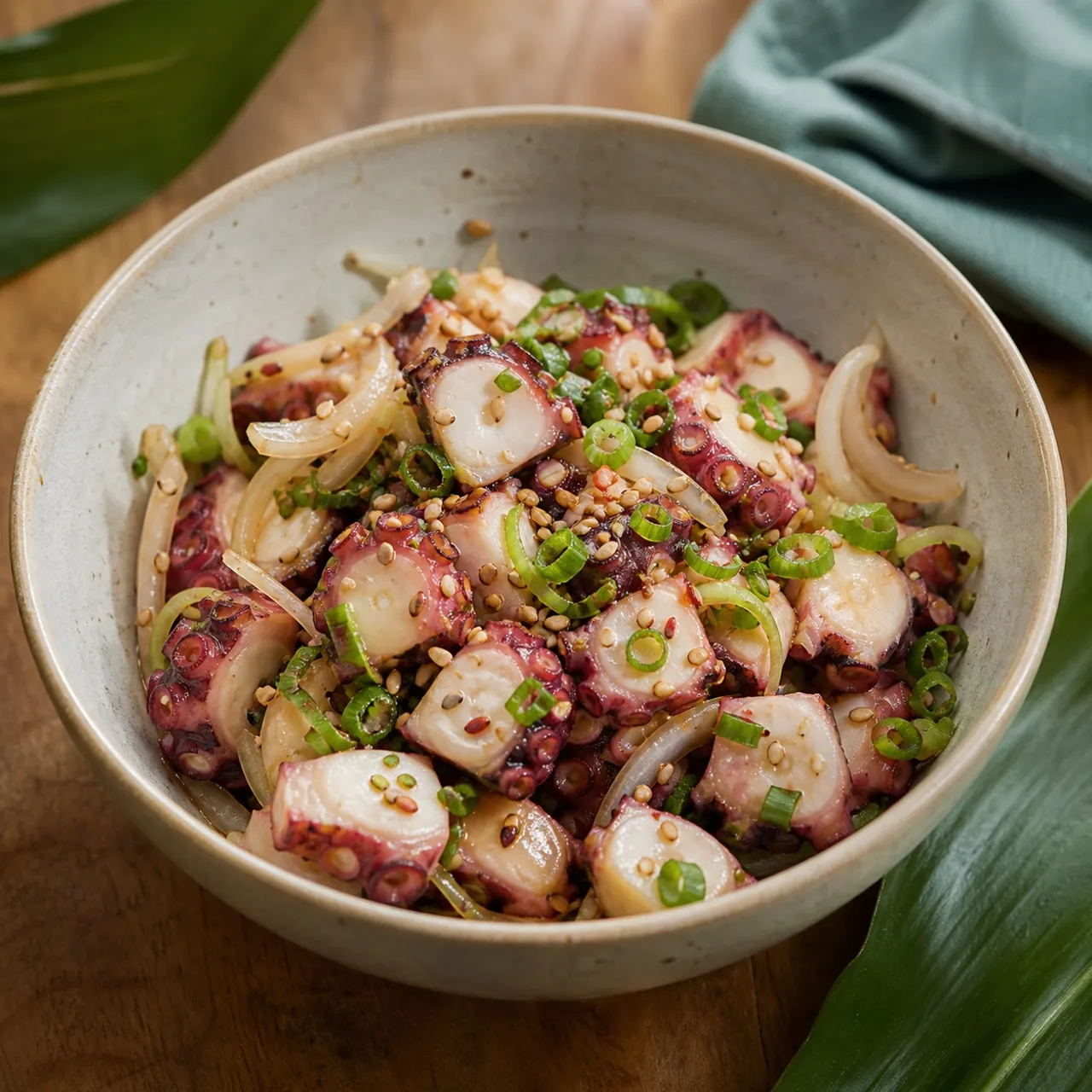
 Hawaiian Images are for illustrative purposes only, may be inaccurate, and do not guarantee the presence or absence of specific ingredients.
 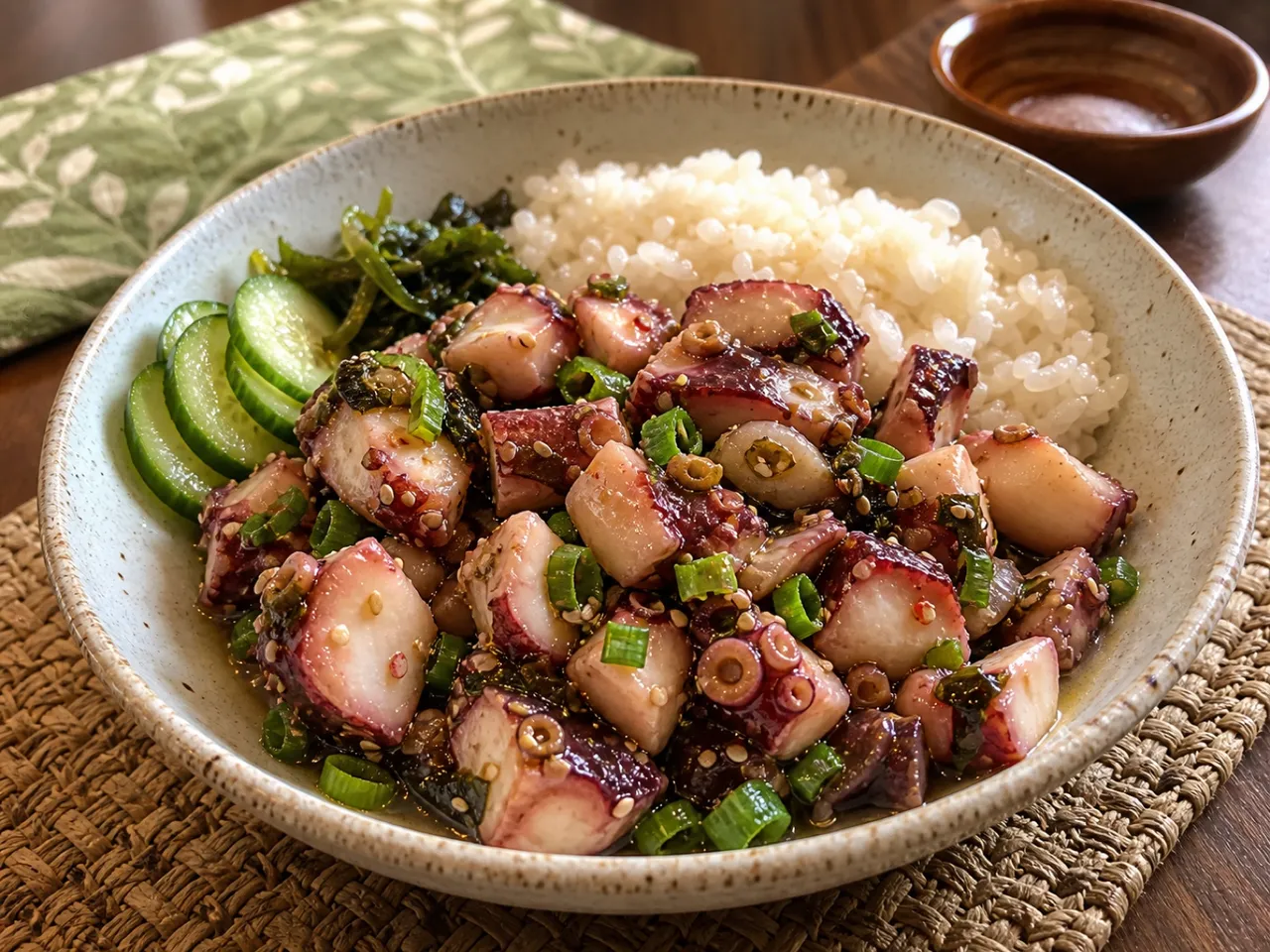 Serving Images are for illustrative purposes only, may be inaccurate, and do not guarantee the presence or absence of specific ingredients.
 Tako Poke
A chewy, savory octopus poke dressed in sesame oil, soy, and sweet onion that is a staple of every island poke counter.
Contains common allergens
In the app, Listahan checks these against your household automatically.
Good to know
- Ready in under 30 minutes
Matched from this dish's own ingredients and timing. Browse more: 30-minute meals
Instructions
6 steps- 1
Place the cut cooked octopus pieces in a large mixing bowl, patting them dry so the dressing clings well.
- 2
Add the soy sauce and toasted sesame oil, tossing gently to coat every piece evenly.
- 3
Fold in the thinly sliced sweet onion, green onions, and red pepper flakes, distributing them throughout the octopus.
- 4
Sprinkle in the toasted sesame seeds and toss once more, then taste and adjust the soy sauce for saltiness.
- 5
Cover and refrigerate for at least 10 minutes to let the octopus absorb the marinade and the onion mellow.
- 6
Serve chilled over a scoop of rice or on its own as a pupu, garnishing with extra sesame seeds.
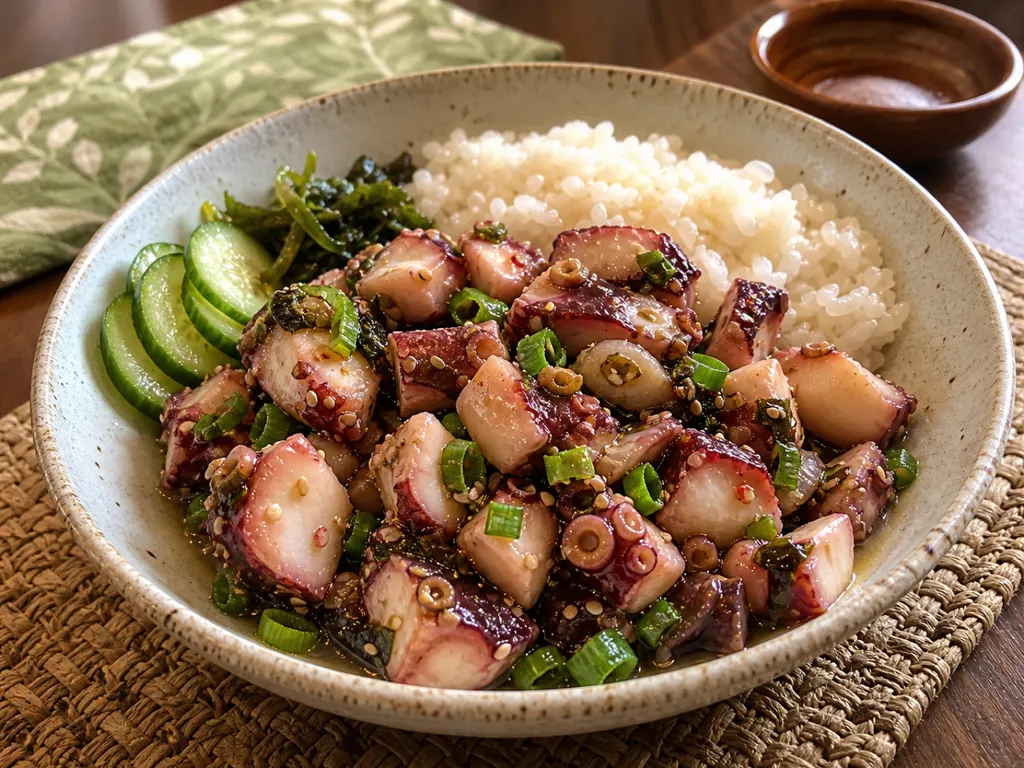 Images are for illustrative purposes only, may be inaccurate, and do not guarantee the presence or absence of specific ingredients.
 Listahan Family Score™
60/100
Works for many families
Score reflects how well this recipe fits a typical busy household. In the app, your Family Score is personalized to your household's allergens, kids, and pantry.
Nutrition
per serving190
Calories
25 g
Protein
3 g
Carbs
8 g
Fat
Estimated per serving. Actual values depend on the brands and portions you use.
Listahan cooking guide
Chef notes & practical guide
Technique notes, ingredient swaps, serve-alongside ideas, storage guidance, and equipment for this recipe.
Cultural context
Poke (pronounced poh-kay) is one of the oldest preparations in Native Hawaiian cooking — the word simply means 'to cut crosswise' in Hawaiian, referring to the way fish or seafood was diced and seasoned with traditional ingredients like sea salt, limu (seaweed), and kukui nut. Tako (octopus) poke became popular as Japanese immigrants, who prized octopus in their own cuisine, introduced it to Hawaiian fish markets and plate lunch counters in the early to mid-20th century. The result is a dish that sits comfortably in two culinary traditions simultaneously.
Listahan note
This version boils the tako until just tender, chills it, and dresses it simply with a shoyu-sesame marinade so the firm, slightly chewy texture of the octopus can be appreciated rather than hidden.
Technique cues
- Tenderize raw octopus by simmering it low and slow at around 200 degrees F for 45 to 60 minutes until a knife tip slides in with no resistance — rushing the cook produces rubbery texture that no dressing will fix.
- Chill the cooked octopus completely before cutting and dressing it; warm octopus releases water that dilutes the marinade and leaves the poke watery at the bottom of the bowl.
- Dress tako poke 30 minutes before serving so the marinade has time to penetrate the surface of the octopus, then taste and adjust seasoning at the last minute — flavors shift as the poke sits.
Kitchen flow
- Parallel prep
- Cook the octopus the night before and refrigerate; the next day, slice and dress it with 30 minutes to spare before serving — the day-before cook makes same-day assembly effortless.
- Make-ahead
- Dressed tako poke keeps well for up to 24 hours in the refrigerator; the marinade deepens in flavor with time, though the texture firms slightly. Do not dress more than a day ahead.
- Leftover move
- Leftover tako poke served warm over steamed rice with a soft poached egg on top is a quick Japanese-inspired donburi that transforms the chilled poke into a completely different dish.
- Cleanup rhythm
- The octopus cooking pot should be washed immediately after use; the purple-black pigment that the octopus releases during cooking stains if left to dry.
Ingredient brief
Role, handling, and swap guidance for each key ingredient.
octopus (tako)
main protein
Purpose: Octopus has a firm yet yielding texture when properly cooked that pairs perfectly with the salty-savory poke dressing and provides the chew that ahi poke does not.
Handling: Freeze raw octopus for 24 hours before cooking to break down the muscle fibers and promote tenderness, then thaw and simmer low and slow.
Adaptation: Pre-tenderized baby octopus from Asian grocery stores reduces the cook time significantly and produces a consistent result.
shoyu
dressing base and salt
Purpose: Shoyu provides the primary seasoning and the savory depth that ties the oceanic flavor of the octopus to the other ingredients.
Handling: Combine with sesame oil and a pinch of sugar for the dressing before adding the chilled, sliced octopus.
Adaptation: Tamari for a gluten-free version with the same savory depth.
sesame oil
aromatic richness
Purpose: Toasted sesame oil adds a nutty, fragrant richness that is characteristic of Hawaii's Japanese-influenced poke style.
Handling: Use sparingly — a teaspoon per pound of octopus is sufficient; too much sesame oil overwhelms the delicate flavor of the tako.
Adaptation: Macadamia nut oil adds a Hawaiian-specific buttery note and can replace sesame oil for a nut-oil version.
green onions (scallions)
fresh bite and color
Purpose: Scallions add a mild onion sharpness and bright green color that cuts through the richness of the dressing.
Handling: Slice thin on the bias and add half to the marinade and half as a final garnish to preserve their fresh texture.
Adaptation: Thinly sliced Maui sweet onion adds a milder sweetness typical of traditional Hawaiian poke preparations.
red pepper flakes or Hawaiian chili pepper
heat
Purpose: A little heat from chili pepper is traditional in many Hawaiian poke preparations and creates the necessary contrast against the cool, sweet octopus.
Handling: Add to taste; fresh sliced Hawaiian chili pepper is authentic but red pepper flakes work well as a substitute.
Adaptation: Omit entirely for a heat-free version suitable for families with young children.
Technique notes
- Rub the raw octopus with coarse salt and massage vigorously for 5 minutes before cooking — this removes some of the surface slime and tenderizes the outer layer through friction.
- A traditional trick for reliable tenderness is to add a wine cork (yes, actual cork) to the cooking water; the enzymes in cork are said to tenderize the octopus, though the evidence is anecdotal, the method is ubiquitous in Mediterranean and Japanese kitchens alike.
- Slice the cooked octopus tentacles on the bias into angled medallions rather than straight rounds — the diagonal cut maximizes the cross-section you see, shows the interior texture, and creates more surface area for the dressing to coat.
Ingredient swaps
- Gluten-free direction
- Replace shoyu with tamari; all other tako poke ingredients are naturally gluten-free.
- Seafood allergy alternative
- Hearts of palm cut into rounds mimic the firm, slightly springy texture of octopus for a plant-based poke that accepts the same dressing.
- Lower-sodium direction
- Use reduced-sodium tamari and taste before adding any additional salt; octopus from the ocean is already mildly saline.
Serve alongside
- Steamed white rice
- Limu seaweed salad
- Cucumber sunomono
- Chilled sake
- Cold Sapporo lager
- Sparkling water with yuzu
Serving suggestions only — check pairings for your household's allergens.
Storage & reheating
- Store tako poke refrigerated in an airtight container for up to 2 days. The marinade continues to season and slightly firm the octopus over time. Do not freeze dressed poke — the marinade and texture both degrade significantly. Undressed cooked octopus can be frozen for up to 1 month.
Equipment
- Large pot for simmering the whole octopus with room to submerge it fully
- Instant-read thermometer or probe thermometer to monitor simmer temperature
- Sharp chef's knife for bias-cutting the tentacles
- Large mixing bowl for tossing the poke gently without breaking up the octopus
Make this household-aware
Listahan Pro checks this recipe against your household's allergens, finds pantry-aware swaps, builds the shopping list, and helps you plan the week around it.
Plan it in Listahan
Add Tako Poke to your week, check it against your household's allergens, and build the shopping list automatically.
More Hawaiian recipes
 Hawaiian Lens Verified Images are for illustrative purposes only, may be inaccurate, and do not guarantee the presence or absence of specific ingredients.
 Spam Fried Rice
Day-old rice stir-fried with caramelized Spam, egg, soy sauce, and green onion — a quick, satisfying island classic that turns pantry staples into something craveable.
 Hawaiian Lens Verified Images are for illustrative purposes only, may be inaccurate, and do not guarantee the presence or absence of specific ingredients.
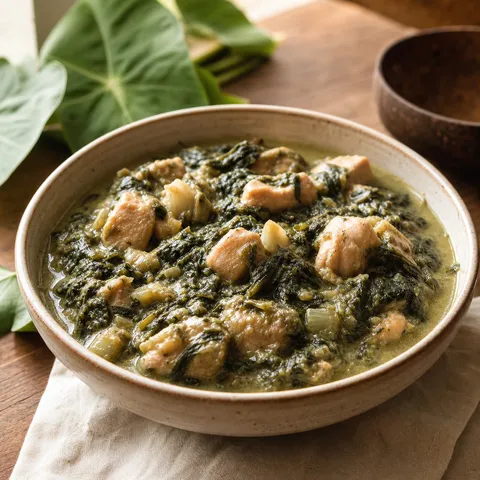
 Chicken Luau
Tender chicken simmered with young taro leaves in coconut milk until velvety and earthy — a quietly comforting Hawaiian stew full of old-fashioned luau warmth.
 Hawaiian Lens Verified Images are for illustrative purposes only, may be inaccurate, and do not guarantee the presence or absence of specific ingredients.
 Lau Lau
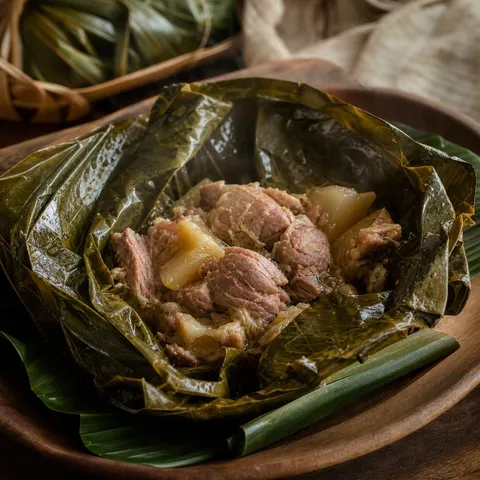
Pork shoulder and butterfish bundled in layers of taro leaf and steamed until meltingly tender — earthy, rich, and deeply rooted in Native Hawaiian tradition.