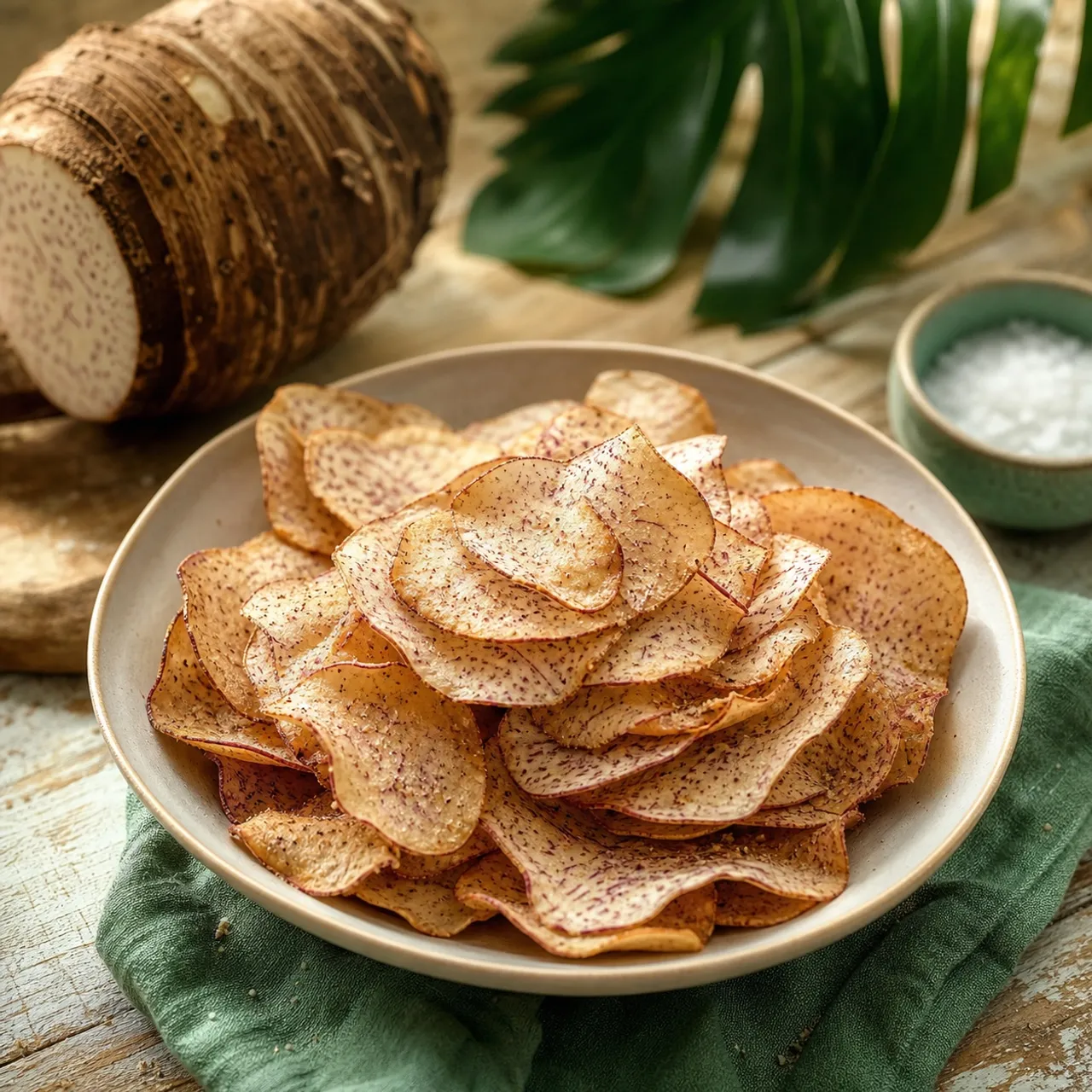
 Hawaiian Images are for illustrative purposes only, may be inaccurate, and do not guarantee the presence or absence of specific ingredients.
 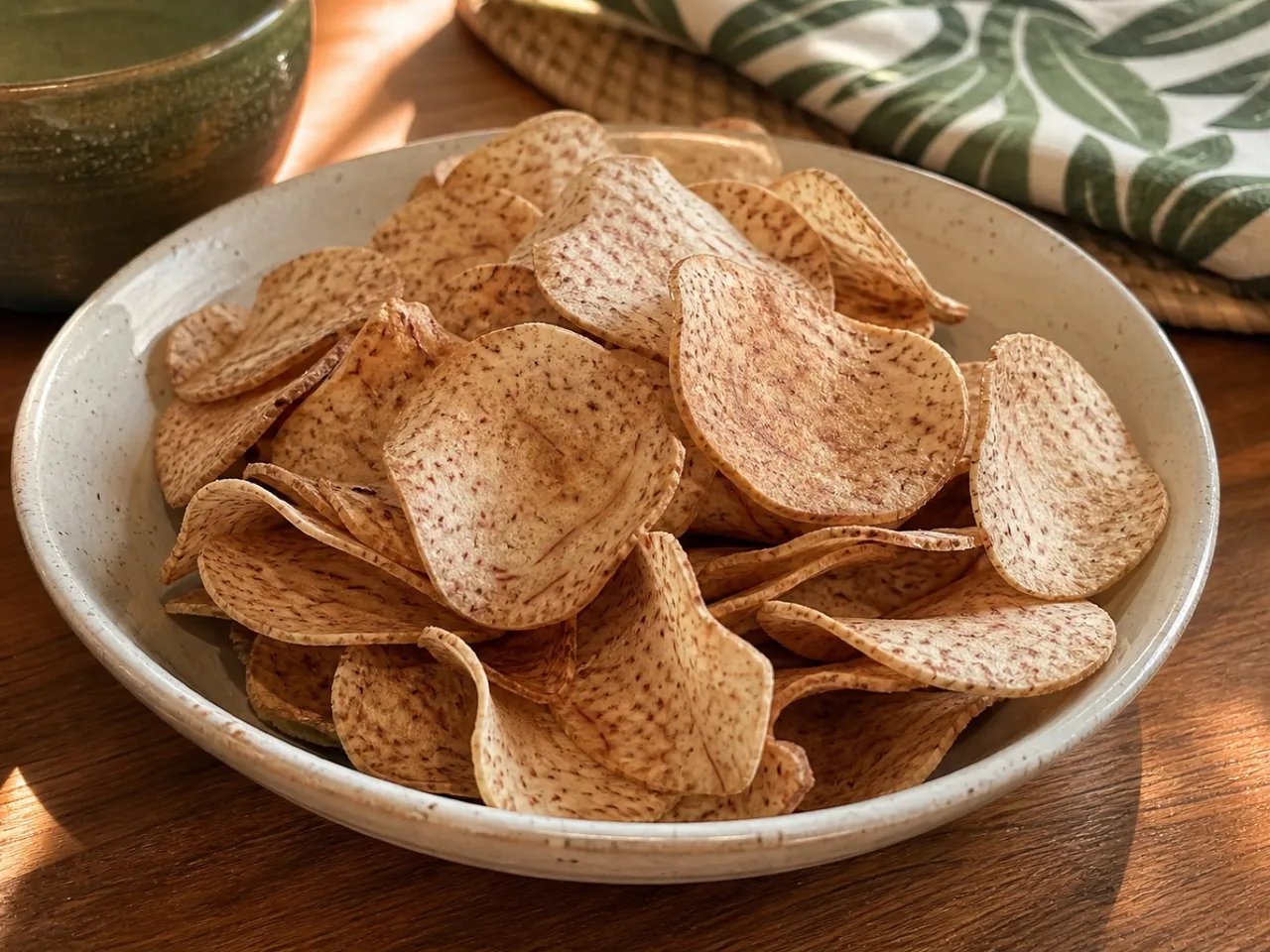 Serving Images are for illustrative purposes only, may be inaccurate, and do not guarantee the presence or absence of specific ingredients.
 Taro Chips
Paper-thin slices of taro root fried to a golden, shattering crisp with a nutty, earthy flavor — Hawaii's irresistible answer to the potato chip.
Contains common allergens
In the app, Listahan checks these against your household automatically.
Good to know
- Crispy
- Ready in under 30 minutes
Matched from this dish's own ingredients and timing. Browse more: crispy recipes30-minute meals
Instructions
7 steps- 1
Using a mandoline, slice the peeled taro into paper-thin rounds, about 1/16 inch thick, working carefully since taro root is starchy and can gum up the blade.
- 2
Soak the slices in a bowl of ice water for 10 minutes to rinse off excess starch, which helps them crisp evenly.
- 3
Drain the taro slices and pat them completely dry with paper towels, since any residual water will cause the hot oil to spatter.
- 4
Heat about 2 inches of vegetable oil in a deep, heavy pot to 325F.
- 5
Fry the taro slices in small batches, stirring gently, for 2 to 3 minutes until golden and the bubbling around them slows, a sign the moisture has cooked out.
- 6
Lift the chips out with a spider skimmer and drain on a wire rack set over paper towels.
- 7
Sprinkle immediately with Hawaiian salt while still hot so it adheres, and let cool completely before serving, since the chips crisp further as they cool.
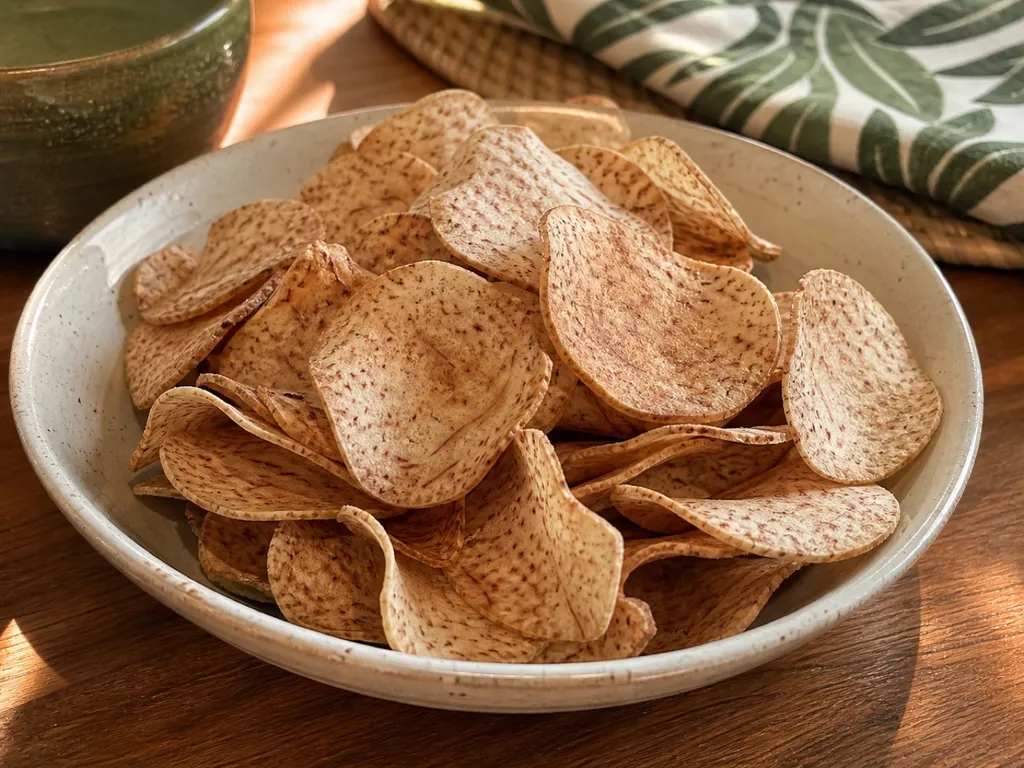 Images are for illustrative purposes only, may be inaccurate, and do not guarantee the presence or absence of specific ingredients.
 Listahan Family Score™
68/100
Works for many families
Score reflects how well this recipe fits a typical busy household. In the app, your Family Score is personalized to your household's allergens, kids, and pantry.
Nutrition
per serving1030
Calories
3 g
Protein
14 g
Carbs
109 g
Fat
Estimated per serving. Actual values depend on the brands and portions you use.
Listahan cooking guide
Chef notes & practical guide
Technique notes, ingredient swaps, serve-alongside ideas, storage guidance, and equipment for this recipe.
Cultural context
Taro has been cultivated in Hawaii for over a thousand years, brought to the islands by Polynesian voyagers who considered the plant so sacred it was treated as an ancestor figure in Native Hawaiian culture. Taro chips emerged as a way to use the root vegetable in a form accessible to wider audiences, and became commercially popular in the 1990s through brands like Terra Chips, which introduced mainland Americans to taro's natural purple-speckled appearance and mildly sweet, nutty flavor. In Hawaii, taro chips carry cultural weight beyond their snack appeal.
Listahan note
This version slices the taro thin on a mandoline for uniform chips that fry consistently and focuses on light seasoning that lets the root's natural flavor come through.
Technique cues
- Wear gloves when peeling and slicing raw taro — the raw root contains calcium oxalate crystals that cause skin irritation and itching for many people.
- Slice taro on a mandoline to 1/16-inch thickness for chips that fry to a crisp without burning; hand-cut slices tend to be uneven and produce half-burnt, half-soft results.
- Fry in small batches at 325F rather than the higher heat used for potato chips — taro chips brown faster due to their sugar content and need slightly lower heat and shorter frying time.
Kitchen flow
- Parallel prep
- Slice all the taro and keep it in cold water before heating the oil; this prevents oxidation and means you can fry continuously once the oil is ready.
- Make-ahead
- Taro chips can be fried up to 6 hours ahead and held at room temperature uncovered on a wire rack; seal only when completely cool to prevent softening.
- Leftover move
- Stale taro chips can be re-crisped in a 325F oven for 5-7 minutes, which restores most of their snap.
- Cleanup rhythm
- Allow frying oil to cool completely before straining and either reusing or discarding; taro starch in the oil can make it clump if the oil is strained while hot.
Ingredient brief
Role, handling, and swap guidance for each key ingredient.
taro root
star ingredient
Purpose: Taro produces a chip with a distinctive earthy sweetness and a naturally purple-flecked cross-section that makes it visually distinctive from potato chips.
Handling: Peel under running water or while wearing gloves, then slice directly into cold water to prevent oxidation before frying.
Adaptation: No close substitute that retains the taro character; purple sweet potato chips are visually similar but taste different.
neutral frying oil
cooking medium
Purpose: A flavorless oil lets the taro flavor speak without any fat taste competing with the chip's natural nuttiness.
Handling: Heat to 325F and maintain temperature with a thermometer throughout frying.
Adaptation: Coconut oil adds a tropical note that pairs naturally with taro but has a lower smoke point; monitor temperature carefully.
sea salt
essential seasoning
Purpose: Light sea salt applied immediately after frying enhances the taro's natural sweetness through contrast.
Handling: Season the chips the moment they come out of the oil while the surface is still wet from frying; seasoning added later does not adhere.
Adaptation: Furikake sprinkled on the hot chips instead of salt creates a Hawaii-specific flavor variation.
Technique notes
- Pat the taro slices very dry with paper towels after removing from water — residual moisture causes violent oil splatter when the chips hit the oil.
- Work in batches of 8-10 chips at a time so the oil temperature does not drop; the entire fry time per batch is only 90-120 seconds at 325F.
- Taro chips naturally vary in color from pale cream to deep purple depending on the variety — the variation is a feature, not a defect.
Ingredient swaps
- Baked version
- Brush taro slices lightly with oil and bake at 375F for 18-20 minutes, flipping halfway; they will be crispier at the edges and slightly chewier than fried.
- Gluten-free direction
- Taro chips are naturally gluten-free; check only that any seasoning blends used are certified gluten-free.
- Allergen-aware direction
- Raw taro contains irritating oxalates — thorough cooking neutralizes them completely, so properly fried chips are safe to eat.
Serve alongside
- guacamole
- tropical fruit salsa
- Hawaiian dip
- poke bowl
- POG juice
- cold sparkling water with lime
- Hawaiian Sun fruit punch
Serving suggestions only — check pairings for your household's allergens.
Storage & reheating
- Store in an airtight container at room temperature for up to 3 days. Avoid refrigerating, as moisture softens the chips irreversibly. Re-crisp in a low oven if they lose their snap. Do not freeze.
Equipment
- mandoline slicer (with cut-resistant glove)
- deep pot or fryer with thermometer
- spider strainer
- wire rack over a sheet pan
Make this household-aware
Listahan Pro checks this recipe against your household's allergens, finds pantry-aware swaps, builds the shopping list, and helps you plan the week around it.
Plan it in Listahan
Add Taro Chips to your week, check it against your household's allergens, and build the shopping list automatically.
More Hawaiian recipes
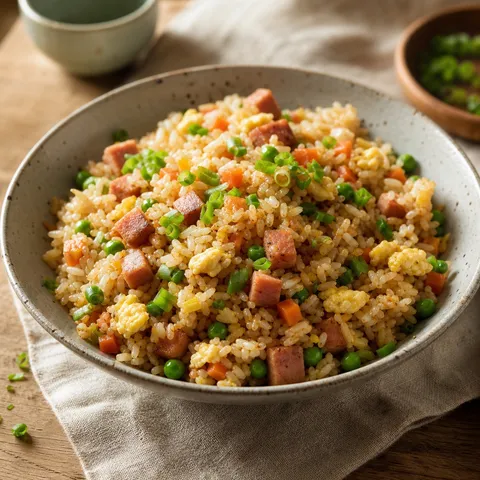 Hawaiian Lens Verified Images are for illustrative purposes only, may be inaccurate, and do not guarantee the presence or absence of specific ingredients.
 Spam Fried Rice
Day-old rice stir-fried with caramelized Spam, egg, soy sauce, and green onion — a quick, satisfying island classic that turns pantry staples into something craveable.
 Hawaiian Lens Verified Images are for illustrative purposes only, may be inaccurate, and do not guarantee the presence or absence of specific ingredients.
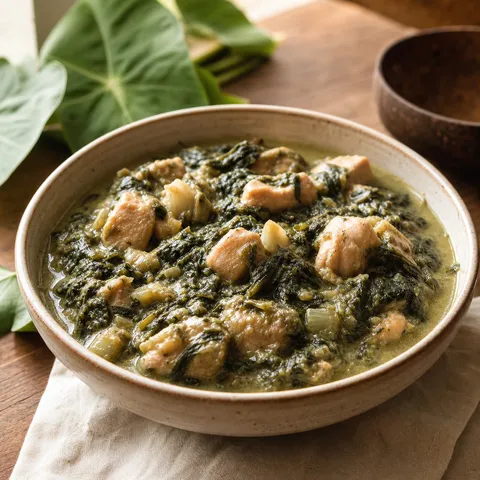
 Chicken Luau
Tender chicken simmered with young taro leaves in coconut milk until velvety and earthy — a quietly comforting Hawaiian stew full of old-fashioned luau warmth.
 Hawaiian Lens Verified Images are for illustrative purposes only, may be inaccurate, and do not guarantee the presence or absence of specific ingredients.
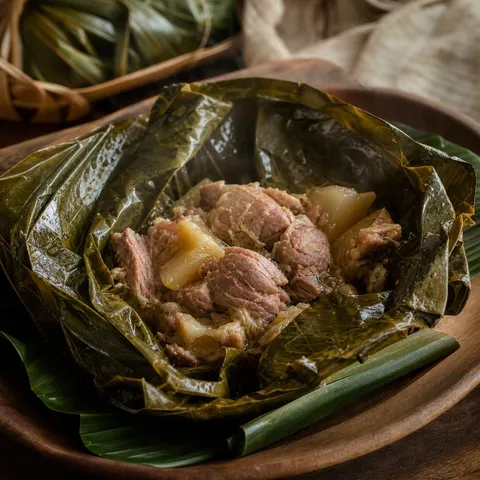
 Lau Lau
Pork shoulder and butterfish bundled in layers of taro leaf and steamed until meltingly tender — earthy, rich, and deeply rooted in Native Hawaiian tradition.