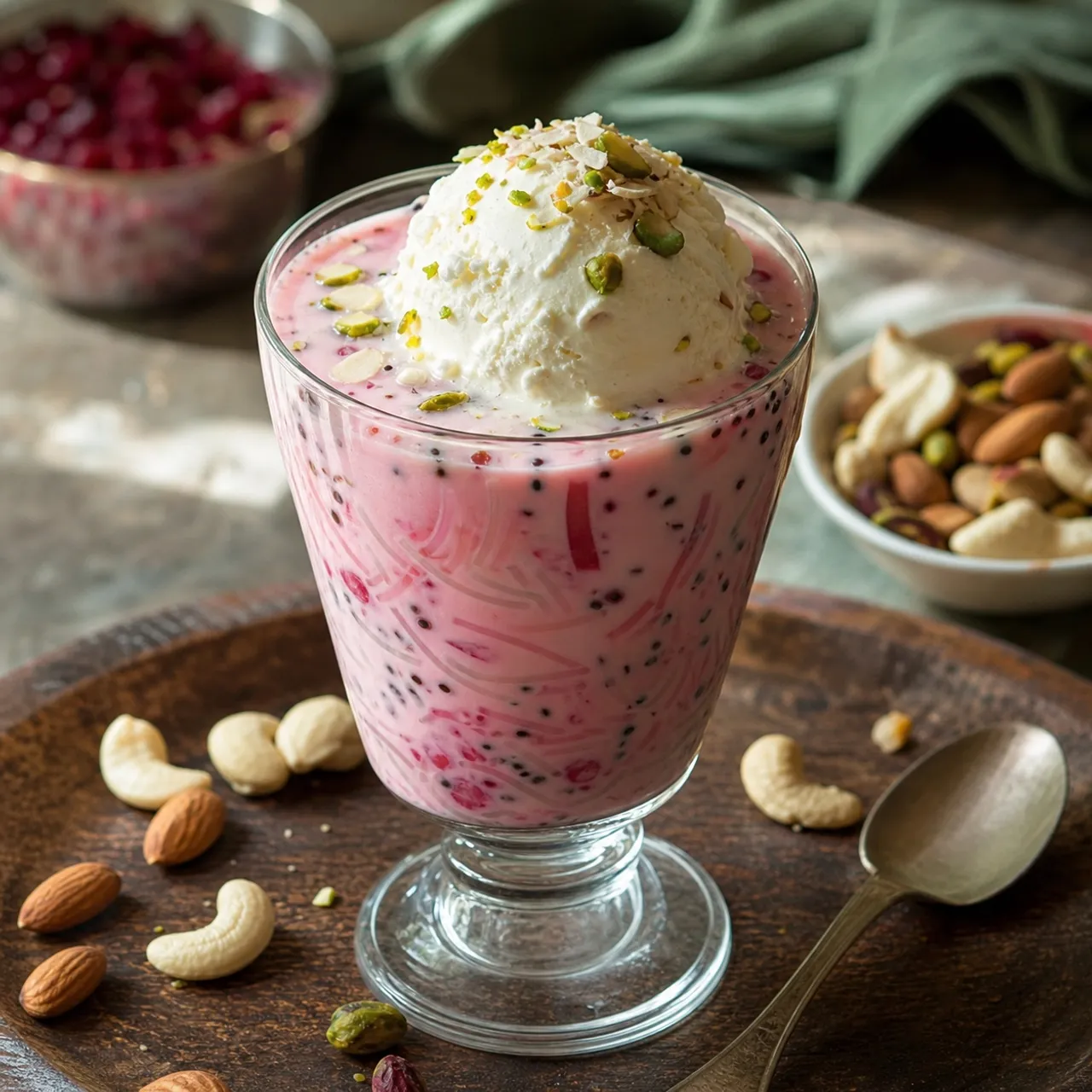
 Indian Images are for illustrative purposes only, may be inaccurate, and do not guarantee the presence or absence of specific ingredients.
 Falooda
A layered rose-scented dessert drink with vermicelli, basil seeds, and milk crowned with a scoop of ice cream.
Contains common allergens
In the app, Listahan checks these against your household automatically.
Good to know
- Ready in under 30 minutes
Matched from this dish's own ingredients and timing. Browse more: 30-minute meals
Instructions
6 steps- 1
Soak the basil seeds in 1/2 cup water for 15 minutes until they swell and turn gelatinous, then drain off any excess water.
- 2
Boil the falooda sev in plenty of water for 3 to 4 minutes until soft and translucent, then drain and rinse under cold water to stop the cooking.
- 3
If using sugar, stir it into the chilled milk until dissolved.
- 4
In two tall serving glasses, spoon 1 tbsp rose syrup into the bottom of each, then layer in the soaked basil seeds and the cooked falooda sev.
- 5
Pour the chilled milk slowly over the layers, then drizzle the remaining rose syrup down the sides for a marbled look.
- 6
Top each glass with a scoop of vanilla ice cream, sprinkle with chopped pistachios and almonds, and serve immediately with a long spoon and straw.
Listahan Family Score™
77/100
Good fit for most families
Score reflects how well this recipe fits a typical busy household. In the app, your Family Score is personalized to your household's allergens, kids, and pantry.
Nutrition
per serving80
Calories
2 g
Protein
12 g
Carbs
3 g
Fat
Estimated per serving. Actual values depend on the brands and portions you use.
Listahan cooking guide
Chef notes & practical guide
Technique notes, ingredient swaps, serve-alongside ideas, storage guidance, and equipment for this recipe.
Cultural context
Falooda traces its roots to the Persian dessert faloodeh, which travelled to South Asia and evolved into a layered, rose-scented drink built with vermicelli, basil seeds, and milk. It became a beloved treat across India and Pakistan, especially in summer, often crowned with a scoop of ice cream for an extra layer of indulgence.
Listahan note
This version builds the layers deliberately in tall glasses so the color and texture contrast stays visible through the glass rather than getting stirred into a uniform pink milkshake.
Technique cues
- Soaking the basil seeds separately until they swell and turn gelatinous gives the drink its distinctive chewy, tapioca-like texture; skipping the soak leaves them hard and gritty.
- Rinsing the cooked falooda sev under cold water stops it from continuing to cook and keeps the strands from clumping together in the glass.
- Pouring the milk slowly down the side of the glass over the layered ingredients keeps the layers distinct rather than mixing them together before serving.
Kitchen flow
- Parallel prep
- Soak the basil seeds and boil the falooda sev at the same time, since both need to cool before layering.
- Make-ahead
- The soaked basil seeds and cooked sev can be prepped a few hours ahead and refrigerated separately until assembly.
- Leftover move
- Leftover soaked basil seeds keep well in the fridge and can start the next day's falooda without resoaking.
- Cleanup rhythm
- Assemble directly in the serving glasses to avoid an extra mixing bowl.
Ingredient brief
Role, handling, and swap guidance for each key ingredient.
Basil seeds (sabja)
Texture element
Purpose: Once soaked, they swell into small, gelatinous beads that add a unique chewy texture found in few other desserts.
Handling: Soak for a full 15 minutes until fully swollen and translucent, draining excess water before layering.
Adaptation: Chia seeds can mimic a similar swollen texture in a pinch, though the flavor is slightly different.
Falooda sev (cornstarch vermicelli)
Noodle layer
Purpose: These thin noodles add a soft, slippery texture that's core to the falooda experience.
Handling: Boil until just soft, then rinse in cold water immediately to stop the cooking and prevent clumping.
Adaptation: Cooked thin rice vermicelli can substitute if falooda sev isn't available, though the texture will be slightly different.
Rose syrup (Rooh Afza)
Flavor and color
Purpose: It gives falooda its signature pink color and floral-sweet flavor that defines the drink.
Handling: Spoon a layer into the bottom of the glass first, then drizzle more down the sides for a marbled effect.
Adaptation: A homemade rose syrup made from rosewater and sugar can substitute if Rooh Afza isn't available.
Chilled whole milk
Base liquid
Purpose: Poured over the layers, it ties the components together while keeping the drink light rather than thick like a milkshake.
Handling: Chill it well beforehand so the drink stays cold as it's assembled.
Adaptation: A plant-based milk like almond or oat milk can work for a dairy-free version, though the flavor will be lighter.
Vanilla ice cream
Crowning element
Purpose: A scoop on top adds richness and a temperature contrast against the cold milk and syrup below.
Handling: Add the scoop just before serving so it doesn't melt into the layers too quickly.
Adaptation: Kulfi, the South Asian frozen dairy dessert, is a more traditional topping than Western vanilla ice cream.
Technique notes
- Layer the ingredients in order, without stirring, so the visual contrast survives until the drink reaches the table.
- Pour the milk slowly and gently down the inside of the glass rather than straight down the middle, which disturbs the layers below.
- Serve immediately once assembled, since the ice cream will start melting into the layers within a few minutes.
Ingredient swaps
- Dairy-free direction
- Use a plant-based milk and a dairy-free ice cream for a version without dairy.
- Simpler direction
- Skip the ice cream scoop for a lighter, less indulgent version that's still fully layered.
- Fruit addition
- Add a layer of chopped fresh mango for a seasonal variation.
Serve alongside
- Samosas
- Pakoras
- Fresh fruit chaat
- Sweet lassi
- Iced masala chai
Serving suggestions only — check pairings for your household's allergens.
Storage & reheating
- Assembled falooda is best enjoyed immediately and doesn't store well once layered.
- The soaked basil seeds and cooked sev can each be refrigerated separately for up to 2 days before assembly.
- Freezing any component is not recommended, as the texture of the seeds and noodles changes after thawing.
Equipment
- Tall serving glasses
- Small saucepan for boiling the sev
- Long spoon and straw for serving
Make this household-aware
Listahan Pro checks this recipe against your household's allergens, finds pantry-aware swaps, builds the shopping list, and helps you plan the week around it.
Plan it in Listahan
Add Falooda to your week, check it against your household's allergens, and build the shopping list automatically.
More Indian recipes
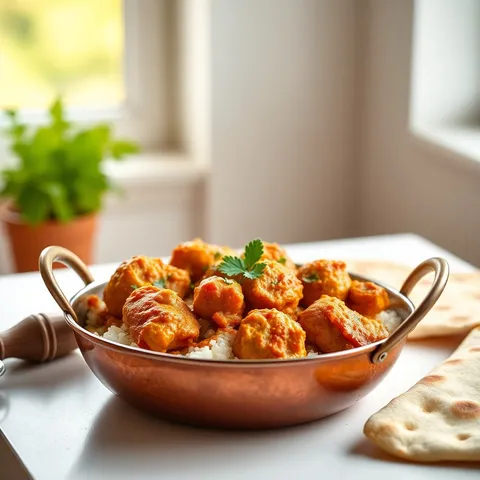 Indian Lens Verified Images are for illustrative purposes only, may be inaccurate, and do not guarantee the presence or absence of specific ingredients.
 Chicken Tikka Masala
Indulge in succulent, yogurt-marinated chicken chunks roasted to perfection and enveloped in a luscious, deeply spiced tomato-cream sauce.
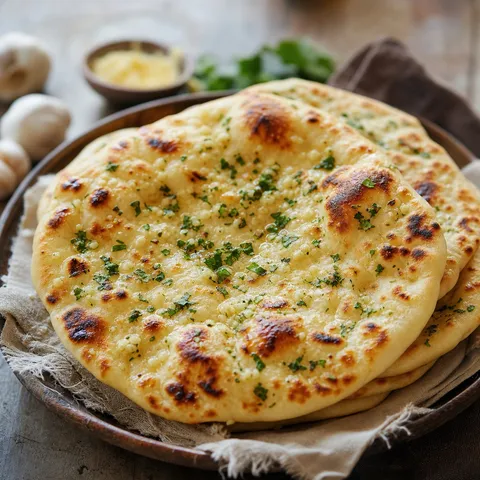 Indian Lens Verified Images are for illustrative purposes only, may be inaccurate, and do not guarantee the presence or absence of specific ingredients.
 Garlic Naan
Tear into this piping hot, blistered flatbread packed with aromatic garlic and brushed generously with irresistible melted butter.
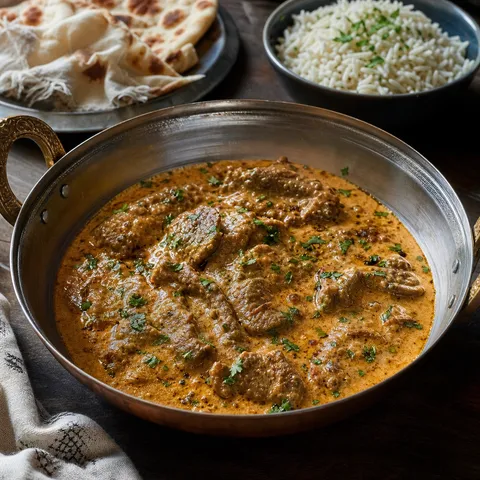 Indian Lens Verified Images are for illustrative purposes only, may be inaccurate, and do not guarantee the presence or absence of specific ingredients.
 Lamb Pasanda
A rich Mughlai dish made with flattened lamb steaks in a creamy almond sauce.