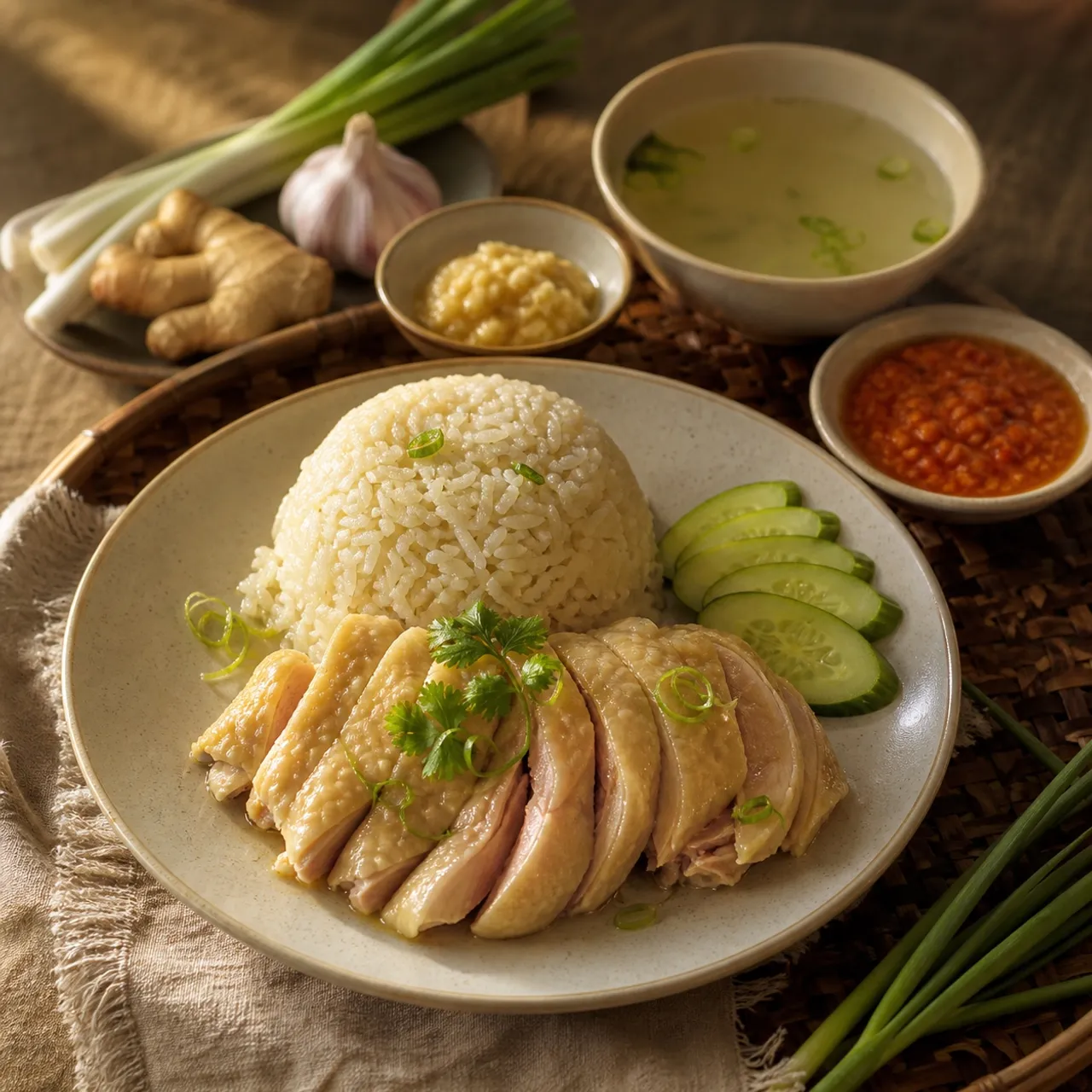
 Indonesian & Malaysian Images are for illustrative purposes only, may be inaccurate, and do not guarantee the presence or absence of specific ingredients.
 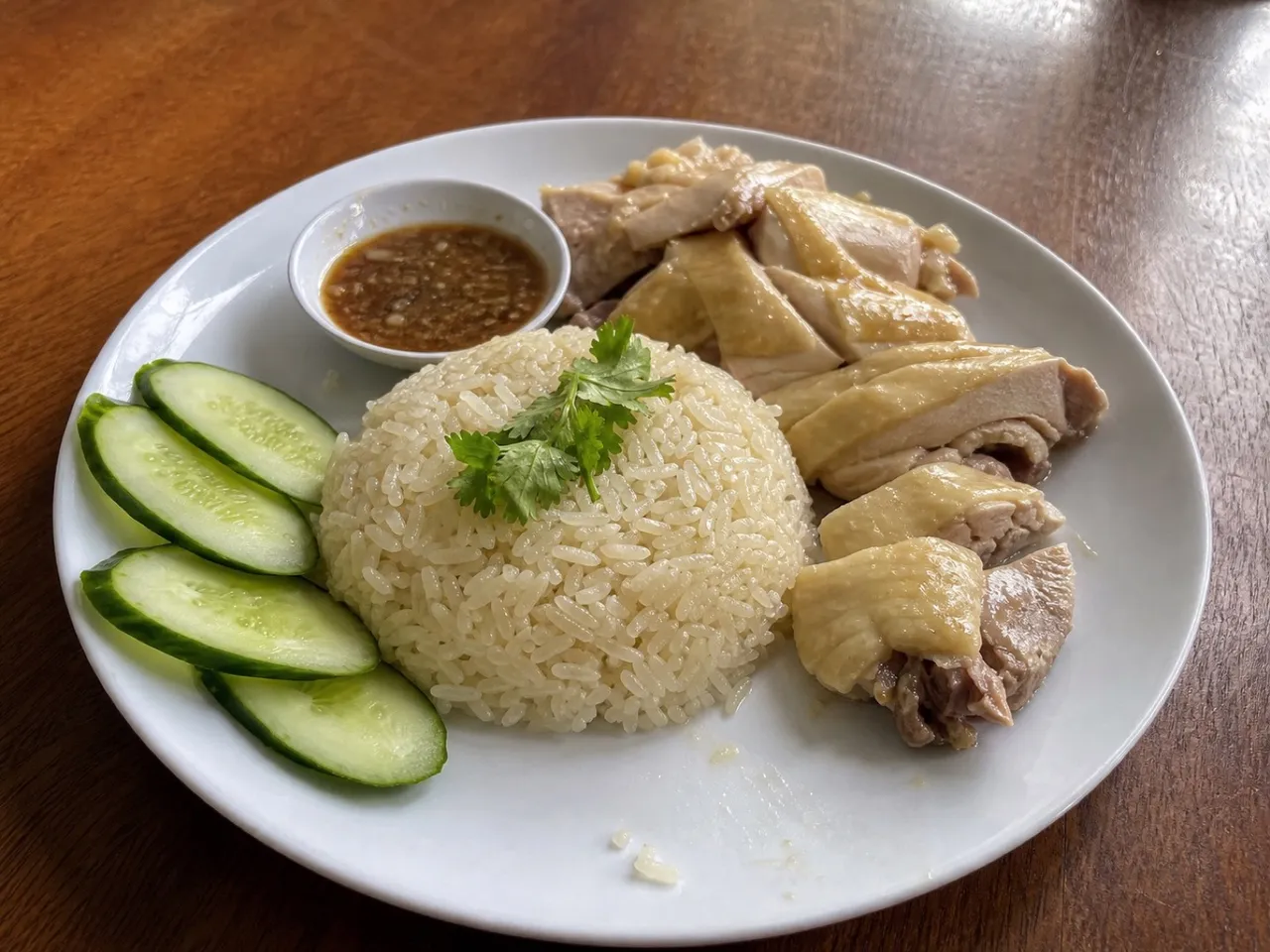 Serving Images are for illustrative purposes only, may be inaccurate, and do not guarantee the presence or absence of specific ingredients.
 Hainanese Chicken Rice
Silky poached chicken over fragrant ginger-garlic rice, served with chili sauce and dark soy — a beloved Southeast Asian classic of understated perfection.
Contains common allergens
In the app, Listahan checks these against your household automatically.
Instructions
6 steps- 1
Bring a large pot of water to a boil. Stuff the chicken cavity with ginger slices and scallions.
- 2
Carefully submerge the chicken in the boiling water, reduce heat to low, cover, and gently poach for 45-50 minutes until fully cooked.
- 3
Remove the chicken and immediately plunge it into an ice bath to stop the cooking and tighten the skin. Reserve the chicken broth.
- 4
In a separate pan, sauté crushed garlic and ginger in a little chicken fat or oil until fragrant.
- 5
Add the uncooked jasmine rice to the pan and toast slightly, then transfer to a rice cooker and cook using the reserved chicken broth instead of water.
- 6
Rub the cooled chicken with sesame oil, chop into pieces, and serve with the fragrant rice, chili sauce, and dark soy sauce.
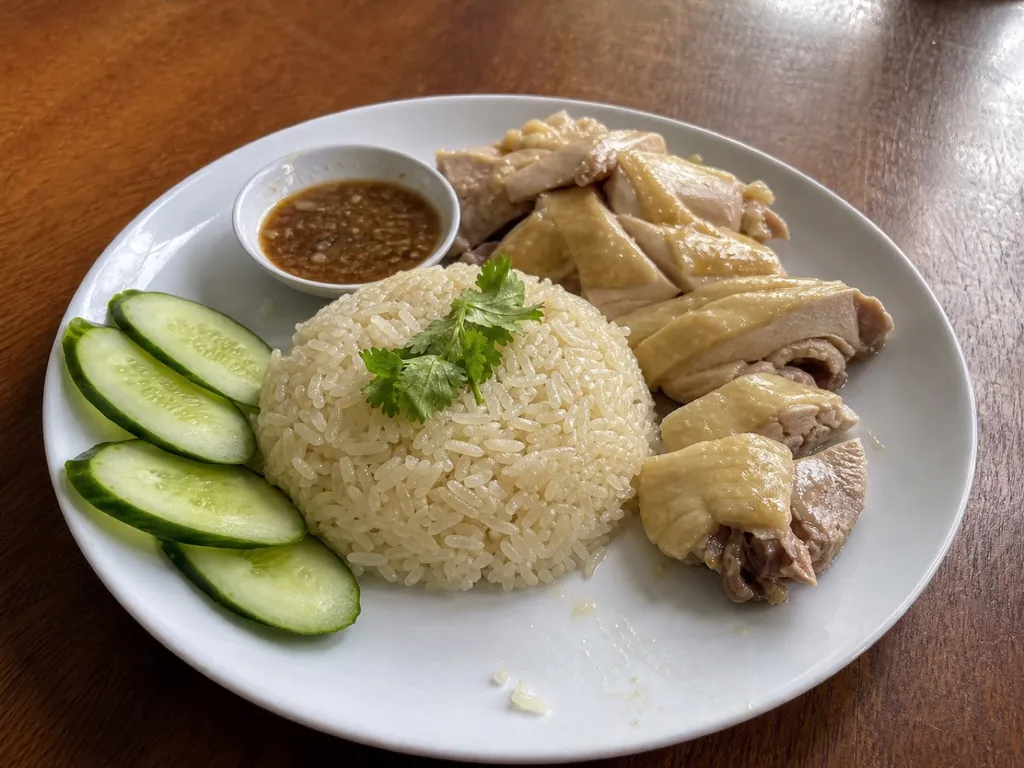 Images are for illustrative purposes only, may be inaccurate, and do not guarantee the presence or absence of specific ingredients.
 Listahan Family Score™
68/100
Works for many families
Score reflects how well this recipe fits a typical busy household. In the app, your Family Score is personalized to your household's allergens, kids, and pantry.
Nutrition
per serving515
Calories
10 g
Protein
113 g
Carbs
1 g
Fat
Estimated per serving. Actual values depend on the brands and portions you use.
Listahan cooking guide
Chef notes & practical guide
Technique notes, ingredient swaps, serve-alongside ideas, storage guidance, and equipment for this recipe.
Cultural context
Hainanese chicken rice was brought to Southeast Asia by immigrants from Hainan province in southern China in the late 19th and early 20th centuries. In Singapore and Malaysia it evolved into a dish more elaborate than its Hainanese origins, with the chicken poaching stock used to cook the rice and three distinct condiments — ginger sauce, dark soy, and chili sauce — served alongside. Singapore declared it one of its national dishes and hawker stalls compete fiercely on the quality of the glistening poached chicken and fragrant rice.
Listahan note
This version focuses on the gentle poaching technique that produces silky, just-cooked chicken skin and uses the resulting stock to build a deeply fragrant rice that tastes complete on its own.
Technique cues
- Submerge the chicken in cold water, bring slowly to a simmer, then cover and turn off the heat — this gentle approach produces silky, barely-set meat textures that are impossible to achieve with aggressive boiling.
- Ice-bath the chicken immediately after poaching to contract the skin and produce the characteristic smooth, slightly gelatinous exterior that distinguishes proper Hainanese chicken rice from plain boiled chicken.
- Toast the rice in the rendered chicken fat and ginger before adding stock — this fat-coating step prevents the grains from clumping and produces a separately grained, fragrant result.
Kitchen flow
- Parallel prep
- While the chicken poaches and then rests in the ice bath, skim the stock and use it to cook the rice — the two components are ready at roughly the same time.
- Make-ahead
- The chicken can be poached and refrigerated whole overnight; slice cold, the gelatinous skin texture is even better the next day.
- Leftover move
- Any leftover chicken and stock make an excellent noodle soup the next day — simmer the stock with ginger, season, and serve over thin noodles.
- Cleanup rhythm
- The same pot is used for poaching and then for skimming stock to cook the rice; minimal equipment required overall.
Ingredient brief
Role, handling, and swap guidance for each key ingredient.
whole chicken
main protein and stock source
Purpose: A whole chicken provides both the protein and, through poaching, the rich stock that defines the flavor of the dish.
Handling: Pat dry, stuff the cavity with ginger slices and green onion, and truss loosely to help it hold shape during poaching.
Adaptation: Bone-in chicken thighs produce a very similar result with significantly less cooking time — about 25 minutes at a bare simmer.
jasmine rice
fragrant rice base
Purpose: Jasmine rice has just enough fragrance and starch to absorb the chicken fat and stock while remaining fluffy.
Handling: Rinse until water runs clear, then stir-fry in rendered chicken fat with ginger for 2 to 3 minutes before adding stock.
Adaptation: Long-grain white rice can substitute; the result will be slightly less fragrant.
fresh ginger
aromatic throughout
Purpose: Ginger is used in the poaching liquid, the rice, the ginger sauce, and the garnish — it is the aromatic backbone of the entire dish.
Handling: Use mature ginger rather than young ginger for a more assertive, spicy flavor appropriate for the condiment.
Adaptation: There is no good substitute for fresh ginger in this dish.
sesame oil
finishing aroma on chicken
Purpose: A brush of sesame oil over the sliced chicken adds the nutty aroma that signals the dish is finished and ready to eat.
Handling: Apply with a pastry brush just before slicing and serving.
Adaptation: A neutral oil with a few drops of toasted sesame seed is a reasonable approximation.
dark soy sauce
condiment depth
Purpose: Dark soy served alongside provides contrast to the delicate poached chicken and the fragrant rice, adding a salty-caramel note.
Handling: Serve in a small dipping bowl alongside the ginger-chili sauce so diners can adjust to their own preference.
Adaptation: Kecap manis provides a sweeter, thicker alternative that also works well as a condiment.
Technique notes
- Skim the stock aggressively during the first 10 minutes of poaching — clear stock produces better-tasting rice than a cloudy, scum-filled liquid.
- The chicken is done when the thigh juices run clear and an instant-read thermometer inserted into the thickest part reads 165F — do not guess, as under-poaching is the most common error.
- Rendered chicken fat skimmed from the poaching stock is superior to any vegetable oil for frying the rice — it is the authentic method and the flavor difference is significant.
Ingredient swaps
- Gluten-free direction
- Use tamari in place of soy sauce and verify the dark soy condiment is gluten-free; the dish is otherwise naturally wheat-free.
- Weeknight shortcut
- Use a rotisserie chicken, strip the meat and bones, simmer the bones in water with ginger and garlic for 30 minutes to make a quick stock, then use that stock to cook the rice.
Serve alongside
- Sliced cucumber and tomato with a drizzle of sesame oil
- Clear chicken ginger broth in small bowls
- Ginger-green onion sauce
- Hot chrysanthemum tea
- Iced barley water
Serving suggestions only — check pairings for your household's allergens.
Storage & reheating
- Store the poached chicken refrigerated, whole and unsliced if possible, for up to 3 days — slicing exposes more surface area and dries the meat faster.
- Stock keeps refrigerated for 5 days or frozen for 3 months; use it as a base for soups or to cook subsequent batches of rice.
Equipment
- Large stockpot (at least 8 quarts) for poaching the whole chicken
- Large bowl with ice water for the ice bath
- Medium saucepan for cooking the rice in stock
Make this household-aware
Listahan Pro checks this recipe against your household's allergens, finds pantry-aware swaps, builds the shopping list, and helps you plan the week around it.
Plan it in Listahan
Add Hainanese Chicken Rice to your week, check it against your household's allergens, and build the shopping list automatically.
More Indonesian & Malaysian recipes
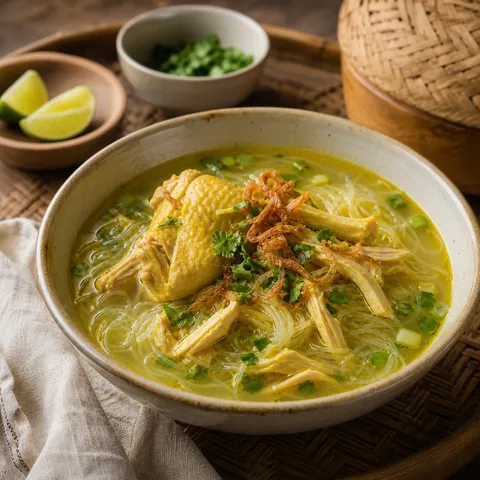 Indonesian & Malaysian Lens Verified Images are for illustrative purposes only, may be inaccurate, and do not guarantee the presence or absence of specific ingredients.
 Soto Ayam
A golden, turmeric-spiced Indonesian chicken soup with glass noodles, crispy shallots, and lime — light, herbal, and deeply comforting.
 Indonesian & Malaysian Lens Verified Images are for illustrative purposes only, may be inaccurate, and do not guarantee the presence or absence of specific ingredients.
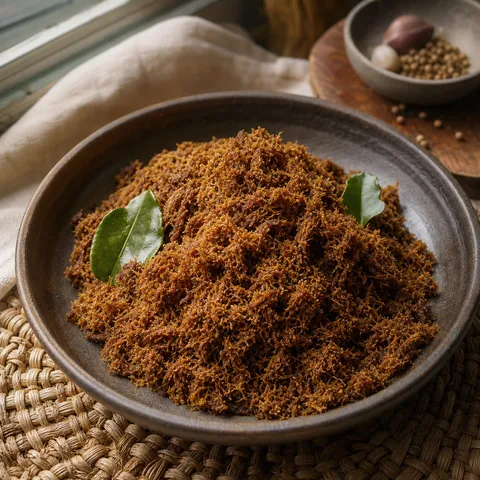
 Beef Serunding
Dry-fried spiced beef floss toasted with coconut and lemongrass until golden and fragrant — a rich, crumbly condiment that transforms plain rice.
 Indonesian & Malaysian Lens Verified Images are for illustrative purposes only, may be inaccurate, and do not guarantee the presence or absence of specific ingredients.
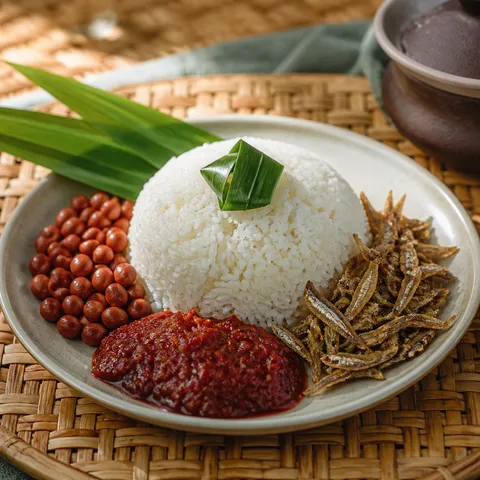
 Nasi Lemak
Malaysia's national comfort dish — fragrant coconut rice paired with sambal, crispy anchovies, roasted peanuts, and a soft-boiled egg.