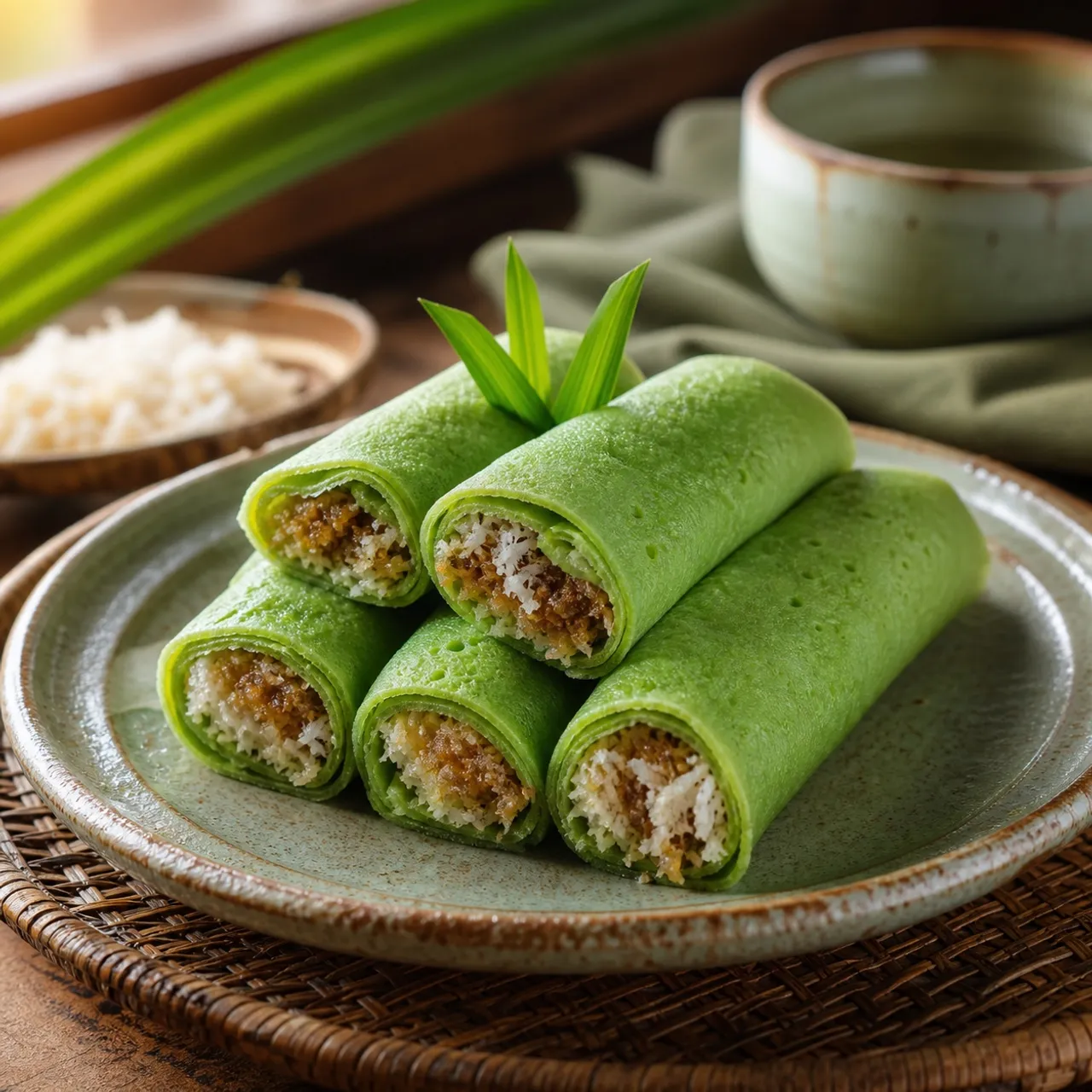
 Indonesian & Malaysian Images are for illustrative purposes only, may be inaccurate, and do not guarantee the presence or absence of specific ingredients.
 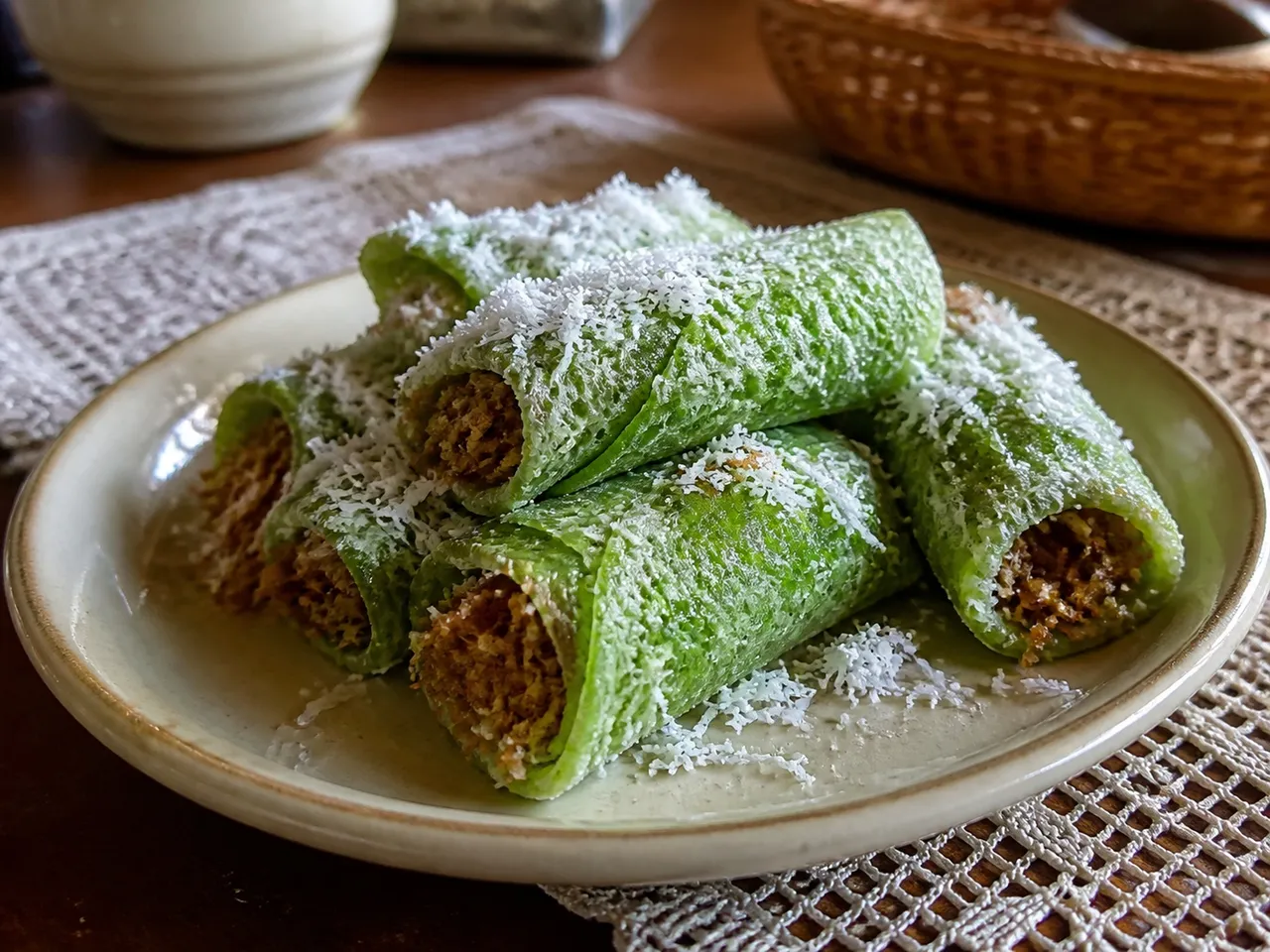 Serving Images are for illustrative purposes only, may be inaccurate, and do not guarantee the presence or absence of specific ingredients.
 Kuih Ketayap
Delicate pandan crepes rolled around sweet, caramelized coconut filling — fragrant, soft, and a little indulgent, these Malay sweets disappear fast.
Contains common allergens
In the app, Listahan checks these against your household automatically.
Good to know
- Ready in under 30 minutes
Matched from this dish's own ingredients and timing. Browse more: 30-minute meals
Instructions
6 steps- 1
Whisk the flour, egg, coconut milk, pandan extract, and a pinch of salt into a smooth, thin batter; strain if any lumps remain.
- 2
Heat a lightly oiled nonstick pan over medium heat and pour in a thin layer of batter, swirling to coat the bottom; cook until set but not browned, about 1 minute, then remove and stack the crepes.
- 3
For the filling, combine the grated coconut, palm sugar, and water in a small pan and cook over medium-low heat, stirring, until the sugar melts and coats the coconut, 5 to 7 minutes.
- 4
Let the filling cool slightly, then spoon a line of it across the center of each crepe.
- 5
Fold in the sides and roll up tightly like a spring roll.
- 6
Serve at room temperature, cut in half if desired.
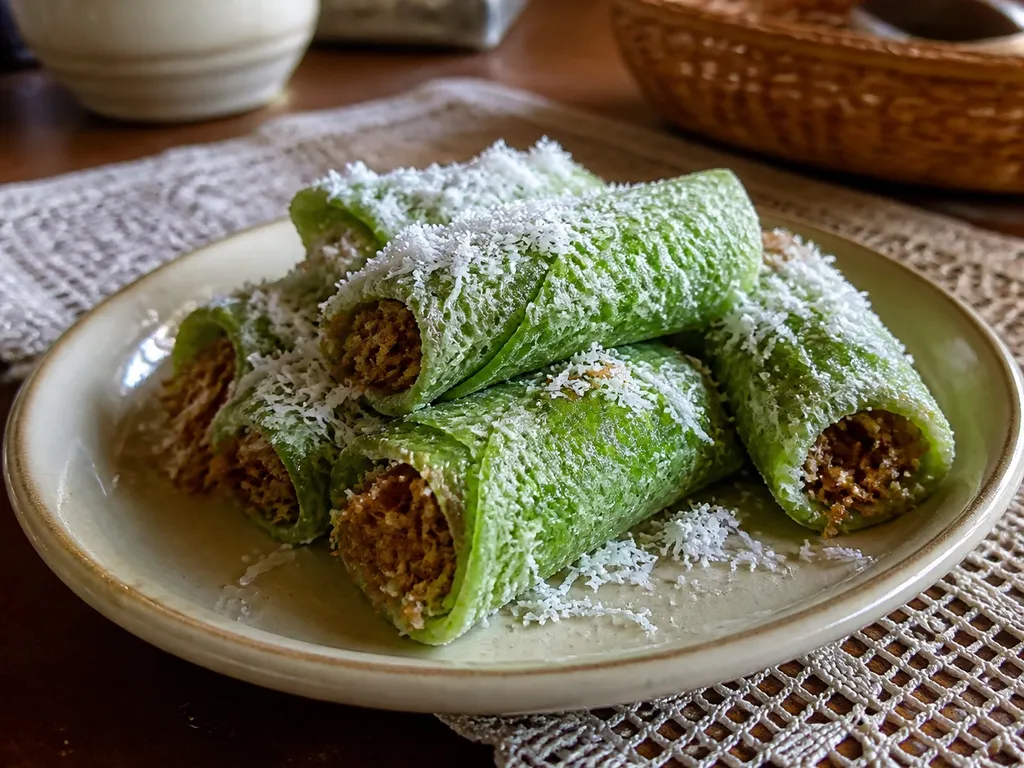 Images are for illustrative purposes only, may be inaccurate, and do not guarantee the presence or absence of specific ingredients.
 Listahan Family Score™
81/100
Good fit for most families
Score reflects how well this recipe fits a typical busy household. In the app, your Family Score is personalized to your household's allergens, kids, and pantry.
Nutrition
per serving120
Calories
1 g
Protein
16 g
Carbs
7 g
Fat
Estimated per serving. Actual values depend on the brands and portions you use.
Listahan cooking guide
Chef notes & practical guide
Technique notes, ingredient swaps, serve-alongside ideas, storage guidance, and equipment for this recipe.
Cultural context
Kuih ketayap is a Malay sweet built on a pandan-flavored crepe wrapped around a caramelized coconut filling, the same coconut-and-palm-sugar filling that shows up across several other Malay and Indonesian kuih under different wrappers.
Listahan note
This version cooks the coconut filling down until it's dry enough to hold its shape when rolled, rather than leaving it loose and syrupy, since a wet filling makes the thin crepe tear.
Technique cues
- Pandan leaves or extract give the crepe batter its characteristic green color and grassy aroma, distinct from a plain egg crepe used in other cuisines.
- The crepes need to be cooked thin and only on one side, since the uncooked side is what seals against itself once the filling is rolled inside.
- The coconut and palm sugar filling is cooked down over low heat until the moisture evaporates and the mixture turns dry and slightly sticky, rather than staying loose and syrupy, since a wet filling soaks through and tears the thin crepe.
- Rolling the filling while both the crepe and filling are still warm makes the wrap easier to close cleanly, since a cooled crepe turns less pliable and can crack at the fold.
Kitchen flow
- Parallel prep
- While Kuih Ketayap is in the oven, measure out any garnish or topping — like the coconut milk — so it's ready the moment the bake finishes cooling. Plan around the cook; that's the slow part.
- Make-ahead
- Kuih Ketayap's dough or batter (built around coconut milk) can usually be made a day ahead and refrigerated, then baked fresh — many doughs actually improve with an overnight rest. Plan around the cook; that's the slow part.
- Leftover move
- Leftover Kuih Ketayap freezes well — wrap individual portions tightly and thaw at room temperature, or crumble it over ice cream for a quick second life. This one leans on the coconut milk. Everything else is quick — the cook is the one step that takes real time.
- Cleanup rhythm
- Soak the mixing bowl and beaters for Kuih Ketayap right away — sugar and butter residue hardens fast once it cools. This one leans on the coconut milk. The cook step is what sets the pace here.
Ingredient brief
Role, handling, and swap guidance for each key ingredient.
Pandan crepe
Flavor support
Purpose: Pandan crepe supports the balance of Kuih Ketayap and should taste integrated.
Handling: Prep before heat is high so the cooking step can move without rushing.
Adaptation: Use the closest fresh equivalent and expect a modest shift in flavor or texture.
coconut
Flavor support
Purpose: coconut supports the balance of Kuih Ketayap and should taste integrated.
Handling: Prep before heat is high so the cooking step can move without rushing.
Adaptation: Use verified safe seeds or omit the crunch when peanut or tree-nut safety matters.
palm sugar
Sweetness and aroma
Purpose: palm sugar adds aroma, sweetness, or warmth without needing extra garnish.
Handling: Measure before heating and break up clumps so the mix distributes evenly.
Adaptation: Use the closest fresh equivalent and expect a modest shift in flavor or texture.
Technique notes
- Kuih ketayap is typically served at room temperature rather than warm, allowing the filling to firm up slightly for a cleaner bite.
- The crepes can be made ahead and stacked with parchment between them, then filled closer to serving time.
- A light dusting of extra grated coconut on the filling before rolling adds texture that the smooth filling alone doesn't provide.
Ingredient swaps
- Nut-aware direction
- Omit the nuts here; a seed garnish keeps the texture without the tree-nut or peanut concern. This one leans on the pandan juice.
- Lower-sodium direction
- Season lighter on salt than the recipe calls for, then adjust right before serving — it's easier to add more than to fix an oversalted batch. This one leans on the pandan juice.
- Weeknight shortcut
- Mix and chill the batter or mix-ins up to a day ahead so the night-of step is just baking, not mixing. This one leans on the pandan juice.
Serve alongside
- Fresh berries
- Citrus fruit salad
- Mint leaves
- Black coffee
- Hot tea
- Sparkling water with lemon
Serving suggestions only — check pairings for your household's allergens.
Storage & reheating
- Store covered for 3 to 4 days, refrigerated when dairy, eggs, custard, or fresh fruit are involved.
- Reheat gently only when warmth improves the texture.
- Freeze sturdy baked portions up to 2 months; avoid freezing delicate fresh toppings.
Equipment
- Mixing bowls
- Baking dish or pan
- Cooling rack
Make this household-aware
Listahan Pro checks this recipe against your household's allergens, finds pantry-aware swaps, builds the shopping list, and helps you plan the week around it.
Plan it in Listahan
Add Kuih Ketayap to your week, check it against your household's allergens, and build the shopping list automatically.
More Indonesian & Malaysian recipes
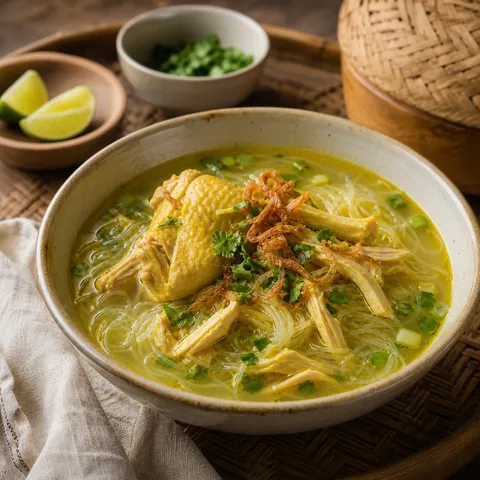 Indonesian & Malaysian Lens Verified Images are for illustrative purposes only, may be inaccurate, and do not guarantee the presence or absence of specific ingredients.
 Soto Ayam
A golden, turmeric-spiced Indonesian chicken soup with glass noodles, crispy shallots, and lime — light, herbal, and deeply comforting.
 Indonesian & Malaysian Lens Verified Images are for illustrative purposes only, may be inaccurate, and do not guarantee the presence or absence of specific ingredients.
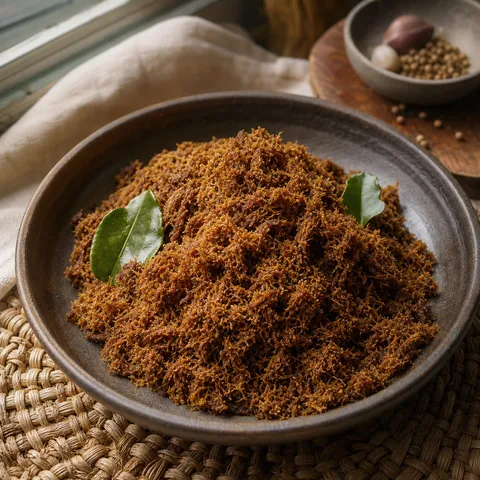
 Beef Serunding
Dry-fried spiced beef floss toasted with coconut and lemongrass until golden and fragrant — a rich, crumbly condiment that transforms plain rice.
 Indonesian & Malaysian Lens Verified Images are for illustrative purposes only, may be inaccurate, and do not guarantee the presence or absence of specific ingredients.
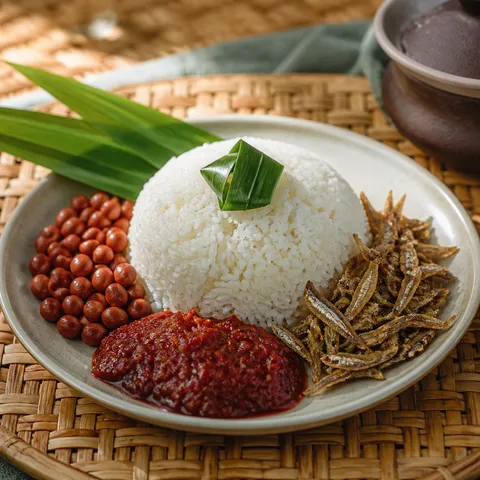
 Nasi Lemak
Malaysia's national comfort dish — fragrant coconut rice paired with sambal, crispy anchovies, roasted peanuts, and a soft-boiled egg.