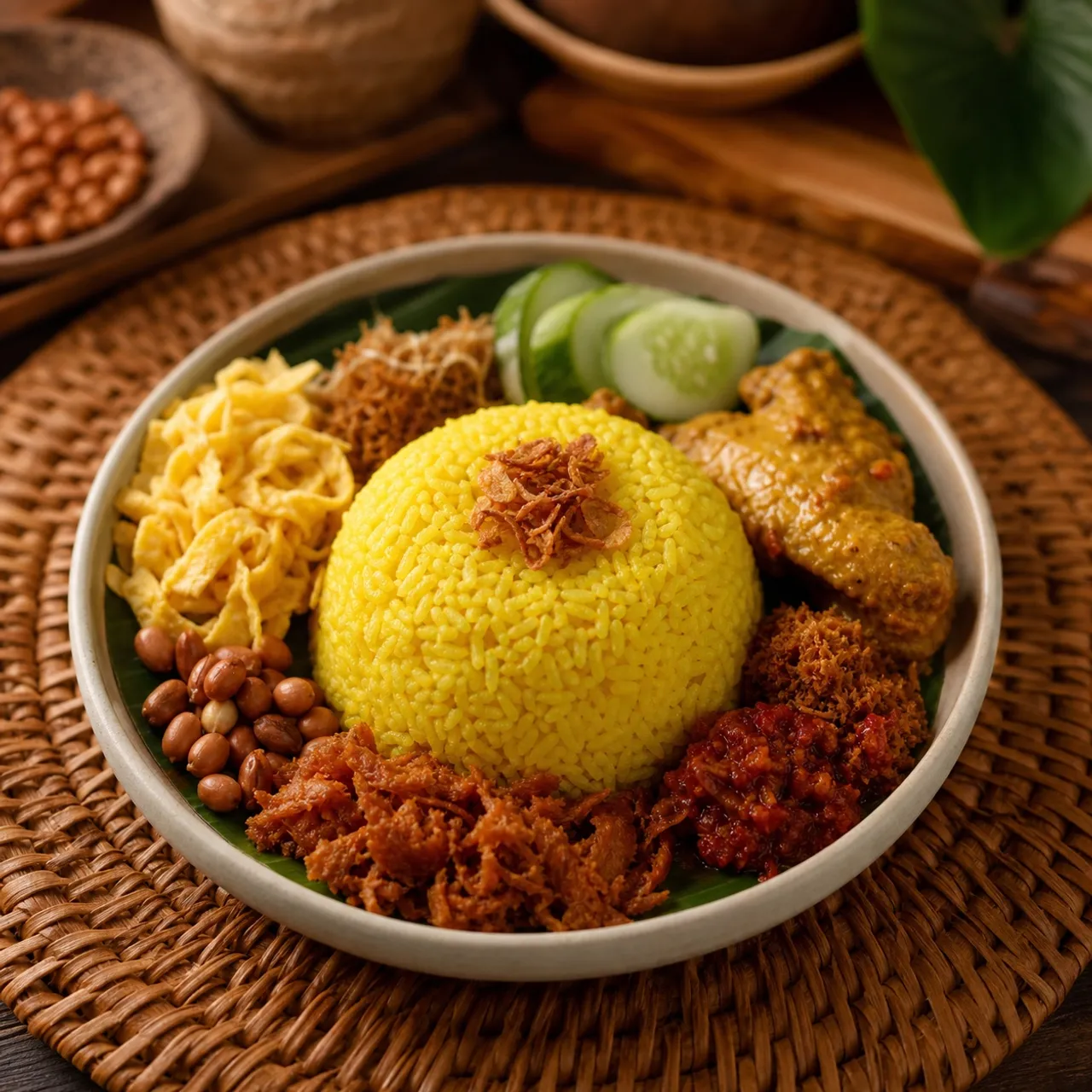
 Indonesian & Malaysian Images are for illustrative purposes only, may be inaccurate, and do not guarantee the presence or absence of specific ingredients.
 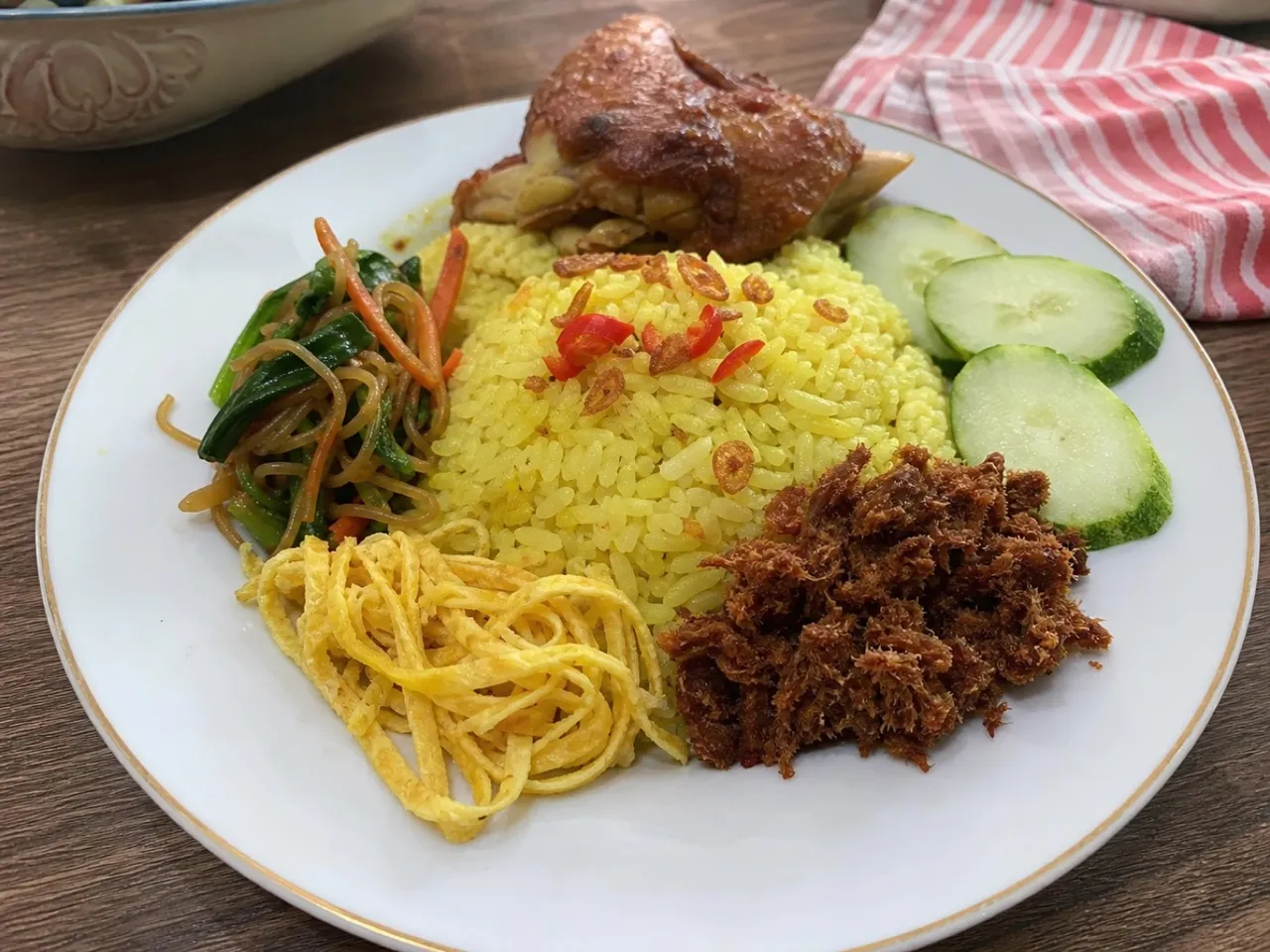 Serving Images are for illustrative purposes only, may be inaccurate, and do not guarantee the presence or absence of specific ingredients.
 Nasi Kuning
Turmeric-golden celebration rice cooked in coconut milk until fragrant and festive — the centerpiece of Indonesian birthdays, weddings, and harvest feasts.
No common allergens detected
Based on this recipe's ingredient list. Always verify with your own brands and labels.
Good to know
- One-pot
Matched from this dish's own ingredients and timing. Browse more: one-pot dinners
Instructions
5 steps- 1
Combine the rinsed rice, coconut milk, turmeric, lime leaves, lemongrass, and salt in a rice cooker or heavy pot, stirring to distribute the turmeric evenly.
- 2
If using a pot, bring to a gentle boil, then cover and reduce to the lowest heat.
- 3
Cook until the liquid is absorbed and the rice is tender, about 18 to 20 minutes for a pot, or per your rice cooker cycle.
- 4
Let the rice rest, covered, for 10 minutes off the heat.
- 5
Remove the lemongrass and lime leaves, fluff the rice with a fork, and serve as the centerpiece of a nasi kuning platter with sides.
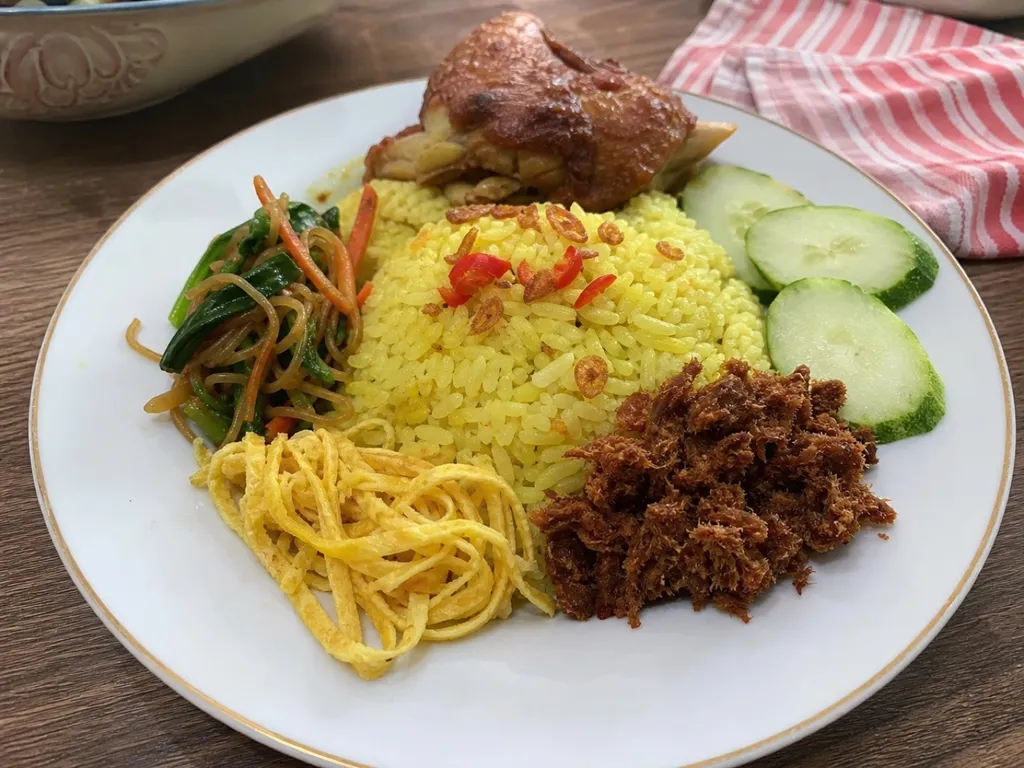 Images are for illustrative purposes only, may be inaccurate, and do not guarantee the presence or absence of specific ingredients.
 Listahan Family Score™
75/100
Good fit for most families
Score reflects how well this recipe fits a typical busy household. In the app, your Family Score is personalized to your household's allergens, kids, and pantry.
Nutrition
per serving550
Calories
9 g
Protein
80 g
Carbs
22 g
Fat
Estimated per serving. Actual values depend on the brands and portions you use.
Listahan cooking guide
Chef notes & practical guide
Technique notes, ingredient swaps, serve-alongside ideas, storage guidance, and equipment for this recipe.
Cultural context
Nasi kuning, meaning yellow rice, is one of Indonesia's most ceremonially significant foods, prepared for births, weddings, and religious celebrations across the archipelago. Its golden color comes from fresh turmeric cooked into the rice with coconut milk, and the color itself carries meaning in Javanese and Balinese traditions as a symbol of prosperity and divine blessing. The dish is traditionally shaped into a cone called a tumpeng and presented at the center of a feast with a ring of accompanying dishes, with the pointed tip offered first to the guest of honor.
Listahan note
This version cooks the rice in a blend of coconut milk and turmeric-infused water so the flavor is present in every grain, not just surface color, and the result works equally well as a festive centerpiece or a flavorful everyday rice substitute.
Technique cues
- Fresh turmeric grated directly into the coconut milk produces a brighter, more floral yellow color and more complex flavor than turmeric powder, though ground turmeric works and is far more pantry-friendly for everyday cooking.
- Cook the rice using the absorption method in the coconut-turmeric liquid rather than boiling and draining; all the flavor and color stays in the grains rather than going down the drain with the cooking water.
- Lemongrass and pandan leaf tied in knots and added to the cooking liquid during simmering give the rice a fragrant floral note that is subtle but unmistakably Southeast Asian; remove them before serving.
Kitchen flow
- Parallel prep
- While the rice cooks, prepare the accompanying garnishes and side dishes so they are ready to arrange around the rice the moment it finishes steaming.
- Make-ahead
- Nasi kuning reheats well; cook the rice up to a day in advance, refrigerate in an airtight container, and steam or microwave with a damp paper towel covering it to restore moisture before serving.
- Leftover move
- Day-old nasi kuning is ideal for fried rice since the coconut fat and the drier grains fry evenly without clumping; stir-fry with eggs, scallions, and a splash of soy sauce for a quick meal.
- Cleanup rhythm
- Turmeric stains pots and cutting boards; rinse utensils immediately in cold water and use stainless-steel cookware rather than light-colored silicone or plastic tools that permanently discolor.
Ingredient brief
Role, handling, and swap guidance for each key ingredient.
jasmine rice
fragrant base
Purpose: Jasmine rice absorbs the coconut-turmeric cooking liquid efficiently while its natural floral aroma complements the other fragrant components without competing with the spicing.
Handling: Rinse two or three times until the water runs mostly clear to remove excess surface starch that would make the rice gummy; drain well before adding to the cooking liquid.
Adaptation: Long-grain white rice works with the same method; avoid short-grain or sticky rice as it turns too dense with the added fat from coconut milk.
turmeric
color and earthy flavor
Purpose: Turmeric provides the dish's defining golden color and a mild earthy, slightly bitter warmth that distinguishes nasi kuning from plain coconut rice.
Handling: If using fresh turmeric, grate it finely or blend with a small amount of water and strain out the fiber; if using ground, whisk it into the coconut milk before adding to the rice.
Adaptation: Ground turmeric at about 1 teaspoon per cup of rice is the standard substitute for fresh; saffron gives a superficially similar color but a completely different flavor and is not traditional here.
full-fat coconut milk
richness and fat-soluble flavor carrier
Purpose: Coconut milk provides the fat that carries fat-soluble color compounds from turmeric deeper into the rice grains, producing even golden color throughout rather than just on the surface.
Handling: Combine with water in a roughly 1-to-2 ratio so the rice does not become overly dense or oily from too much fat.
Adaptation: Coconut cream thinned with water can be used for a richer result; coconut water replaces the milk for a lighter dish with less fat but reduced richness.
lemongrass
aromatic infuser
Purpose: Lemongrass steeped in the cooking liquid adds a citrusy, floral background note that lifts the otherwise heavy coconut flavor and is one of the key scent markers of authentic nasi kuning.
Handling: Bruise two stalks with the back of a knife, tie them into a loose knot, and add to the pot; remove before serving as the fibrous stalk is not eaten.
Adaptation: A few strips of lime zest added to the cooking liquid approximate the citrus quality of lemongrass if the stalks are unavailable.
pandan leaves
sweet aromatic
Purpose: Pandan adds a distinctive sweet, slightly nutty fragrance often described as vanilla-adjacent that is widely considered essential to the complete aroma of nasi kuning.
Handling: Tie two or three leaves into a knot and nestle among the rice before adding the liquid; remove before serving.
Adaptation: Pandan extract (sold in many Asian grocery stores) used at 1 to 2 drops is a reasonable substitute; omitting pandan produces a simpler but still good result.
Technique notes
- For a tumpeng presentation, pack the hot cooked rice firmly into a well-oiled cone-shaped mold or a tall colander lined with plastic wrap, then invert it onto a platter and surround with garnishes immediately before the rice cools and the shape becomes difficult to hold.
- Adding a small amount of coconut cream instead of all coconut milk in the last few minutes of cooking produces an even richer, shinier finish on the grains without making the texture gummy.
- The kaffir lime leaves (daun salam) sometimes added to the pot alongside lemongrass and pandan are worth seeking out at Asian grocery stores; even one or two leaves add a layer of citrus complexity that makes the fragrance of the cooked rice noticeably more sophisticated.
Ingredient swaps
- Gluten-free direction
- Nasi kuning is naturally gluten-free as written; verify that any accompanying condiments or side dishes do not contain wheat-based soy sauce and substitute tamari where needed.
- Lower-fat direction
- Replace full-fat coconut milk with light coconut milk and reduce quantity slightly; the rice will be less rich but still golden and fragrant, and the cooking time remains the same.
- Weeknight shortcut
- Use a rice cooker: add the rinsed rice, coconut milk, turmeric, bruised lemongrass, and water to the correct fill line and press cook; the result is nearly identical to stovetop with no monitoring required.
Serve alongside
- Ayam goreng (Indonesian fried chicken)
- Tempe orek (sweet soy caramelized tempeh)
- Telur balado (sambal-fried eggs)
- Acar (pickled cucumber and carrot)
- Es jeruk (fresh iced orange juice)
- Bandung (rose syrup milk drink)
- Hot jasmine tea
Serving suggestions only — check pairings for your household's allergens.
Storage & reheating
- Refrigerate leftover rice in an airtight container for up to 3 days; press plastic wrap directly against the surface of the rice before sealing to prevent the top layer from drying out.
- Reheat by spreading the rice in a steamer basket over boiling water for 5 minutes, or microwave in a covered dish with a small cup of water set inside the microwave to add steam moisture.
Equipment
- Heavy-bottomed saucepan with tight-fitting lid for even heat distribution and steam retention during absorption cooking
- Fine grater or microplane for grating fresh turmeric without stringy pieces remaining
- Cone mold or tall colander for the traditional tumpeng presentation if serving for a celebration
- Stainless-steel bowls and utensils to avoid permanent turmeric staining
Make this household-aware
Listahan Pro checks this recipe against your household's allergens, finds pantry-aware swaps, builds the shopping list, and helps you plan the week around it.
Plan it in Listahan
Add Nasi Kuning to your week, check it against your household's allergens, and build the shopping list automatically.
More Indonesian & Malaysian recipes
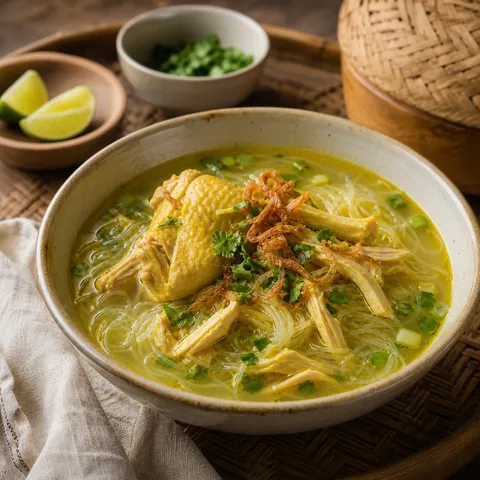 Indonesian & Malaysian Lens Verified Images are for illustrative purposes only, may be inaccurate, and do not guarantee the presence or absence of specific ingredients.
 Soto Ayam
A golden, turmeric-spiced Indonesian chicken soup with glass noodles, crispy shallots, and lime — light, herbal, and deeply comforting.
 Indonesian & Malaysian Lens Verified Images are for illustrative purposes only, may be inaccurate, and do not guarantee the presence or absence of specific ingredients.
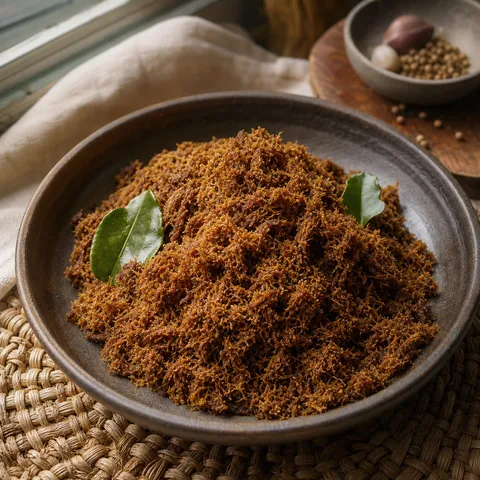
 Beef Serunding
Dry-fried spiced beef floss toasted with coconut and lemongrass until golden and fragrant — a rich, crumbly condiment that transforms plain rice.
 Indonesian & Malaysian Lens Verified Images are for illustrative purposes only, may be inaccurate, and do not guarantee the presence or absence of specific ingredients.
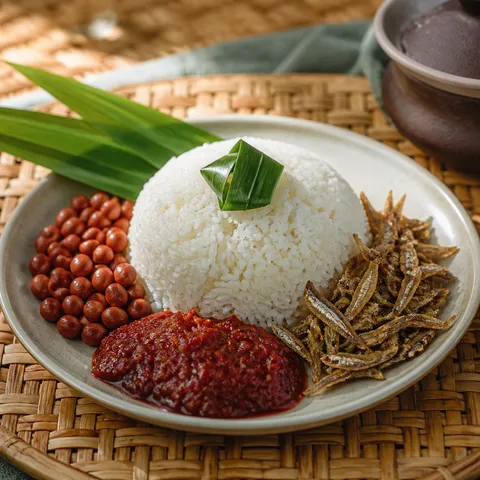
 Nasi Lemak
Malaysia's national comfort dish — fragrant coconut rice paired with sambal, crispy anchovies, roasted peanuts, and a soft-boiled egg.