 Indonesian & Malaysian Images are for illustrative purposes only, may be inaccurate, and do not guarantee the presence or absence of specific ingredients.
  Serving Images are for illustrative purposes only, may be inaccurate, and do not guarantee the presence or absence of specific ingredients.
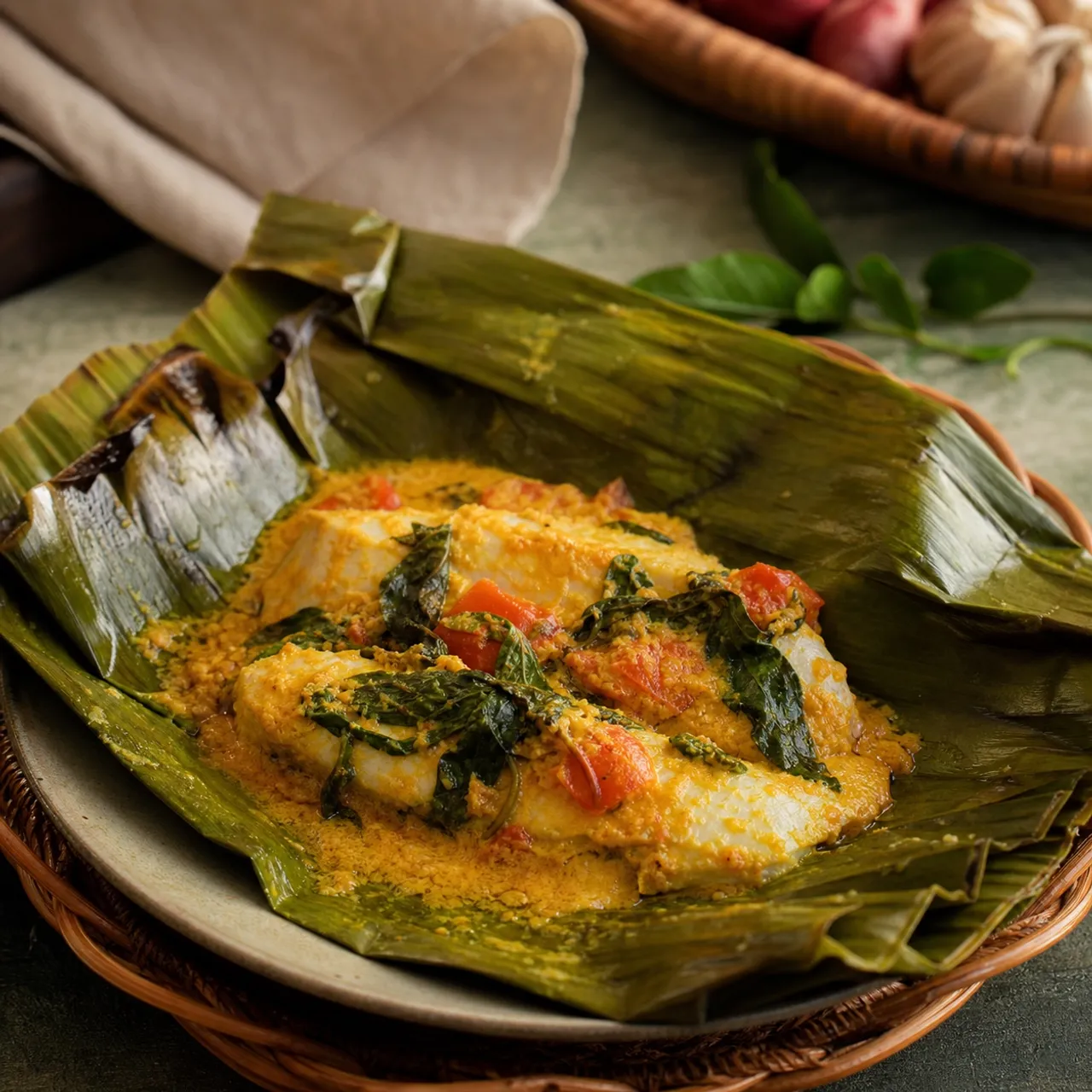
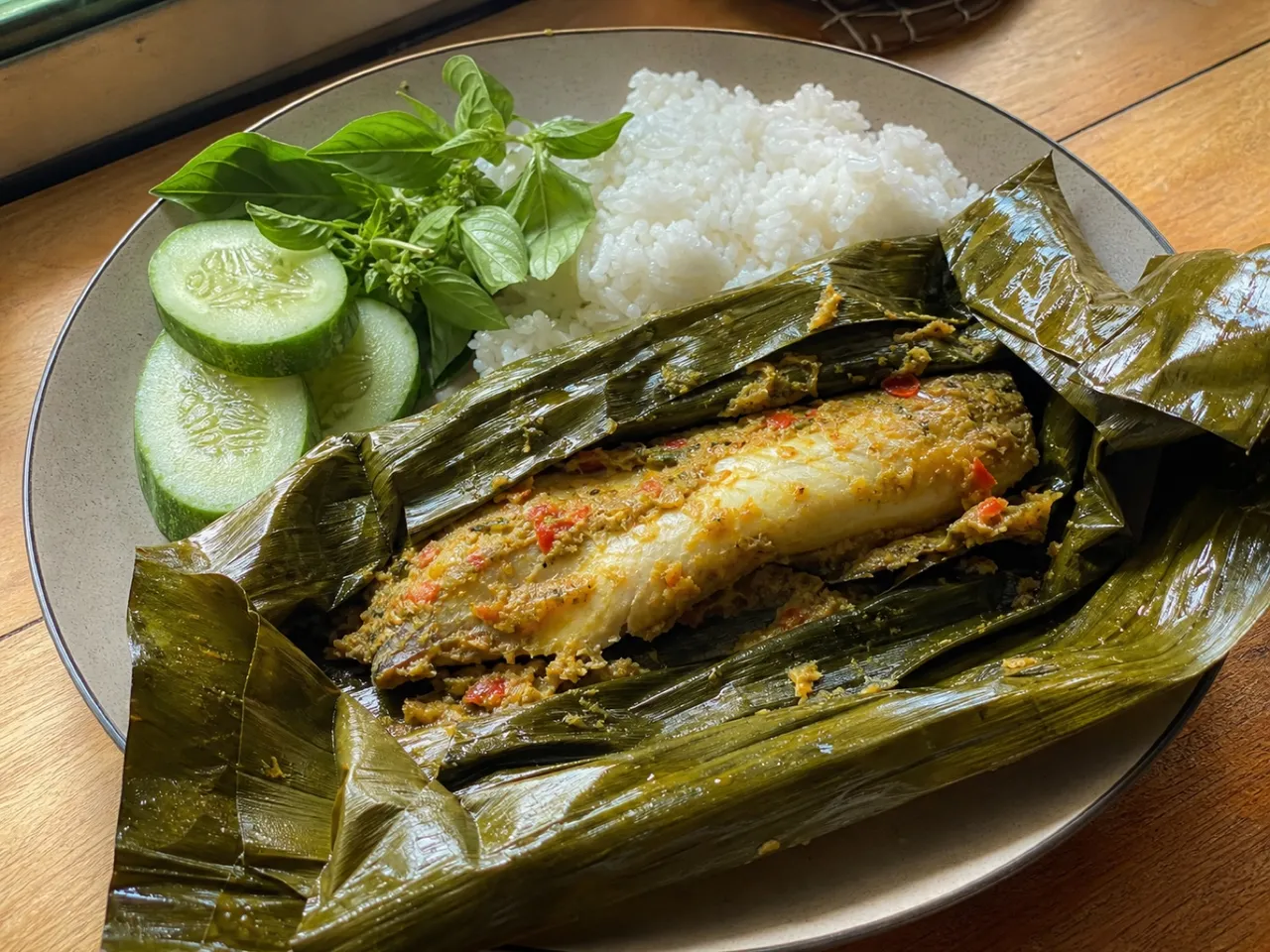
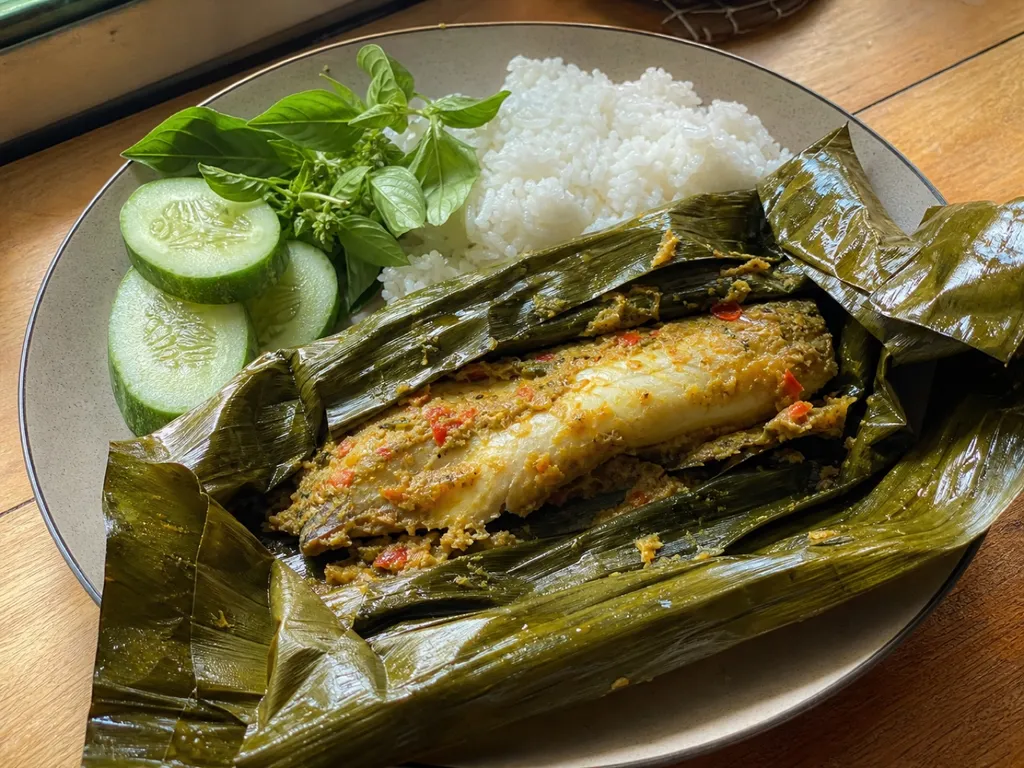
 Pepes Ikan
Fish fillets packed with lemongrass, chili, and basil, wrapped in banana leaves and steamed until aromatic — delicate, herbal, and beautifully fragrant.
Contains common allergens
In the app, Listahan checks these against your household automatically.
Instructions
6 steps- 1
Pound or process the shallots, garlic, chilies, turmeric, and candlenut into a thick yellow paste.
- 2
Coat the fish fillets entirely with the spice paste, mixing in the diced tomatoes and fresh lemon basil leaves.
- 3
Wilt the banana leaves over an open flame for a few seconds to make them pliable and prevent tearing.
- 4
Place a portion of the marinated fish and herbs onto a banana leaf square, wrap it tightly into a log, and pin the ends with toothpicks.
- 5
Place the wrapped fish parcels in a steamer basket over boiling water.
- 6
Steam for 30 minutes, then optionally grill the parcels for 2 minutes to impart a smoky aroma before serving.
 Images are for illustrative purposes only, may be inaccurate, and do not guarantee the presence or absence of specific ingredients.
 Listahan Family Score™
56/100
Works for many families
Score reflects how well this recipe fits a typical busy household. In the app, your Family Score is personalized to your household's allergens, kids, and pantry.
Nutrition
per serving250
Calories
43 g
Protein
2 g
Carbs
8 g
Fat
Estimated per serving. Actual values depend on the brands and portions you use.
Listahan cooking guide
Chef notes & practical guide
Technique notes, ingredient swaps, serve-alongside ideas, storage guidance, and equipment for this recipe.
Cultural context
Pepes ikan is a Sundanese and Javanese technique of steaming or grilling fish wrapped in banana leaves packed with a fresh spice paste. The method predates clay pots and ovens in the archipelago and was developed as a way to cook fish gently while infusing it with aromatics from all sides simultaneously — the sealed leaf parcel traps the steam from the fish's own moisture along with the fragrance of lemongrass, galangal, and turmeric. Today it remains a cornerstone of Sundanese home cooking from West Java, served alongside rice and sambal as an everyday meal.
Listahan note
This version steams the parcels first for guaranteed doneness, then briefly grills them to give the banana leaf its characteristic char and smoky aroma.
Technique cues
- Rub the spice paste generously inside the fish cavity and between the gills, not just on the exterior surface — the interior of the fish is where the aromatics penetrate deepest during steaming.
- Double-wrap each parcel with a second banana leaf layer if using large fish pieces; a single layer can split under the steam pressure and allows the spice paste to escape into the steaming water.
- The parcels are done when the banana leaf has turned olive-green and the fish flakes easily when the parcel is opened at its thinnest end — steaming time will vary from 20 to 35 minutes depending on fish thickness.
Kitchen flow
- Parallel prep
- Blend the spice paste while the banana leaves soften over heat; assemble parcels assembly-line while the steamer comes to pressure.
- Make-ahead
- Assembled raw parcels can be refrigerated for up to 6 hours before cooking; the fish will marinate inside the leaf and develop more flavor.
- Leftover move
- Flake leftover pepes ikan and mix with sambal into a toasted rice cake or use as a filling for fried spring rolls.
- Cleanup rhythm
- All the mess stays inside the banana leaf parcel; the steamer basket and grill pan clean up quickly with a hot rinse.
Ingredient brief
Role, handling, and swap guidance for each key ingredient.
whole fish or thick fillet
main protein
Purpose: A firm, meaty fish like snapper, tilapia, or mackerel holds together inside the parcel and develops a moist, infused texture that thin fillets cannot achieve.
Handling: Score the fish on both sides down to the bone so the spice paste can penetrate through the skin.
Adaptation: Salmon fillets work well and are widely available; their natural oil makes the pepes especially moist.
banana leaves
cooking vessel and flavor source
Purpose: The banana leaf imparts a grassy, faintly vegetal fragrance that is inseparable from what makes pepes taste distinctly Indonesian rather than just steamed fish.
Handling: Soften leaves over an open flame or in boiling water so they fold without cracking; wipe dry before assembling.
Adaptation: Parchment paper retains the steam and moisture but none of the banana leaf fragrance.
lemongrass
aromatic paste base
Purpose: Lemongrass provides the dominant bright, citrusy note in the spice paste that lifts the mild fish flavor.
Handling: Use only the bottom third, slice thin, and process until completely smooth so no fiber remains in the paste.
Adaptation: Lemongrass paste (2 teaspoons per stalk) is an acceptable shortcut for the blender stage.
kaffir lime leaves
citrus fragrance layer
Purpose: Kaffir lime leaves placed inside the parcel release volatile citrus oils as the fish steams, creating a floral-bright top note.
Handling: Tear the leaves slightly to release their oils before tucking them around the fish in the parcel.
Adaptation: Two long strips of lime zest can approximate the citrus note if kaffir lime leaves are unavailable.
fresh tomato
acid and moisture
Purpose: Sliced tomato placed inside the parcel releases juice that keeps the fish moist and adds a mild acidity that balances the rich aromatics.
Handling: Slice into thin rounds and layer directly on top of and beneath the fish.
Adaptation: A tablespoon of tamarind water can substitute for the acidity if tomatoes are omitted.
Technique notes
- Toast the spice paste in a dry pan for 3 minutes before applying it to the fish — cooking out the raw galangal and turmeric first means the steamed result tastes cooked and rounded rather than raw and sharp.
- If grill-finishing, place parcels seam-side down first so the toothpick or skewer closure is on the underside and doesn't pop open from the heat.
- A pinch of palm sugar in the paste is the Sundanese touch that makes this version subtly sweet-savory — it is not traditional everywhere but noticeably improves the balance.
Ingredient swaps
- Gluten-free direction
- The recipe is naturally gluten-free; verify any store-bought sambal served alongside does not contain wheat.
- Allergen-direction swap
- For shrimp paste (terasi) sensitivity, omit it entirely — the spice paste is still deeply flavored from lemongrass, galangal, and turmeric.
- Weeknight shortcut
- Use parchment paper parcels instead of banana leaves and cook in a 375 F oven for 20 minutes — no steamer needed and the fish cooks in its own juices.
Serve alongside
- Steamed jasmine rice
- Lalapan (raw vegetable platter with cucumbers and cabbage)
- Sambal terasi
- Iced lemongrass tea
- Young coconut water
Serving suggestions only — check pairings for your household's allergens.
Storage & reheating
- Refrigerate cooked parcels for up to 2 days; the flavor continues to develop as the fish sits in the spice paste.
- Reheat by steaming for 8 minutes or warming in a 350 F oven for 12 minutes; microwaving is acceptable but the banana leaf fragrance diminishes.
Equipment
- Bamboo steamer or steamer pot
- Grill pan or broiler for finishing
- Toothpicks or thin bamboo skewers for securing parcels
Make this household-aware
Listahan Pro checks this recipe against your household's allergens, finds pantry-aware swaps, builds the shopping list, and helps you plan the week around it.
Plan it in Listahan
Add Pepes Ikan to your week, check it against your household's allergens, and build the shopping list automatically.
More Indonesian & Malaysian recipes
 Indonesian & Malaysian Lens Verified Images are for illustrative purposes only, may be inaccurate, and do not guarantee the presence or absence of specific ingredients.
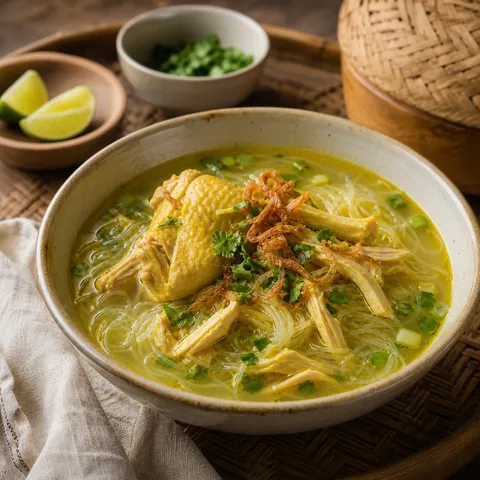
 Soto Ayam
A golden, turmeric-spiced Indonesian chicken soup with glass noodles, crispy shallots, and lime — light, herbal, and deeply comforting.
 Indonesian & Malaysian Lens Verified Images are for illustrative purposes only, may be inaccurate, and do not guarantee the presence or absence of specific ingredients.
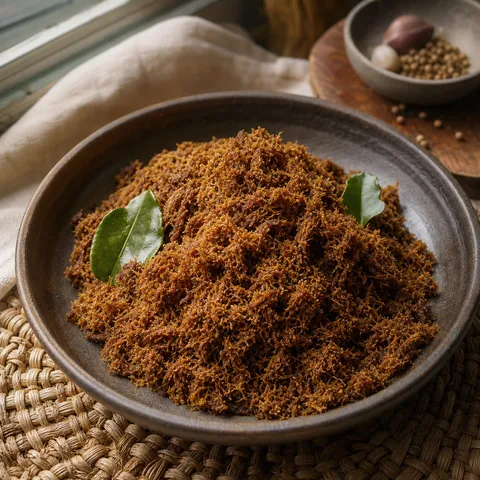
 Beef Serunding
Dry-fried spiced beef floss toasted with coconut and lemongrass until golden and fragrant — a rich, crumbly condiment that transforms plain rice.
 Indonesian & Malaysian Lens Verified Images are for illustrative purposes only, may be inaccurate, and do not guarantee the presence or absence of specific ingredients.
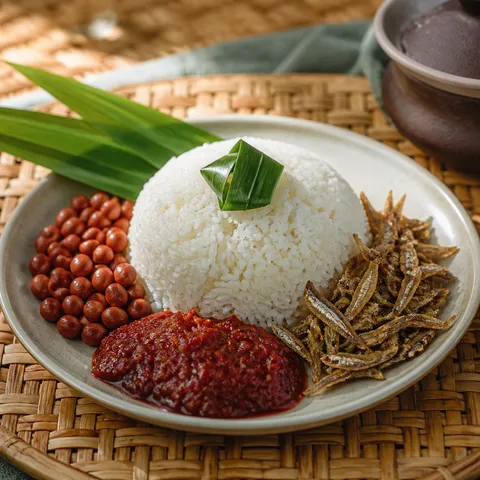
 Nasi Lemak
Malaysia's national comfort dish — fragrant coconut rice paired with sambal, crispy anchovies, roasted peanuts, and a soft-boiled egg.