 Indonesian & Malaysian Images are for illustrative purposes only, may be inaccurate, and do not guarantee the presence or absence of specific ingredients.
  Serving Images are for illustrative purposes only, may be inaccurate, and do not guarantee the presence or absence of specific ingredients.
 Roti Canai
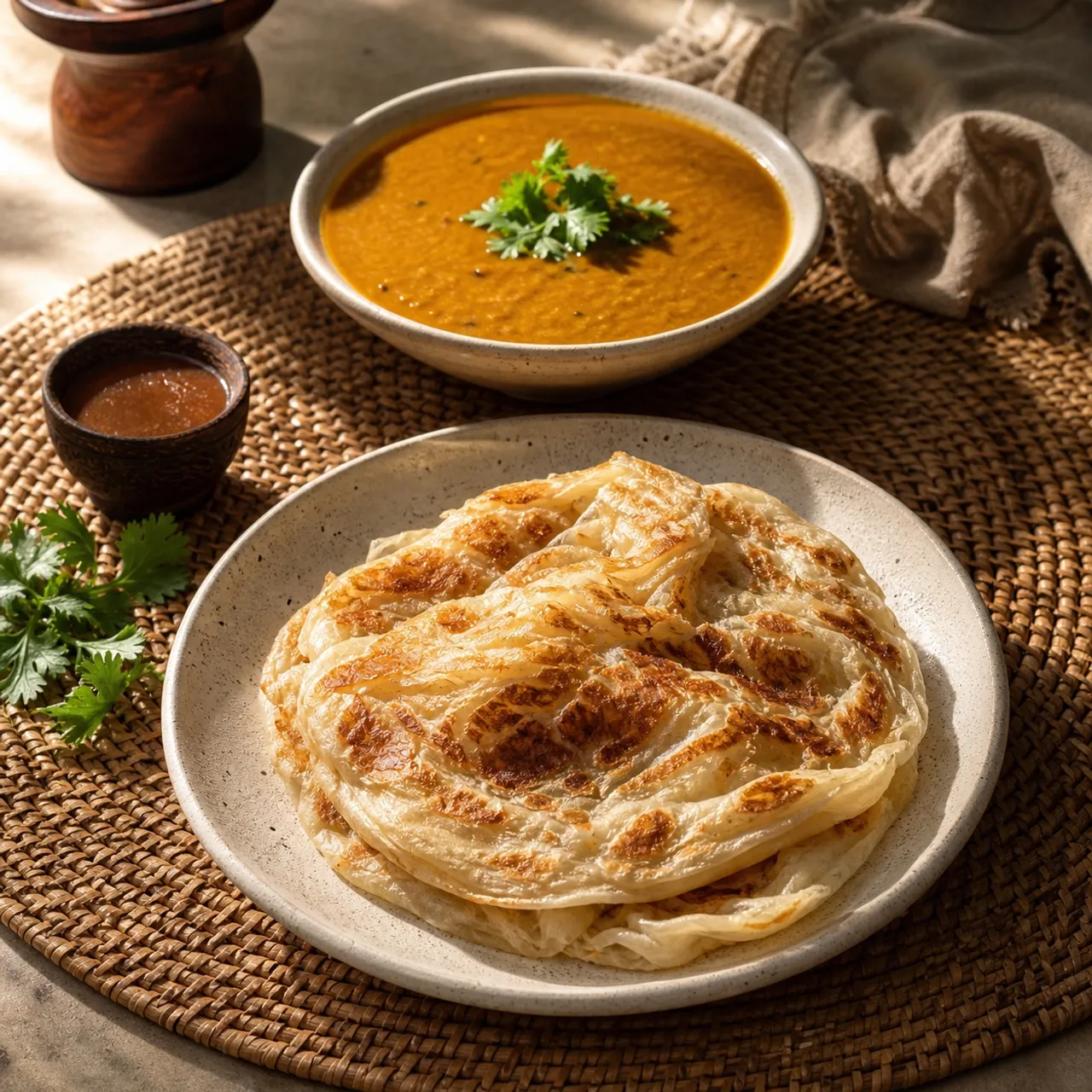
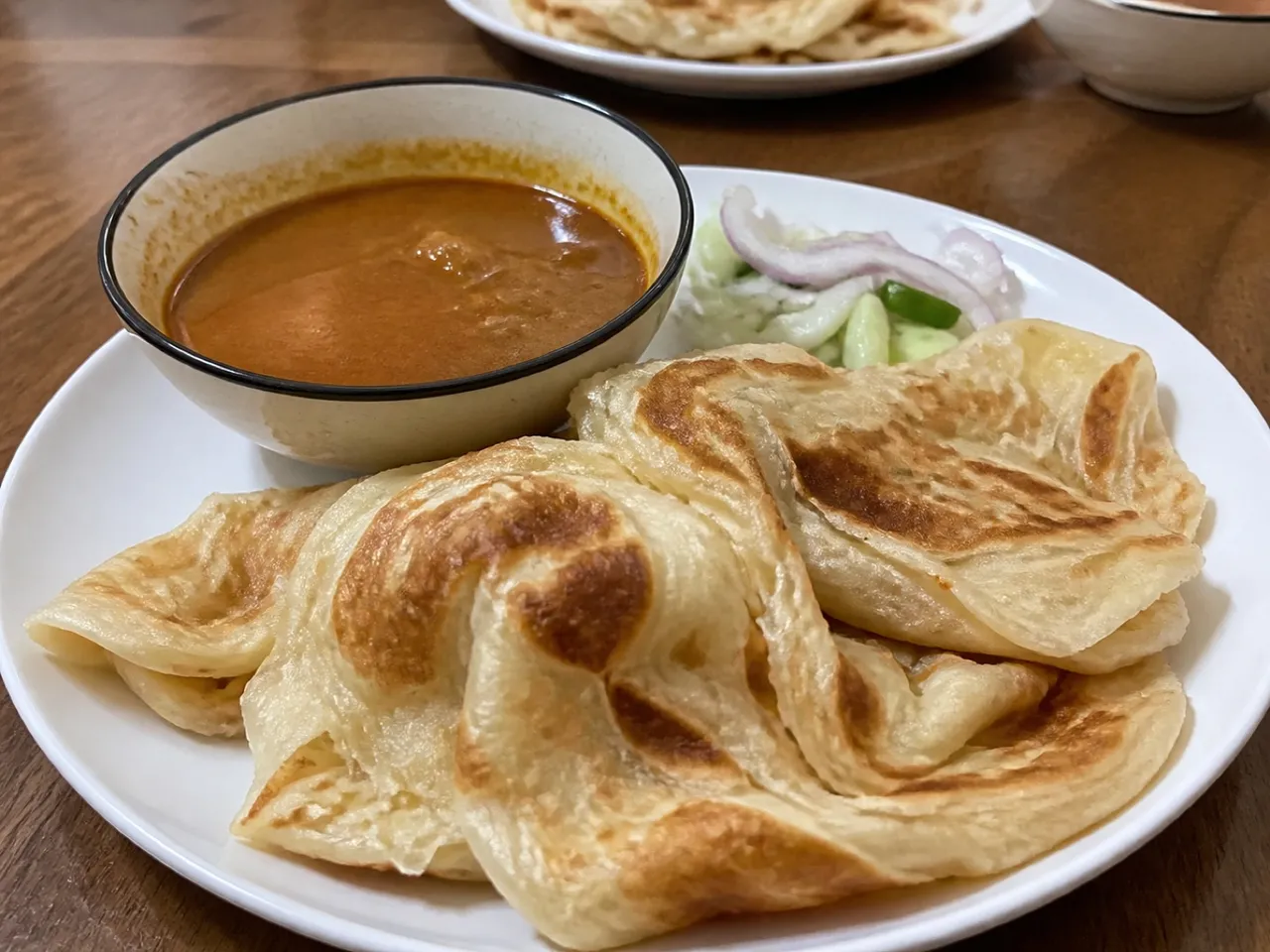
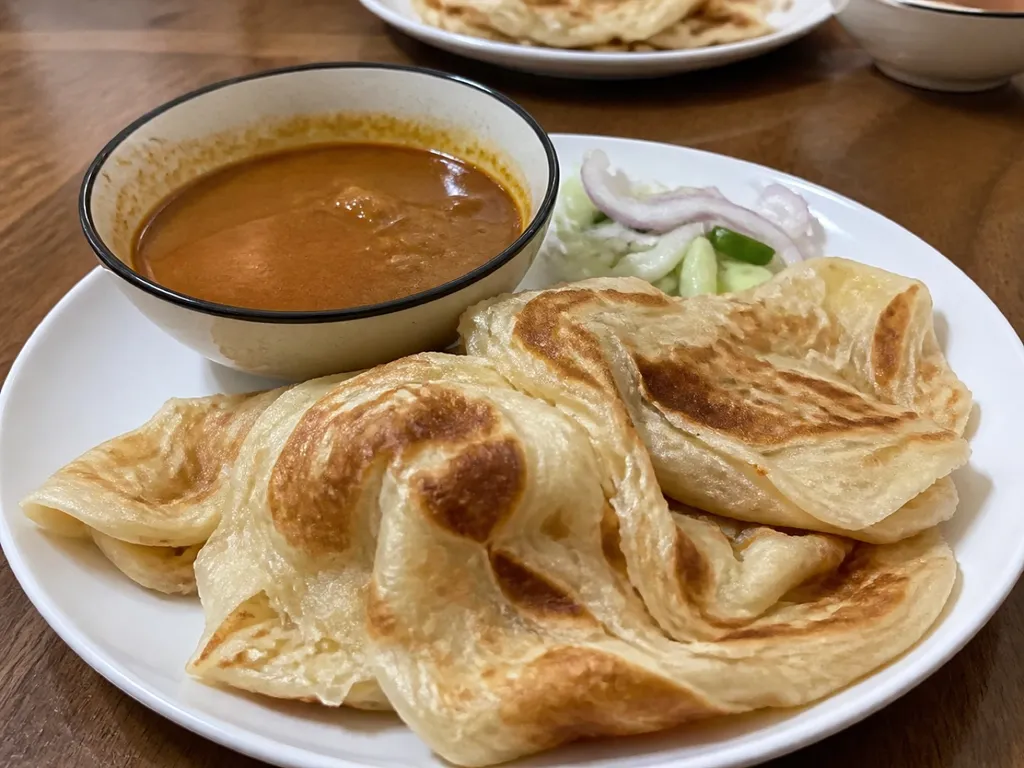
Malaysia's flaky, layered flatbread cooked on a hot griddle until crisp at the edges — tear and dip into a fragrant dhal or curry.
Contains common allergens
In the app, Listahan checks these against your household automatically.
Good to know
- Crispy
Matched from this dish's own ingredients and timing. Browse more: crispy recipes
Instructions
6 steps- 1
Mix flour, salt, sugar, water, and condensed milk to form a soft dough. Knead for 10 minutes until smooth and elastic.
- 2
Divide the dough into small balls, coat generously with melted ghee, and let them rest at room temperature for at least 4 hours.
- 3
Flatten a dough ball on an oiled surface, then flip and stretch it until it is paper-thin and nearly translucent.
- 4
Fold the stretched dough into a square or gather it into a spiral shape to create flaky layers.
- 5
Heat a flat griddle over medium heat and pan-fry the folded dough for 2-3 minutes per side until golden brown and crispy.
- 6
Immediately crush the cooked roti slightly between your hands to separate the layers, and serve with hot dhal or chicken curry.
 Images are for illustrative purposes only, may be inaccurate, and do not guarantee the presence or absence of specific ingredients.
 Listahan Family Score™
69/100
Works for many families
Score reflects how well this recipe fits a typical busy household. In the app, your Family Score is personalized to your household's allergens, kids, and pantry.
Nutrition
per serving645
Calories
11 g
Protein
85 g
Carbs
28 g
Fat
Estimated per serving. Actual values depend on the brands and portions you use.
Listahan cooking guide
Chef notes & practical guide
Technique notes, ingredient swaps, serve-alongside ideas, storage guidance, and equipment for this recipe.
Cultural context
Roti canai is a flaky flatbread brought to Malaysia by South Indian Muslim (Mamak) immigrants, derived from the North Indian paratha tradition. The name is believed to come from 'roti chenai', referencing Chennai (Madras) where the technique of stretching and folding dough in fat originated. Malaysian Mamak hawker stalls serve roti canai around the clock — slapped onto a flat iron griddle and cooked in pools of ghee or margarine — with dhal curry or fish curry as the standard accompaniment.
Listahan note
This version focuses on building the laminated layers correctly through proper resting and stretching rather than shortcuts, producing a flatbread with the pull-apart flakiness that defines the real thing.
Technique cues
- Rest the dough for at least 4 hours (or overnight) after kneading and coating in fat — without adequate rest the gluten is too tight to stretch thin without tearing, and the layers will not separate properly.
- Stretch the dough on an oiled surface rather than floured — excess flour prevents the layers from crisping and creates a dusty rather than flaky texture.
- Cook with enough ghee to shallow-fry rather than just grease the pan; the bubbling fat that pools around the roti is what creates the crispy, layered edges.
Kitchen flow
- Parallel prep
- Make the dough the evening before; while it rests, prepare the dhal curry so both are ready at the same time the next day.
- Make-ahead
- Rested, portioned dough balls coated in oil can be refrigerated for up to 2 days or frozen for 1 month; thaw in the refrigerator before stretching.
- Leftover move
- Leftover cooked roti canai reheats well in a dry pan over medium heat; it will not be as flaky as fresh but is still excellent with curry or eggs.
- Cleanup rhythm
- Use a flat cast-iron griddle or tawa that can be wiped down between batches; excess ghee can be poured off into a small bowl and reused for subsequent pieces.
Ingredient brief
Role, handling, and swap guidance for each key ingredient.
all-purpose flour
dough structure
Purpose: All-purpose flour has the right gluten content for roti canai — enough to stretch thin without breaking, but not so strong that it snaps back aggressively.
Handling: Measure by weight if possible for consistency; sift to eliminate lumps before mixing.
Adaptation: Bread flour can work but makes the dough harder to stretch thin; plain flour is optimal.
ghee or margarine
laminating fat
Purpose: Ghee is spread between the folded layers of dough to create separation and contributes to the buttery, crispy exterior during cooking.
Handling: Soften to a spreadable consistency; it should smear easily without tearing the stretched dough.
Adaptation: Vegetable shortening or neutral vegetable oil can substitute if ghee is not available, though the flavor will be less rich.
condensed milk
softener and slight sweetness
Purpose: A small amount of condensed milk tenderizes the dough and adds a subtle sweetness that balances the savory dhal it is traditionally served with.
Handling: Incorporate with the water during initial mixing so it distributes evenly through the dough.
Adaptation: A teaspoon of sugar and a tablespoon of regular milk can approximate the effect.
egg
richness and color
Purpose: Egg enriches the dough and helps the exterior develop a golden color during cooking.
Handling: Beat lightly and add with the liquid ingredients.
Adaptation: Omit for a vegan version; the texture will be slightly less tender.
Technique notes
- The classic 'canai' tossing technique — spinning the dough in the air — is impressive but not required at home; stretching it on a clean, oiled countertop by pressing and pulling from the center achieves the same thinness.
- The ideal finished dough sheet should be thin enough to see your hand through it without tearing; if it tears, fold it up, let it rest 5 more minutes, and try again.
- Clap the finished cooked roti between your palms while still hot — this breaks the layers apart and creates the characteristic fluffy, pulled-apart interior that a roti served intact does not have.
Ingredient swaps
- Dairy-free direction
- Replace ghee with refined coconut oil for frying and omit condensed milk, using coconut milk instead — the flavor profile shifts slightly tropical but the technique remains the same.
- Egg-free direction
- Omit the egg and add an extra tablespoon of oil to the dough; the texture will be marginally less tender but still very good.
Serve alongside
- Yellow dhal curry (dal tadka)
- Fish curry (kari ikan)
- Teh tarik
- Teh tarik (pulled milk tea)
- Iced Milo
Serving suggestions only — check pairings for your household's allergens.
Storage & reheating
- Cooked roti canai keeps at room temperature for up to 4 hours; refrigerate for up to 2 days and reheat in a dry skillet.
- Uncooked portioned dough balls keep refrigerated for 2 days oiled; freeze for up to 1 month.
Equipment
- Large flat cast-iron griddle, tawa, or wide nonstick skillet
- Oiled marble or stainless countertop for stretching
- Pastry brush for applying ghee between layers
Make this household-aware
Listahan Pro checks this recipe against your household's allergens, finds pantry-aware swaps, builds the shopping list, and helps you plan the week around it.
Plan it in Listahan
Add Roti Canai to your week, check it against your household's allergens, and build the shopping list automatically.
More Indonesian & Malaysian recipes
 Indonesian & Malaysian Lens Verified Images are for illustrative purposes only, may be inaccurate, and do not guarantee the presence or absence of specific ingredients.
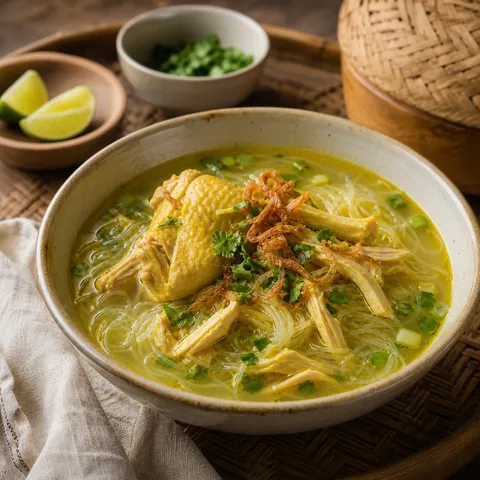
 Soto Ayam
A golden, turmeric-spiced Indonesian chicken soup with glass noodles, crispy shallots, and lime — light, herbal, and deeply comforting.
 Indonesian & Malaysian Lens Verified Images are for illustrative purposes only, may be inaccurate, and do not guarantee the presence or absence of specific ingredients.
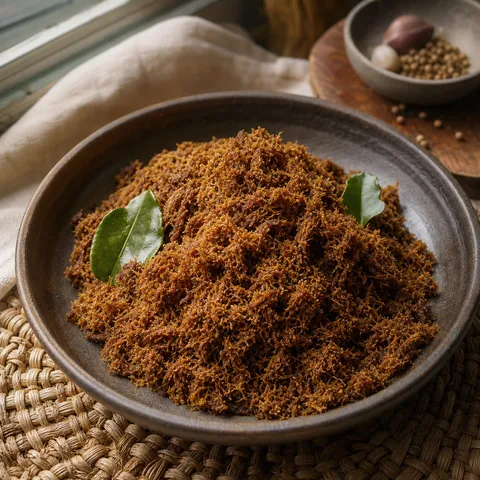
 Beef Serunding
Dry-fried spiced beef floss toasted with coconut and lemongrass until golden and fragrant — a rich, crumbly condiment that transforms plain rice.
 Indonesian & Malaysian Lens Verified Images are for illustrative purposes only, may be inaccurate, and do not guarantee the presence or absence of specific ingredients.
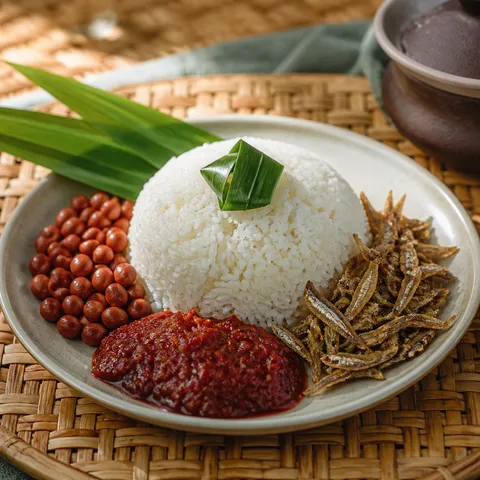
 Nasi Lemak
Malaysia's national comfort dish — fragrant coconut rice paired with sambal, crispy anchovies, roasted peanuts, and a soft-boiled egg.