 Korean Images are for illustrative purposes only, may be inaccurate, and do not guarantee the presence or absence of specific ingredients.
  Serving Images are for illustrative purposes only, may be inaccurate, and do not guarantee the presence or absence of specific ingredients.
 Samgyeopsal (Grilled Pork Belly)
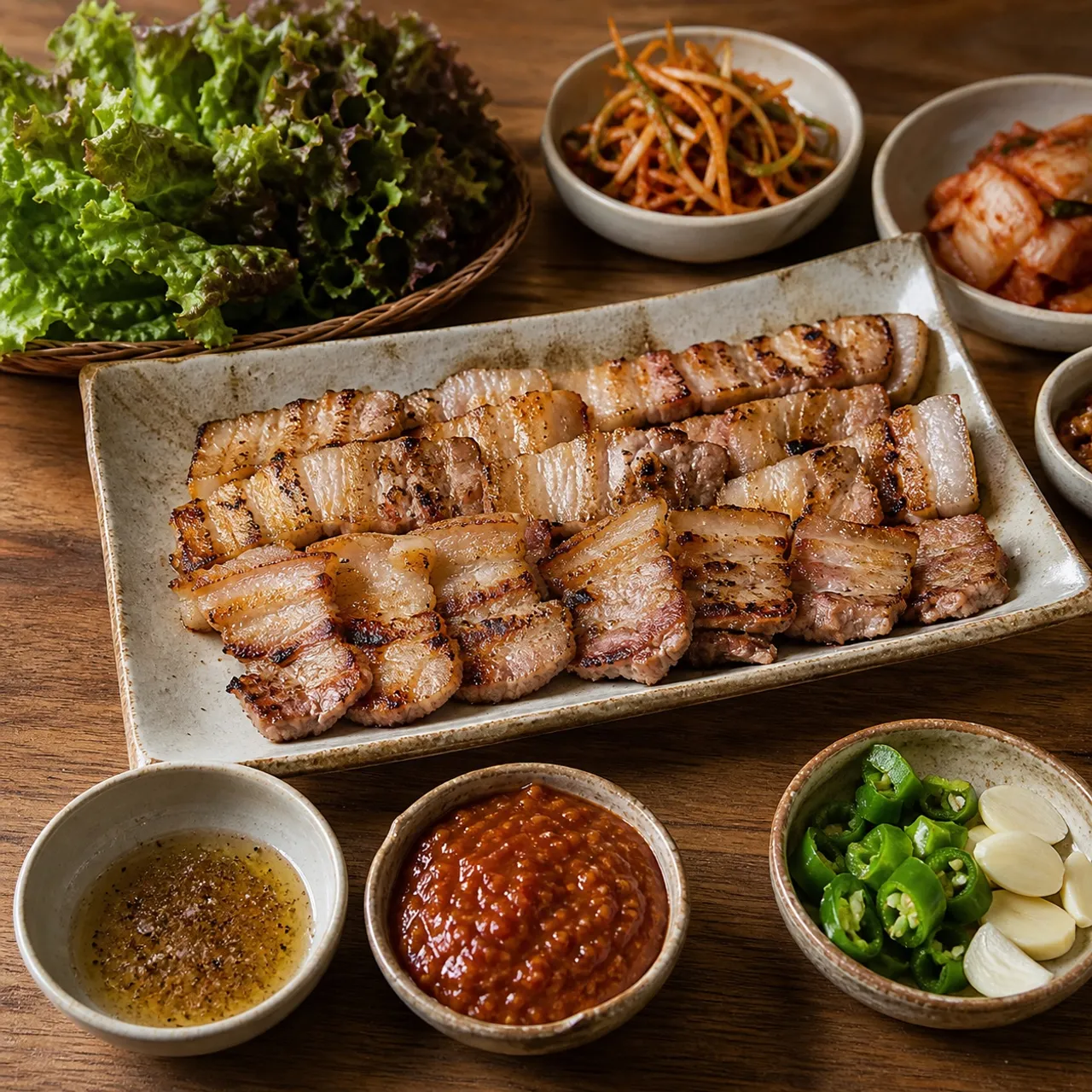
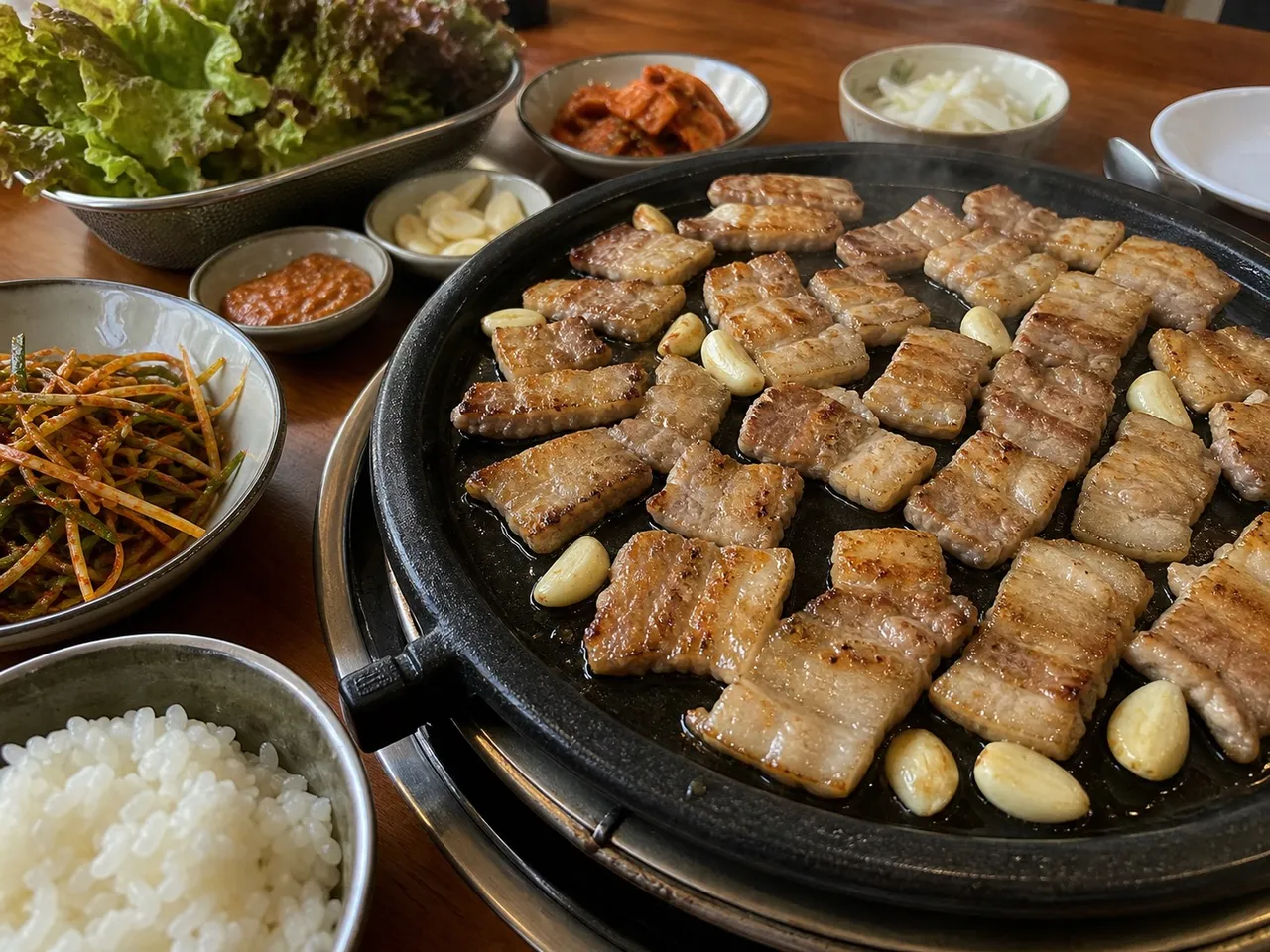
Thick, fatty slices of pork belly meat. The meat is usually not marinated or seasoned, and is grilled at the diner's table.
Contains common allergens
In the app, Listahan checks these against your household automatically.
Good to know
- Crispy
- Ready in under 30 minutes
Matched from this dish's own ingredients and timing. Browse more: crispy recipes30-minute meals
Instructions
5 steps- 1
Heat a Korean BBQ grill pan or large cast-iron skillet over medium-high heat until it begins to smoke slightly.
- 2
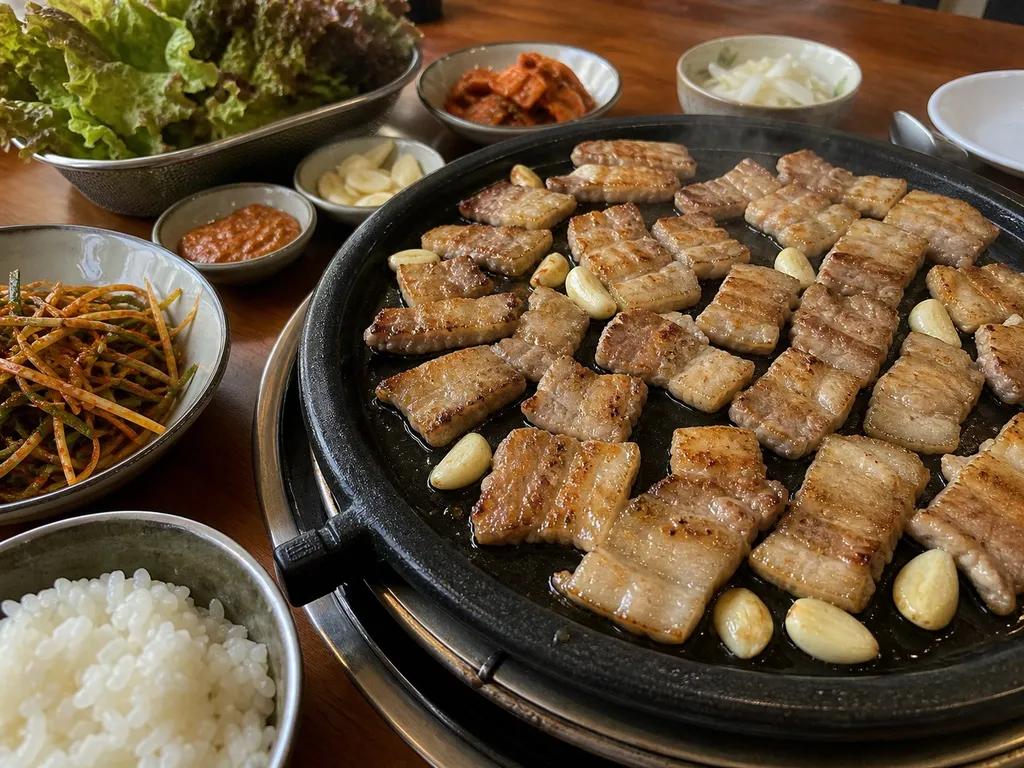
Lay the thick pork belly slices flat on the grill. Cook for 3-4 minutes until the bottom is golden brown and crispy, then flip.
- 3
Add the halved garlic cloves and sliced chili peppers to the grill, letting them cook in the rendered pork fat.
- 4
Once the pork is deeply browned on both sides and fully cooked through, use tongs and kitchen shears to cut the meat into bite-sized pieces right on the grill.
- 5
Serve immediately. To eat, place a piece of pork on a lettuce leaf, dip it lightly in the sesame oil-salt mixture, add a piece of grilled garlic and a dab of ssamjang, wrap it up into a small pouch, and eat it in one bite.
 Images are for illustrative purposes only, may be inaccurate, and do not guarantee the presence or absence of specific ingredients.
 Listahan Family Score™
64/100
Works for many families
Score reflects how well this recipe fits a typical busy household. In the app, your Family Score is personalized to your household's allergens, kids, and pantry.
Nutrition
per serving505
Calories
55 g
Protein
5 g
Carbs
28 g
Fat
Estimated per serving. Actual values depend on the brands and portions you use.
Listahan cooking guide
Chef notes & practical guide
Technique notes, ingredient swaps, serve-alongside ideas, storage guidance, and equipment for this recipe.
Cultural context
Samgyeopsal, meaning three-layer flesh, is thick-cut pork belly grilled at the table and wrapped in lettuce with garlic, ssamjang, and rice. It is Korea's most social meal, cooked communally over a tabletop grill and assembled by hand. The ritual of wrapping each bite is as much the point as the pork itself.
Listahan note
This version keeps the pork unmarinated so its flavor leads, relying on a hot grill for crisp edges and a spread of wraps and dipping sauces to build each bite.
Technique cues
- Grill the belly without marinade so the pork flavor and crisp fat shine.
- Cook over high heat and snip into bite-size pieces with scissors at the table.
- Grill the kimchi and garlic alongside for caramelized, mellowed accompaniments.
Kitchen flow
- Parallel prep
- Wash the lettuce, slice garlic and chili, and set out sauces before grilling.
- Make-ahead
- Prep all the wraps and sides ahead; the grilling happens at the table.
- Leftover move
- Chop leftover pork into kimchi fried rice the next day.
- Cleanup rhythm
- Line the grill area; the rendered fat is easiest to wipe while warm.
Ingredient brief
Role, handling, and swap guidance for each key ingredient.
Thick-cut pork belly
Main
Purpose: Its layered fat crisps and renders for the signature bite.
Handling: Use thick, unmarinated slices and grill until edges crisp.
Adaptation: Pork shoulder steaks work but are leaner.
Lettuce leaves
Wrapper
Purpose: Provide the fresh, crunchy base for each ssam wrap.
Handling: Wash and dry well so they hold the fillings.
Adaptation: Perilla leaves add a distinct herbal note.
Ssamjang
Dipping paste
Purpose: The seasoned soybean-chili paste is the flavor anchor of each wrap.
Handling: Dab a little inside each wrap; a small amount is potent.
Adaptation: Mix doenjang with gochujang and sesame oil to make your own.
Garlic and green chili
Aromatic accents
Purpose: Add pungency and heat to balance the rich pork.
Handling: Grill the garlic to mellow it or eat it raw for bite.
Adaptation: Adjust the chili to taste.
Technique notes
- Resist marinating; the unadorned pork is the tradition.
- Keep the grill hot for crisp edges and well-rendered fat.
- Build each wrap small enough to eat in one bite, the proper way.
Ingredient swaps
- Leaner direction
- Use thick pork shoulder steaks for less fat.
- Gluten-free direction
- Confirm the ssamjang is gluten-free or make your own with tamari-based doenjang.
- Lower-sodium direction
- Go light on the ssamjang and lean on fresh garlic and chili.
Serve alongside
- Steamed white rice
- Kimchi
- Pa-muchim (scallion salad)
- Soybean paste stew (doenjang jjigae)
- Soju
- Light lager
- Barley tea
Serving suggestions only — check pairings for your household's allergens.
Storage & reheating
- Refrigerate cooked pork up to 3 days.
- Reheat in a hot pan to keep the edges crisp.
- Freezing cooked belly is possible but the texture suffers.
Equipment
- Tabletop grill or cast-iron pan
- Kitchen scissors
- Tongs
- Small dishes for sauces
Make this household-aware
Listahan Pro checks this recipe against your household's allergens, finds pantry-aware swaps, builds the shopping list, and helps you plan the week around it.
Plan it in Listahan
Add Samgyeopsal (Grilled Pork Belly) to your week, check it against your household's allergens, and build the shopping list automatically.
More Korean recipes
 Korean Lens Verified Images are for illustrative purposes only, may be inaccurate, and do not guarantee the presence or absence of specific ingredients.
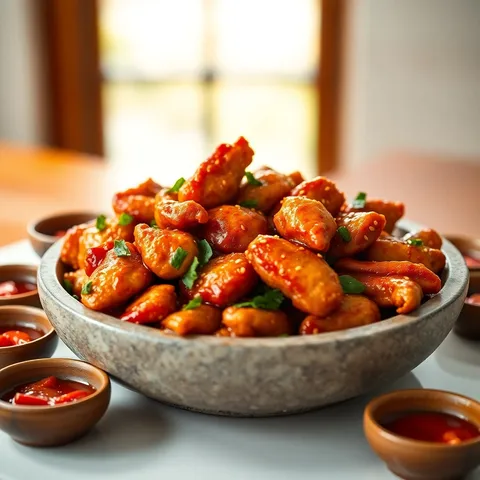
 Dakgalbi (Spicy Stir-fried Chicken)
Diced chicken marinated in a gochujang-based sauce, stir-fried with sweet potatoes, cabbage, perilla leaves, and tteok.
 Korean Lens Verified Images are for illustrative purposes only, may be inaccurate, and do not guarantee the presence or absence of specific ingredients.
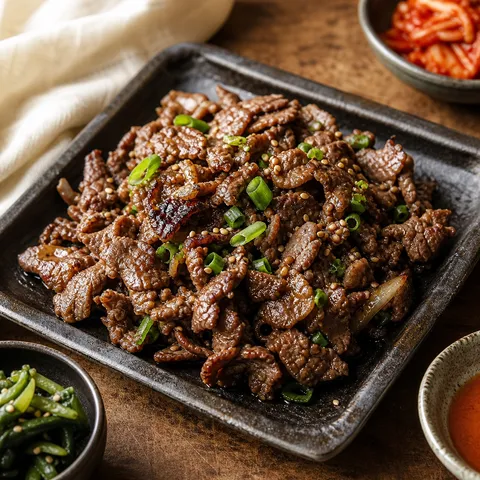
 Bulgogi (Marinated Beef BBQ)
Thinly sliced, marinated beef ribeye or sirloin grilled or stir-fried. Sweet, savory, and tender.
 Korean Lens Verified Images are for illustrative purposes only, may be inaccurate, and do not guarantee the presence or absence of specific ingredients.
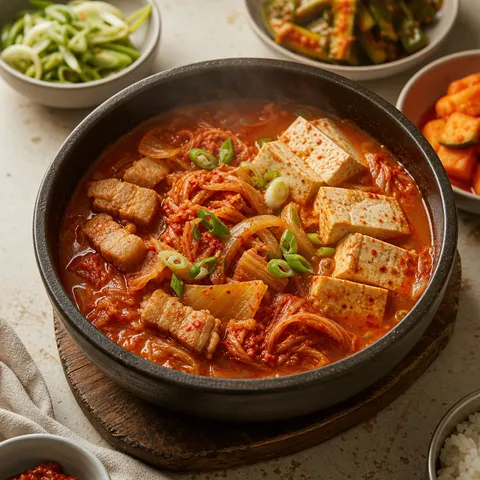
 Kimchi Jjigae (Kimchi Stew)
A classic, comforting stew made with aged kimchi, pork or seafood, scallions, onions, and diced tofu.