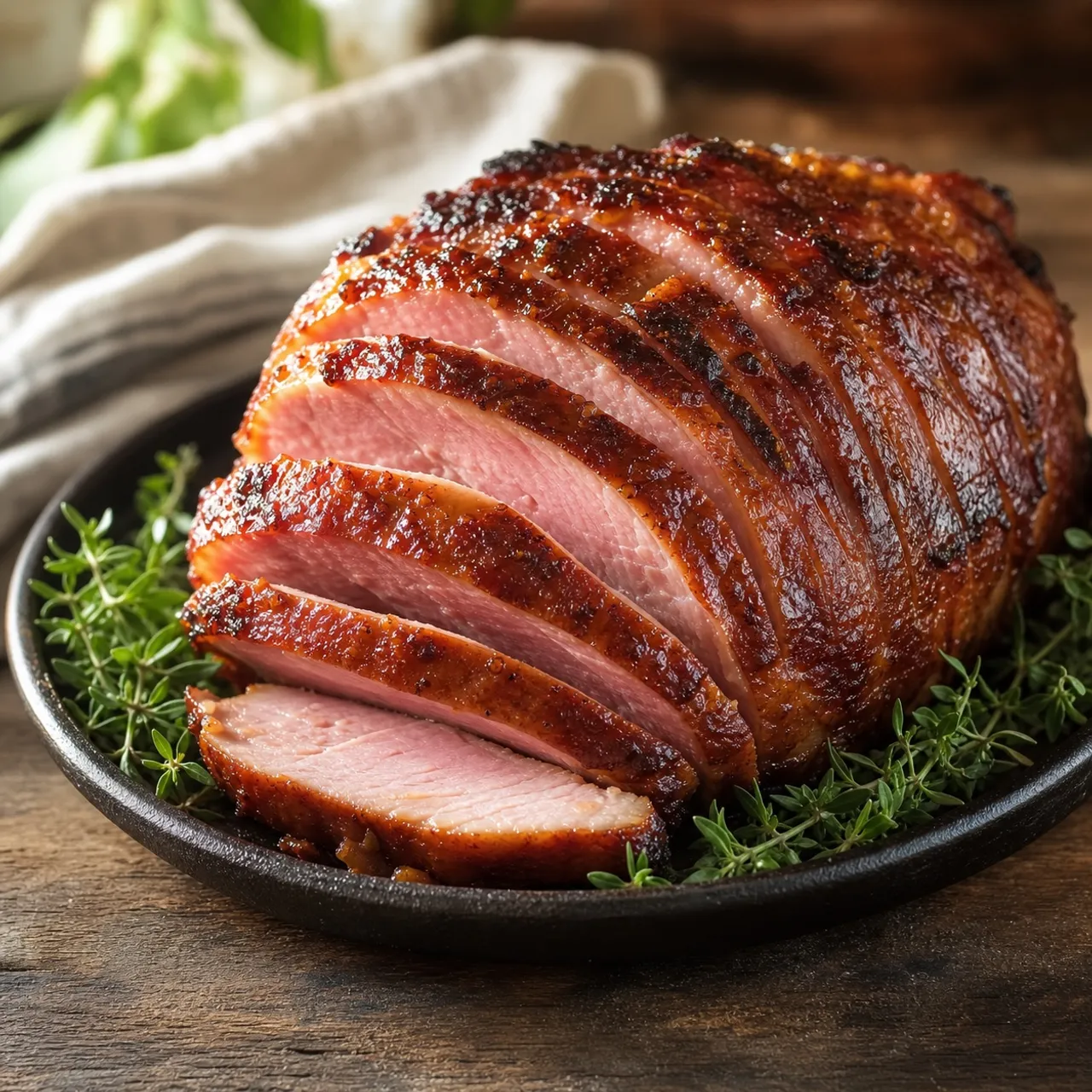
 Meat & Pork Images are for illustrative purposes only, may be inaccurate, and do not guarantee the presence or absence of specific ingredients.
 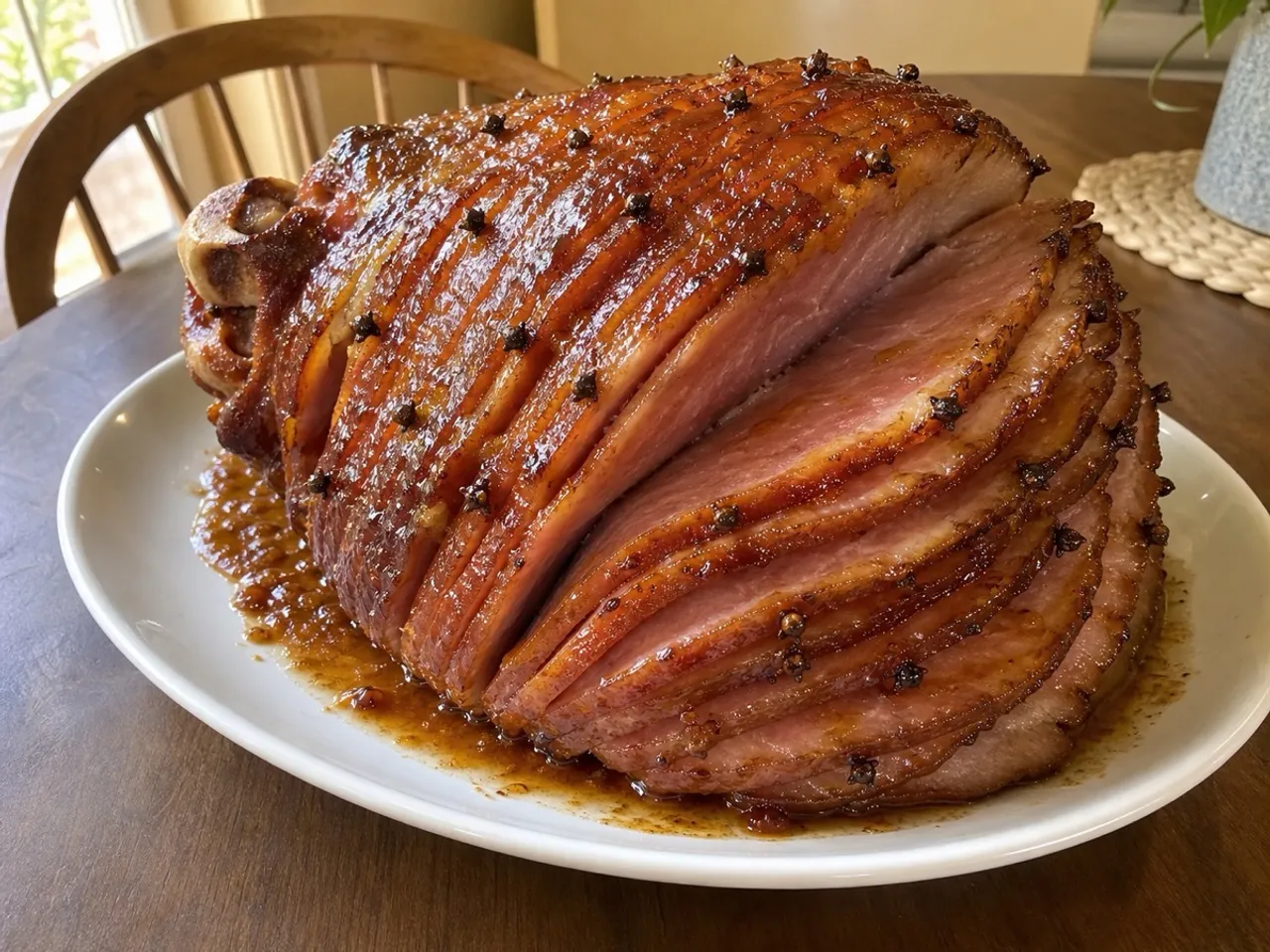 Serving Images are for illustrative purposes only, may be inaccurate, and do not guarantee the presence or absence of specific ingredients.
 Honey Glazed Baked Ham
A bone-in spiral-cut ham baked low and slow under a sticky honey-brown sugar glaze studded with whole cloves.
Contains common allergens
In the app, Listahan checks these against your household automatically.
Instructions
6 steps- 1
Preheat oven to 300°F. Stud the surface of the ham with whole cloves and place in a roasting pan, cut-side down. Cover tightly with foil.
- 2
Bake for 90 minutes, or about 12-13 minutes per pound.
- 3
Meanwhile, combine honey, brown sugar, Dijon mustard, apple cider vinegar, and butter in a small saucepan and simmer over medium heat 5 minutes until glossy, stirring occasionally.
- 4
Remove the ham from the oven, discard the foil, and increase oven temperature to 425°F. Brush the ham generously with the glaze.
- 5
Return the ham to the oven uncovered and bake 15-20 minutes, basting with glaze every 5-10 minutes, until deeply caramelized.
- 6
Let rest 15 minutes before slicing and serving with any remaining glaze.
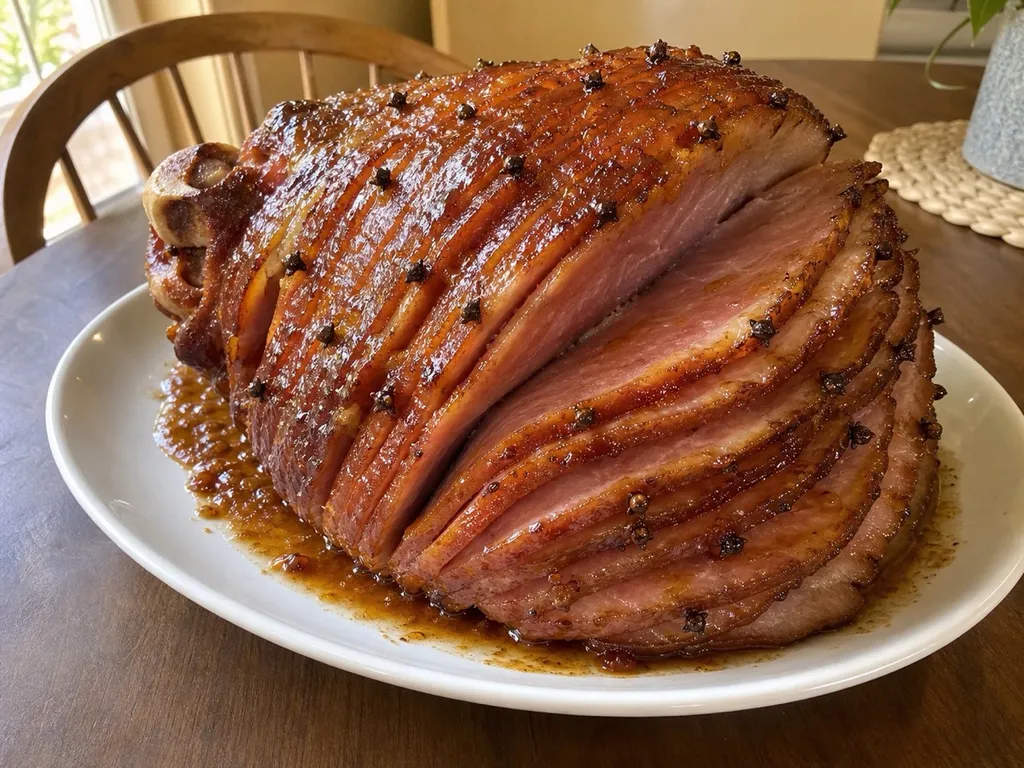 Images are for illustrative purposes only, may be inaccurate, and do not guarantee the presence or absence of specific ingredients.
 Listahan Family Score™
75/100
Good fit for most families
Score reflects how well this recipe fits a typical busy household. In the app, your Family Score is personalized to your household's allergens, kids, and pantry.
Nutrition
per serving655
Calories
77 g
Protein
30 g
Carbs
26 g
Fat
Estimated per serving. Actual values depend on the brands and portions you use.
Listahan cooking guide
Chef notes & practical guide
Technique notes, ingredient swaps, serve-alongside ideas, storage guidance, and equipment for this recipe.
Cultural context
Glazed ham sits in a North American holiday lane shaped by older European cured-pork traditions and by pantry sweeteners like brown sugar, honey, cider, and mustard. A spiral-cut ham is a modern convenience version: it is already cooked and sliced, so the cook's real job is warming it gently without drying the exposed cuts and building a shiny glaze at the end.
Listahan note
This version keeps the oven low for the long warm-through, then uses a short high-heat finish so the honey-brown sugar glaze caramelizes without turning the ham tough. The cloves are used as a quiet aromatic accent, not as the main flavor.
Technique cues
- Keep the ham covered during the first bake. Spiral slices expose a lot of surface area, and foil helps the meat warm through before the glaze goes on.
- Put the ham cut-side down so the flat face stays protected in the pan juices instead of drying at the edges.
- Save most of the glaze for the uncovered finish. Honey and brown sugar can darken quickly, so repeated thin coats work better than one heavy coat.
Kitchen flow
- Parallel prep
- Start the glaze during the last 15 minutes of the covered bake so it is glossy and ready when the oven temperature goes up.
- Make-ahead
- Make the glaze earlier in the day and rewarm it gently before brushing so it spreads smoothly.
- Leftover move
- Dice leftover ham into potato hash, split pea soup, or a breakfast strata where the sweet edges can season the whole dish.
- Cleanup rhythm
- Line the roasting pan with foil before the ham goes in, then soak the saucepan as soon as the glaze is poured off.
Ingredient brief
Role, handling, and swap guidance for each key ingredient.
8 lb bone-in spiral-cut ham, fully cooked
Main centerpiece
Purpose: The bone helps the ham hold moisture and gives the slices a natural serving shape.
Handling: Set it cut-side down in the roasting pan and cover tightly before the first bake.
Adaptation: A smaller bone-in spiral-cut ham works with the same method; start checking the warm-through earlier.
Honey
Glossy sweetness
Purpose: Honey gives the glaze shine and a sticky texture that clings to the spiral slices.
Handling: Simmer it with the other glaze ingredients so it loosens before brushing.
Adaptation: Maple syrup gives a darker, woodsy sweetness and will make the glaze slightly thinner.
Packed brown sugar
Caramel base
Purpose: Brown sugar deepens the glaze and helps create the darker lacquered edges during the hot finish.
Handling: Pack it firmly when measuring so the glaze has enough body.
Adaptation: Light brown sugar keeps the flavor milder; dark brown sugar makes the glaze more molasses-forward.
Dijon mustard
Sharp balance
Purpose: Dijon cuts through the sweetness and keeps the glaze from tasting flat.
Handling: Whisk it into the saucepan until no mustard streaks remain.
Adaptation: Whole-grain mustard gives a more rustic texture and a gentler bite.
Apple cider vinegar
Acid lift
Purpose: A small amount brightens the honey and brown sugar so the glaze does not read as candy-sweet.
Handling: Let it simmer briefly with the glaze so the acidity blends into the sauce.
Adaptation: White wine vinegar gives a cleaner sharpness; use a little less if you want a softer glaze.
Whole cloves
Warm aromatic accent
Purpose: Cloves perfume the outside of the ham and tie the sweet glaze to a classic holiday profile.
Handling: Stud them into the surface before baking, spacing them so they are easy to spot later.
Adaptation: Ground cloves can be stirred into the glaze in a tiny pinch, but it is stronger and less tidy than whole cloves.
Technique notes
- Do not glaze from the start. The sugar will spend too long in the oven and can taste scorched before the ham is warmed through.
- Baste in thin layers every 5 to 10 minutes during the final bake. Thin coats caramelize more evenly and slide into the spiral cuts.
- Rest before slicing into portions. The glaze firms slightly as it sits, making the slices cleaner and less slippery to move.
Ingredient swaps
- Less-sweet direction
- Reduce the brown sugar slightly and keep the Dijon mustard and apple cider vinegar unchanged so the glaze still has balance.
- Maple glaze path
- Use maple syrup in place of honey for a deeper flavor, then simmer the glaze a minute longer if it seems loose.
- No-clove adjustment
- Skip the whole cloves and add a small pinch of black pepper to the glaze for warmth without the holiday-spice note.
- Smaller ham timing
- Use the same covered-then-glazed method for a smaller spiral-cut ham, but shorten the first bake and rely on visual cues during the caramelizing stage.
Serve alongside
- Scalloped potatoes
- Green bean casserole
- Roasted carrots with parsley
- Parker House rolls
- Sparkling apple cider
- Dry Riesling
- Black tea with lemon
Serving suggestions only — check pairings for your household's allergens.
Storage & reheating
- Refrigerate sliced ham with a spoonful of glaze in a sealed container so the cut edges stay moist.
- Reheat slices covered in a baking dish with a splash of water or extra glaze until warmed through.
- Freeze sliced portions with a little glaze, thaw overnight in the refrigerator, then reheat covered so the sugar does not burn.
Equipment
- Large roasting pan
- Heavy-duty foil
- Small saucepan
- Pastry brush
Make this household-aware
Listahan Pro checks this recipe against your household's allergens, finds pantry-aware swaps, builds the shopping list, and helps you plan the week around it.
Plan it in Listahan
Add Honey Glazed Baked Ham to your week, check it against your household's allergens, and build the shopping list automatically.
More Meat & Pork recipes
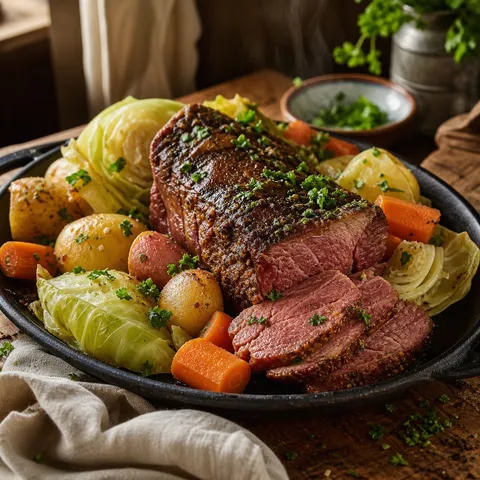 Meat & Pork Lens Verified Images are for illustrative purposes only, may be inaccurate, and do not guarantee the presence or absence of specific ingredients.
 Corned Beef and Cabbage
A classic Irish-American simmer of brined corned beef brisket with cabbage, carrots, and potatoes, served with mustard.
 Meat & Pork Lens Verified Images are for illustrative purposes only, may be inaccurate, and do not guarantee the presence or absence of specific ingredients.
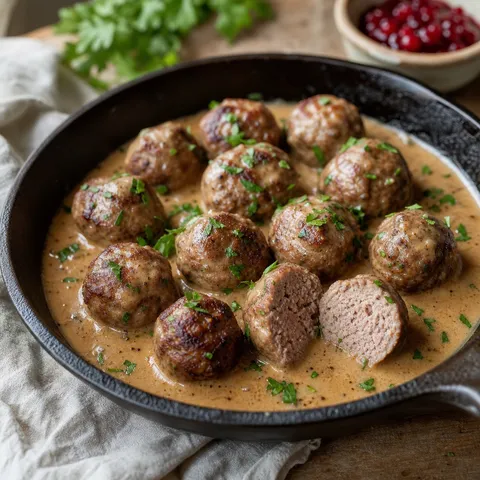
 Swedish Meatballs
Warmly spiced beef and pork meatballs in a velvety sour cream gravy, served over egg noodles with a spoonful of lingonberry jam.
 Meat & Pork Lens Verified Images are for illustrative purposes only, may be inaccurate, and do not guarantee the presence or absence of specific ingredients.
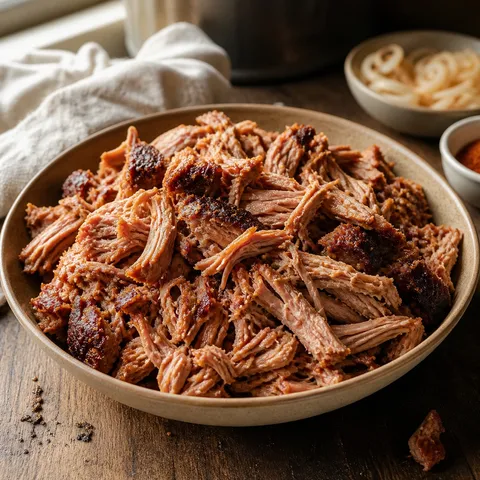
 Slow Cooker Pulled Pork
Fork-tender pork shoulder slow-cooked with a smoky-sweet spice rub until it shreds effortlessly, perfect piled on buns with barbecue sauce.