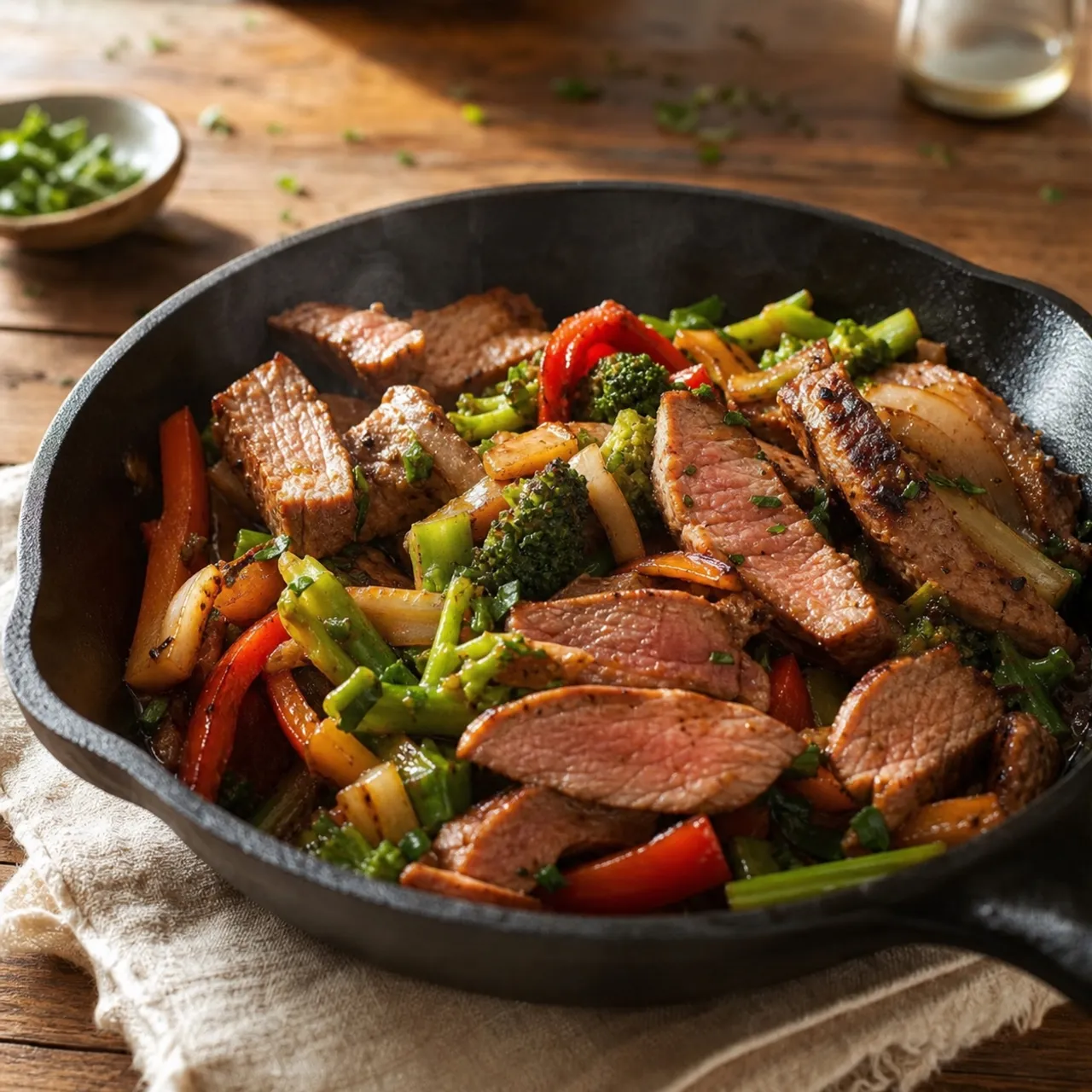
 Meat & Pork Images are for illustrative purposes only, may be inaccurate, and do not guarantee the presence or absence of specific ingredients.
 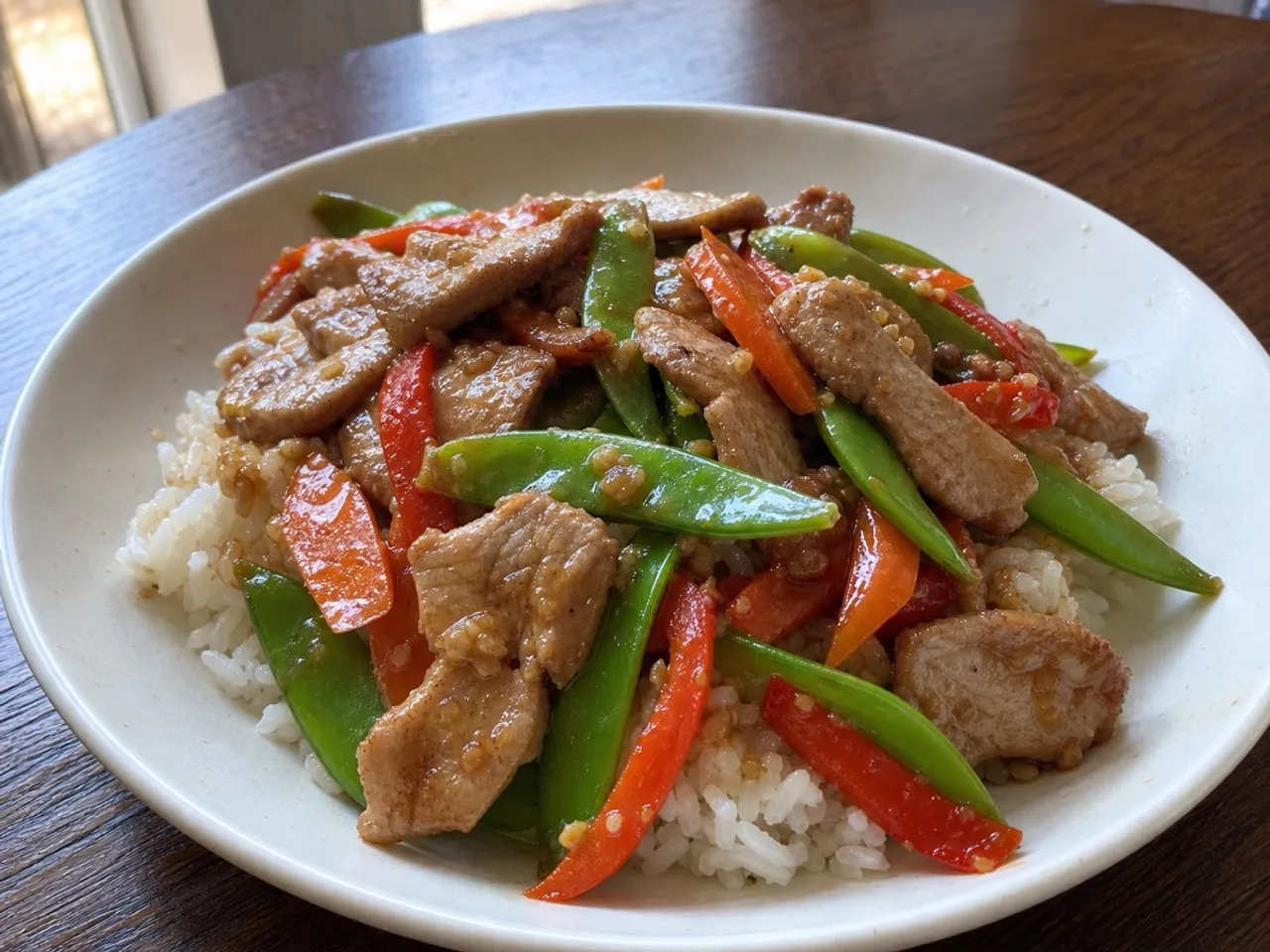 Serving Images are for illustrative purposes only, may be inaccurate, and do not guarantee the presence or absence of specific ingredients.
 Pork Stir-Fry with Vegetables
Quick-seared pork tenderloin tossed with crisp bell peppers, carrots, and snap peas in a savory garlic-ginger sauce.
Contains common allergens
In the app, Listahan checks these against your household automatically.
Good to know
- Ready in under 30 minutes
Matched from this dish's own ingredients and timing. Browse more: 30-minute meals
Instructions
6 steps- 1
Toss the sliced pork with 1 tbsp soy sauce and 1 tbsp cornstarch; let marinate 10 minutes.
- 2
Whisk together remaining soy sauce, oyster sauce, chicken broth, sesame oil, and remaining 1 tbsp cornstarch to make the sauce.
- 3
Heat 1 tbsp oil in a wok or large skillet over high heat and stir-fry the bell pepper, carrot, and snap peas until crisp-tender, about 3 minutes; remove and set aside.
- 4
Add remaining oil to the wok and stir-fry the pork until browned and cooked through, about 3-4 minutes. Add garlic and ginger and stir-fry 30 seconds.
- 5
Return the vegetables to the wok, pour in the sauce, and toss until glossy and thickened, about 1-2 minutes.
- 6
Serve hot over cooked rice.
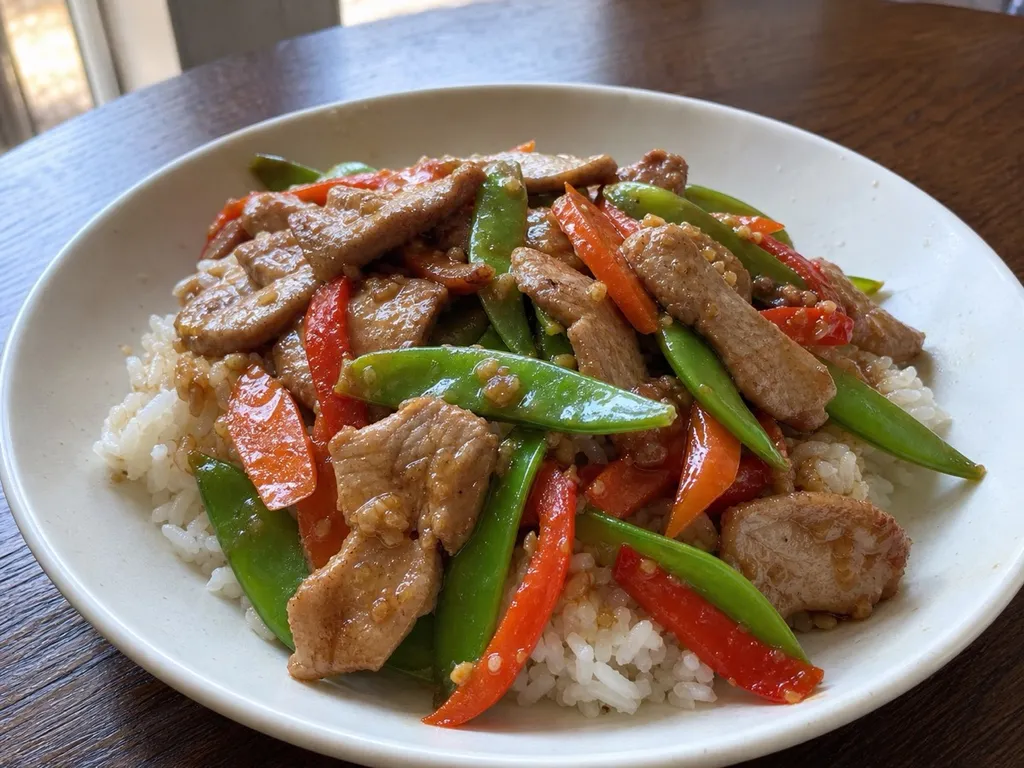 Images are for illustrative purposes only, may be inaccurate, and do not guarantee the presence or absence of specific ingredients.
 Listahan Family Score™
61/100
Works for many families
Score reflects how well this recipe fits a typical busy household. In the app, your Family Score is personalized to your household's allergens, kids, and pantry.
Nutrition
per serving425
Calories
34 g
Protein
15 g
Carbs
24 g
Fat
Estimated per serving. Actual values depend on the brands and portions you use.
Listahan cooking guide
Chef notes & practical guide
Technique notes, ingredient swaps, serve-alongside ideas, storage guidance, and equipment for this recipe.
Cultural context
Stir-frying comes from Chinese wok cooking, where small pieces of meat and vegetables are cut to cook quickly over strong heat. This North American weeknight version uses pork tenderloin and familiar vegetables, but the core idea is the same: prep everything first, then cook fast so the pork browns and the vegetables stay crisp.
Listahan note
This version prioritizes speed, clean slicing, and a glossy sauce that coats the pork without drowning the vegetables. The cornstarch does two jobs here: it helps the pork sear lightly and thickens the sauce at the end.
Technique cues
- Slice the pork thinly across the grain so it cooks in minutes and stays tender instead of chewy.
- Have the sauce mixed and the vegetables cut before the pan heats. Once stir-frying starts, there is no good pause point.
- Cook the vegetables first, then remove them. That keeps them crisp while the pork gets the hotter, less crowded pan it needs.
Kitchen flow
- Parallel prep
- Start the rice before slicing the pork, then cut vegetables and whisk the sauce while the pork sits in its short marinade.
- Make-ahead
- Slice the vegetables and mix the sauce earlier in the day; keep the pork marinade step close to cooking so the coating stays fresh.
- Leftover move
- Chop leftovers and fold them into fried rice with extra snap peas or a scrambled egg.
- Cleanup rhythm
- Rinse the sauce bowl as soon as it is emptied, then soak the wok or skillet while you eat so the glossy starch coating releases easily.
Ingredient brief
Role, handling, and swap guidance for each key ingredient.
Pork tenderloin
Main protein
Purpose: Tenderloin is lean and quick-cooking, which makes it a good match for a 25-minute stir-fry.
Handling: Slice thinly and as evenly as possible so the pieces brown and finish at the same pace.
Adaptation: Pork loin works if sliced very thin; pork shoulder has more flavor but needs a different, longer cooking approach.
Soy sauce
Savory base
Purpose: It seasons both the quick marinade and the final sauce, tying the pork and vegetables together.
Handling: Divide it as written so the pork gets seasoned before cooking and the sauce still has enough depth.
Adaptation: Tamari or coconut aminos can be used, with tamari tasting closer and coconut aminos bringing a slightly sweeter profile.
Cornstarch
Texture and thickener
Purpose: It gives the pork a light coating and turns the broth-based sauce glossy in the pan.
Handling: Whisk it thoroughly into the sauce so no dry clumps hit the hot wok.
Adaptation: Arrowroot starch thickens similarly but can turn slick if boiled hard for too long.
Bell pepper, carrot, and snap peas
Crisp vegetables
Purpose: They bring sweetness, color, and crunch that balance the savory pork sauce.
Handling: Slice the carrot thinly so it can soften in the same short window as the pepper and snap peas.
Adaptation: Broccoli florets, green beans, or zucchini can work; cut firmer vegetables smaller so they keep pace.
Garlic and fresh ginger
Aromatic lift
Purpose: They make the sauce taste fresh and sharper than bottled sauce alone would.
Handling: Add them after the pork browns and stir briefly so they bloom without scorching.
Adaptation: Jarred ginger or garlic paste can help on a busy night, but use a little less because the texture and intensity are different.
Oyster sauce
Sweet-savory body
Purpose: It gives the sauce thickness, dark color, and a rounded restaurant-style finish.
Handling: Whisk it with the broth before cooking so it loosens evenly and coats quickly.
Adaptation: Hoisin sauce makes the dish sweeter and less briny; use a smaller amount and taste before adding more.
Technique notes
- Use high heat and a thin layer of oil. If the pork goes into a lukewarm pan, it releases moisture before it browns.
- Do not crowd the pork. Cook in two batches if needed, especially in a skillet instead of a wok.
- When the sauce goes in, toss constantly for 1 to 2 minutes and stop once it looks glossy; over-reducing makes it pasty.
Ingredient swaps
- Soy sauce alternative
- Use tamari for a close savory profile or coconut aminos for a milder, sweeter sauce; either may need small seasoning adjustments.
- Vegetable shortcut
- Use a fresh stir-fry vegetable mix, but pull out any thick carrot coins and slice them thinner so everything cooks evenly.
- Broth adjustment
- Use low-sodium chicken broth if your soy sauce and oyster sauce are both full-strength, then taste the finished sauce before adding more seasoning.
Serve alongside
- Steamed jasmine rice
- Garlic fried rice
- Scallion cucumber salad
- Sesame roasted broccoli
- Jasmine iced tea
- Sparkling lime water
- Light lager
Serving suggestions only — check pairings for your household's allergens.
Storage & reheating
- Refrigerate leftovers in a sealed container, with rice stored separately if possible so it does not absorb all the sauce.
- Reheat in a skillet over medium heat with a splash of broth or water to loosen the sauce.
- Freeze the pork and vegetables without rice; thaw overnight and reheat gently so the vegetables do not turn mushy.
Equipment
- Wok or large skillet
- Sharp chef's knife
- Mixing bowls for marinade and sauce
- Tongs or wok spatula
Make this household-aware
Listahan Pro checks this recipe against your household's allergens, finds pantry-aware swaps, builds the shopping list, and helps you plan the week around it.
Plan it in Listahan
Add Pork Stir-Fry with Vegetables to your week, check it against your household's allergens, and build the shopping list automatically.
More Meat & Pork recipes
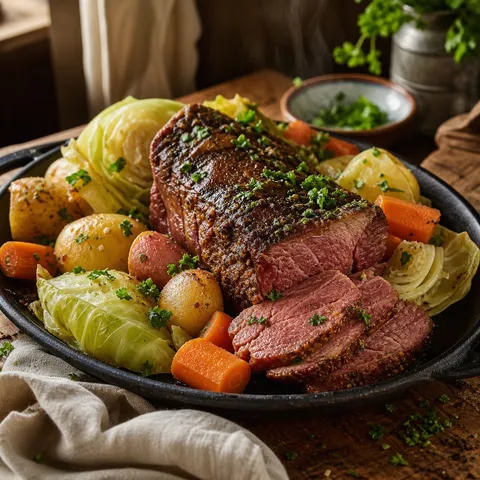 Meat & Pork Lens Verified Images are for illustrative purposes only, may be inaccurate, and do not guarantee the presence or absence of specific ingredients.
 Corned Beef and Cabbage
A classic Irish-American simmer of brined corned beef brisket with cabbage, carrots, and potatoes, served with mustard.
 Meat & Pork Lens Verified Images are for illustrative purposes only, may be inaccurate, and do not guarantee the presence or absence of specific ingredients.
 Swedish Meatballs
Warmly spiced beef and pork meatballs in a velvety sour cream gravy, served over egg noodles with a spoonful of lingonberry jam.
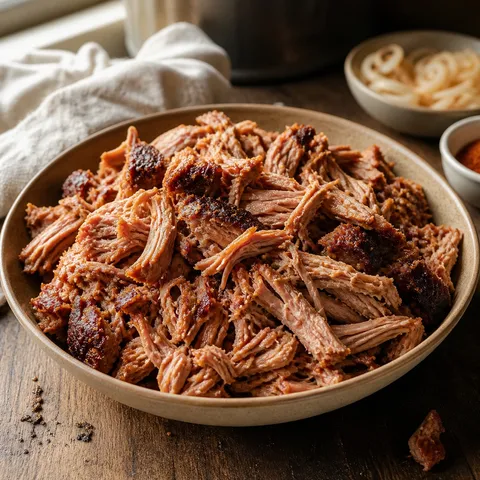 Meat & Pork Lens Verified Images are for illustrative purposes only, may be inaccurate, and do not guarantee the presence or absence of specific ingredients.
 Slow Cooker Pulled Pork
Fork-tender pork shoulder slow-cooked with a smoky-sweet spice rub until it shreds effortlessly, perfect piled on buns with barbecue sauce.