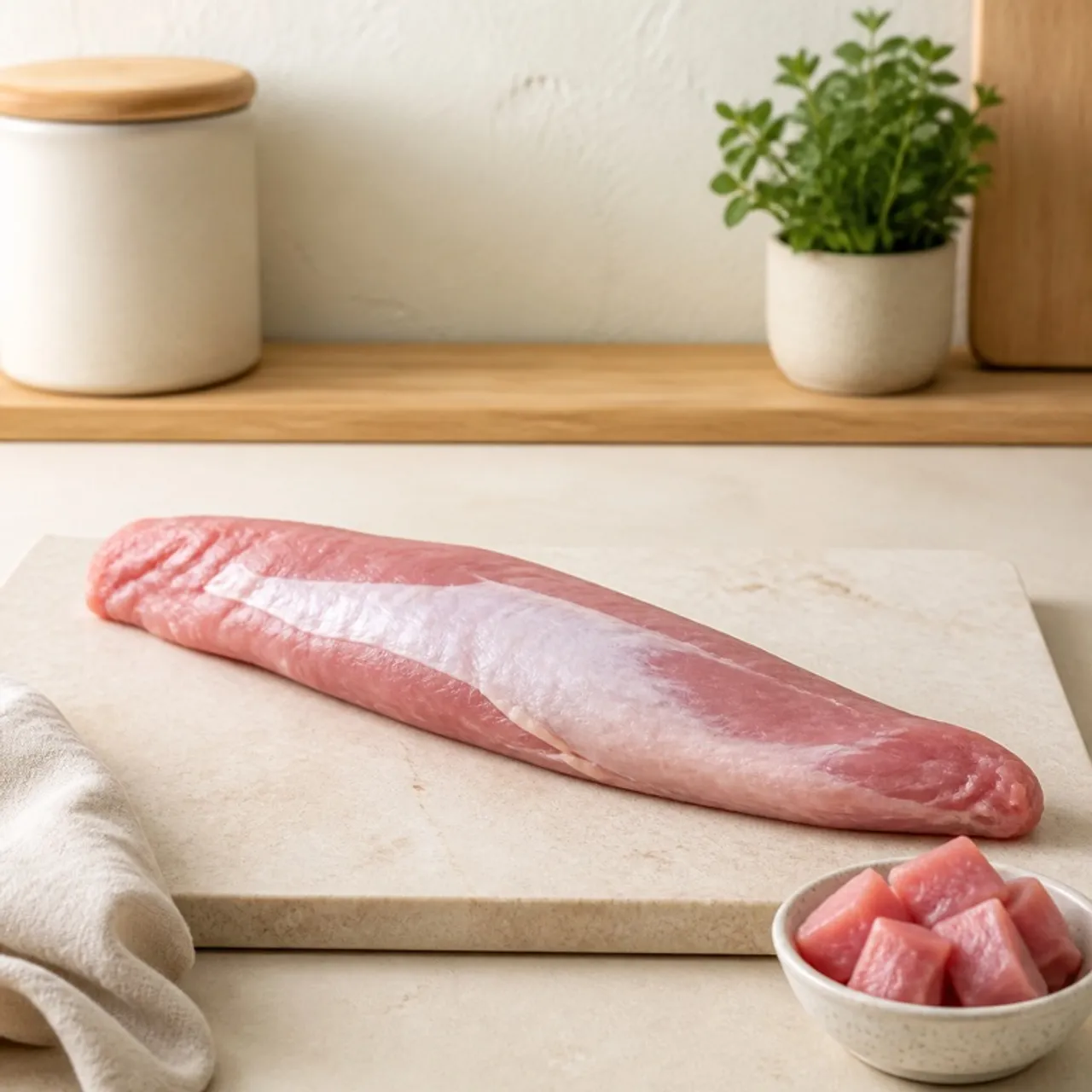
 Food Lens Images are for illustrative purposes only, may be inaccurate, and do not guarantee the presence or absence of specific ingredients.
 Food Lens · Protein
Pork tenderloin
Mild, clean pork flavor with a delicate sweetness and very fine grain. The texture is exceptionally tender when cooked to the right temperature but turns dry and chalky if overcooked beyond 65 °C.
Lens VerifiedPork tenderloin is the long, slender muscle that runs along the pig's backbone, prized as the leanest and most tender cut on the animal. It cooks quickly, takes marinades beautifully, and suits everything from weeknight roasts to elegant dinner-party centerpieces. Because it contains so little fat and connective tissue, it rewards careful temperature control to stay juicy.
Where it comes from
Valued across pork-eating cultures worldwide, pork tenderloin has been the prized lean cut of the pig since antiquity, featured in European, East Asian, and Latin American cooking traditions for centuries.
Varieties — Sold whole (typically 400–600 g each), in medallions, or butterflied and stuffed. Some markets offer marinated ready-to-cook versions seasoned with herbs or teriyaki-style glazes.
In Chinese cooking it is thinly sliced for stir-fries or marinated in soy, honey, and five-spice for char siu. In French cuisine it appears as filet de porc with cream sauces. American cooks often wrap it in bacon and grill it over charcoal.
In a modern kitchen — Sous vide at 58–60 °C for one to two hours then seared hard produces a consistently rosy, juicy result. A quick chimichurri or fruit-based chutney cuts through its mild flavor and elevates a simple weeknight cook.
Buying it
Look for a pale pink, uniformly shaped loin with no strong odor. The silver skin — a thin pearlescent membrane running along one side — should be trimmed before cooking; some butchers do this for you. Avoid cuts with dark spots or excessive moisture in the packaging.
Storing it
Keep pork tenderloin refrigerated and use within a few days, or freeze it for longer storage. Thaw frozen tenderloin in the fridge, not on the counter, and cook promptly once thawed.
Keeps about 4 days in the fridge.
Out of pork tenderloin? Good swaps
General cooking guidance — always check the labels on the products you use. Listahan’s allergen checks run automatically when you plan a recipe in the app. Not medical advice.
Recipes that use pork tenderloin
Common questions about pork tenderloin
What can I use instead of pork tenderloin?
Good swaps include , . Each behaves a little differently — see the swaps above for notes, and always check labels for allergens.
How do I store pork tenderloin?
Keep pork tenderloin refrigerated and use within a few days, or freeze it for longer storage. Thaw frozen tenderloin in the fridge, not on the counter, and cook promptly once thawed. It keeps about 4 days in the fridge.
More protein
See all


Make pork tenderloin about your kitchen — with Listahan Pro
Everything above is free, forever. Pro adds the Household Lens — the same food, seen for your family:
-
Checked for each member
Flags pork tenderloin per person against your household's allergies and school rules — not just a generic "contains" tag.
-
Pantry-aware
Knows whether you already have it, what is running low, and the best swap from what is in your kitchen tonight.
-
What it costs near you
A real price from the Presyo community index, so you can plan the budget — not guess.
-
Your household memory
Who likes it, plus your own private notes — brand, where you keep it, who skips it.
Allergen safety is always free — Pro adds the automation, never the safety.
Cook with pork tenderloin — safely
Plan a recipe in Listahan and the household allergen check runs automatically — every plan, every swap, every lunchbox. Safety is never paywalled.