 North American Images are for illustrative purposes only, may be inaccurate, and do not guarantee the presence or absence of specific ingredients.
  Serving Images are for illustrative purposes only, may be inaccurate, and do not guarantee the presence or absence of specific ingredients.
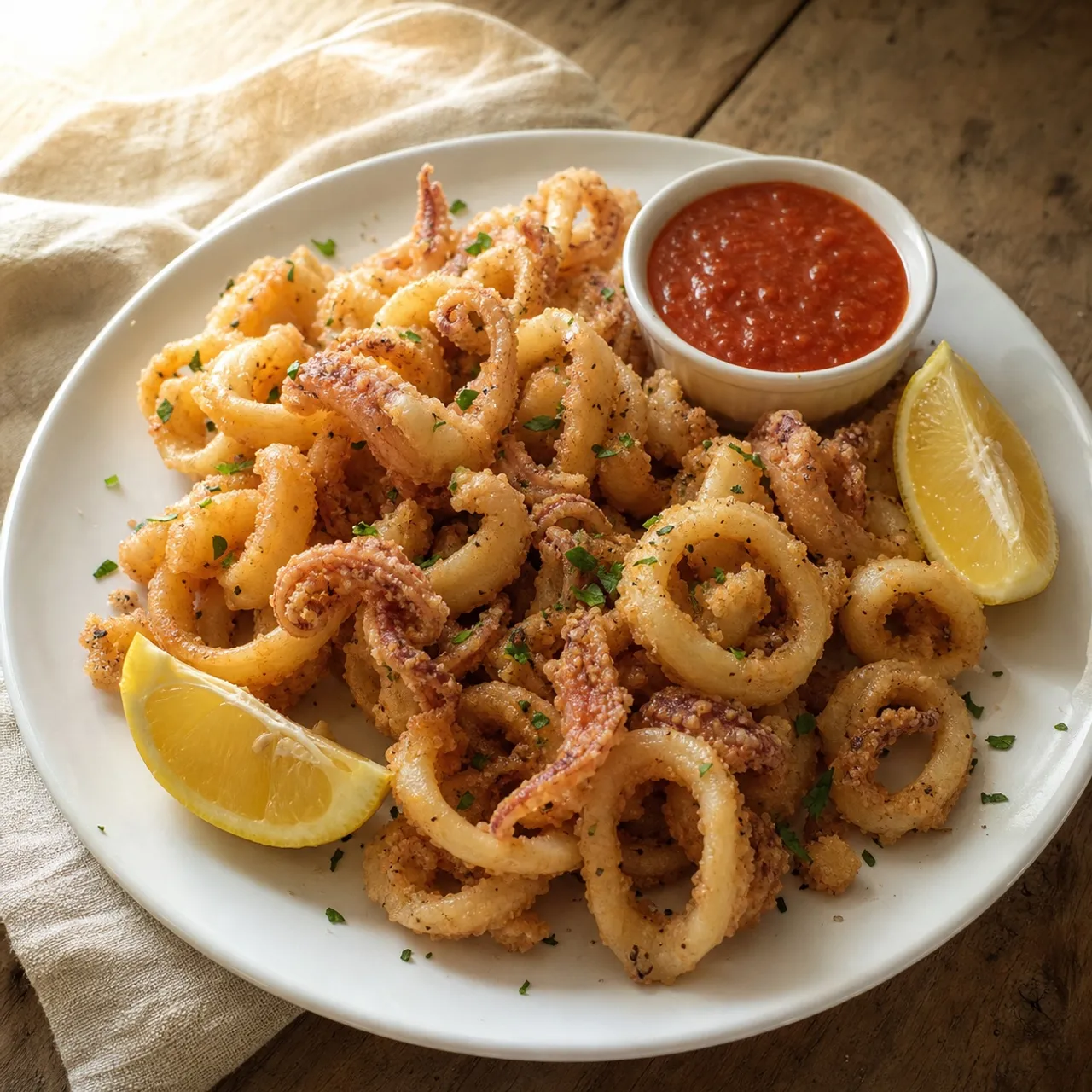
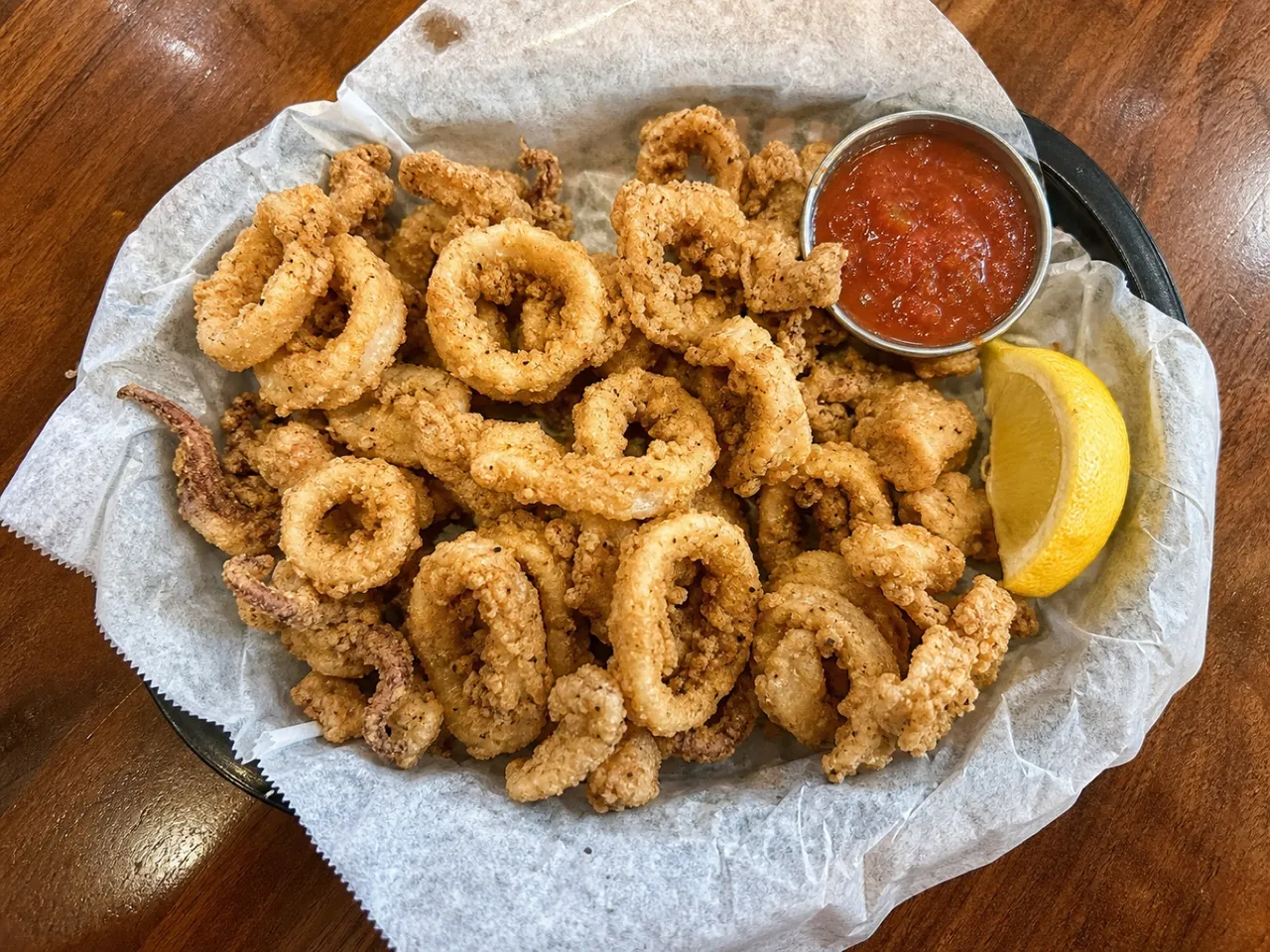
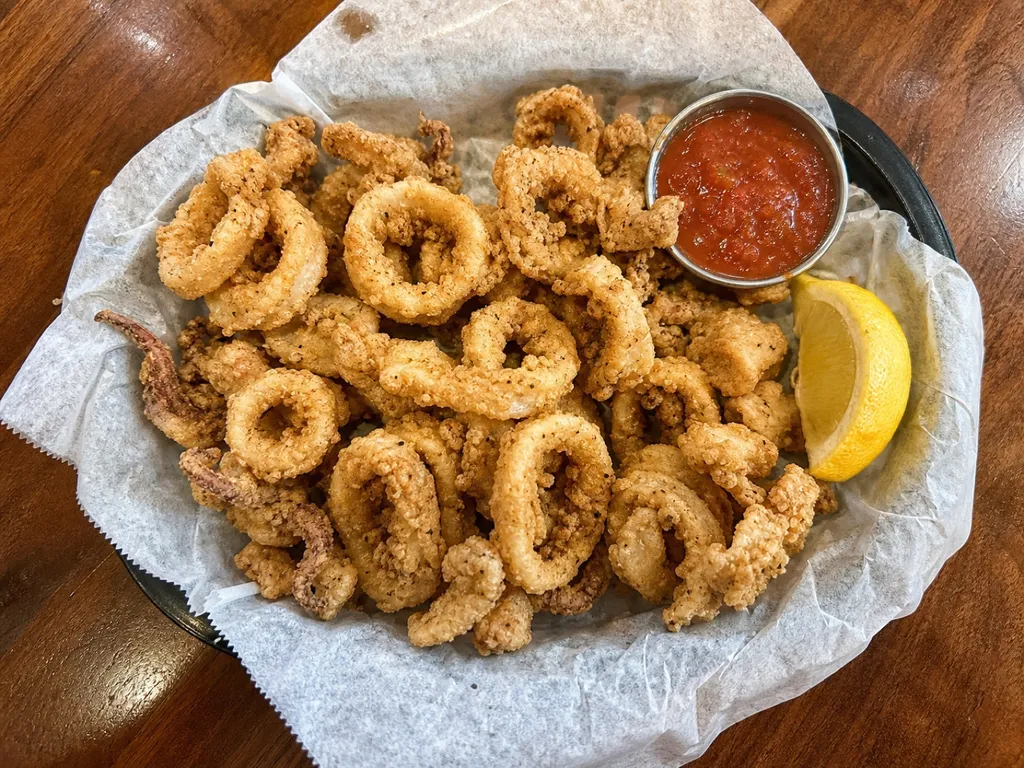
 Fried Calamari
Lightly battered rings of squid fried until crisp, served with lemon and marinara.
Contains common allergens
In the app, Listahan checks these against your household automatically.
Good to know
- Crispy
- Ready in under 30 minutes
Matched from this dish's own ingredients and timing. Browse more: crispy recipes30-minute meals
Instructions
6 steps- 1
Dry the Squid: Pat the squid rings very dry.
- 2
Season the Coating: Mix the flour, cornstarch, paprika, salt, and pepper.
- 3
Dredge: Toss the rings in the seasoned flour to coat, shaking off the excess.
- 4
Heat Oil: Heat oil to 190°C (375°F).
- 5
Fry: Fry in small batches for 1-2 minutes until pale gold and crisp — overcooking makes squid rubbery.
- 6
Serve: Drain, season with salt, and serve hot with lemon wedges and marinara.
 Images are for illustrative purposes only, may be inaccurate, and do not guarantee the presence or absence of specific ingredients.
 Listahan Family Score™
67/100
Works for many families
Score reflects how well this recipe fits a typical busy household. In the app, your Family Score is personalized to your household's allergens, kids, and pantry.
Nutrition
per serving415
Calories
32 g
Protein
62 g
Carbs
3 g
Fat
Estimated per serving. Actual values depend on the brands and portions you use.
Listahan cooking guide
Chef notes & practical guide
Technique notes, ingredient swaps, serve-alongside ideas, storage guidance, and equipment for this recipe.
Cultural context
Fried calamari became a mainstream American restaurant appetizer in the late 1980s and 1990s as Italian-American restaurants moved upscale and squid, once considered bycatch, became fashionable. The dish is a simplified version of Italian fritto di calamari, stripped to rings in a light flour coating and served with marinara rather than the Mediterranean herb-and-lemon tradition.
Listahan note
This version uses a flour-and-cornstarch blend for a shatteringly light crust that does not turn chewy when it hits the dipping sauce, and keeps the squid rings thin so they cook through in seconds.
Technique cues
- Squid goes from tender to rubber in about 30 seconds of overcooking; fry rings for no more than 90 seconds at 190C and pull them before they look completely done.
- The cornstarch in the coating is the key to a crisp, non-greasy result; pure flour coatings absorb more oil and turn chewy faster.
- Soaking the cleaned squid in salted milk for 30 minutes before dredging tenderizes the rings and reduces the briny edge, though it is optional.
Kitchen flow
- Parallel prep
- Set up the dipping sauces and lemon wedges before heating the oil; plating should be immediate once the rings come out.
- Make-ahead
- Clean and dry the squid up to 8 hours ahead and refrigerate uncovered on a rack; fry to order.
- Leftover move
- Leftover fried calamari does not reheat well; toss cold rings into a pasta with marinara sauce and warm briefly over low heat.
- Cleanup rhythm
- Place newspaper or paper bags under the draining rack before frying starts; the used paper absorbs oil and goes straight to the bin.
Ingredient brief
Role, handling, and swap guidance for each key ingredient.
500g cleaned squid, cut into rings
Main protein
Purpose: Fresh or properly thawed squid has a sweet, mild flavor that a good coating complements without masking.
Handling: Pat the rings extremely dry; any surface moisture turns to steam in the hot oil and strips the coating before it sets.
Adaptation: Large raw shrimp, butterflied and flattened, can substitute with the same coating; cooking time is similar.
150g all-purpose flour
Primary coating
Purpose: Flour gives the coating structure and a slight chew at the base layer closest to the squid.
Handling: Season the flour generously with salt, pepper, and paprika so the coating has flavor through its full depth.
Adaptation: Semolina flour in place of all-purpose gives a coarser, crunchier crust and a faintly nutty flavor.
60g cornstarch
Crust lightener
Purpose: Cornstarch reduces gluten development in the coating and creates a lighter, more shatteringly crisp exterior than flour alone.
Handling: Mix the cornstarch into the flour thoroughly so there are no pockets of pure starch that clump when the wet squid touches them.
Adaptation: Potato starch or tapioca starch work in the same ratio and produce a similar effect; rice flour blends also work for a gluten-free direction.
1 tsp paprika, salt and pepper
Coating seasoning
Purpose: Seasoning the flour directly means the coating has flavor even when some of it falls off during frying, keeping each ring consistently seasoned.
Handling: Mix into the flour-cornstarch blend thoroughly before dredging so the spice is evenly distributed rather than concentrated in clumps.
Adaptation: Add cayenne or smoked paprika for a spicier, more complex coating; Old Bay seasoning is a classic alternative for a seafood-forward flavor.
Technique notes
- Fry in very small batches, about 10 to 12 rings at a time; a full pound at once drops the oil temperature drastically and the coating turns oily rather than crisp.
- Shake excess flour off the rings firmly over the bowl before dropping them in the oil; excess coating falls off in the oil and makes the next batch greasy.
- Serve immediately; fried calamari loses its crispness within 3 to 4 minutes, especially if covered or piled deep.
Ingredient swaps
- Gluten-free direction
- Replace all-purpose flour with a 50/50 blend of rice flour and potato starch; the coating is lighter and crispier and entirely gluten-free.
- Spiced coating option
- Add 1 tsp cayenne, 1 tsp dried oregano, and a pinch of garlic powder to the flour mix for a seasoned crust that needs less dipping sauce.
Serve alongside
- Marinara sauce for dipping
- Garlic aioli or lemon mayonnaise
- Simple arugula salad with lemon and olive oil
- Crisp Pinot Grigio or Vermentino
- Sparkling water with lemon
- Light wheat beer or pilsner
Serving suggestions only — check pairings for your household's allergens.
Storage & reheating
- Fried calamari is best eaten immediately and does not store well; the coating becomes soft and the squid rubbery within an hour.
- If you must reheat, spread on a wire rack in a 220C oven for 4 to 5 minutes; it will not fully recover its crispness but is edible.
- Freeze cleaned raw squid rings on a sheet pan, then bag; fry from frozen, adding 30 extra seconds to the cooking time.
Equipment
- Heavy pot or Dutch oven with a deep-fry thermometer
- Wire rack over a baking sheet for draining, not paper towels which trap steam
- Wide shallow bowl for the coating mixture and tongs or a spider for pulling rings
Make this household-aware
Listahan Pro checks this recipe against your household's allergens, finds pantry-aware swaps, builds the shopping list, and helps you plan the week around it.
Plan it in Listahan
Add Fried Calamari to your week, check it against your household's allergens, and build the shopping list automatically.
More North American recipes
 North American Lens Verified Images are for illustrative purposes only, may be inaccurate, and do not guarantee the presence or absence of specific ingredients.
 Soft Pretzels
Chewy golden mall-style pretzels with a salty crust, brushed in butter.
 North American Lens Verified Images are for illustrative purposes only, may be inaccurate, and do not guarantee the presence or absence of specific ingredients.
 Gumbo
A Louisiana-style gumbo of chicken thighs and Andouille sausage simmered with okra, the Cajun holy trinity, and a dark roux, served over rice.
 North American Lens Verified Images are for illustrative purposes only, may be inaccurate, and do not guarantee the presence or absence of specific ingredients.
 New York Cheesecake
A dense, ultra-creamy baked cheesecake with a buttery graham cracker crust and a faintly tangy, melt-in-your-mouth filling.