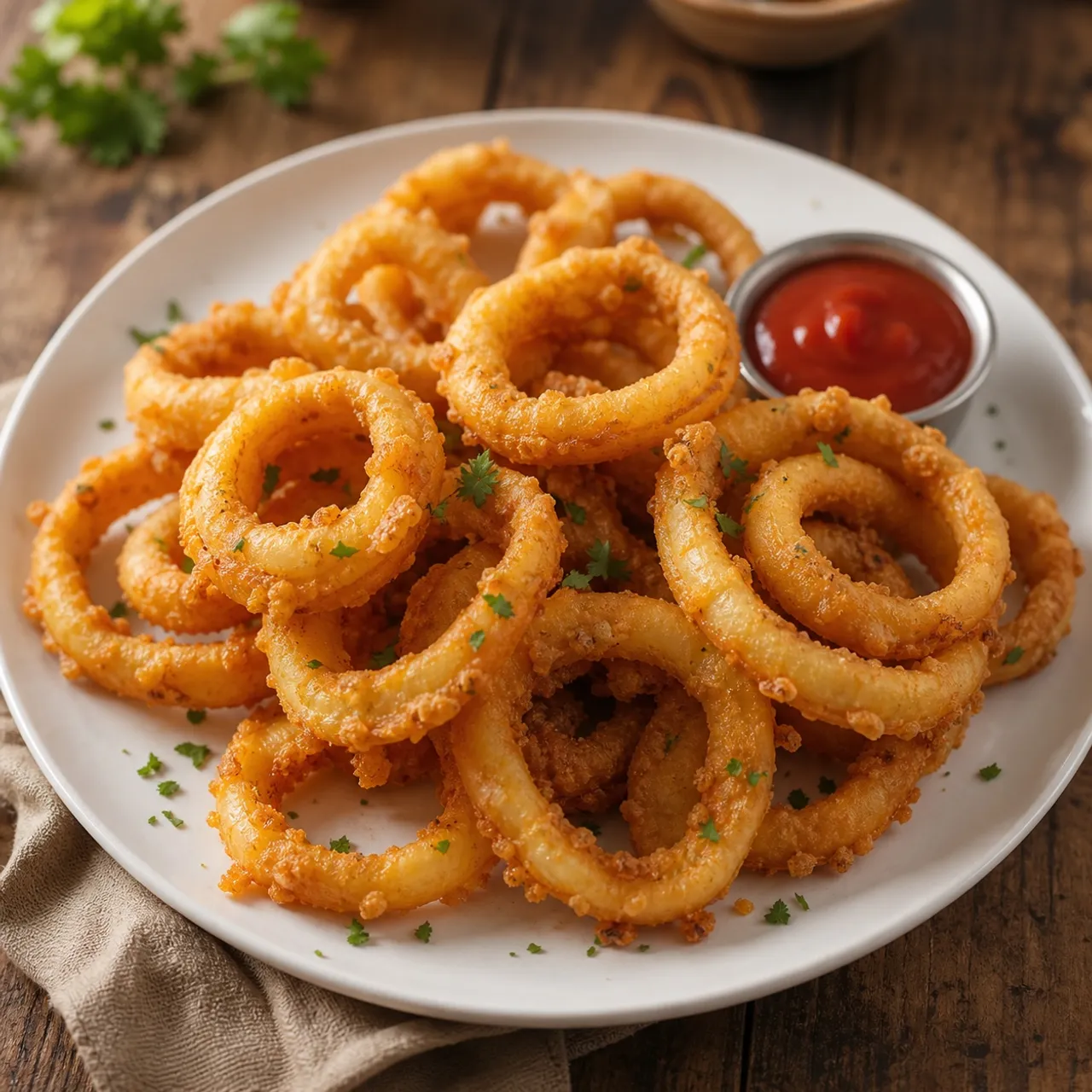
 North American Images are for illustrative purposes only, may be inaccurate, and do not guarantee the presence or absence of specific ingredients.
 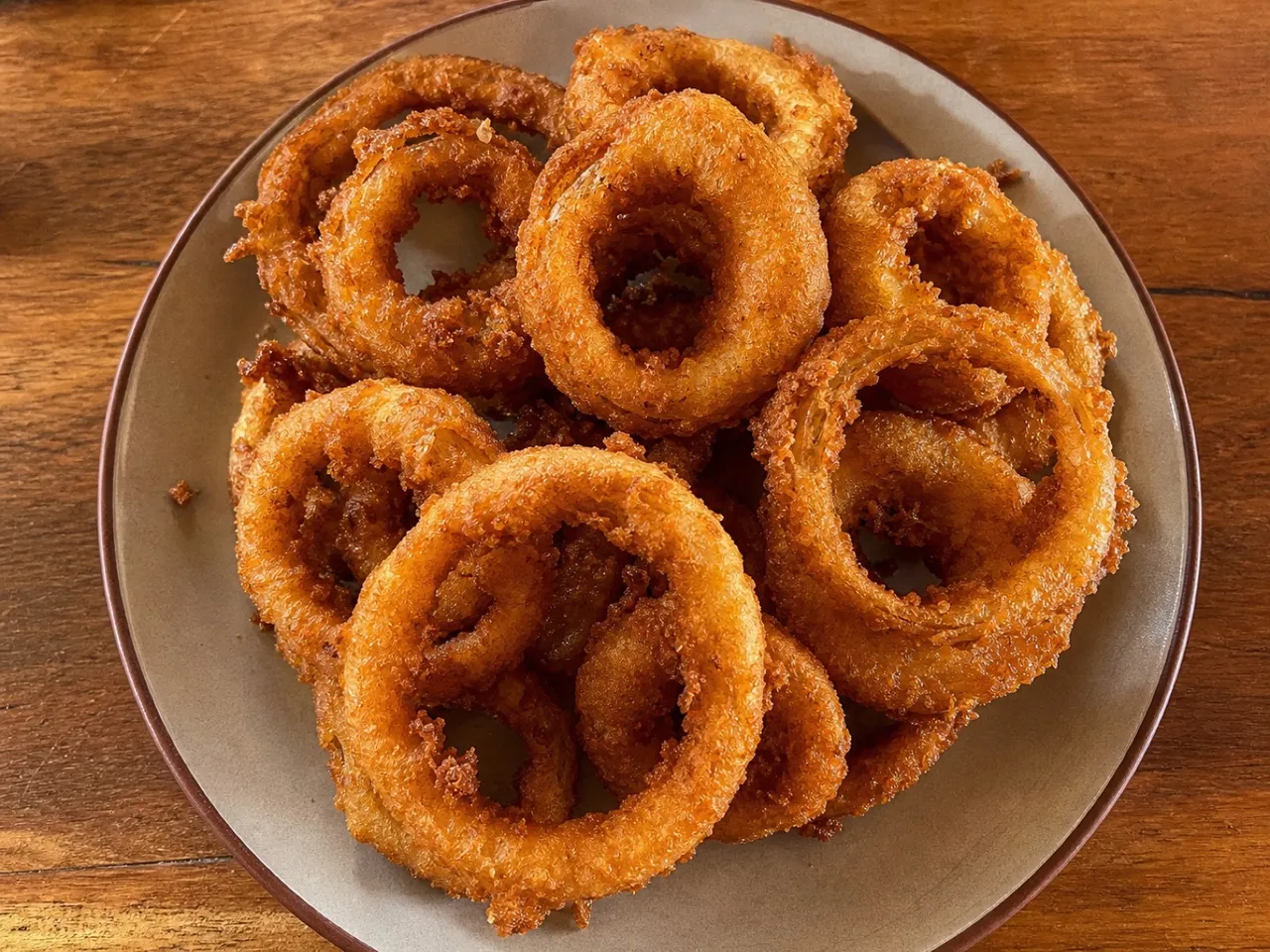 Serving Images are for illustrative purposes only, may be inaccurate, and do not guarantee the presence or absence of specific ingredients.
 Onion Rings
Thick-cut sweet onion rings dipped in a buttermilk-egg batter and fried until golden and crunchy.
Contains common allergens
In the app, Listahan checks these against your household automatically.
Good to know
- One-pot
- Crispy
- Ready in under 30 minutes
Matched from this dish's own ingredients and timing. Browse more: one-pot dinnerscrispy recipes30-minute meals
Instructions
6 steps- 1
Peel the onions and slice them crosswise into 1/2-inch thick rings. Carefully separate the rings from each other.
- 2
In a shallow dish, whisk together the flour, garlic powder, paprika, and salt.
- 3
In a separate bowl, thoroughly whisk the buttermilk and the egg together.
- 4
Heat the vegetable oil in a deep heavy-bottomed pot or Dutch oven to 375°F (190°C).
- 5
Working in small batches, dip the onion rings first into the flour mixture, then into the buttermilk mixture, and finally back into the flour, shaking off any excess.
- 6
Carefully drop the coated rings into the hot oil. Fry for 2-3 minutes, turning once, until they are puffy, crisp, and golden brown. Transfer to a wire rack set over paper towels to drain. Season with extra salt while hot.
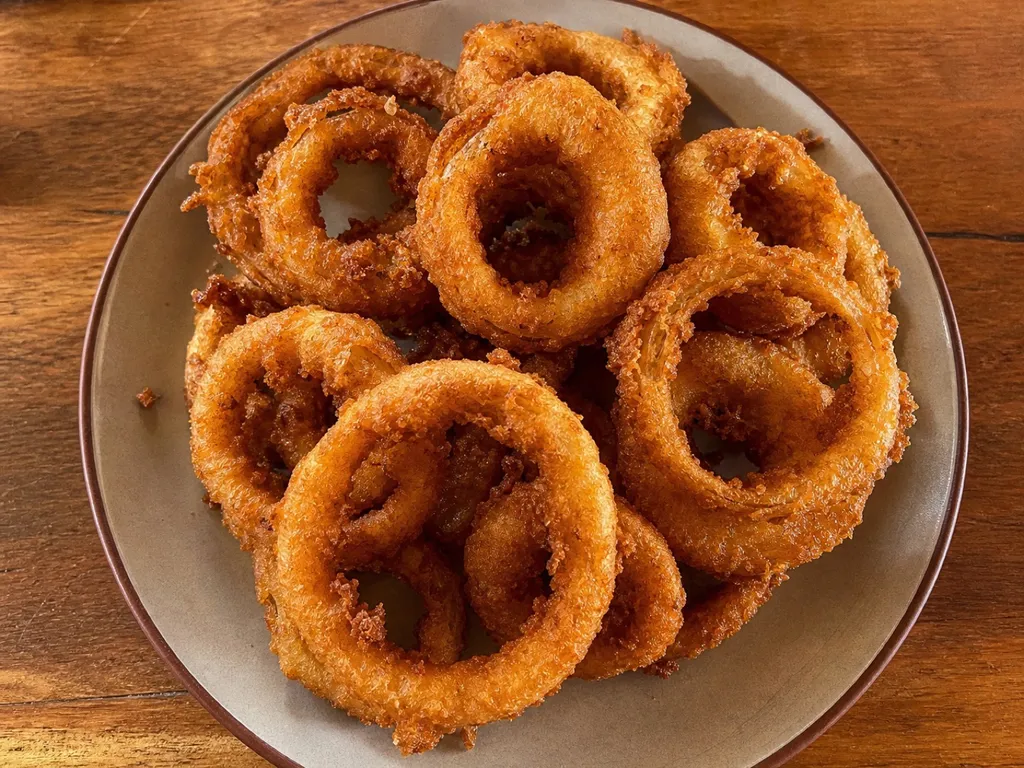 Images are for illustrative purposes only, may be inaccurate, and do not guarantee the presence or absence of specific ingredients.
 Listahan Family Score™
71/100
Good fit for most families
Score reflects how well this recipe fits a typical busy household. In the app, your Family Score is personalized to your household's allergens, kids, and pantry.
Nutrition
per serving430
Calories
9 g
Protein
44 g
Carbs
24 g
Fat
Estimated per serving. Actual values depend on the brands and portions you use.
Listahan cooking guide
Chef notes & practical guide
Technique notes, ingredient swaps, serve-alongside ideas, storage guidance, and equipment for this recipe.
Cultural context
Fried onion rings appear in American cookbooks as early as the 1930s, though battered fried onions in some form had been served in British cooking well before that. The version with a thick buttermilk batter became associated with American diner and drive-in culture in the postwar decades, where they competed with french fries as the standard fried side. Sweet onion varieties like Vidalia, developed in Georgia in the 1930s, became the preferred choice because their lower sulfur content means they fry sweet rather than sharp.
Listahan note
This version uses a buttermilk-and-egg batter seasoned with garlic powder and paprika, which clings tightly and fries to a crisp shell without the thick, doughy coating that makes lesser onion rings go soggy quickly.
Technique cues
- Oil temperature is the most important variable in the whole recipe; at 350 degrees the batter sets quickly and crisps without absorbing excess oil, but below 325 degrees the rings soak and go greasy.
- Dredging the rings in dry flour before dipping them in batter gives the coating something to grip, which is the main reason restaurant-style rings stay on the onion instead of sliding off during frying.
- Do not crowd the pan; adding too many rings at once drops the oil temperature sharply and the batter steams instead of crisping.
Kitchen flow
- Parallel prep
- Slice and separate the onion rings while the oil heats; set up the dredge station before the oil reaches temperature.
- Make-ahead
- Onion rings do not make-ahead well; they are best served within 5 minutes of frying.
- Leftover move
- Re-crisp leftover rings in a 400 degree oven or air fryer for 5 minutes; do not microwave or they will steam soft.
- Cleanup rhythm
- Set up a wire rack over a sheet pan before you start frying so drained rings go directly onto it; cool oil fully before filtering and storing.
Ingredient brief
Role, handling, and swap guidance for each key ingredient.
sweet onions
Main vegetable
Purpose: Vidalia or Walla Walla onions are low in sulfur, so they turn sweet and mild when fried rather than sharp and overpowering.
Handling: Cut crosswise into half-inch rings; separate them gently so they stay intact as individual circles.
Adaptation: Yellow onions work but are sharper in flavor; red onions fry well but will discolor the batter slightly.
buttermilk
Wet batter base
Purpose: The acidity in buttermilk tenderizes the outer layer of the onion slightly and helps the batter adhere more firmly than plain milk.
Handling: Whisk with the egg until fully combined before dipping the rings.
Adaptation: Combine 1 cup of regular milk with 1 tablespoon of lemon juice or white vinegar and let it sit for 5 minutes to make a quick buttermilk substitute.
all-purpose flour
Structure and coating
Purpose: Flour builds the dry dredge layer and forms the structural shell of the batter when it hits the hot oil.
Handling: Season the flour with garlic powder, paprika, and salt before using, so both the dredge and batter coats are seasoned.
Adaptation: Rice flour in the dredge layer makes for an even crispier shell and is naturally gluten-free.
paprika
Color and mild spice
Purpose: Adds a warm orange-red color to the batter and a subtle smoky or sweet note that makes the coating more interesting.
Handling: Mix into the dry flour mixture so it distributes evenly across every ring.
Adaptation: Smoked paprika adds more depth; cayenne adds heat instead of sweetness.
Technique notes
- Use a thermometer in the oil; guessing temperature by bread test is imprecise and the difference between 325 and 375 degrees is the difference between greasy and crisp.
- Work in the sequence of dry flour first, then buttermilk batter, never the reverse; reversing the order gives you a wet exterior that falls away in the oil.
- Lay finished rings on a wire rack over a sheet pan, never on paper towels; paper traps steam underneath and softens the bottom of the coating.
Ingredient swaps
- Gluten-free direction
- Replace all-purpose flour with a 1:1 gluten-free flour blend or use rice flour for a lighter, crispier coating.
- Air fryer direction
- Spray battered rings with cooking oil spray and air fry at 400 degrees for 10-12 minutes, flipping once; the coating will be crispier than oven-baked but less uniformly golden than deep-fried.
Serve alongside
- Diner-style cheeseburger with special sauce
- Beer-battered fish and chips
- Hot dog with yellow mustard
- Chocolate milkshake
- Cold draft lager
- Sparkling lemonade
Serving suggestions only — check pairings for your household's allergens.
Storage & reheating
- Best served immediately; refrigerate leftovers in a single layer in an airtight container for up to 2 days.
- Reheat in a 400 degree oven or air fryer for 5-7 minutes until crisp again; do not microwave.
- Do not freeze battered and fried rings; the batter becomes soggy upon thawing.
Equipment
- Deep heavy-bottomed pot or Dutch oven for frying
- Instant-read or clip-on thermometer
- Wire rack set over a rimmed baking sheet
- Tongs or spider strainer for lifting rings
Make this household-aware
Listahan Pro checks this recipe against your household's allergens, finds pantry-aware swaps, builds the shopping list, and helps you plan the week around it.
Plan it in Listahan
Add Onion Rings to your week, check it against your household's allergens, and build the shopping list automatically.
More North American recipes
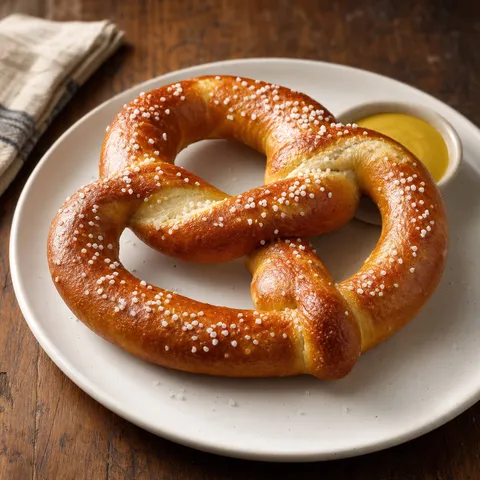 North American Lens Verified Images are for illustrative purposes only, may be inaccurate, and do not guarantee the presence or absence of specific ingredients.
 Soft Pretzels
Chewy golden mall-style pretzels with a salty crust, brushed in butter.
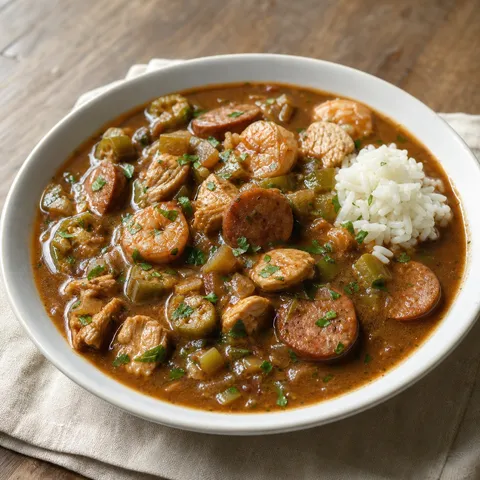 North American Lens Verified Images are for illustrative purposes only, may be inaccurate, and do not guarantee the presence or absence of specific ingredients.
 Gumbo
A Louisiana-style gumbo of chicken thighs and Andouille sausage simmered with okra, the Cajun holy trinity, and a dark roux, served over rice.
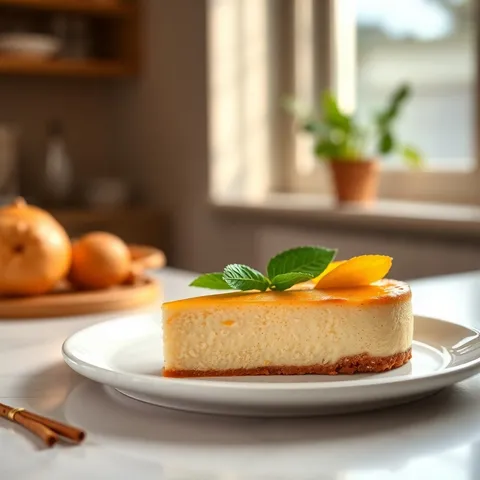 North American Lens Verified Images are for illustrative purposes only, may be inaccurate, and do not guarantee the presence or absence of specific ingredients.
 New York Cheesecake
A dense, ultra-creamy baked cheesecake with a buttery graham cracker crust and a faintly tangy, melt-in-your-mouth filling.