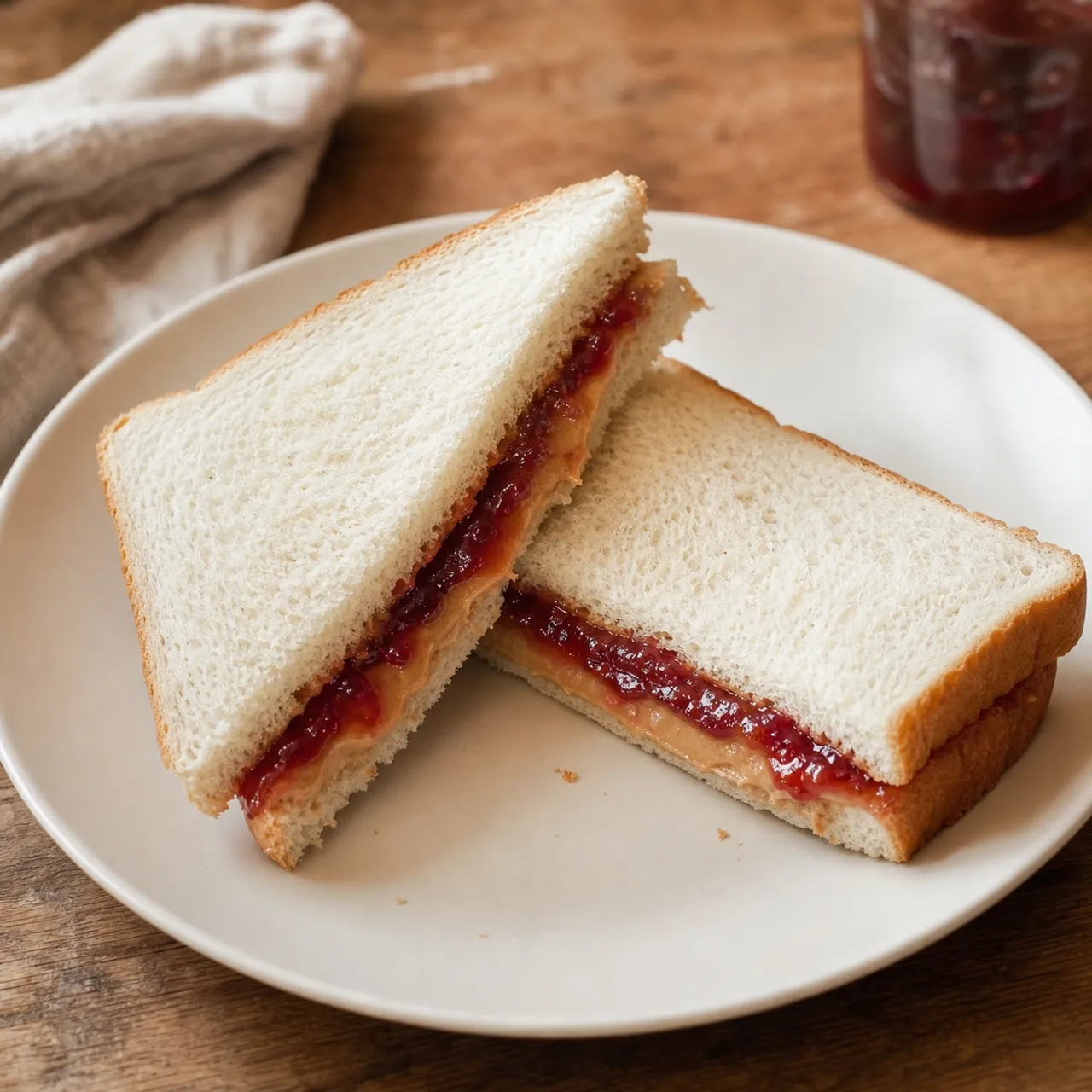
 North American Images are for illustrative purposes only, may be inaccurate, and do not guarantee the presence or absence of specific ingredients.
 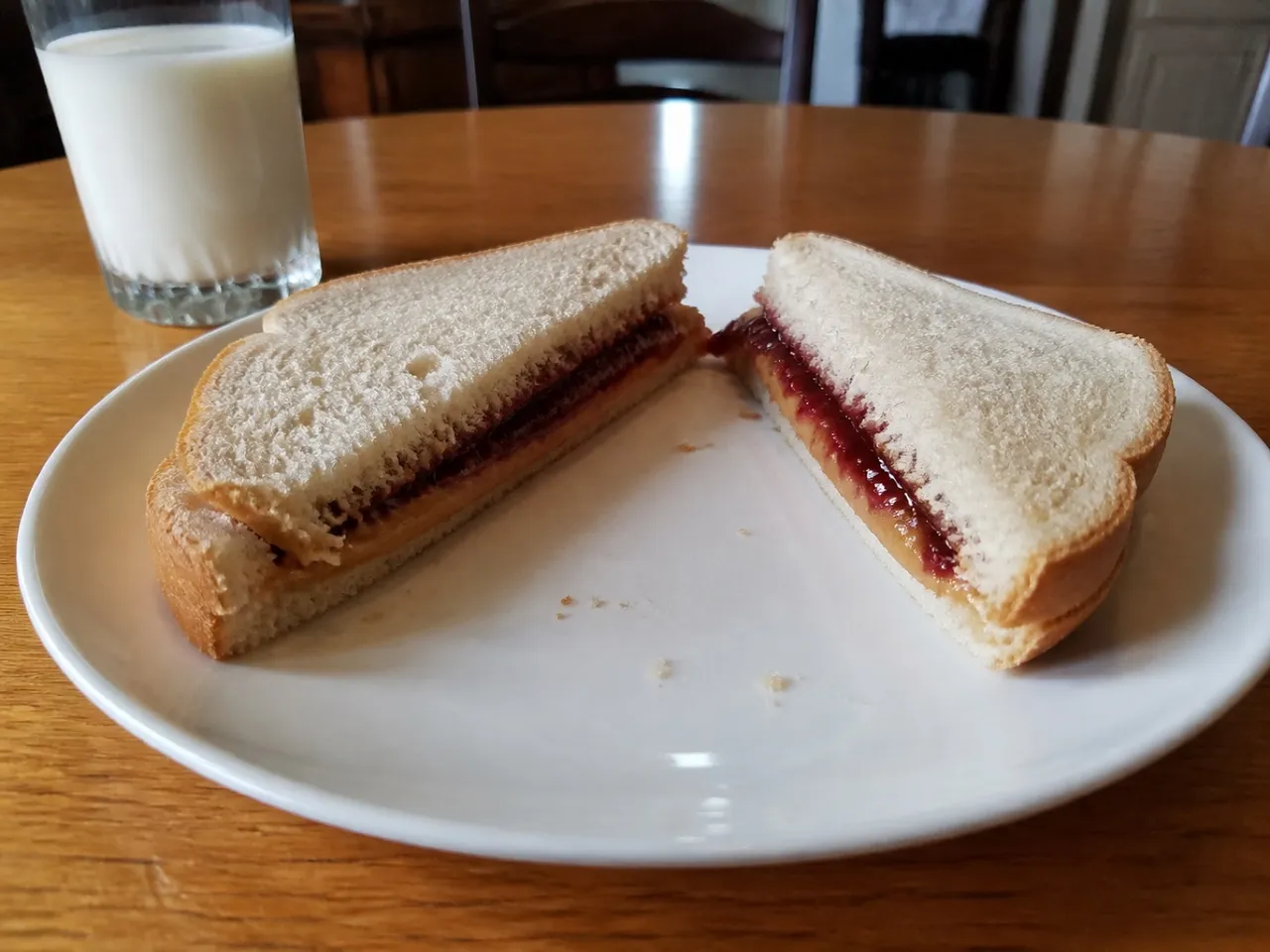 Serving Images are for illustrative purposes only, may be inaccurate, and do not guarantee the presence or absence of specific ingredients.
 PB&J Sandwich
Creamy or chunky peanut butter and sweet grape jelly spread between soft sandwich bread, the classic American lunchbox staple.
Contains common allergens
In the app, Listahan checks these against your household automatically.
Good to know
- Ready in under 30 minutes
Matched from this dish's own ingredients and timing. Browse more: 30-minute meals
Instructions
6 steps- 1
Lay both slices of bread flat on a clean cutting board or plate.
- 2
Using a butter knife, spread a generous, even layer of peanut butter entirely over one slice, reaching all the way to the crusts.
- 3
For a soggy-proof sandwich (optional but recommended), spread a very thin layer of peanut butter on the second slice of bread to act as a barrier against the jelly.
- 4
Wipe the knife clean, then spread a thick layer of jelly or jam over the second slice of bread.
- 5
Quickly but carefully flip the jelly-coated slice onto the peanut butter-coated slice. Press down lightly to adhere.
- 6
Cut the sandwich diagonally or straight across the middle and serve immediately, paired with a cold glass of milk.
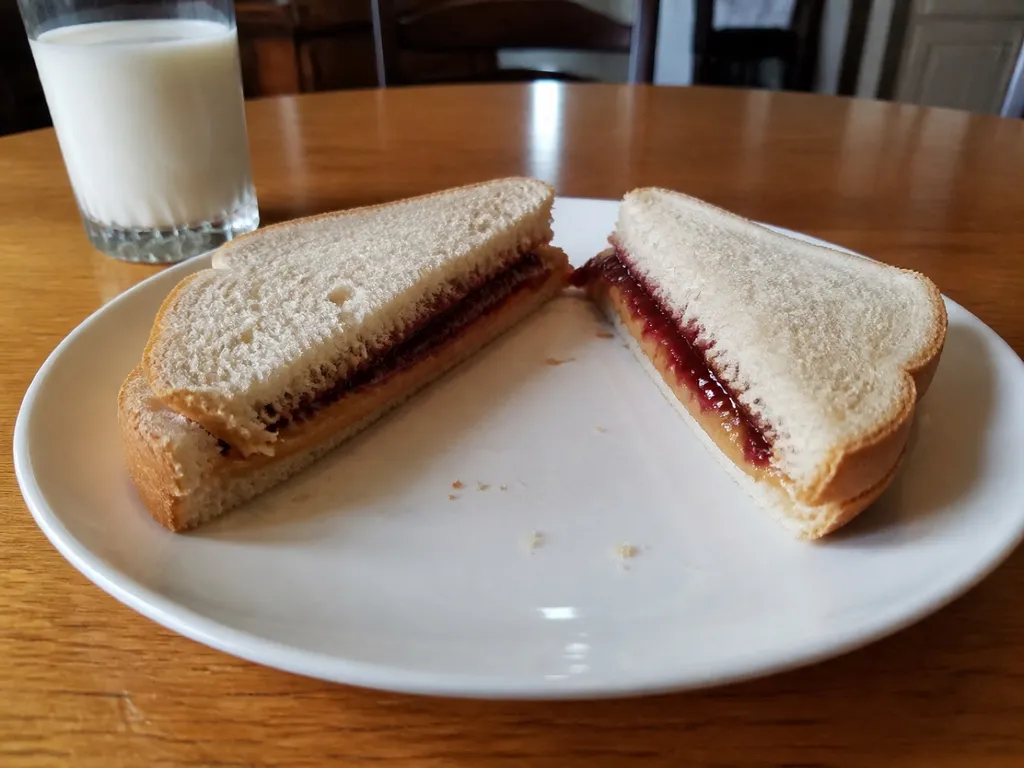 Images are for illustrative purposes only, may be inaccurate, and do not guarantee the presence or absence of specific ingredients.
 Listahan Family Score™
79/100
Good fit for most families
Score reflects how well this recipe fits a typical busy household. In the app, your Family Score is personalized to your household's allergens, kids, and pantry.
Nutrition
per serving135
Calories
4 g
Protein
16 g
Carbs
7 g
Fat
Estimated per serving. Actual values depend on the brands and portions you use.
Listahan cooking guide
Chef notes & practical guide
Technique notes, ingredient swaps, serve-alongside ideas, storage guidance, and equipment for this recipe.
Cultural context
Peanut butter and jelly sandwiches became an American staple during World War II, when both peanut butter and jelly were included in US military rations and soldiers reportedly combined them on bread from field bakeries. Pre-sliced bread had become widely available in the 1930s, and the combination spread rapidly through civilian households after the war as a cheap, shelf-stable, protein-and-sugar lunch that children would eat without complaint. The PB&J became so deeply embedded in American childhood food culture that it is sometimes cited as the most universally recognized American lunch.
Listahan note
This version adds the optional thin peanut butter barrier on the jelly side, a small step that genuinely extends how long the sandwich holds before the jelly makes the bread soggy.
Technique cues
- A thin coat of peanut butter on both slices before the jelly goes on creates a fat barrier that significantly slows moisture migration from the jelly into the bread.
- Spreading peanut butter to the edges of the bread, not just the center, is the difference between a satisfying first bite from any angle and a bare-bread corner.
- Creamy peanut butter spreads more evenly on soft sandwich bread; chunky peanut butter works better on sturdier bread where it does not tear the crumb.
Kitchen flow
- Parallel prep
- This sandwich takes under 3 minutes; there is no meaningful parallel prep, but assembling multiple sandwiches at once is the natural efficiency move.
- Make-ahead
- Assemble up to 4 hours ahead and wrap tightly in plastic wrap or wax paper; the jelly barrier technique helps maintain bread texture.
- Leftover move
- Day-old PB&J can be pan-fried in butter like French toast for a warm, slightly caramelized variation that makes it feel like a new thing.
- Cleanup rhythm
- Wipe the knife between peanut butter and jelly to keep the jelly jar from getting peanut butter contamination that shortens its shelf life.
Ingredient brief
Role, handling, and swap guidance for each key ingredient.
soft sandwich bread (white or wheat)
Structural vessel
Purpose: Soft sandwich bread has a pliable, even crumb that spreads peanut butter without tearing and folds or cuts without crumbling.
Handling: Keep at room temperature; cold bread from the refrigerator is stiffer and more likely to tear under the peanut butter knife.
Adaptation: Whole wheat or multigrain bread adds more fiber and a slightly nuttier flavor that works well with natural peanut butter; brioche makes a sweeter, richer version.
creamy or chunky peanut butter
Primary protein and fat layer
Purpose: Peanut butter is the savory, protein-dense anchor that balances the sweetness of the jelly and makes the sandwich filling.
Handling: Stir natural peanut butter before using if the oil has separated; spread generously all the way to the crust edges.
Adaptation: Almond butter or sunflower seed butter (SunButter) can replace peanut butter here; tahini produces a more savory result with less sweetness.
grape jelly or strawberry jam
Sweet fruit layer and acid contrast
Purpose: The sweetness and light acidity of the jelly cuts through the richness of the peanut butter and is why the combination has more balance than peanut butter alone.
Handling: Spread the jelly on the peanut-butter-coated side rather than bare bread to minimize the jelly soaking through.
Adaptation: Raspberry jam adds more brightness; honey is a classic substitute with less sweetness and no fruit pieces; any soft fruit preserve works.
thin second coat of peanut butter (jelly-side barrier)
Moisture barrier
Purpose: A thin fat layer on the jelly-facing slice slows moisture migration from the jelly into the bread, keeping the sandwich from becoming soggy if made ahead.
Handling: Spread a very thin coat on the second slice before adding jelly; it should be barely visible, not a full peanut butter layer.
Adaptation: A thin smear of softened cream cheese serves the same barrier function and adds a mild dairy richness without changing the sandwich profile significantly.
Technique notes
- Diagonal cuts are not just aesthetic; the triangular wedge gives a better grip and distributes filling more evenly to the first bite than a straight horizontal cut.
- For a lunchbox that will sit for 3-4 hours, use jam with lower water content (typically labeled 'jam' or 'preserves') rather than jelly, which is more liquid and migrates faster.
- Toasting the bread before assembly produces a fundamentally different sandwich: crunchier, warmer if eaten immediately, but more prone to cracking if carried.
Ingredient swaps
- Nut-free direction
- Use sunflower seed butter (SunButter) in the same quantity; the color is slightly darker but the texture and behavior are nearly identical to creamy peanut butter.
- Gluten-free direction
- Use a gluten-free sandwich loaf; choose one with a soft, flexible crumb to avoid crumbling when spreading.
- Lower-sugar option
- Use a no-added-sugar fruit spread or mashed fresh berries; the jelly layer becomes less sweet and slightly tarter.
Serve alongside
- Apple slices or banana for a classic lunchbox
- Carrot sticks and celery with hummus
- Potato chips for the salty crunch contrast
- Chocolate milk for the after-school combination
- Cold whole milk
- Apple juice
- Sparkling water for an adult version
Serving suggestions only — check pairings for your household's allergens.
Storage & reheating
- Wrap tightly and refrigerate for up to 1 day; the jelly barrier technique extends freshness but the bread will still soften over time.
- Eat at room temperature for best flavor; a cold PB&J straight from the fridge has muted flavors and stiffer bread.
- Assembled sandwiches do not freeze well due to texture changes in the bread; freeze bread and fillings separately instead.
Equipment
- Butter knife or offset spreader for even spreading to the edges
- Cutting board for clean diagonal or straight cuts
- Wax paper or plastic wrap for carrying or packing
Make this household-aware
Listahan Pro checks this recipe against your household's allergens, finds pantry-aware swaps, builds the shopping list, and helps you plan the week around it.
Plan it in Listahan
Add PB&J Sandwich to your week, check it against your household's allergens, and build the shopping list automatically.
More North American recipes
 North American Lens Verified Images are for illustrative purposes only, may be inaccurate, and do not guarantee the presence or absence of specific ingredients.
 Soft Pretzels
Chewy golden mall-style pretzels with a salty crust, brushed in butter.
 North American Lens Verified Images are for illustrative purposes only, may be inaccurate, and do not guarantee the presence or absence of specific ingredients.
 Gumbo
A Louisiana-style gumbo of chicken thighs and Andouille sausage simmered with okra, the Cajun holy trinity, and a dark roux, served over rice.
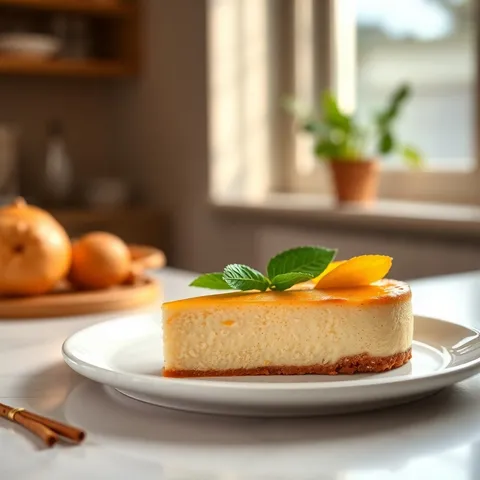 North American Lens Verified Images are for illustrative purposes only, may be inaccurate, and do not guarantee the presence or absence of specific ingredients.
 New York Cheesecake
A dense, ultra-creamy baked cheesecake with a buttery graham cracker crust and a faintly tangy, melt-in-your-mouth filling.