 Sandwiches Images are for illustrative purposes only, may be inaccurate, and do not guarantee the presence or absence of specific ingredients.
  Serving Images are for illustrative purposes only, may be inaccurate, and do not guarantee the presence or absence of specific ingredients.
 Peanut Butter and Jelly
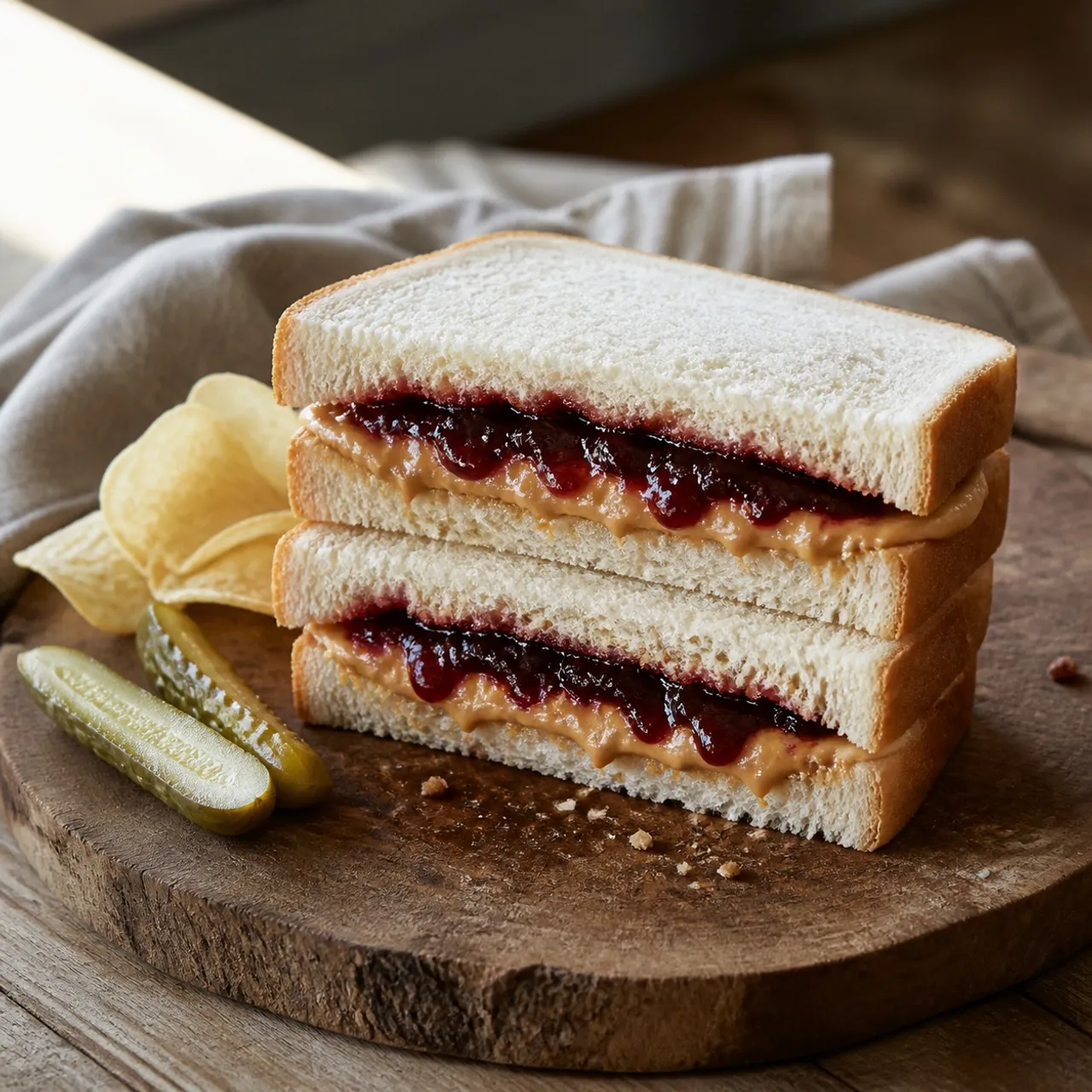
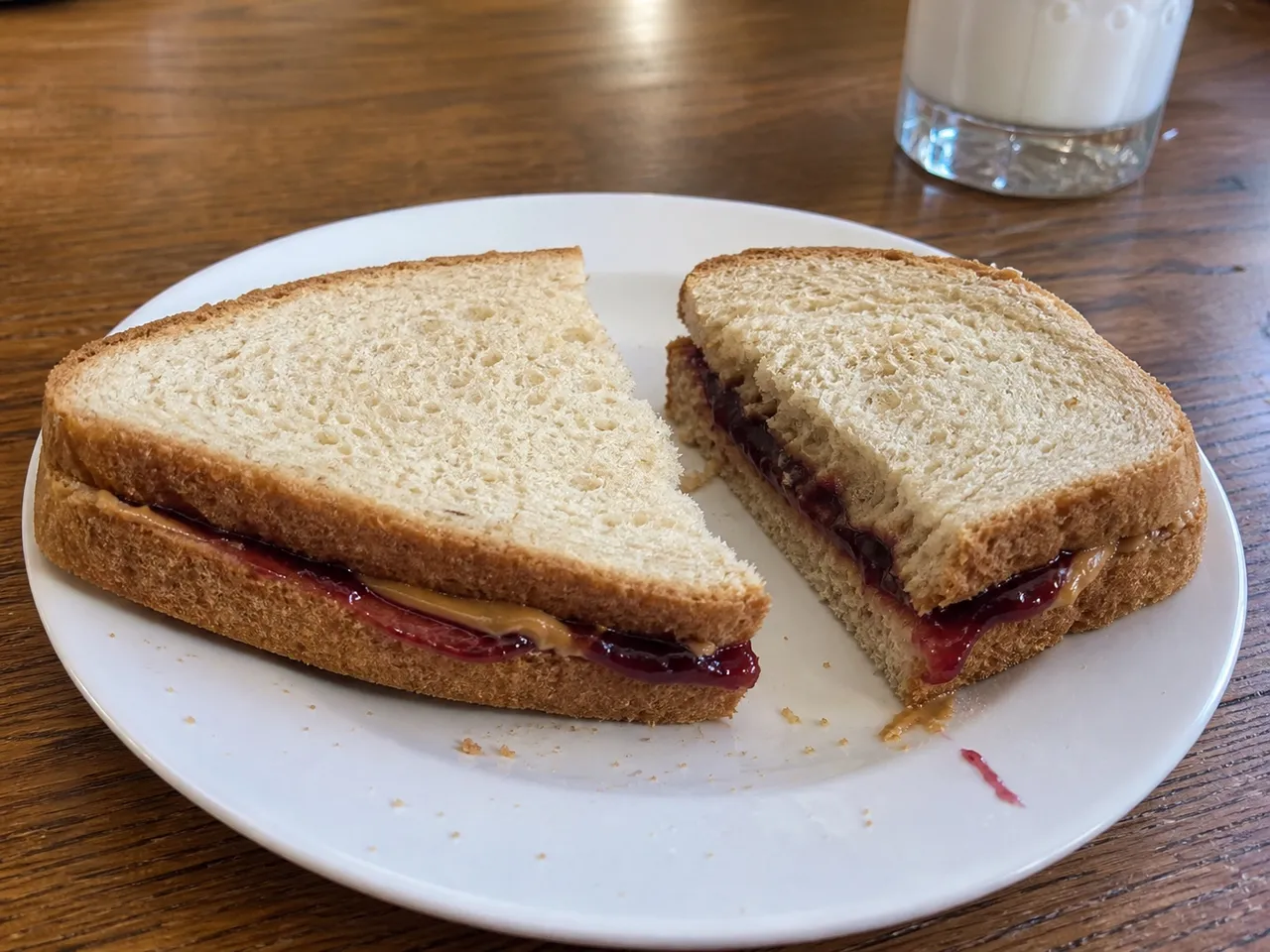
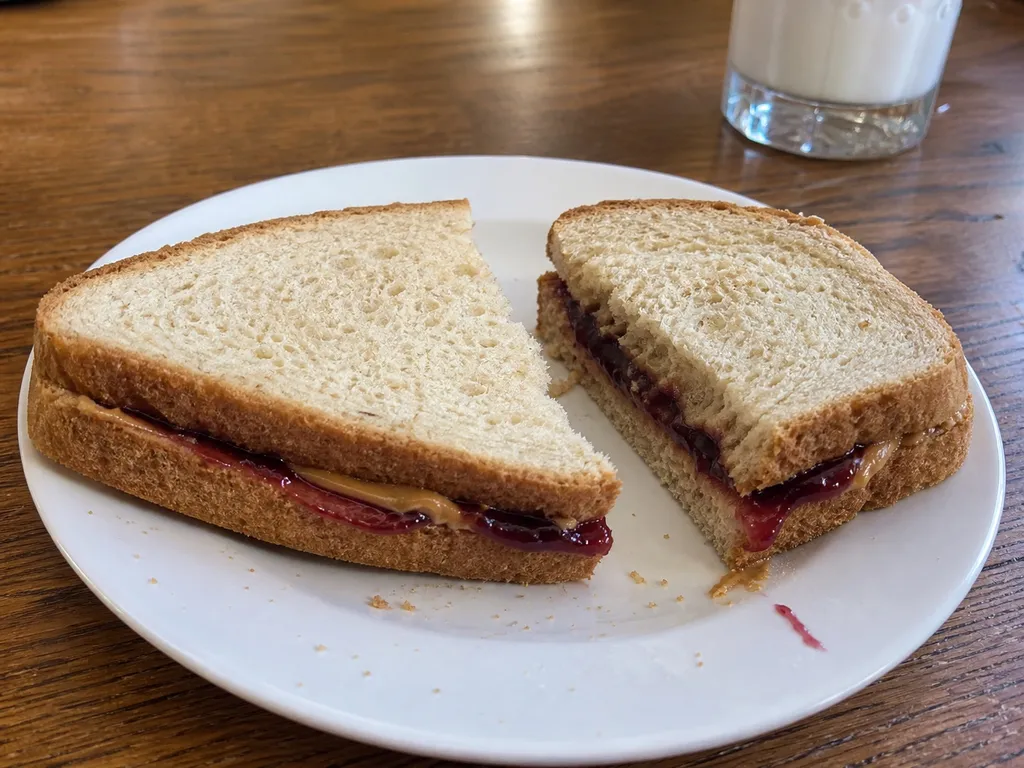
Peanut butter and grape or strawberry jelly spread between two slices of soft bread, the classic lunchbox sandwich.
Contains common allergens
In the app, Listahan checks these against your household automatically.
Good to know
- Ready in under 30 minutes
Matched from this dish's own ingredients and timing. Browse more: 30-minute meals
Instructions
5 steps- 1
Lay the two slices of bread flat on a clean cutting board.
- 2
Using a butter knife, generously spread the peanut butter in an even layer across the entire surface of one slice of bread, ensuring it reaches all the way to the crusts.
- 3
Clean the knife or use a fresh spoon to spread the jelly evenly across the other slice of bread.
- 4
Carefully flip the jelly-coated slice onto the peanut butter-coated slice, pressing them together lightly to adhere.
- 5
Cut the sandwich in half diagonally, horizontally, or into quarters with the crusts removed, depending on your preference. Serve immediately or pack tightly in plastic wrap for later.
 Images are for illustrative purposes only, may be inaccurate, and do not guarantee the presence or absence of specific ingredients.
 Listahan Family Score™
79/100
Good fit for most families
Score reflects how well this recipe fits a typical busy household. In the app, your Family Score is personalized to your household's allergens, kids, and pantry.
Nutrition
per serving135
Calories
4 g
Protein
16 g
Carbs
7 g
Fat
Estimated per serving. Actual values depend on the brands and portions you use.
Listahan cooking guide
Chef notes & practical guide
Technique notes, ingredient swaps, serve-alongside ideas, storage guidance, and equipment for this recipe.
Cultural context
The peanut butter and jelly sandwich became an American staple during the early 20th century, when peanut butter shifted from an upscale tearoom delicacy to a cheap, shelf-stable protein. It was cemented as a household icon when both peanut butter and sliced bread were issued in U.S. military rations during World War II, and returning soldiers carried the habit home.
Listahan note
This version spreads both peanut butter and jelly all the way to the crusts so every bite is full, and keeps the spreads on separate slices until assembly so the jelly does not bleed into the peanut butter prematurely.
Technique cues
- Spreading peanut butter edge-to-edge on its own slice first creates a fat barrier that slows the jelly from soaking into the bread and turning it soggy.
- Pressing the two slices together only lightly keeps the soft bread from compressing into a dense, gummy layer.
- Cutting on the diagonal exposes more filling per bite and makes the sandwich easier for small hands to hold than a single large square.
Kitchen flow
- Parallel prep
- Spread peanut butter on one slice while the jelly knife rests, so the two spreads are ready to meet at the same moment.
- Make-ahead
- Build it up to a day ahead and wrap tightly only if the peanut butter fully seals the jelly side, otherwise the bread softens.
- Leftover move
- A leftover half freezes well wrapped in plastic and thaws to lunchbox temperature by midday.
- Cleanup rhythm
- Wipe the knife between the peanut butter and jelly so you are left with just one sticky knife and a cutting board to rinse.
Ingredient brief
Role, handling, and swap guidance for each key ingredient.
creamy or chunky peanut butter
Main spread and protein
Purpose: It carries the savory, fatty backbone that balances the sweet jelly and supplies most of the sandwich's staying power.
Handling: Stir natural peanut butter thoroughly to redistribute the oil before spreading so it lands in an even layer.
Adaptation: Sunflower seed butter is a peanut-free stand-in with a similar texture and a slightly earthier, less sweet flavor.
grape or strawberry jelly
Sweet contrast
Purpose: Its bright sweetness and jammy moisture cut through the dense peanut butter so the sandwich does not read as one-note.
Handling: Spread it on its own slice in a thin, even layer to control how much soaks into the bread.
Adaptation: A low-sugar fruit spread or mashed fresh fruit reduces sweetness but adds more moisture, so use slightly less.
soft white or honey wheat bread
Structure
Purpose: Soft, tender bread is the traditional vehicle and presses cleanly against the spreads without crumbling.
Handling: Use fresh slices at room temperature; cold bread tears more easily when you spread firm peanut butter.
Adaptation: Gluten-free sandwich bread works but is often more crumbly, so toast it lightly for structure.
chunky peanut butter (texture choice)
Texture variable
Purpose: Choosing chunky over creamy adds peanut pieces that give the soft sandwich a bit of crunch and contrast.
Handling: If using chunky, spread a slightly thicker layer so the bits stay anchored and do not tear the bread.
Adaptation: Creamy peanut butter gives a smoother, kid-friendlier bite with no crunch at all.
Technique notes
- Bring the peanut butter to room temperature before spreading so it glides instead of dragging and tearing the bread.
- For a no-soak lunchbox version, spread peanut butter on both slices and sandwich the jelly in the middle so no jelly touches bare bread.
- Toasting the bread first and assembling while warm gives a melty, slightly nutty version that holds up better for travel.
Ingredient swaps
- Peanut-free direction
- Swap in sunflower seed or soy butter so the sandwich is safe for nut-restricted settings; the flavor reads earthier and a touch less sweet.
- Lower-sodium direction
- Use unsalted or no-salt-added peanut butter and a low-sugar fruit spread to cut both sodium and added sugar noticeably.
- Weeknight shortcut
- Use squeeze-bottle peanut butter and jelly so kids can build their own with no knife and minimal mess.
Serve alongside
- Sliced apples
- Carrot sticks
- Potato chips
- Celery with extra peanut butter
- Cold whole milk
- Chocolate milk
- Iced water with lemon
Serving suggestions only — check pairings for your household's allergens.
Storage & reheating
- Refrigerate a wrapped sandwich for up to 1 day, though the bread is best the same day it is made.
- There is no reheating step; serve at room temperature, or briefly toast a whole assembled sandwich in a dry skillet to revive day-old bread.
- Freeze tightly wrapped for up to 1 month and thaw at room temperature for a couple of hours before eating.
Equipment
- Butter knife
- Clean cutting board
- Bread knife for clean halving
- Plastic wrap for packing
Make this household-aware
Listahan Pro checks this recipe against your household's allergens, finds pantry-aware swaps, builds the shopping list, and helps you plan the week around it.
Plan it in Listahan
Add Peanut Butter and Jelly to your week, check it against your household's allergens, and build the shopping list automatically.
More Sandwiches recipes
 Sandwiches Lens Verified Images are for illustrative purposes only, may be inaccurate, and do not guarantee the presence or absence of specific ingredients.
 Falafel Wrap
A vegetarian favorite with crispy falafel balls and tahini sauce in a wrap.
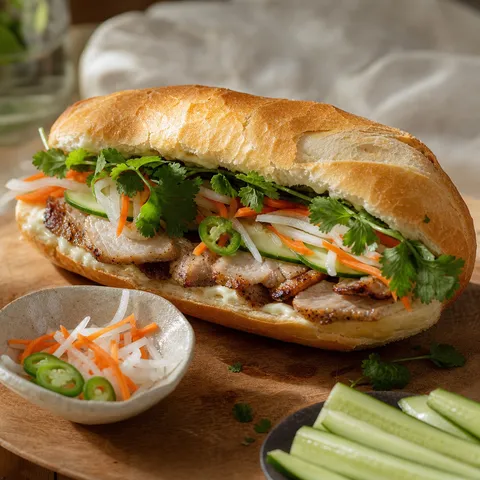 Sandwiches Lens Verified Images are for illustrative purposes only, may be inaccurate, and do not guarantee the presence or absence of specific ingredients.
 Banh Mi
A Vietnamese classic with savory meat, pickled vegetables, and fresh herbs in a baguette.
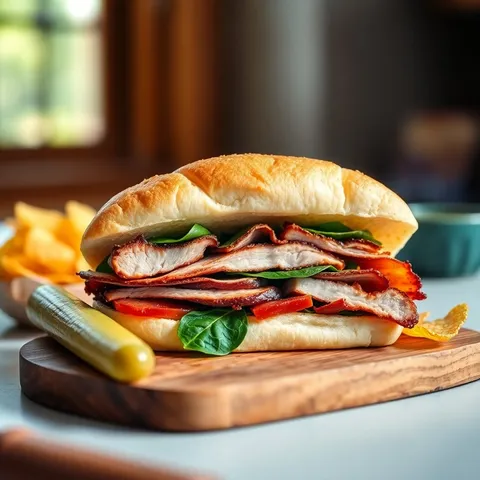 Sandwiches Lens Verified Images are for illustrative purposes only, may be inaccurate, and do not guarantee the presence or absence of specific ingredients.
 Roast Pork Italian Sandwich
Philadelphia's beloved roll piled with garlicky slow-roasted pork, sharp provolone, and garlicky sauteed broccoli rabe.