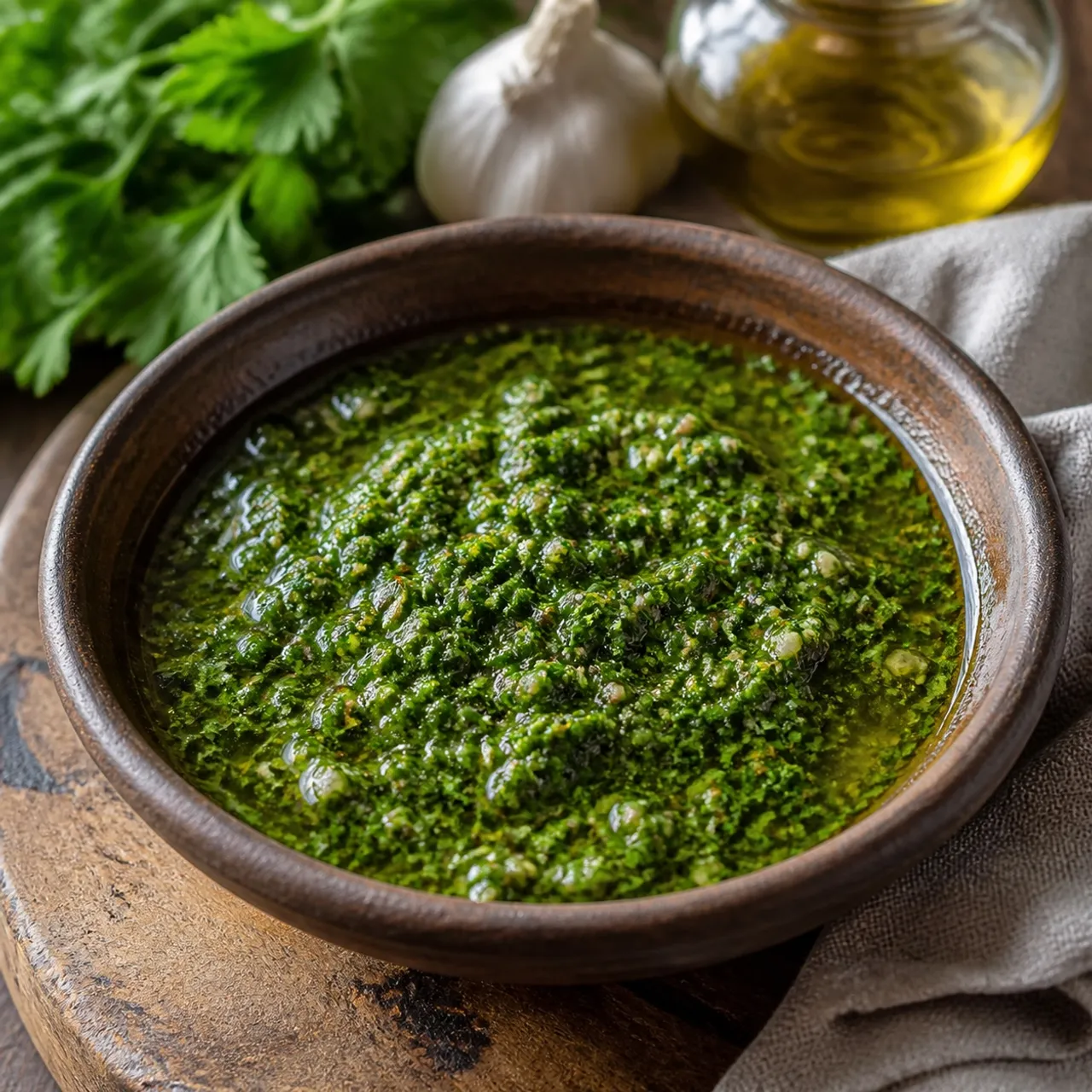
 South American Images are for illustrative purposes only, may be inaccurate, and do not guarantee the presence or absence of specific ingredients.
 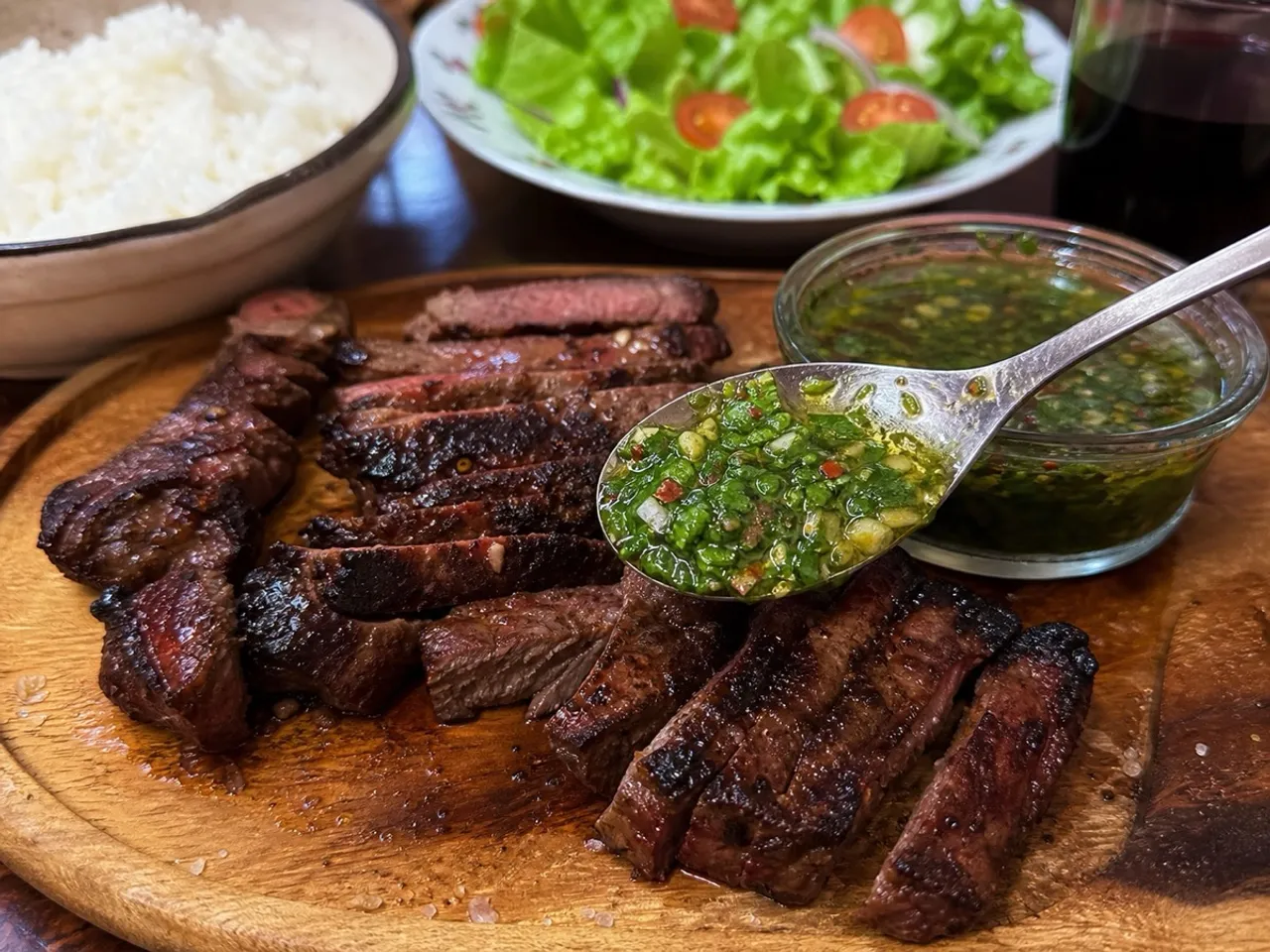 Serving Images are for illustrative purposes only, may be inaccurate, and do not guarantee the presence or absence of specific ingredients.
 Chimichurri
Argentina's vibrant uncooked herb sauce — bright parsley, garlic, red wine vinegar, and red pepper flakes blended in olive oil, the essential partner for grilled meat.
No common allergens detected
Based on this recipe's ingredient list. Always verify with your own brands and labels.
Good to know
- Ready in under 30 minutes
Matched from this dish's own ingredients and timing. Browse more: 30-minute meals
Instructions
6 steps- 1
Finely chop the parsley and mince the garlic, or pulse both briefly in a food processor for a slightly coarser texture, taking care not to puree it into a paste.
- 2
Combine the parsley and garlic in a bowl with the dried oregano and red pepper flakes.
- 3
Whisk in the olive oil and red wine vinegar until well combined.
- 4
Season with salt and black pepper, adding a tablespoon of water if the sauce seems too thick.
- 5
Let the chimichurri rest at room temperature for at least 30 minutes before serving, so the flavors meld.
- 6
Stir well before spooning generously over grilled steak or other meats.
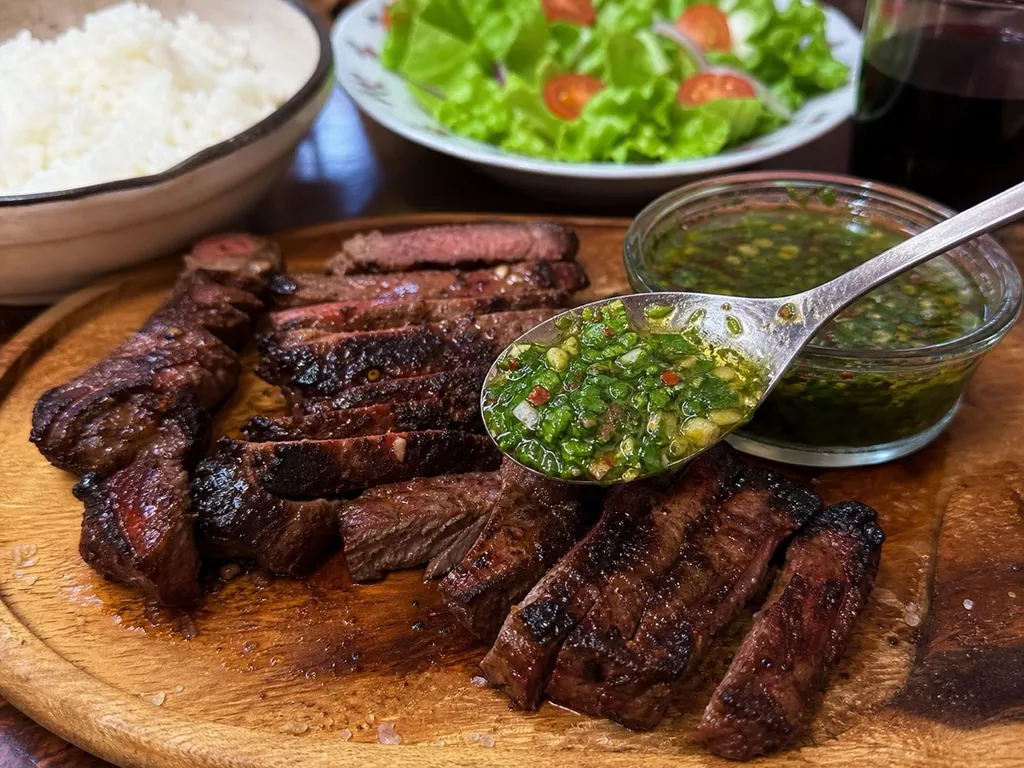 Images are for illustrative purposes only, may be inaccurate, and do not guarantee the presence or absence of specific ingredients.
 Listahan Family Score™
72/100
Good fit for most families
Score reflects how well this recipe fits a typical busy household. In the app, your Family Score is personalized to your household's allergens, kids, and pantry.
Nutrition
per serving250
Calories
0 g
Protein
1 g
Carbs
27 g
Fat
Estimated per serving. Actual values depend on the brands and portions you use.
Listahan cooking guide
Chef notes & practical guide
Technique notes, ingredient swaps, serve-alongside ideas, storage guidance, and equipment for this recipe.
Cultural context
Chimichurri is the bright green herb sauce of Argentina and Uruguay, an indispensable partner to grilled beef at the asado. It is a loose blend of finely chopped parsley, garlic, oregano, vinegar, and oil, with red versions adding chile and tomato. Many fanciful tales explain its odd name, but its role is unmistakable, a fresh, acidic counterpoint that cuts the richness of charred meat.
Listahan note
This version keeps chimichurri raw and hand-chopped the traditional way, balancing herbs, garlic, and acid so it tastes vibrant rather than oily. Letting it rest before serving is what pulls the flavors together.
Technique cues
- Chop the herbs and garlic by hand rather than blending, so the sauce stays loose and textured instead of turning into a dark, pasty puree.
- Let the finished sauce rest at least 15 to 20 minutes so the garlic mellows and the vinegar marries into the oil before serving.
- Add the salt early and let it dissolve in the vinegar; salting at the end leaves an uneven, gritty bite.
Kitchen flow
- Parallel prep
- Make the chimichurri first thing so it rests and develops while whatever you are grilling cooks.
- Make-ahead
- Chimichurri keeps several days in the fridge and improves overnight; make a big batch.
- Leftover move
- Spoon leftover chimichurri over eggs, roasted vegetables, or grilled bread, or stir it into rice.
- Cleanup rhythm
- Chop everything on one board and scrape straight into the jar; the sauce stores and serves from the same container.
Ingredient brief
Role, handling, and swap guidance for each key ingredient.
fresh parsley
the green base
Purpose: Flat-leaf parsley is the backbone of chimichurri, giving it color and a clean, grassy flavor.
Handling: Wash, dry well, and chop fine by hand.
Adaptation: A portion of cilantro can be blended in for a different herb note.
garlic
the pungent core
Purpose: Raw garlic gives chimichurri its sharp, savory bite that defines the sauce.
Handling: Mince very fine so it disperses evenly.
Adaptation: Roasted garlic for a mellower, sweeter version.
dried oregano
the earthy herb note
Purpose: Oregano adds the warm, slightly bitter depth characteristic of Argentine chimichurri.
Handling: Rub between your fingers to release the oils before adding.
Adaptation: Fresh oregano, chopped, in roughly triple the amount.
red wine vinegar
the acid
Purpose: Vinegar provides the bright tang that makes chimichurri cut through fatty grilled meat.
Handling: Combine with the salt first so it dissolves before the oil goes in.
Adaptation: Sherry vinegar or red wine vinegar with a squeeze of lemon.
olive oil
the carrier
Purpose: Oil binds the chopped herbs and acid into a spoonable sauce that clings to meat.
Handling: Stir in last and do not emulsify; the sauce should stay loose.
Adaptation: A neutral oil if you want the herbs and garlic to lead.
red pepper flakes
gentle heat
Purpose: A pinch of chile flake gives the subtle warmth typical of many chimichurri styles.
Handling: Add to taste with the vinegar so it softens slightly.
Adaptation: Minced fresh red chile for a fresher heat, or omit for a mild sauce.
Technique notes
- Resist the food processor; the texture of hand-chopped herbs is the whole character of a good chimichurri.
- Balance to taste at the end with a touch more vinegar or salt; it should taste sharp and lively, not muted by oil.
- Serve at room temperature, not fridge-cold, so the oil is fluid and the aromas are fully expressed.
Ingredient swaps
- Red chimichurri direction
- Add smoked paprika, fresh red chile, and a little tomato for the rojo version.
- Lower-sodium direction
- Cut the salt and lean on extra garlic, oregano, and acid for flavor.
- Milder direction
- Leave out the chile flakes entirely for a milder, family-friendly sauce.
Serve alongside
- Grilled skirt steak
- Grilled chicken or vegetables
- Crusty bread
- Roasted potatoes
- Argentine Malbec
- Sparkling water with lime
- Cold lager
Serving suggestions only — check pairings for your household's allergens.
Storage & reheating
- Store chimichurri in a sealed jar in the fridge for up to a week; the oil may solidify when cold, so bring it back to room temperature before serving. Stir before each use to redistribute the herbs and oil. It can be frozen in an ice cube tray for portioned use, though the fresh texture softens slightly.
Equipment
- Sharp chef's knife for hand-chopping
- Cutting board
- Glass jar with a lid for storing
- Microplane or garlic press for the garlic
Make this household-aware
Listahan Pro checks this recipe against your household's allergens, finds pantry-aware swaps, builds the shopping list, and helps you plan the week around it.
Plan it in Listahan
Add Chimichurri to your week, check it against your household's allergens, and build the shopping list automatically.
More South American recipes
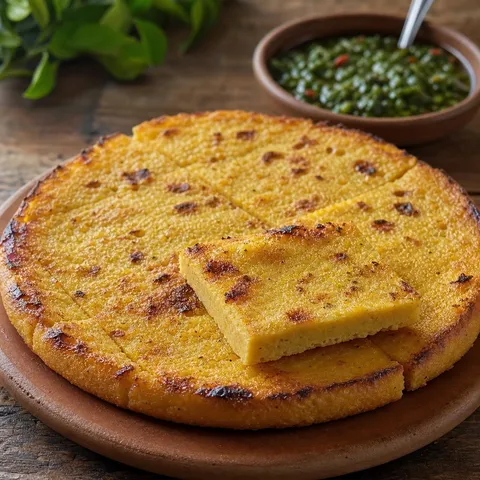 South American Lens Verified Images are for illustrative purposes only, may be inaccurate, and do not guarantee the presence or absence of specific ingredients.
 Fainá
Buenos Aires's thin chickpea flatbread, baked until golden and fragrant — simple, crispy-edged, and traditionally eaten layered right on top of a pizza slice.
 South American Lens Verified Images are for illustrative purposes only, may be inaccurate, and do not guarantee the presence or absence of specific ingredients.
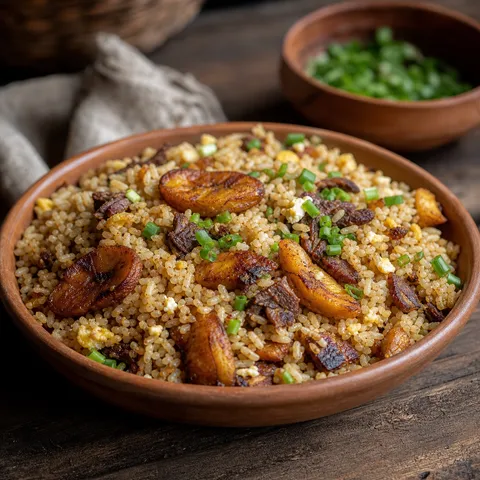
 Majadito
Bolivia's rustic one-pot comfort — dried charque beef simmered down with rice, tomato, and spices into a savory, fragrant dish topped with a fried egg.
 South American Lens Verified Images are for illustrative purposes only, may be inaccurate, and do not guarantee the presence or absence of specific ingredients.
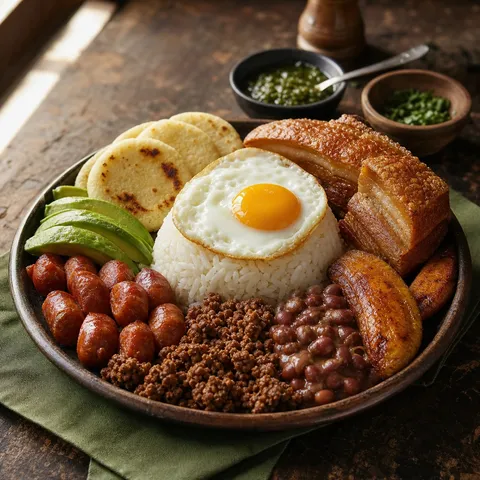
 Bandeja Paisa
Colombia's legendary tray of abundance — red beans, white rice, chicharrón, chorizo, fried egg, plantains, and avocado all piled high for a satisfying feast.