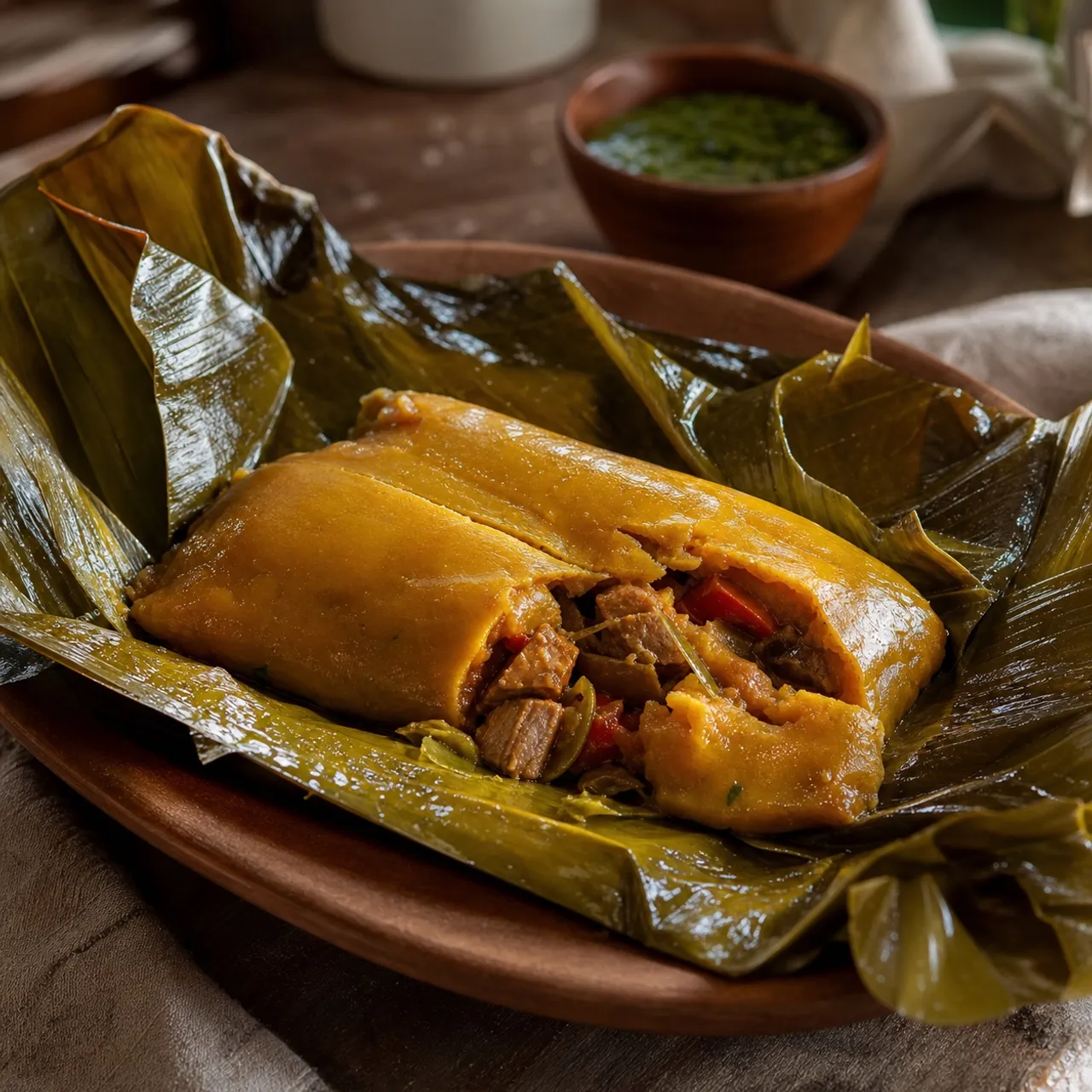
 South American Images are for illustrative purposes only, may be inaccurate, and do not guarantee the presence or absence of specific ingredients.
 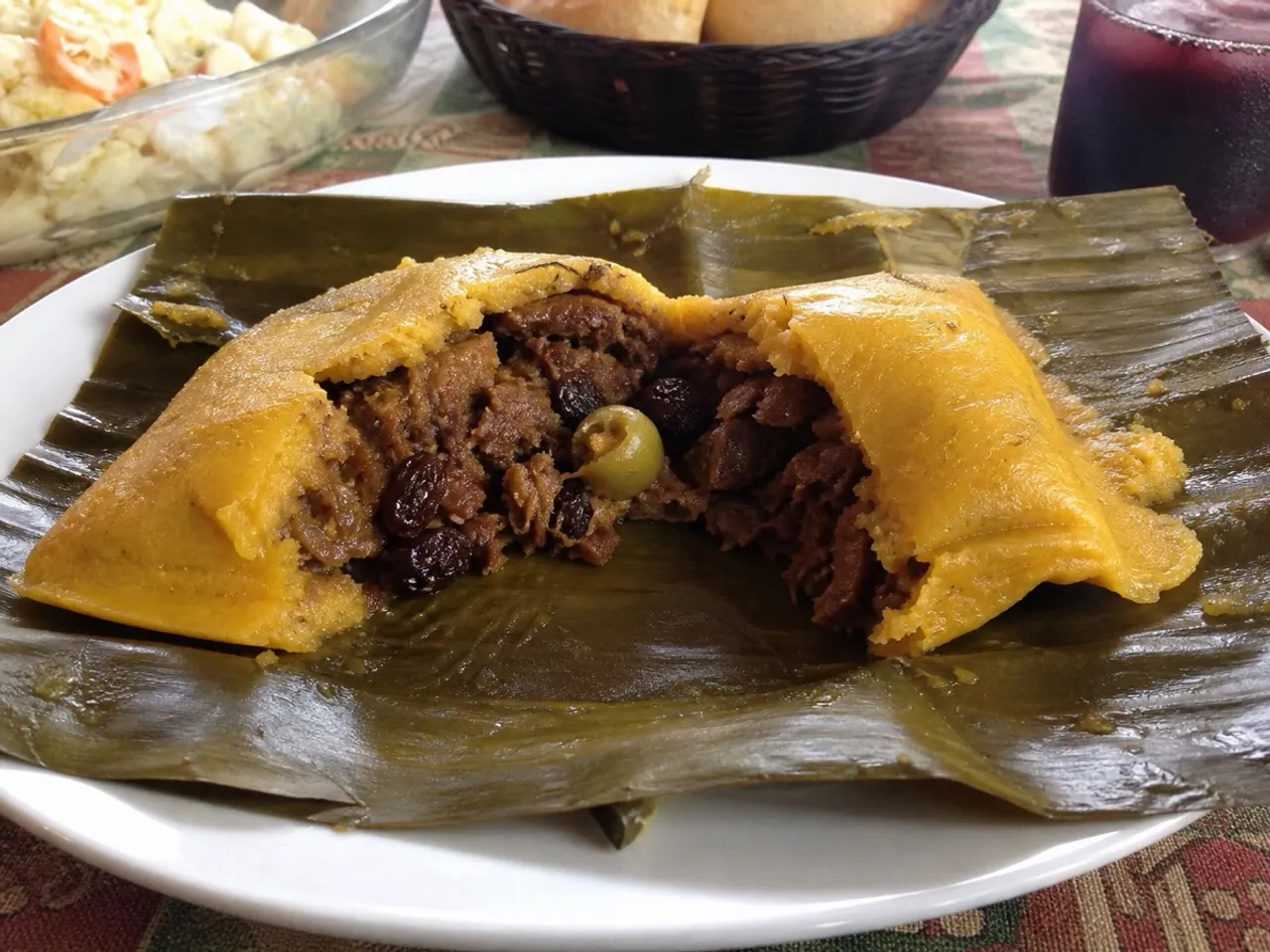 Serving Images are for illustrative purposes only, may be inaccurate, and do not guarantee the presence or absence of specific ingredients.
 Hallacas
Venezuela's treasured Christmas dish — spiced meat, olives, and raisins wrapped in seasoned corn dough, bundled in plantain leaves, and steamed until aromatic.
Contains common allergens
In the app, Listahan checks these against your household automatically.
Instructions
8 steps- 1
Simmer the pork and beef in water with a quartered onion and garlic until tender, about 1 hour; reserve the meat and the broth separately.
- 2
Shred or chop the cooked meat, then saute it with more onion, bell pepper, garlic, and tomato sauce until it forms a thick, well-seasoned stew (the guiso); stir in the raisins and set aside to cool.
- 3
Make the masa by kneading the corn flour with the warm reserved broth and achiote oil until you have a smooth, pliable, orange-tinted dough.
- 4
Pass the plantain leaves briefly over an open flame or hot pan to soften them and make them pliable.
- 5
Spread a thin, even layer of masa in the center of each plantain leaf square, then top with a spoonful of the meat guiso, a few olives, and a slice of hard-boiled egg if using.
- 6
Fold the plantain leaf over the filling to enclose it completely, forming a neat rectangular package, then wrap in a second leaf and tie securely with kitchen twine.
- 7
Boil or steam the hallacas in a large pot of water for 45 minutes to 1 hour, until the masa is firm and fully cooked.
- 8
Let rest for 10 minutes before unwrapping and serving.
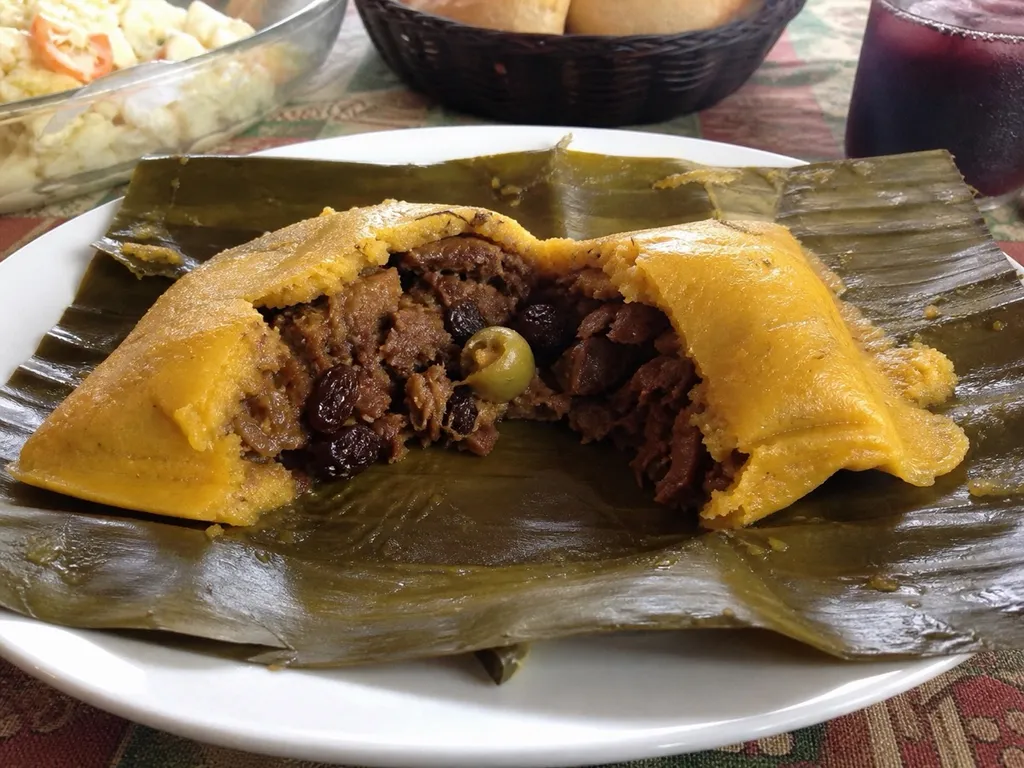 Images are for illustrative purposes only, may be inaccurate, and do not guarantee the presence or absence of specific ingredients.
 Listahan Family Score™
68/100
Works for many families
Score reflects how well this recipe fits a typical busy household. In the app, your Family Score is personalized to your household's allergens, kids, and pantry.
Nutrition
per serving345
Calories
32 g
Protein
14 g
Carbs
19 g
Fat
Estimated per serving. Actual values depend on the brands and portions you use.
Listahan cooking guide
Chef notes & practical guide
Technique notes, ingredient swaps, serve-alongside ideas, storage guidance, and equipment for this recipe.
Cultural context
Hallacas are Venezuela's iconic Christmas dish, a labor-of-love tamale of seasoned corn dough filled with a rich meat stew and wrapped in banana leaves before boiling. They reflect the country's mixed heritage, with Indigenous corn dough, European meats and olives, and African and Caribbean techniques folded into one parcel. Making them is traditionally a family assembly line spanning a whole day in December.
Listahan note
This version honors the layered guiso filling and annatto-tinted dough while scaling it to a family batch rather than a hundred-parcel marathon. The flavor reward is in cooking the stew down well and seasoning the masa generously.
Technique cues
- Cook the guiso filling a day ahead and let it cool so the flavors deepen and the stew is thick enough not to leak when wrapped.
- Tint and enrich the masa with annatto-infused oil so the dough has the golden color and savory depth that defines a hallaca.
- Soften the banana leaves over a flame or in hot water until pliable so they fold without cracking and seal the parcel.
Kitchen flow
- Parallel prep
- Make the guiso and the annatto oil a day ahead, then set up a wrapping station with dough, filling, garnish, and leaves.
- Make-ahead
- Hallacas are built for advance work; assemble and refrigerate or freeze raw, then boil to serve.
- Leftover move
- Pan-fry a leftover hallaca, leaf removed, until the dough crisps, then top with a fried egg.
- Cleanup rhythm
- Run the wrapping as an assembly line so one cleanup covers the whole batch instead of clearing repeatedly.
Ingredient brief
Role, handling, and swap guidance for each key ingredient.
corn masa (masarepa)
the dough wrapper
Purpose: Precooked corn flour forms the tender, golden dough that encloses the filling.
Handling: Knead with warm broth and annatto oil until smooth and pliable.
Adaptation: Masa harina works, though masarepa is the authentic Venezuelan choice.
mixed meats (beef, pork, chicken)
the stew filling
Purpose: A combination of meats gives the guiso its rich, layered flavor that is the heart of the hallaca.
Handling: Simmer with sofrito until tender and the sauce thickens.
Adaptation: Any two of the three meats work; all-chicken for a lighter version.
annatto (achiote)
color and earthy aroma
Purpose: Annatto-infused oil gives both the dough and stew their characteristic golden-red color.
Handling: Warm the seeds in oil, then strain and use the colored oil.
Adaptation: A little turmeric plus paprika approximates the color.
banana leaves
the wrapper
Purpose: Banana leaves impart a subtle aroma and hold the parcel together through boiling.
Handling: Pass over a flame or dip in hot water until pliable, then trim.
Adaptation: Parchment plus foil if banana leaves are unavailable, losing the aroma.
olives, capers, and raisins
the traditional garnish (adorno)
Purpose: These briny-sweet accents pressed into each parcel are the signature finishing touch.
Handling: Place a few on top of the filling before folding.
Adaptation: Any combination of these; chopped almonds are also traditional.
Technique notes
- Keep the guiso thick; a soupy filling soaks the dough and breaks the parcel during the long boil.
- Tie each hallaca snugly with twine in both directions so it holds shape and does not unravel in the pot.
- Boil them fully submerged at a steady simmer and let them rest before unwrapping so the dough firms up.
Ingredient swaps
- Weeknight shortcut
- Make a small batch as open-faced steamed corn cakes with the guiso spooned on top to skip the wrapping marathon.
- Lighter direction
- Use all chicken and cut back the olives and raisins for a leaner, milder parcel.
- Vegetarian direction
- Fill with a hearty bean-and-vegetable guiso with the same annatto, olives, and raisins.
Serve alongside
- Pan de jamon (ham bread)
- Ensalada de gallina (chicken salad)
- Pickled onions
- Hot sauce
- Ponche crema
- Fresh fruit juice
- Cold lager
Serving suggestions only — check pairings for your household's allergens.
Storage & reheating
- Refrigerate cooked hallacas in their leaves for up to four days and reheat by boiling or steaming again. Raw assembled hallacas freeze beautifully for two to three months and boil from frozen with extra time, which is the traditional way to enjoy them past the holidays. Avoid microwaving in the leaf, which steams unevenly.
Equipment
- Large pot for boiling
- Kitchen twine for tying
- Fine strainer for the annatto oil
- Large work surface for the assembly line
Make this household-aware
Listahan Pro checks this recipe against your household's allergens, finds pantry-aware swaps, builds the shopping list, and helps you plan the week around it.
Plan it in Listahan
Add Hallacas to your week, check it against your household's allergens, and build the shopping list automatically.
More South American recipes
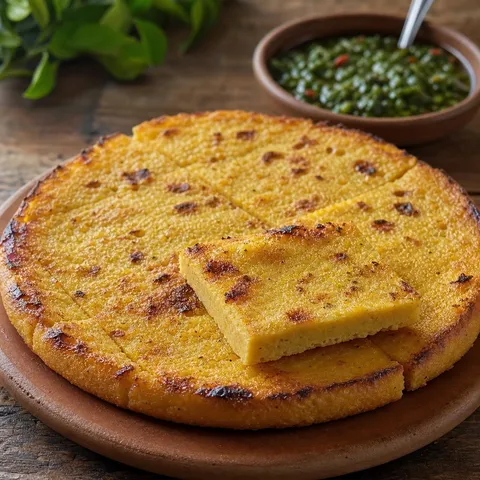 South American Lens Verified Images are for illustrative purposes only, may be inaccurate, and do not guarantee the presence or absence of specific ingredients.
 Fainá
Buenos Aires's thin chickpea flatbread, baked until golden and fragrant — simple, crispy-edged, and traditionally eaten layered right on top of a pizza slice.
 South American Lens Verified Images are for illustrative purposes only, may be inaccurate, and do not guarantee the presence or absence of specific ingredients.
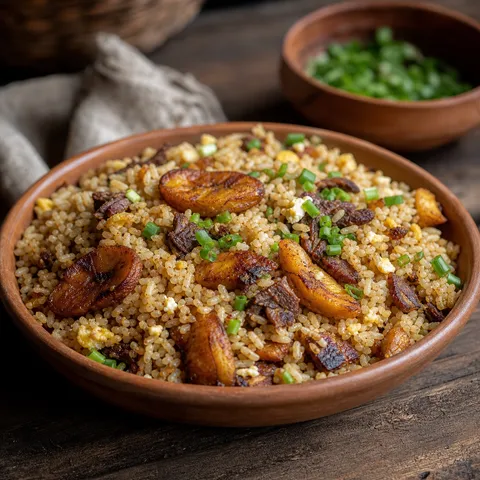
 Majadito
Bolivia's rustic one-pot comfort — dried charque beef simmered down with rice, tomato, and spices into a savory, fragrant dish topped with a fried egg.
 South American Lens Verified Images are for illustrative purposes only, may be inaccurate, and do not guarantee the presence or absence of specific ingredients.
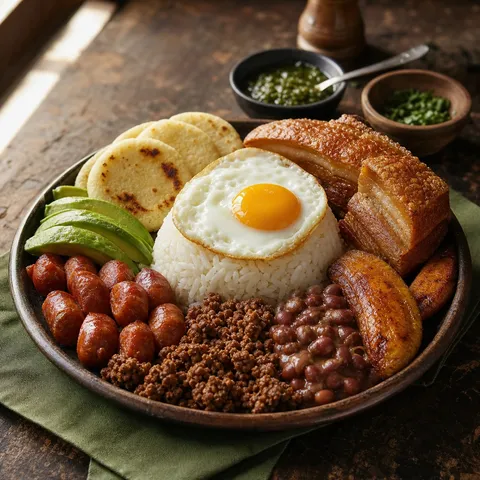
 Bandeja Paisa
Colombia's legendary tray of abundance — red beans, white rice, chicharrón, chorizo, fried egg, plantains, and avocado all piled high for a satisfying feast.