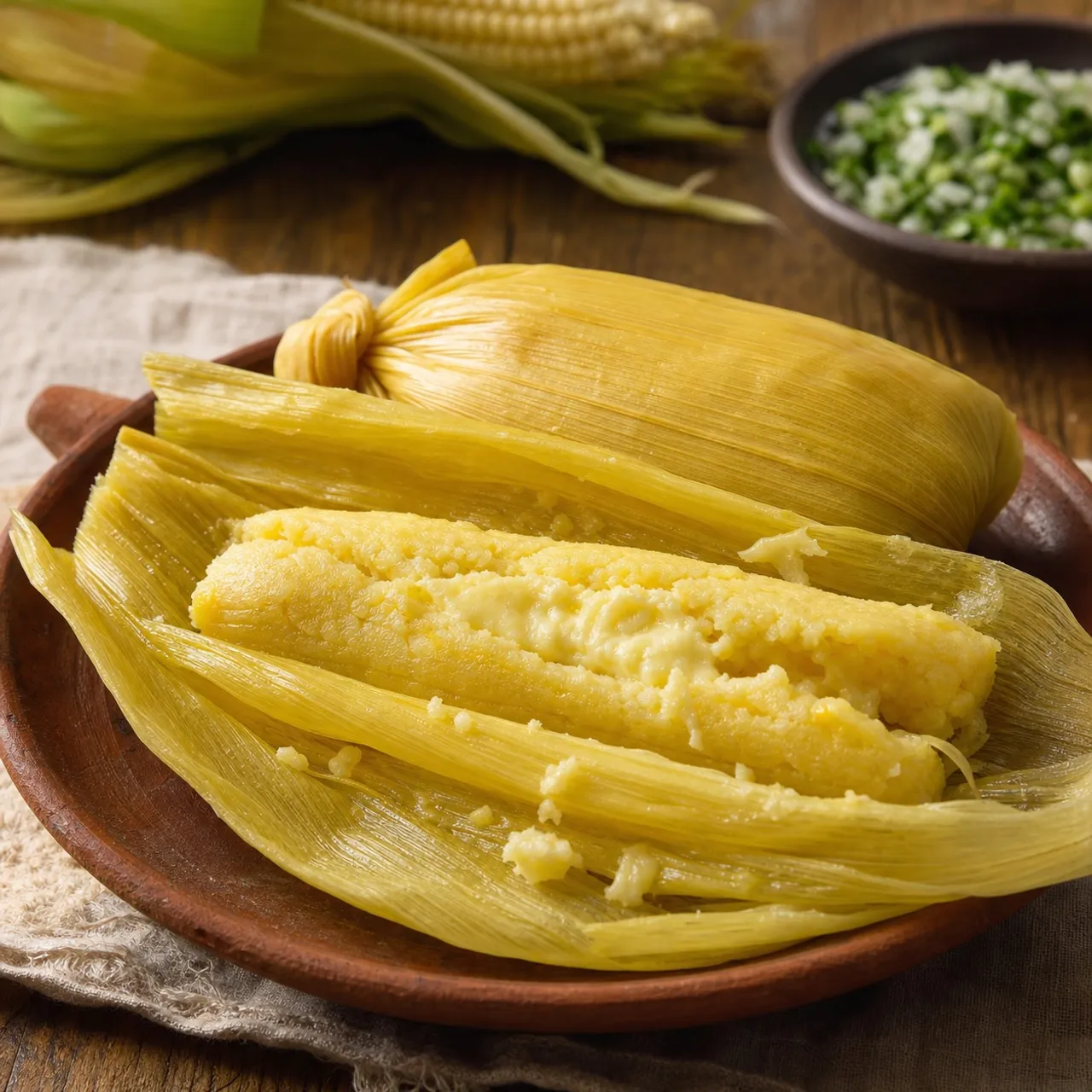
 South American Images are for illustrative purposes only, may be inaccurate, and do not guarantee the presence or absence of specific ingredients.
 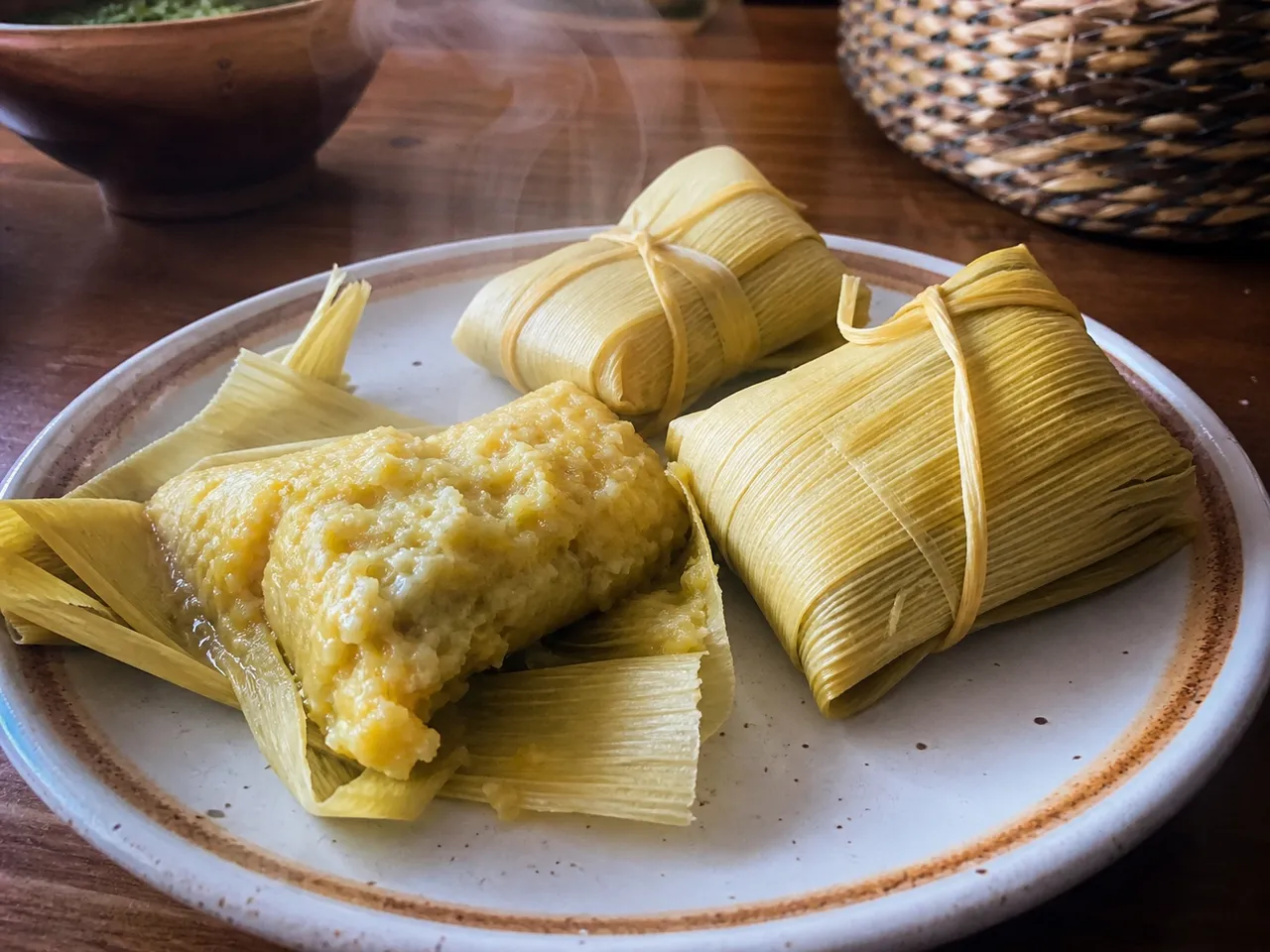 Serving Images are for illustrative purposes only, may be inaccurate, and do not guarantee the presence or absence of specific ingredients.
 Humitas
Tender fresh corn masa steamed in their own husks with cheese and a whisper of basil — a simple, ancient Andean treat that's sweet, fragrant, and comforting.
Contains common allergens
In the app, Listahan checks these against your household automatically.
Instructions
6 steps- 1
Prepare the husks: Carefully cut the base off the corn cobs and peel away the large green husks without tearing them. Blanch the husks in boiling water for 2 minutes to make them pliable, then set aside.
- 2
Extract the corn: Slice the corn kernels off the cob. Blend or process the kernels until they form a coarse, thick puree.
- 3
Make the sofrito: In a skillet, melt the butter and sauté the diced white onion until translucent.
- 4
Mix the filling: Combine the blended corn, onion sofrito, salt, and grated cheese in a large bowl.
- 5
Assemble the humitas: Overlap two softened corn husks. Place 3-4 tablespoons of the corn mixture in the center. Fold the sides in, then fold the top and bottom over to create a tight, rectangular packet. Tie with a strip of husk.
- 6
Steam: Place the humitas in a steamer basket over boiling water. Cover and steam for 35-45 minutes until the dough is firm and fragrant. Serve warm.
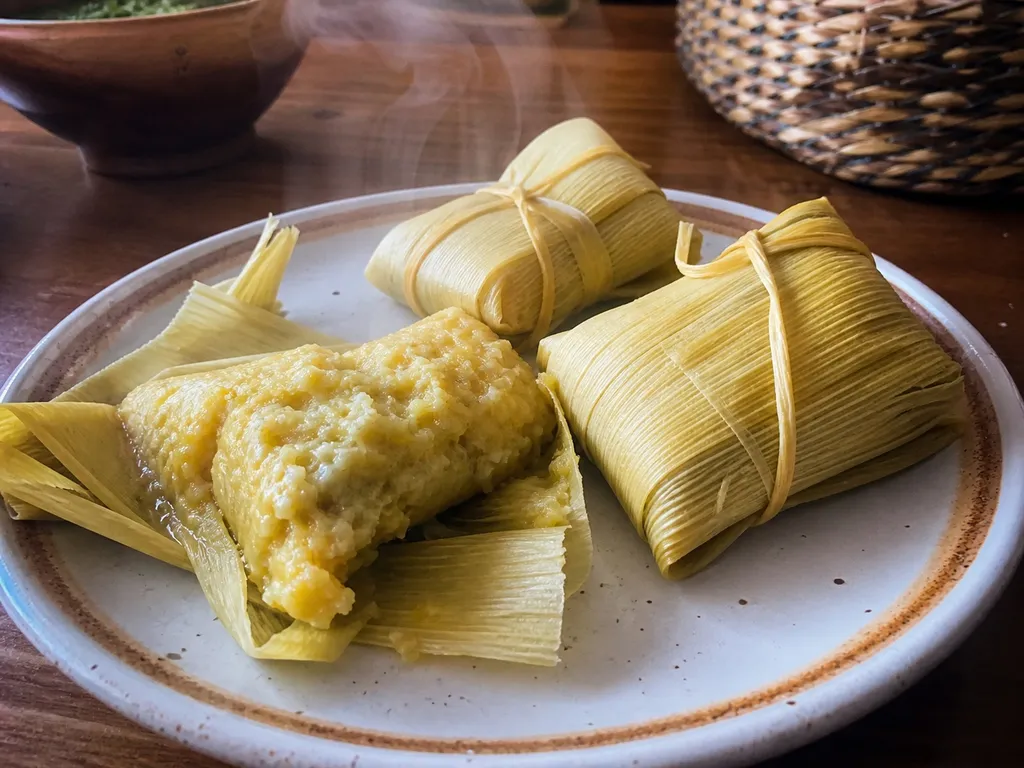 Images are for illustrative purposes only, may be inaccurate, and do not guarantee the presence or absence of specific ingredients.
 Listahan Family Score™
79/100
Good fit for most families
Score reflects how well this recipe fits a typical busy household. In the app, your Family Score is personalized to your household's allergens, kids, and pantry.
Nutrition
per serving170
Calories
7 g
Protein
2 g
Carbs
15 g
Fat
Estimated per serving. Actual values depend on the brands and portions you use.
Listahan cooking guide
Chef notes & practical guide
Technique notes, ingredient swaps, serve-alongside ideas, storage guidance, and equipment for this recipe.
Cultural context
Humitas are a pre-Columbian Andean dish of ground fresh corn steamed inside its own husks, made for centuries across Peru, Bolivia, Chile, and Argentina long before the arrival of Spanish ingredients. Unlike a Mexican tamale built on dried-corn masa, humitas use fresh sweet corn ground into a loose paste, giving them a tender, almost custardy texture. They appear in both savory and sweet versions depending on the region and the cook.
Listahan note
This version keeps the humitas savory and accessible, using fresh or frozen corn so you do not need an Andean market to make them. The aim is that creamy, just-set corn texture with a gentle hit of onion and spice.
Technique cues
- Grind the corn coarsely rather than to a smooth puree so the filling keeps texture and does not turn watery when steamed.
- Cook the grated onion and aji down until soft before folding it into the corn, since raw onion stays sharp and crunchy through steaming.
- Wrap each parcel snugly but not airtight so steam can set the filling without it leaking; a loose wrap floods, a too-tight wrap bursts.
Kitchen flow
- Parallel prep
- Soak the husks and cook the onion mixture while you grind the corn, so everything meets at the mixing bowl.
- Make-ahead
- Wrapped uncooked humitas hold in the fridge for a day before steaming, or freeze raw and steam from frozen.
- Leftover move
- Pan-fry leftover humitas in a little butter until the edges crisp, then top with a fried egg.
- Cleanup rhythm
- Wipe the food processor and bowl right away before the corn paste dries and cements to the sides.
Ingredient brief
Role, handling, and swap guidance for each key ingredient.
fresh corn kernels
the body of the dish
Purpose: Fresh sweet corn ground into a paste is the entire identity of humitas, giving their tender custard texture.
Handling: Cut kernels from the cob and pulse coarsely, reserving the husks for wrapping.
Adaptation: Frozen corn, thawed, works well; canned corn is too soft and watery.
corn husks
the steaming wrapper
Purpose: The husk imparts a subtle grassy aroma and holds the loose filling together as it steams.
Handling: Soak dried husks in warm water until pliable, or use fresh husks straight from the cob.
Adaptation: Parchment squares folded into packets work if husks are unavailable.
onion
savory aromatic base
Purpose: Softened onion gives the filling its savory depth and balances the sweetness of the corn.
Handling: Grate or finely dice and cook gently until translucent before mixing in.
Adaptation: Shallot or the white of a leek both work.
aji or paprika
warmth and color
Purpose: A mild chile or paprika adds the gentle warmth and golden hue typical of Andean humitas.
Handling: Bloom in the warm onion oil so the flavor and color release fully.
Adaptation: Sweet paprika plus a pinch of cayenne mimics aji amarillo's mild heat.
cornmeal or masa
binder
Purpose: A spoonful of cornmeal tightens a loose fresh-corn paste so the parcels set instead of running.
Handling: Stir in gradually only until the mixture holds a soft shape.
Adaptation: Fine polenta or a little flour also tightens the mix.
Technique notes
- Taste the corn raw; very sweet summer corn may need no added sugar, while starchier corn benefits from a small pinch to round it out.
- Steam over gently simmering, not boiling, water so the parcels set evenly without the bottoms overcooking.
- Let the humitas rest five minutes after steaming before unwrapping, which firms the filling so it does not collapse.
Ingredient swaps
- Sweet version
- Add sugar, a little cinnamon, and raisins for the dessert-style humitas dulces common in Chile.
- Vegan direction
- Skip any butter or cheese and bind with extra cornmeal and a splash of plant milk.
- Cheese-stuffed direction
- Tuck a cube of fresh cheese into the center of each parcel before wrapping for a melty surprise.
Serve alongside
- Fresh tomato and onion salad (salsa criolla)
- Sliced avocado with lime
- A wedge of fresh white cheese
- Black bean stew
- Mate
- Hot Andean herbal tea (muna)
- Chilled chicha morada
Serving suggestions only — check pairings for your household's allergens.
Storage & reheating
- Keep steamed humitas wrapped in the fridge for up to three days; reheat by steaming again or pan-frying for crisp edges. Raw wrapped parcels freeze well for two months and can be steamed straight from frozen with a few extra minutes. Avoid microwaving fully unwrapped, which dries the corn.
Equipment
- Food processor or box grater for the corn
- Large steamer pot with a basket
- Kitchen twine or thin husk strips for tying
- Slotted spoon for lifting parcels
Make this household-aware
Listahan Pro checks this recipe against your household's allergens, finds pantry-aware swaps, builds the shopping list, and helps you plan the week around it.
Plan it in Listahan
Add Humitas to your week, check it against your household's allergens, and build the shopping list automatically.
More South American recipes
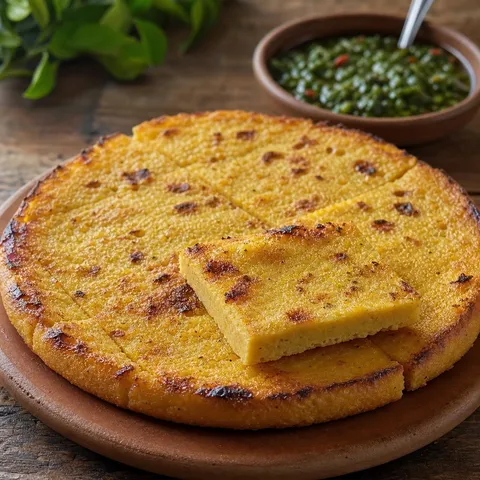 South American Lens Verified Images are for illustrative purposes only, may be inaccurate, and do not guarantee the presence or absence of specific ingredients.
 Fainá
Buenos Aires's thin chickpea flatbread, baked until golden and fragrant — simple, crispy-edged, and traditionally eaten layered right on top of a pizza slice.
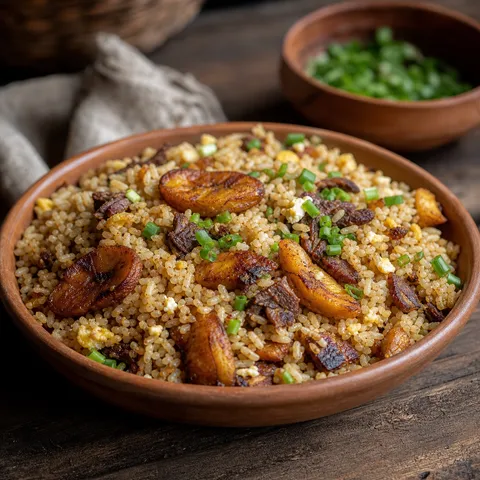 South American Lens Verified Images are for illustrative purposes only, may be inaccurate, and do not guarantee the presence or absence of specific ingredients.
 Majadito
Bolivia's rustic one-pot comfort — dried charque beef simmered down with rice, tomato, and spices into a savory, fragrant dish topped with a fried egg.
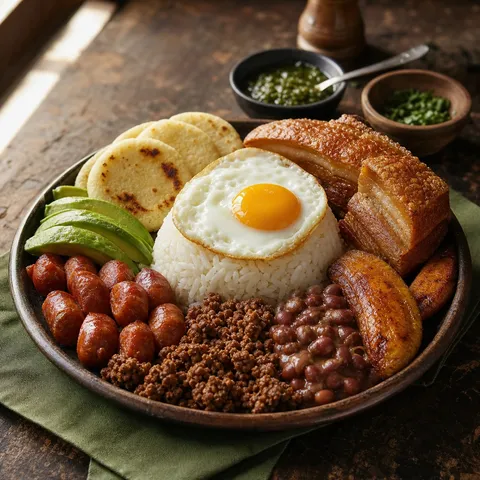 South American Lens Verified Images are for illustrative purposes only, may be inaccurate, and do not guarantee the presence or absence of specific ingredients.
 Bandeja Paisa
Colombia's legendary tray of abundance — red beans, white rice, chicharrón, chorizo, fried egg, plantains, and avocado all piled high for a satisfying feast.