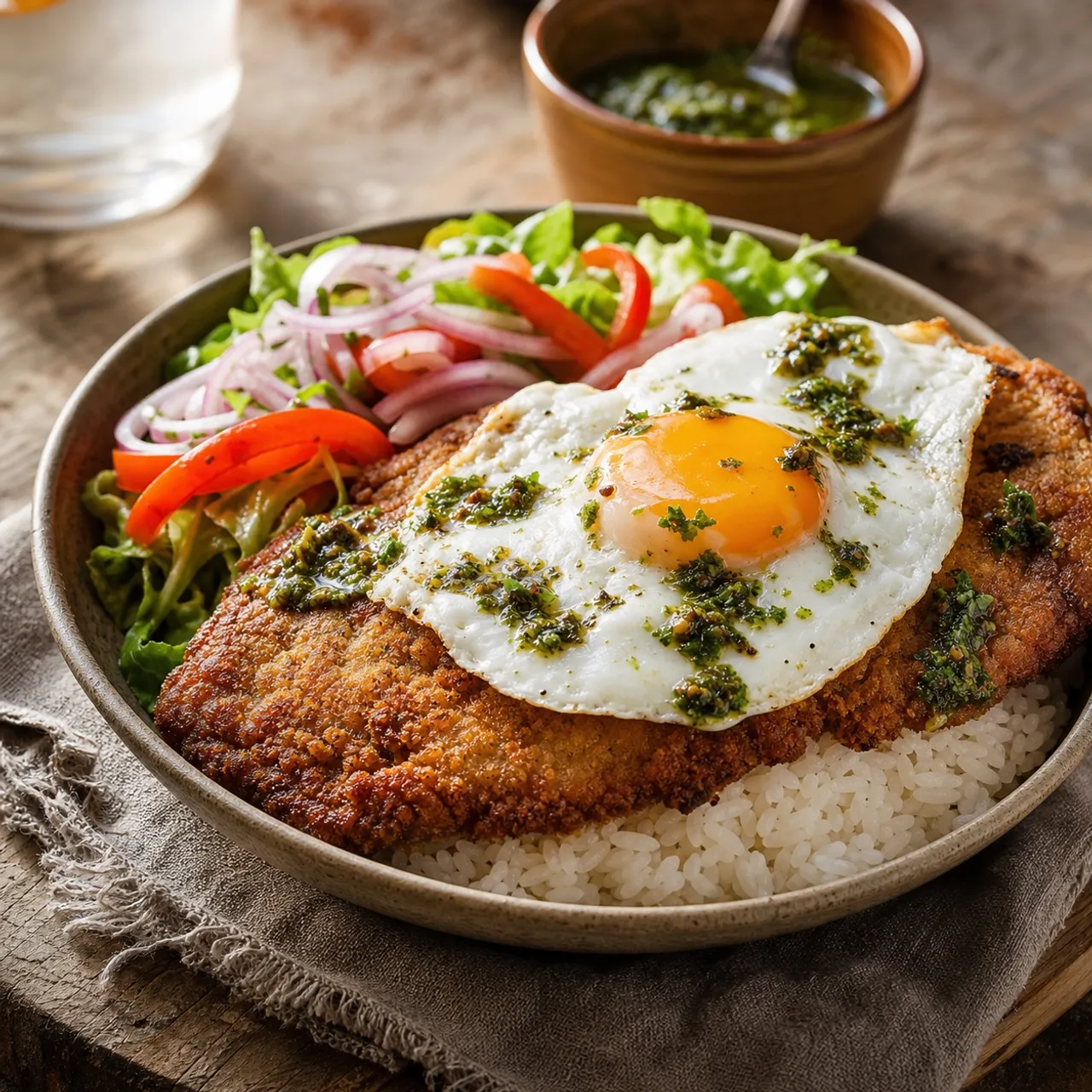
 South American Images are for illustrative purposes only, may be inaccurate, and do not guarantee the presence or absence of specific ingredients.
 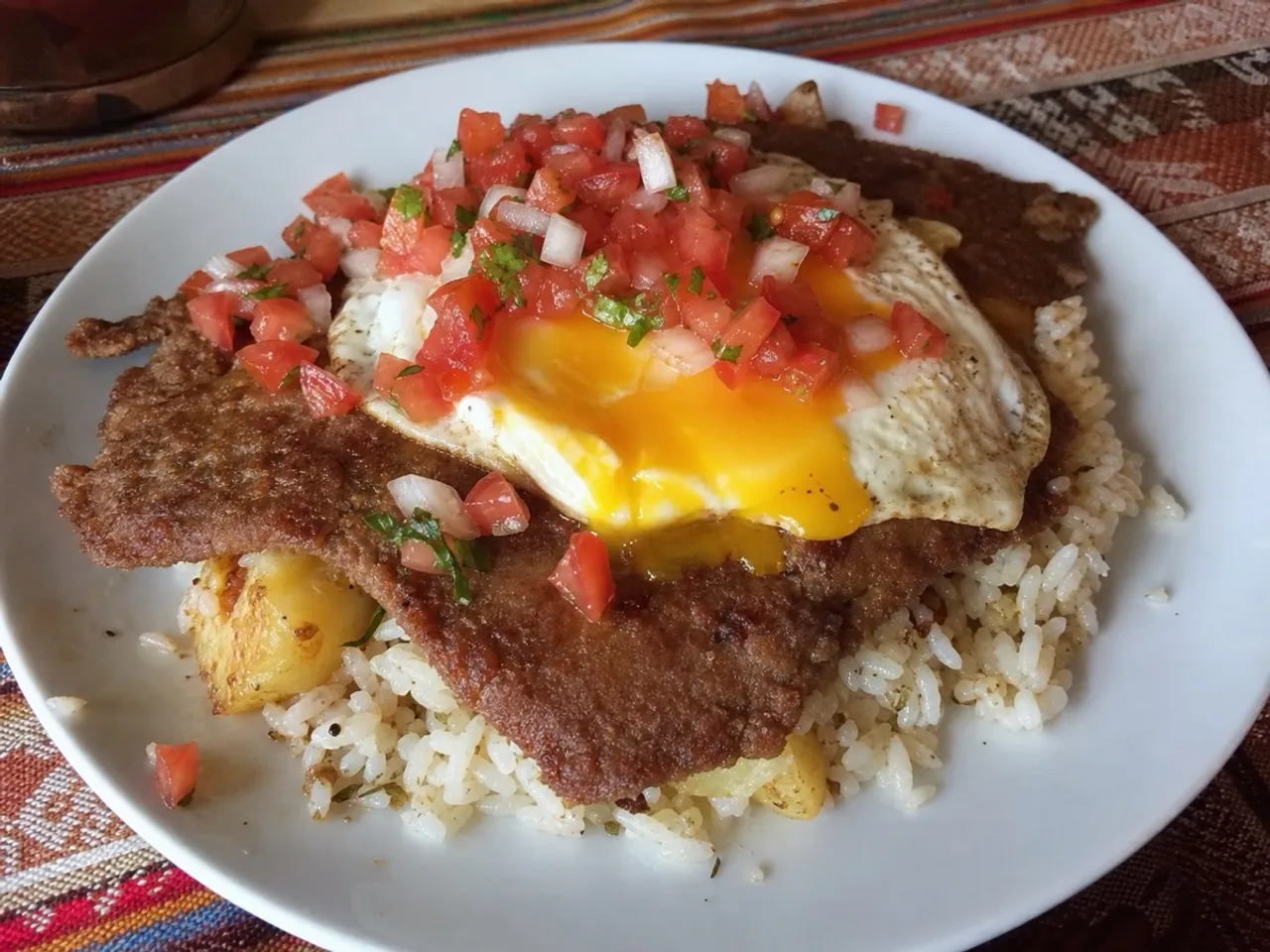 Serving Images are for illustrative purposes only, may be inaccurate, and do not guarantee the presence or absence of specific ingredients.
 Silpancho
Bolivia's satisfying layered plate — a wide, thin breaded beef patty laid over seasoned rice and potatoes, topped with fried egg, tomato, and onion salsa.
Contains common allergens
In the app, Listahan checks these against your household automatically.
Good to know
- Crispy
Matched from this dish's own ingredients and timing. Browse more: crispy recipes
Instructions
7 steps- 1
Season the beef cutlets with salt and pepper, then dredge in flour, dip in beaten egg, and coat thoroughly in breadcrumbs.
- 2
Fry the diced potatoes in oil until golden and crisp, about 8 minutes, and drain.
- 3
Toss the sliced onion with vinegar, salt, and a pinch of sugar and let it sit for 10 minutes to soften into a quick curtido; combine with the diced tomato for the salsa topping.
- 4
Heat oil in a large skillet and fry the breaded cutlets for 3 to 4 minutes per side, until golden brown and crisp, pounding them out further if needed so each covers most of the plate.
- 5
Fry the extra eggs sunny-side up in a separate pan until the whites are set and yolks remain runny.
- 6
To assemble, spread a bed of rice on each plate, scatter the fried potatoes over it, and lay the breaded cutlet on top, covering the rice and potatoes.
- 7
Top the cutlet with the tomato and onion salsa, finish with a fried egg, and sprinkle with chopped parsley.
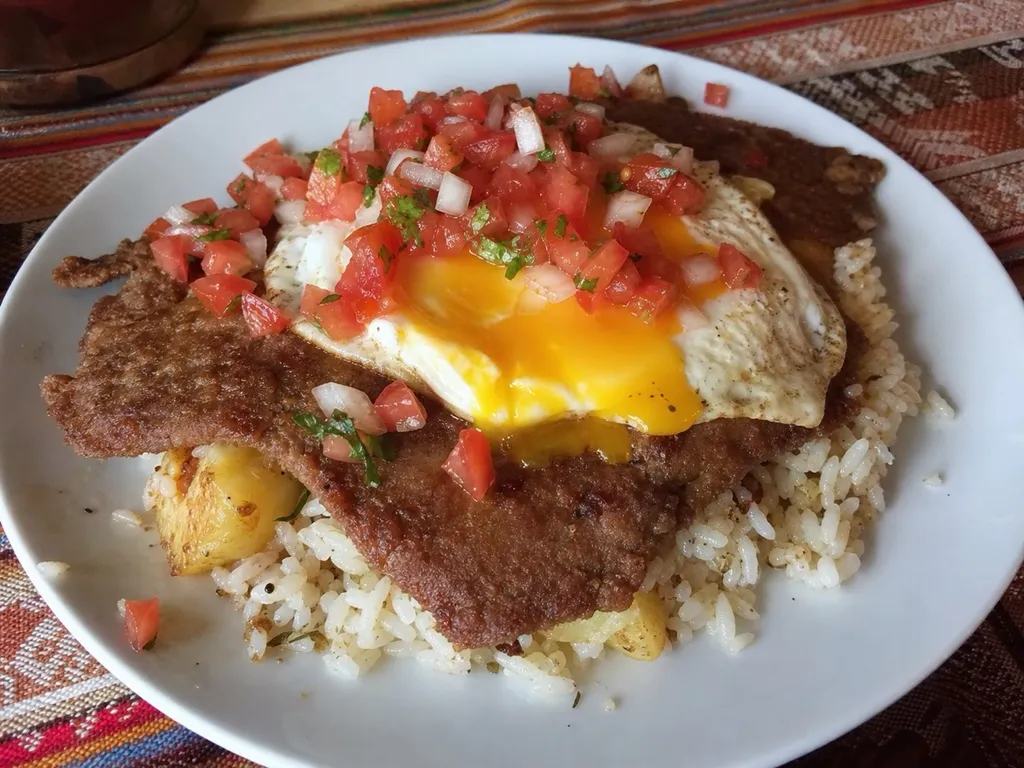 Images are for illustrative purposes only, may be inaccurate, and do not guarantee the presence or absence of specific ingredients.
 Listahan Family Score™
69/100
Works for many families
Score reflects how well this recipe fits a typical busy household. In the app, your Family Score is personalized to your household's allergens, kids, and pantry.
Nutrition
per serving695
Calories
42 g
Protein
74 g
Carbs
22 g
Fat
Estimated per serving. Actual values depend on the brands and portions you use.
Listahan cooking guide
Chef notes & practical guide
Technique notes, ingredient swaps, serve-alongside ideas, storage guidance, and equipment for this recipe.
Cultural context
Silpancho is a hearty layered plate from Cochabamba, Bolivia, a city known for its generous, fork-and-knife cooking. It stacks a bed of rice, sliced boiled potato, a wide thin breaded beef cutlet, and a fried egg, all finished with a fresh chopped tomato-and-onion salsa called llajwa or salsa criolla. Every layer plays a role, and the dish is meant to fill you for the day.
Listahan note
This version builds the full silpancho stack with a pounded, breadcrumb-thin cutlet and a bright raw salsa to cut through the richness. Pounding the beef wide and thin is what makes it authentic rather than just a steak on rice.
Technique cues
- Pound the cutlet very wide and thin, wider than the plate is traditional, so it cooks in seconds and stays tender under its thin crust.
- Make the raw tomato-onion salsa first and let it sit so the onion softens and the juices mingle into the dressing for the top.
- Layer hot to cold from the bottom, rice and potato warm, salsa fresh on top, so the plate has contrast in both temperature and texture.
Kitchen flow
- Parallel prep
- Cook the rice and boil the potatoes first, make the salsa while they cook, then fry the cutlet and egg last so the plate assembles hot.
- Make-ahead
- Cook the rice and potatoes ahead and bread the cutlets in advance; fry the cutlet and egg fresh to serve.
- Leftover move
- Chop everything together with the salsa into a quick fried-rice-style hash topped with a fresh egg.
- Cleanup rhythm
- Crisp the potatoes then fry the cutlet then the egg in the same skillet, so one pan handles the hot components.
Ingredient brief
Role, handling, and swap guidance for each key ingredient.
thin beef cutlet
the breaded layer
Purpose: A wide, thin breaded beef cutlet is the centerpiece that defines silpancho.
Handling: Pound very thin, coat in breadcrumbs, and pan-fry quickly.
Adaptation: A pounded chicken cutlet works for a lighter plate.
rice
the base layer
Purpose: A bed of plain rice anchors the stack and soaks up the egg yolk and salsa.
Handling: Cook fluffy and keep warm.
Adaptation: Any long-grain white rice.
boiled potato
the middle layer
Purpose: Sliced boiled potato, often pan-crisped, adds a starchy layer between rice and cutlet.
Handling: Boil, slice, and optionally crisp in a little oil.
Adaptation: Pan-fried potato rounds for extra crispness.
egg
the rich crown
Purpose: A fried egg with a runny yolk tops the cutlet and enriches every layer below.
Handling: Fry sunny-side up so the yolk runs when cut.
Adaptation: A firmer-cooked egg if a runny yolk is not wanted.
tomato and onion
the fresh salsa
Purpose: A raw chopped tomato-onion salsa brings the acidity and crunch that lifts the heavy stack.
Handling: Dice fine, dress with lime or vinegar, and rest before serving.
Adaptation: Add a chile for llajwa-style heat, or keep mild as salsa criolla.
breadcrumbs
the cutlet coating
Purpose: A breadcrumb crust gives the thin beef its signature crisp edge.
Handling: Press onto the pounded cutlet before frying.
Adaptation: Panko or gluten-free crumbs both work.
Technique notes
- Get the cutlet truly thin and the oil hot so it fries in well under a minute and stays tender, not tough.
- Hold the fresh salsa until plating so it stays crisp and bright against the warm layers.
- Assemble each plate individually in the right order so the stack looks and eats the way it should, with the egg on top.
Ingredient swaps
- Lighter direction
- Use a chicken cutlet and skip pan-crisping the potato for a leaner plate.
- Gluten-free direction
- Bread the cutlet with gluten-free crumbs and serve over rice as usual.
- Spicy direction
- Make the salsa as a proper llajwa with locoto chile for real Bolivian heat.
Serve alongside
- Llajwa (Bolivian chile salsa)
- Fried plantain
- Sliced avocado
- Simple green salad
- Mocochinchi (peach drink)
- Cold lager
- Fresh fruit juice
Serving suggestions only — check pairings for your household's allergens.
Storage & reheating
- Store the components separately in the fridge for up to three days, since each reheats differently. Re-crisp the cutlet and potato in a pan or oven and fry a fresh egg; make the salsa fresh, as it weeps overnight. The cooked beef and rice freeze for a month, but the egg and salsa do not.
Equipment
- Meat mallet for the wide thin cutlet
- Skillet for cutlet, potato, and egg
- Rice cooker or saucepan
- Knife and board for the fresh salsa
Make this household-aware
Listahan Pro checks this recipe against your household's allergens, finds pantry-aware swaps, builds the shopping list, and helps you plan the week around it.
Plan it in Listahan
Add Silpancho to your week, check it against your household's allergens, and build the shopping list automatically.
More South American recipes
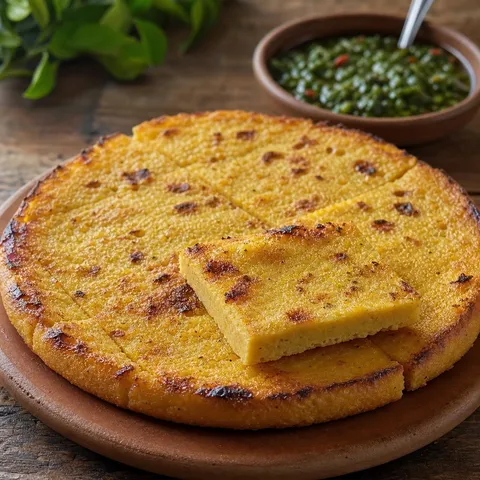 South American Lens Verified Images are for illustrative purposes only, may be inaccurate, and do not guarantee the presence or absence of specific ingredients.
 Fainá
Buenos Aires's thin chickpea flatbread, baked until golden and fragrant — simple, crispy-edged, and traditionally eaten layered right on top of a pizza slice.
 South American Lens Verified Images are for illustrative purposes only, may be inaccurate, and do not guarantee the presence or absence of specific ingredients.
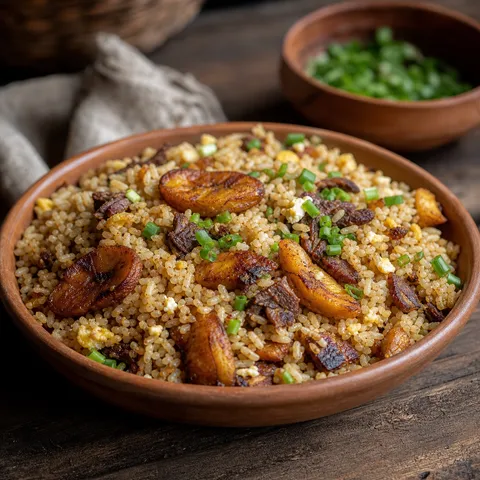
 Majadito
Bolivia's rustic one-pot comfort — dried charque beef simmered down with rice, tomato, and spices into a savory, fragrant dish topped with a fried egg.
 South American Lens Verified Images are for illustrative purposes only, may be inaccurate, and do not guarantee the presence or absence of specific ingredients.
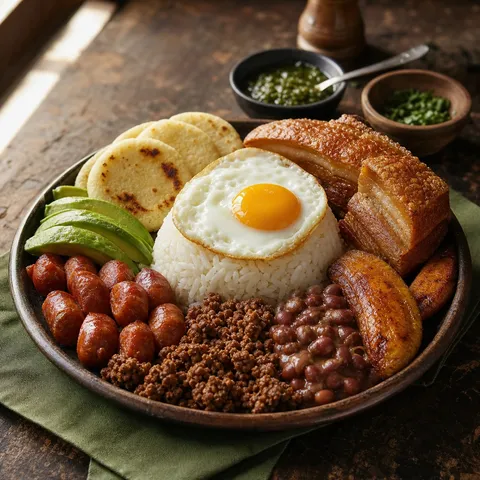
 Bandeja Paisa
Colombia's legendary tray of abundance — red beans, white rice, chicharrón, chorizo, fried egg, plantains, and avocado all piled high for a satisfying feast.