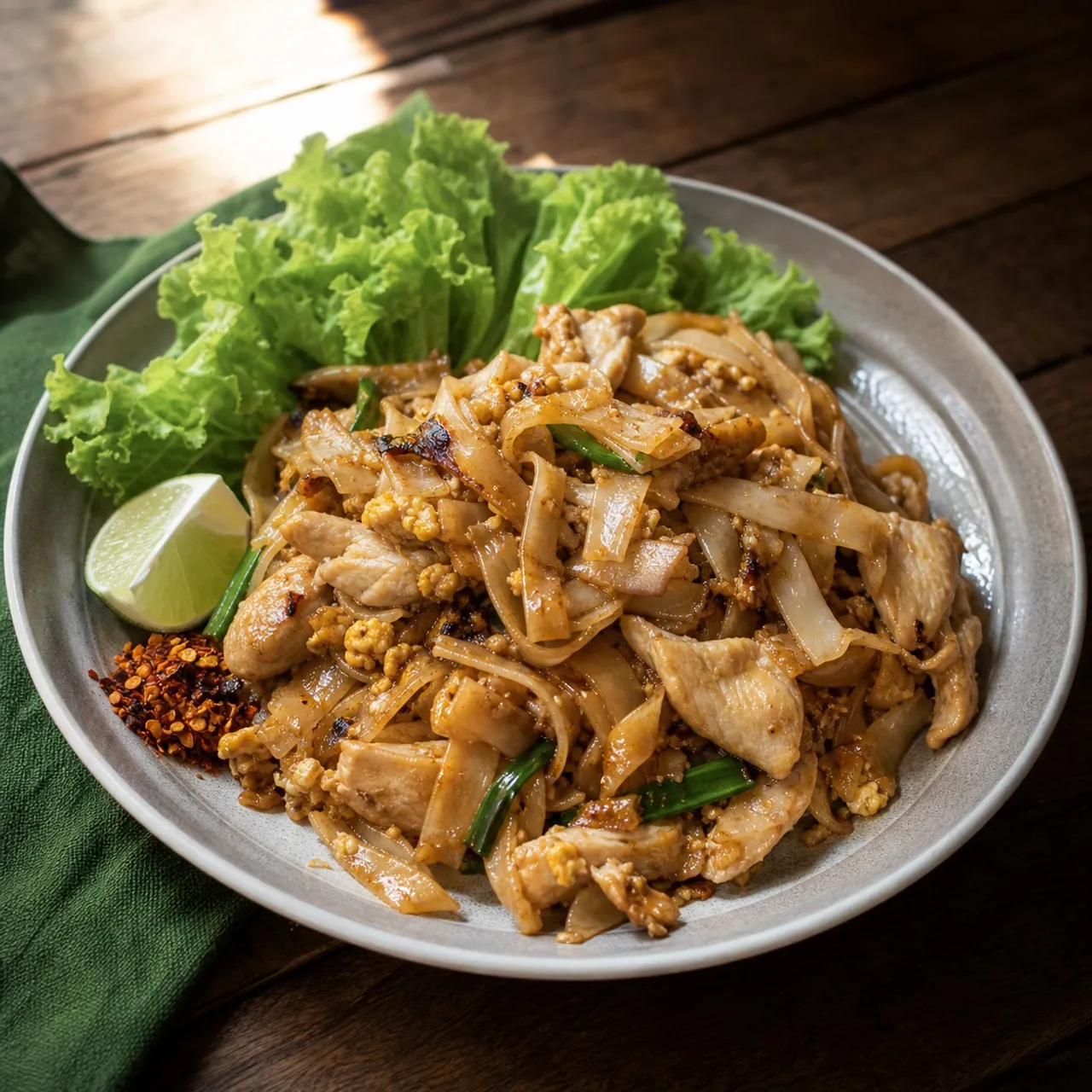
 Thai Images are for illustrative purposes only, may be inaccurate, and do not guarantee the presence or absence of specific ingredients.
 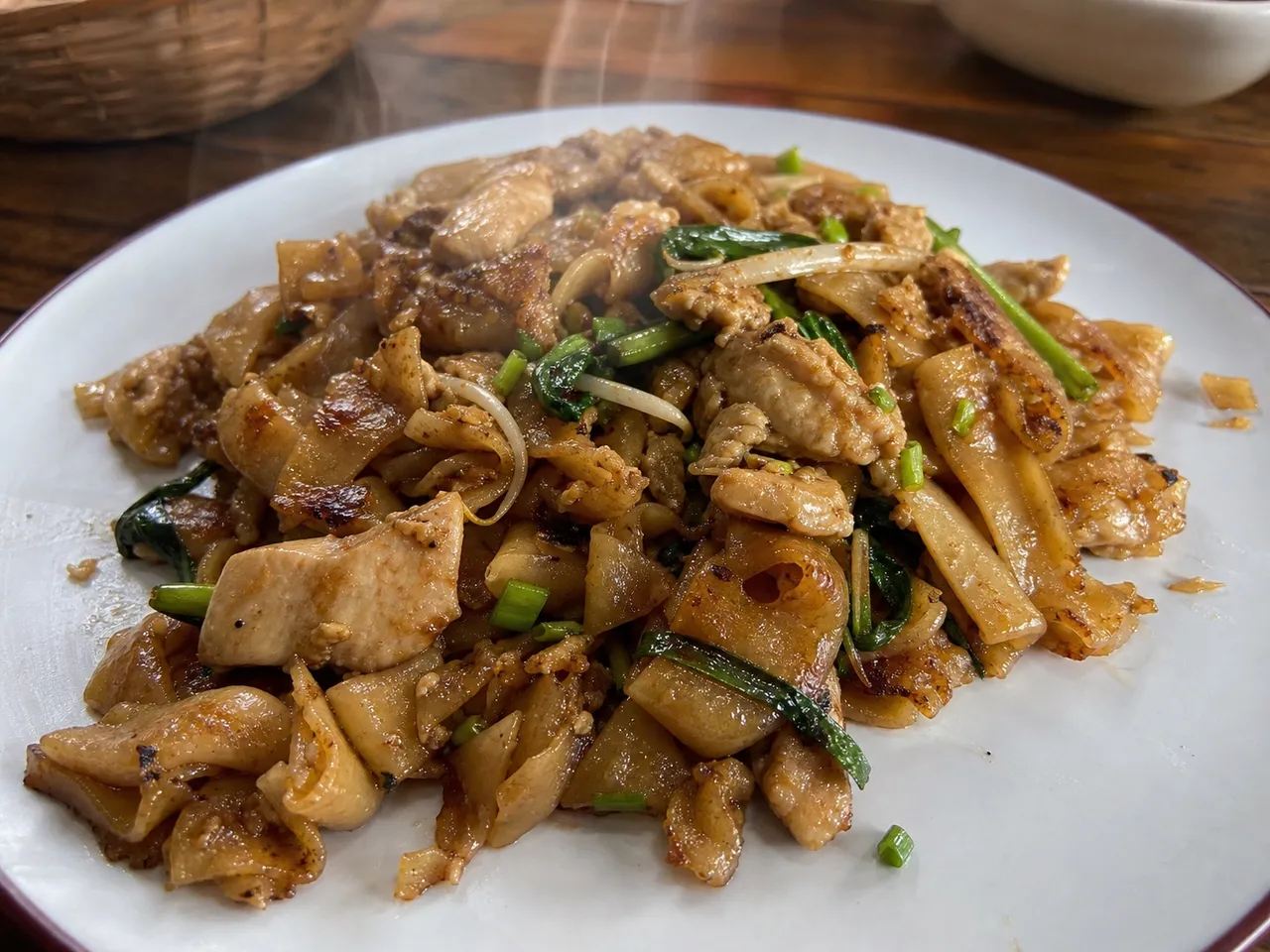 Serving Images are for illustrative purposes only, may be inaccurate, and do not guarantee the presence or absence of specific ingredients.
 Kuay Teow Kua Gai
Flat rice noodles dry-fried with chicken, egg, and bean sprouts until each strand picks up wok char — a Bangkok hawker classic prized for its smoky, almost caramelized depth.
Contains common allergens
In the app, Listahan checks these against your household automatically.
Good to know
- Ready in under 30 minutes
Matched from this dish's own ingredients and timing. Browse more: 30-minute meals
Instructions
8 steps- 1
Heat a wok over high heat until smoking, then add the oil and swirl to coat.
- 2
Fry the garlic briefly until fragrant, then add the sliced chicken and stir-fry until just cooked through.
- 3
Push the chicken to one side and crack the eggs into the wok, letting them set for a few seconds before breaking them up.
- 4
Add the fresh rice noodles directly to the wok, separating any clumps with the spatula, and drizzle with the light soy sauce, oyster sauce, dark soy sauce, and sugar.
- 5
Let the noodles sit against the hot wok surface undisturbed for 30 to 40 seconds at a time before tossing, so they pick up a light char and smoky wok hei rather than steaming soft.
- 6
Continue this press-and-toss method for 2 to 3 minutes until the noodles are evenly coated and slightly crisped in spots.
- 7
Add the bean sprouts and scallions and toss briefly, just until the sprouts soften slightly but keep their crunch.
- 8
Finish with a dusting of white pepper and serve immediately with lime wedges and the usual Thai condiment tray of sugar, chili flakes, and fish sauce.
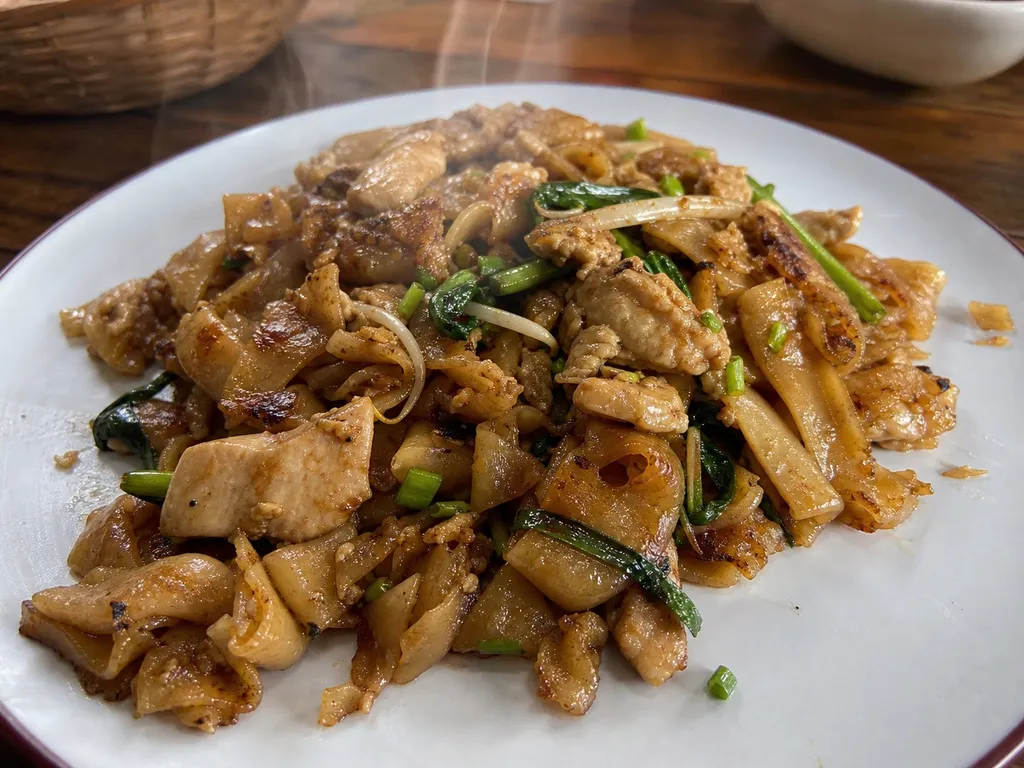 Images are for illustrative purposes only, may be inaccurate, and do not guarantee the presence or absence of specific ingredients.
 Listahan Family Score™
69/100
Works for many families
Score reflects how well this recipe fits a typical busy household. In the app, your Family Score is personalized to your household's allergens, kids, and pantry.
Nutrition
per serving740
Calories
50 g
Protein
86 g
Carbs
21 g
Fat
Estimated per serving. Actual values depend on the brands and portions you use.
Listahan cooking guide
Chef notes & practical guide
Technique notes, ingredient swaps, serve-alongside ideas, storage guidance, and equipment for this recipe.
Cultural context
Kuay teow kua gai is a Thai-Chinese street dish of wide rice noodles dry-fried with chicken and egg, traditionally served over a bed of raw squid or shredded lettuce. It comes out of Bangkok's Chinatown noodle stalls, where cooks let the noodles catch and char against a screaming-hot wok rather than swim in sauce. The name kua means to dry-fry, and the appeal is exactly that smoky, slightly crisped edge on noodles that stay barely sauced.
Listahan note
This version chases the dry-fried char by keeping the sauce minimal and the heat high, so the noodles brown instead of steam. It uses chicken and egg as a gentle, family-friendly base under the bolder seasonings.
Technique cues
- Let the noodles sit untouched against the hot wok for a moment between tosses so they pick up the toasty char that defines the dish.
- Push the noodles aside and scramble the egg in the cleared space so it sets into soft curds instead of coating everything.
- Use far less liquid than a saucy stir-fry, since the goal is dry-fried noodles with a faint glaze rather than a wet sauce.
Kitchen flow
- Parallel prep
- Slice the chicken and green onions and mix the sauce while the noodles come to room temperature and separate.
- Make-ahead
- Prep all components ahead, but stir-fry only at serving time since charred noodles do not hold well.
- Leftover move
- Re-crisp leftovers in a dry hot pan rather than the microwave to bring back some edge.
- Cleanup rhythm
- Wipe the wok hot right after plating so the sticky glaze lifts before it dries on.
Ingredient brief
Role, handling, and swap guidance for each key ingredient.
wide rice noodles
main starch
Purpose: Broad fresh rice noodles char beautifully and give the dish its chewy, smoky backbone.
Handling: Gently separate the strands by hand so they do not tear or clump in the wok.
Adaptation: Dried wide rice noodles soaked until pliable work when fresh ones are unavailable.
chicken
protein
Purpose: Thinly sliced chicken cooks fast and stays tender against the high heat.
Handling: Slice across the grain into thin bite-size pieces so it sears in seconds.
Adaptation: Pork or extra egg and tofu both stand in cleanly for the chicken.
egg
binder and richness
Purpose: A scrambled egg adds soft texture and gentle richness that rounds out the savory noodles.
Handling: Crack into a cleared spot in the wok and let it set briefly before folding in.
Adaptation: Leave it out for an egg-free version and add a little more chicken for body.
oyster sauce
savory glaze
Purpose: A small amount lends the deep, slightly sweet umami that lightly coats the noodles.
Handling: Add it near the end and toss quickly so it glazes rather than pools.
Adaptation: Vegetarian mushroom stir-fry sauce gives the same depth without shellfish.
soy sauce
salt and color
Purpose: Soy sauce seasons the noodles and deepens their color as they fry.
Handling: Drizzle along the hot wok edge so it sizzles and caramelizes slightly.
Adaptation: Tamari keeps it gluten-free with the same savory hit.
green onions
fresh aromatic
Purpose: Green onions add a mild, fresh bite that cuts the richness of the egg and sauce.
Handling: Cut into longer segments and toss in at the very end so they stay crisp.
Adaptation: Chinese chives or thin lettuce ribbons offer a similar fresh lift.
Technique notes
- Cook in two batches if your pan is small, because crowding drops the heat and steams the noodles instead of charring them.
- Get the wok smoking before the noodles go in, as the char only develops on genuinely hot metal.
- Resist over-saucing; the dish should look glossy and dry, not wet, with seasoning clinging tight to each strand.
Ingredient swaps
- Gluten-free direction
- Use tamari and a certified gluten-free oyster sauce to keep the savory glaze without wheat.
- Shellfish-free direction
- Replace oyster sauce with mushroom stir-fry sauce so no shellfish touches the dish.
- Weeknight shortcut
- Use pre-cut stir-fry chicken and pre-separated fresh noodles to get from prep to plate in under fifteen minutes.
Serve alongside
- Sliced cucumber with chili-vinegar dip
- Tom kha gai
- Steamed Chinese broccoli
- Fried egg on the side
- Thai iced tea
- Cold barley tea
- Chrysanthemum tea
Serving suggestions only — check pairings for your household's allergens.
Storage & reheating
- Refrigerate up to two days in a sealed container. Reheat in a hot dry skillet to revive the texture, since microwaving leaves the noodles limp. Freezing is not recommended because the rice noodles turn pasty after thawing.
Equipment
- Carbon-steel wok
- Wide metal spatula
- Sharp chef's knife
- High-output burner or strong stovetop
Make this household-aware
Listahan Pro checks this recipe against your household's allergens, finds pantry-aware swaps, builds the shopping list, and helps you plan the week around it.
Plan it in Listahan
Add Kuay Teow Kua Gai to your week, check it against your household's allergens, and build the shopping list automatically.
More Thai recipes
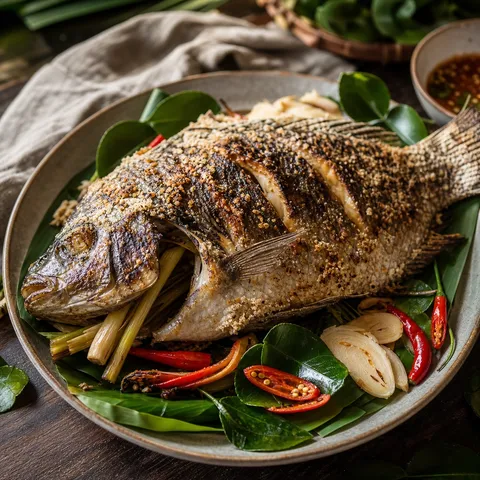 Thai Lens Verified Images are for illustrative purposes only, may be inaccurate, and do not guarantee the presence or absence of specific ingredients.
 Pla Pao
A whole salt-crusted fish stuffed with lemongrass and grilled until the skin is crackling and the flesh is silky.
 Thai Lens Verified Images are for illustrative purposes only, may be inaccurate, and do not guarantee the presence or absence of specific ingredients.
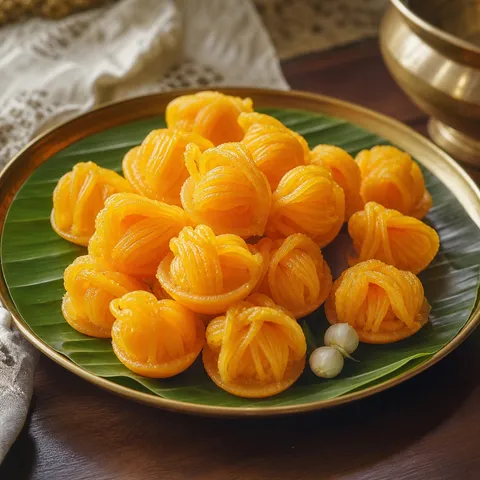
 Thong Yip
Petite golden flowers pressed from egg yolk and sugar, simmered in jasmine-scented syrup until set — a centuries-old Thai royal confection as beautiful as it is sweet.
 Thai Lens Verified Images are for illustrative purposes only, may be inaccurate, and do not guarantee the presence or absence of specific ingredients.
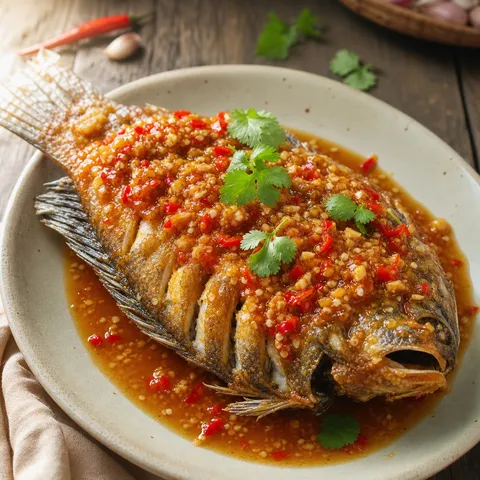
 Pla Rad Prik
Whole fish fried to a shatteringly crisp shell, then blanketed in a sticky, sweet-hot chili-tamarind sauce with garlic and basil — dramatic, punchy, and made for sharing.