 Vietnamese Images are for illustrative purposes only, may be inaccurate, and do not guarantee the presence or absence of specific ingredients.
  Serving Images are for illustrative purposes only, may be inaccurate, and do not guarantee the presence or absence of specific ingredients.
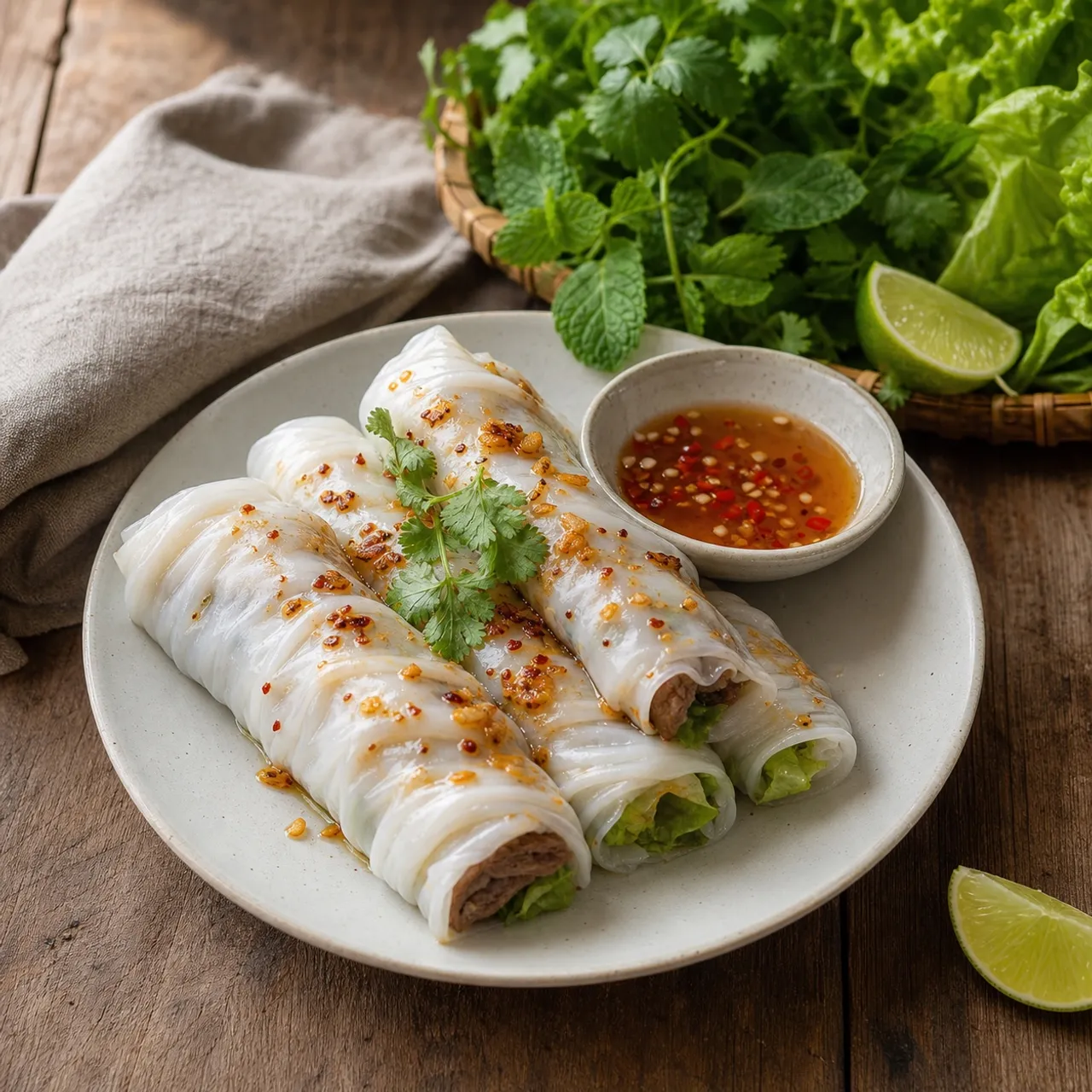
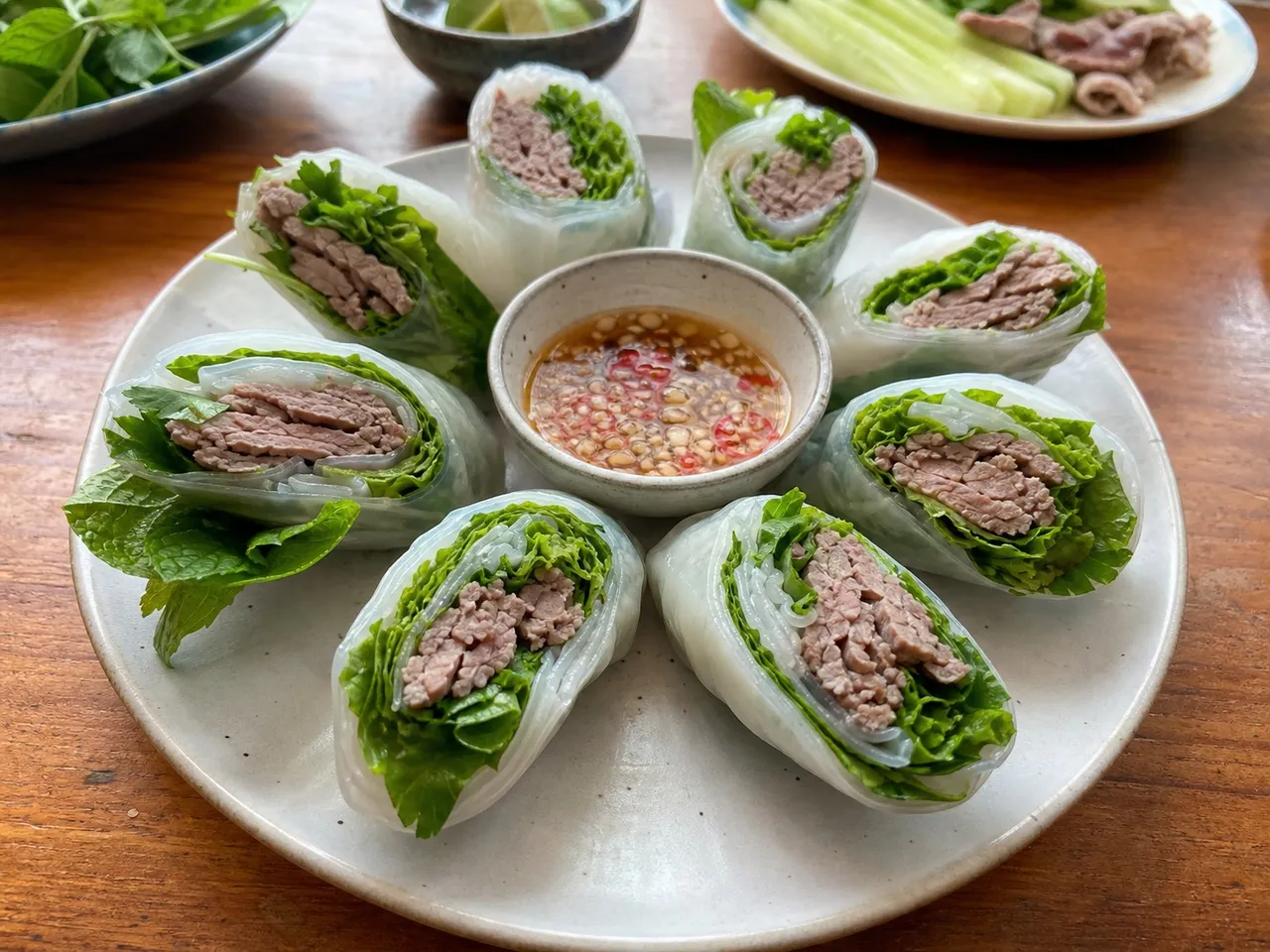
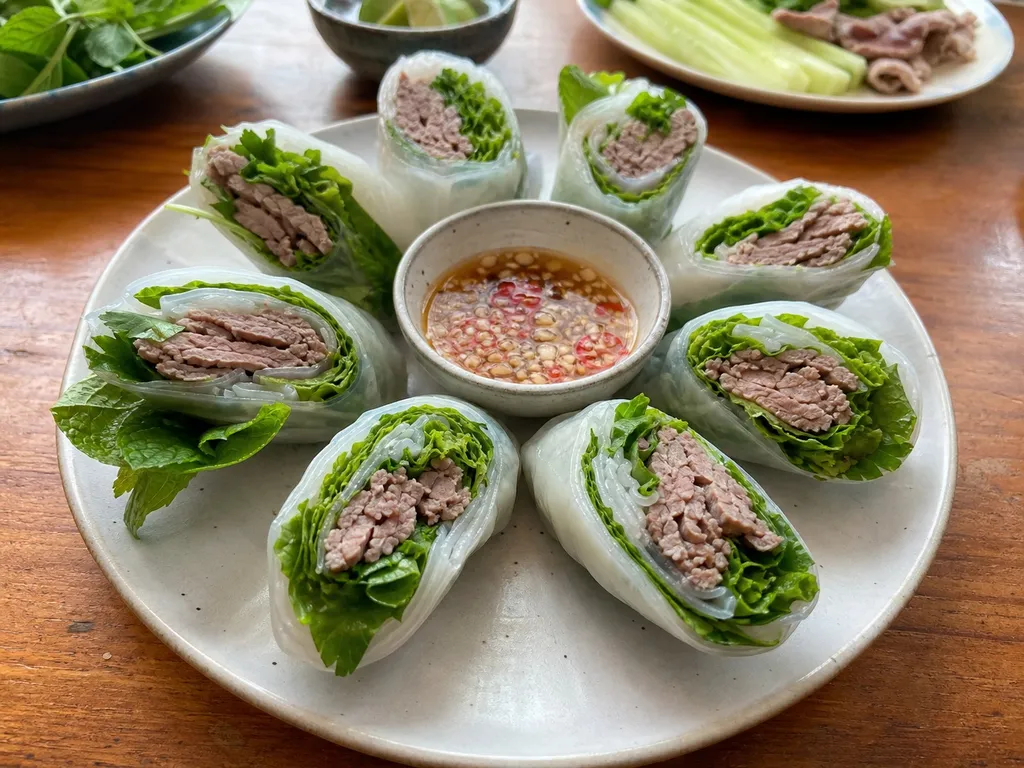
 Phở Cuốn (Fresh Phở Rolls)
A Hanoi favorite of wide fresh rice noodle sheets wrapped around stir-fried beef and herbs, served with a sweet-tangy dipping sauce.
Contains common allergens
In the app, Listahan checks these against your household automatically.
Instructions
5 steps- 1
Whisk together the fish sauce, sugar, lime juice, 3 tablespoons warm water, and the minced garlic and chili to make a balanced sweet-sour-salty dipping sauce, then set aside.
- 2
Heat 1 tablespoon oil in a wok over high heat, add the minced garlic, and stir-fry the sliced beef with the oyster sauce for 2 minutes until just seared and still juicy, then remove from the heat.
- 3
Cut the fresh rice noodle sheets into rectangles roughly 4 by 6 inches, gently separating any that stick together.
- 4
Lay a few herb and lettuce leaves and a small portion of beef across the bottom third of each noodle sheet, then fold in the sides and roll up snugly into a neat parcel.
- 5
Arrange the rolls seam-side down on a platter and serve immediately with the dipping sauce, eating them by hand within an hour so the noodles stay soft.
 Images are for illustrative purposes only, may be inaccurate, and do not guarantee the presence or absence of specific ingredients.
 Listahan Family Score™
58/100
Works for many families
Score reflects how well this recipe fits a typical busy household. In the app, your Family Score is personalized to your household's allergens, kids, and pantry.
Nutrition
per serving750
Calories
39 g
Protein
103 g
Carbs
18 g
Fat
Estimated per serving. Actual values depend on the brands and portions you use.
Listahan cooking guide
Chef notes & practical guide
Technique notes, ingredient swaps, serve-alongside ideas, storage guidance, and equipment for this recipe.
Cultural context
Phở cuốn emerged in Hanoi in the 1990s as a street-food riff on the city's most iconic dish, born on Ngũ Xã Street near West Lake where vendors began using the wide, silky fresh pho noodle sheets to wrap stir-fried beef and herbs rather than cutting them into ribbons for soup. The dish is essentially a summer roll that swaps dry rice paper for pho noodle sheets, and the Hanoi street-food scene embraced it quickly as a cooler, lighter alternative to a bowl of hot pho. Phở cuốn represents the way Vietnamese cooks continuously reinvent a canonical ingredient — here the broad, translucent pho sheet functions as a wrapper rather than a noodle.
Listahan note
This version focuses on keeping the pho noodle sheets pliable and the beef stir-fry quick and high-heat so the rolls have good structural integrity and a savory, garlicky center rather than a soggy or bland fill.
Technique cues
- Fresh pho noodle sheets must be at room temperature before rolling — cold sheets crack and tear; if refrigerated, let them sit out for 30 minutes or briefly warm each sheet by placing it on a warm plate for 30 seconds before filling.
- The beef stir-fry must be done over the highest possible heat in the smallest possible batches; spreading the beef in the pan in a single layer and not moving it for the first minute produces the caramelized, slightly smoky edge that distinguishes phở cuốn from a generic rice paper roll.
- The dipping sauce balance is the dish's final layer — it should be assertively sweet-sour-salty with the fish sauce, sugar, lime, garlic, and chili all perceptible in a single dip; if any one element dominates, the sauce will fight rather than complement the delicate noodle wrapper.
Kitchen flow
- Parallel prep
- Make the dipping sauce first (it improves as it sits), marinate the beef, and arrange all herb and filling components in assembly order so rolling can proceed continuously without stopping.
- Make-ahead
- The dipping sauce keeps for up to 3 days in the fridge. The rolls themselves should be made within 2 hours of serving — beyond that the noodle wrapper begins to dry, crack, or stick to whatever they rest on.
- Leftover move
- Leftover stir-fried beef can be reheated and tossed with cooked rice vermicelli, sliced cucumber, and the remaining dipping sauce for a simple bun-style cold noodle bowl the next day.
- Cleanup rhythm
- The stir-fry is the only high-heat step; clean the wok or skillet while the assembled rolls rest, then the only remaining cleanup is the assembly board and bowls.
Ingredient brief
Role, handling, and swap guidance for each key ingredient.
fresh wide rice noodle sheets (bánh phở tươi)
wrapper and primary texture
Purpose: The broad, translucent pho sheet is what makes this dish distinct — its silky, slightly chewy surface wraps tightly around the filling and delivers the characteristic pho noodle experience in a hand-held format.
Handling: Separate sheets carefully at room temperature; if they are sticking together, a light brush of neutral oil on the surface helps them release without tearing.
Adaptation: Dried pho rice noodles cannot substitute for sheets; dried spring roll rice paper (the dry translucent rounds) is a workable structural alternative, though the texture is thinner and crispier when wet.
beef sirloin, thinly sliced
savory protein fill
Purpose: Thinly sliced sirloin stir-fries in under 2 minutes over high heat and produces tender, juicy slices with good caramelized edges — the right contrast to the delicate, soft noodle wrapper.
Handling: Freeze the sirloin for 20 minutes before slicing to firm it up, making thin, even slices much easier with a sharp knife; slice against the grain.
Adaptation: Chicken breast sliced thin and marinated in soy and oyster sauce works well; tofu slabs pressed and pan-fried crisp are a solid vegetarian alternative.
oyster sauce
marinade sweetness and gloss
Purpose: Oyster sauce caramelizes quickly in the hot pan, coating the beef slices in a glossy, slightly sweet-savory lacquer that prevents them from tasting dry or bland inside the rolls.
Handling: Combine with garlic in the beef marinade and let sit for 15 minutes minimum before stir-frying; the sugar in oyster sauce will caramelize in the hot pan.
Adaptation: Hoisin sauce works structurally but is sweeter; vegetarian oyster sauce (mushroom-based) provides similar gloss for a non-shellfish version.
fish sauce
primary seasoning in dipping sauce
Purpose: Fish sauce forms the savory, fermented base of the nuoc cham dipping sauce that is the dish's most essential accompaniment — without it the dip tastes flat and generic.
Handling: Mix with sugar, lime juice, and a small amount of water first to balance, then add garlic and chili; taste before adding chili quantities as heat levels vary significantly by variety.
Adaptation: Soy sauce thinned with water and a splash of rice vinegar approximates the dipping sauce for those avoiding fish sauce.
mixed lettuce, cilantro, and mint leaves
fresh cooling layer
Purpose: The fresh herb and lettuce layer inside the roll provides coolness and vegetal freshness that balance the warm, savory beef and create the temperature and texture contrast central to all Vietnamese rolls.
Handling: Use whole leaves rather than shredded; they provide more structure inside the roll and prevent the fill from sliding when picked up.
Adaptation: Bean sprouts and julienned cucumber can supplement or partially replace the herbs if any are unavailable.
Technique notes
- Lay out the noodle sheet with the smooth side down when rolling — the slightly rougher interior surface grips the filling better and the smooth side faces out, giving the finished roll a clean, attractive appearance.
- Roll phở cuốn tightly but gently, more like a burrito than a spring roll — the goal is a compact cylinder with the filling centered so every bite has all components; a loose roll falls apart when dipped.
- Serve rolls whole or sliced in half on the bias rather than in thirds — the cross-section shows the herb layer and beef clearly and makes the portioning feel intentional rather than practical.
Ingredient swaps
- Gluten-free direction
- Replace oyster sauce with gluten-free hoisin or a combination of soy sauce (gluten-free tamari) plus a small amount of brown sugar; the noodle sheets and fish sauce are naturally gluten-free.
- Vegetarian direction
- Replace beef with pressed, pan-fried firm tofu marinated in soy sauce, sesame oil, and garlic; the stir-fry technique remains identical and the tofu absorbs the marinade well.
- Shellfish-free dipping sauce
- Replace fish sauce in the dipping sauce with soy sauce and a small piece of kombu (dried kelp) briefly soaked in the liquid to add oceanic umami depth.
Serve alongside
- simple cucumber batons with salt and chili for snacking between rolls
- fried tofu cubes (dau hu chien) with dipping sauce on the side
- Vietnamese egg rolls (cha gio) for a mixed appetizer spread
- fresh lime soda with salt (soda chanh muoi) for a classic Hanoi pairing
- cold Hanoi lager
- iced jasmine green tea
Serving suggestions only — check pairings for your household's allergens.
Storage & reheating
- Assembled rolls keep covered at room temperature for up to 2 hours before the noodle wrapper begins to dry and crack; do not refrigerate assembled rolls.
- All components can be prepped and refrigerated separately up to 1 day ahead — cooked beef, dipping sauce, and washed herbs — with rolling done at serving time.
- The cooked beef filling freezes well for up to 1 month; thaw and reheat in a hot pan for 1 minute before assembling fresh rolls.
Equipment
- large wok or heavy skillet for high-heat beef stir-fry
- large flat plate or cutting board for rolling
- small sharp knife for slicing assembled rolls cleanly
- individual small dipping bowls for each diner
Make this household-aware
Listahan Pro checks this recipe against your household's allergens, finds pantry-aware swaps, builds the shopping list, and helps you plan the week around it.
Plan it in Listahan
Add Phở Cuốn (Fresh Phở Rolls) to your week, check it against your household's allergens, and build the shopping list automatically.
More Vietnamese recipes
 Vietnamese Lens Verified Images are for illustrative purposes only, may be inaccurate, and do not guarantee the presence or absence of specific ingredients.
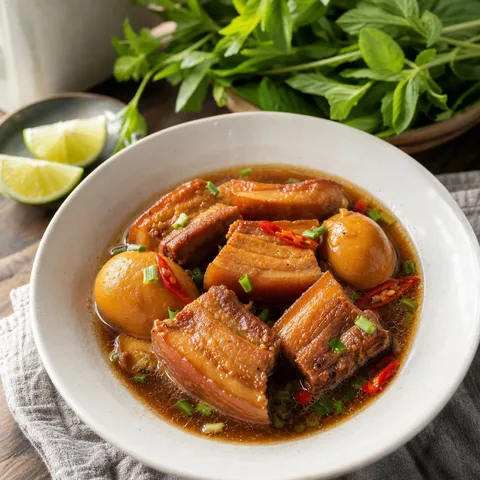
 Thịt Kho Tàu (Caramelized Pork and Eggs)
Meltingly tender pork belly and hard-boiled eggs braised in a rich, sweet, and savory coconut juice caramel, perfect over steamed rice.
 Vietnamese Lens Verified Images are for illustrative purposes only, may be inaccurate, and do not guarantee the presence or absence of specific ingredients.
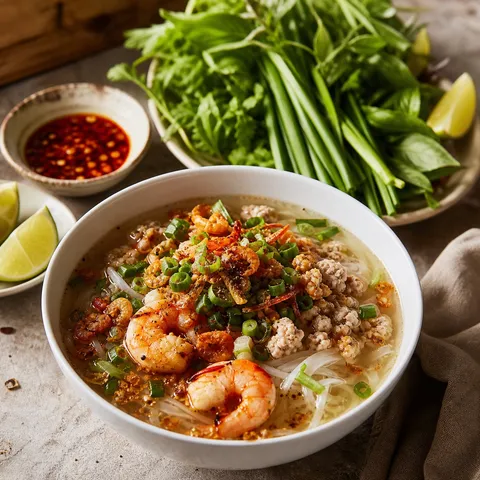
 Hủ Tiếu (Pork and Seafood Noodle Soup)
A Vietnamese pork-bone broth noodle soup loaded with ground pork, shrimp, and dried shrimp over chewy tapioca noodles, finished with garlic chives and fried garlic.
 Vietnamese Lens Verified Images are for illustrative purposes only, may be inaccurate, and do not guarantee the presence or absence of specific ingredients.
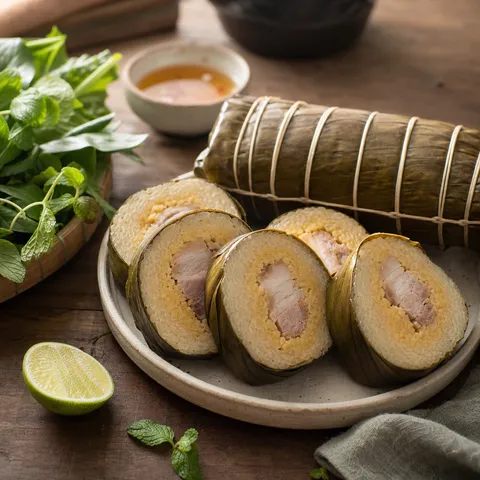
 Bánh Tét (Cylindrical Sticky Rice Cake)
The Southern equivalent of Bánh Chưng, rolled into a cylinder.