 West African Images are for illustrative purposes only, may be inaccurate, and do not guarantee the presence or absence of specific ingredients.
  Serving Images are for illustrative purposes only, may be inaccurate, and do not guarantee the presence or absence of specific ingredients.
 Bofrot
Ghana's plump, slightly chewy take on fried dough balls — golden outside, soft and airy within, fragrant with nutmeg, and irresistible warm from the fryer.
Contains common allergens
In the app, Listahan checks these against your household automatically.
Good to know
- Crispy
Matched from this dish's own ingredients and timing. Browse more: crispy recipes
Instructions
8 steps- 1
In a large bowl, whisk together the flour, sugar, yeast, nutmeg, and salt.
- 2
Gradually stir in the warm water or milk, then beat the batter vigorously by hand for about 5 minutes, until smooth, thick, and elastic.
- 3
Cover and let rise in a warm place for 45 minutes to 1 hour, until visibly puffed and bubbly.
- 4
Heat about 3 inches of oil in a deep pot to 325 to 350F, slightly cooler than for puff puff so the centers cook through.
- 5
Wet a spoon or your hand and drop tablespoon-sized portions of dough into the hot oil, being careful not to crowd the pot.
- 6
Fry, turning occasionally, for 4 to 5 minutes, until the bofrot are deep golden brown outside and cooked through to a soft, chewy center.
- 7
Remove with a slotted spoon and drain on paper towels.
- 8
Serve warm on their own or with roasted peanuts.
 Images are for illustrative purposes only, may be inaccurate, and do not guarantee the presence or absence of specific ingredients.
 Listahan Family Score™
68/100
Works for many families
Score reflects how well this recipe fits a typical busy household. In the app, your Family Score is personalized to your household's allergens, kids, and pantry.
Nutrition
per serving280
Calories
7 g
Protein
61 g
Carbs
1 g
Fat
Estimated per serving. Actual values depend on the brands and portions you use.
Listahan cooking guide
Chef notes & practical guide
Technique notes, ingredient swaps, serve-alongside ideas, storage guidance, and equipment for this recipe.
Cultural context
Bofrot, also called puff puff in Nigeria or togbei in parts of Ghana, is a fried sweet dough ball sold by street vendors and made at home across West Africa for parties, naming ceremonies, and weekend breakfasts. Yeast gives it a tangy lift that sets it apart from cake-style doughnuts, and the round shape comes from scooping batter by hand rather than rolling and cutting. It is one of the most democratic snacks in the region, equally at home in a roadside paper cone and on a celebration table.
Listahan note
This version keeps the batter loose and well-proofed so the insides stay airy rather than dense. It leans on a gentle frying temperature so the balls cook through before the outside browns too hard.
Technique cues
- Let the yeast batter proof until it is visibly bubbly and nearly doubled, because that air is what gives bofrot its light, hollow chew rather than a heavy core.
- Keep the oil around 350F and resist crowding the pot, since cold dough dropped into hot crowded oil drops the temperature and leaves the centers gummy.
- Scoop the batter with a wet spoon or wet hand so it releases cleanly into the oil and forms a rounder ball without sticking.
Kitchen flow
- Parallel prep
- While the batter proofs, line a tray with paper towels and bring the oil up to temperature so you can fry the moment it is ready.
- Make-ahead
- Mix the batter and refrigerate it overnight for a slower, more flavorful rise; bring it back to room temperature before frying.
- Leftover move
- Refresh day-old bofrot in a 325F oven for five minutes to bring back some crispness, then dust with sugar.
- Cleanup rhythm
- Cool the frying oil fully, then strain it through a fine sieve back into a jar for reuse and wipe the pot while it is still slightly warm.
Ingredient brief
Role, handling, and swap guidance for each key ingredient.
all-purpose flour
structure
Purpose: It builds the soft gluten network that traps the yeast gas and gives the ball its chew.
Handling: Whisk it smooth with the sugar and yeast before adding liquid to avoid lumps.
Adaptation: A 1:1 gluten-free baking blend with xanthan gum works, though the crumb will be slightly more tender.
instant yeast
leavening
Purpose: It ferments the batter so the interior turns airy and faintly tangy instead of flat and dense.
Handling: Mix it directly into the dry ingredients, then let the batter rise in a warm spot until bubbly.
Adaptation: Active dry yeast works if you bloom it first in the warm water with a pinch of sugar.
sugar
sweetness and browning
Purpose: It feeds the yeast and helps the exterior caramelize to that signature golden-brown shell.
Handling: Dissolve it into the warm liquid so it distributes evenly through the loose batter.
Adaptation: Coconut sugar gives a deeper molasses note and a darker crust.
nutmeg
warm spice
Purpose: A small amount of freshly grated nutmeg is the classic warm backnote that signals a homemade batch.
Handling: Grate it fresh into the batter, since pre-ground loses its perfume quickly.
Adaptation: A pinch of cinnamon or a few cardamom seeds can stand in for a different warm aroma.
vegetable oil
frying medium
Purpose: A neutral high-smoke-point oil lets the balls fry evenly without lending an off taste.
Handling: Heat at least two inches deep so the balls float and turn themselves.
Adaptation: Refined coconut oil works and adds a subtle sweetness if you do not mind the flavor.
Technique notes
- Drop one test ball first to calibrate your oil; if it browns before counting to about ninety seconds, the oil is too hot and you should lower the heat.
- Wet your scooping spoon between each ball so the sticky batter slides off cleanly and the shape stays round.
- Tumble the hot balls in cinnamon sugar or roll them in plain sugar within a minute of draining so the coating sticks.
Ingredient swaps
- Gluten-free direction
- Use a gluten-free flour blend with xanthan gum and expect a slightly softer, more cake-like interior.
- Lower-sugar direction
- Halve the sugar in the batter and skip the sugar coating, leaning on nutmeg and a squeeze of orange zest for flavor.
- Dairy-free option
- This batter is naturally dairy-free; just confirm your frying oil is a plant oil rather than ghee.
Serve alongside
- spicy roasted groundnuts
- fresh mango slices
- sliced pineapple with chili salt
- ginger and pineapple agua fresca
- hibiscus tea (zobo)
- milky spiced tea
Serving suggestions only — check pairings for your household's allergens.
Storage & reheating
- Store cooled bofrot in an airtight container at room temperature for up to two days; they soften over time. Reheat in a 325F oven for a few minutes to revive the crust rather than microwaving, which makes them rubbery. The fried balls freeze well for up to a month and reheat straight from frozen in a hot oven.
Equipment
- heavy deep pot or Dutch oven
- candy or instant-read thermometer
- slotted spoon or spider
- wire rack set over a tray
Make this household-aware
Listahan Pro checks this recipe against your household's allergens, finds pantry-aware swaps, builds the shopping list, and helps you plan the week around it.
Plan it in Listahan
Add Bofrot to your week, check it against your household's allergens, and build the shopping list automatically.
More West African recipes
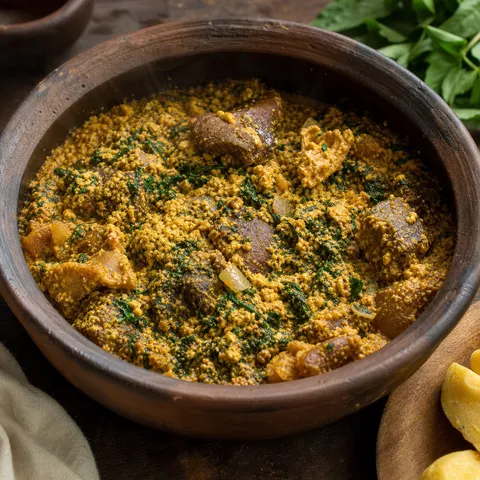 West African Lens Verified Images are for illustrative purposes only, may be inaccurate, and do not guarantee the presence or absence of specific ingredients.
 Egusi Soup
Ground melon seeds simmered with palm oil, leafy greens, and bold spices into a rich, nutty stew that's a cornerstone of Nigerian home cooking.
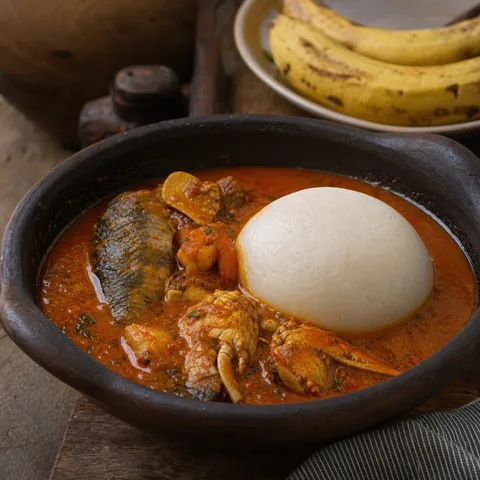 West African Lens Verified Images are for illustrative purposes only, may be inaccurate, and do not guarantee the presence or absence of specific ingredients.
 Banku
A smooth, slightly tangy Ghanaian dough of fermented corn and cassava, cooked to a stretchy consistency — the perfect partner for okra stew or grilled tilapia.
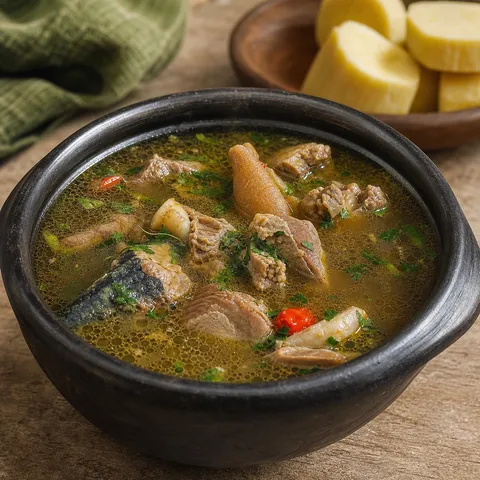 West African Lens Verified Images are for illustrative purposes only, may be inaccurate, and do not guarantee the presence or absence of specific ingredients.
 Pepper Soup
A piercingly spiced, crystal-clear broth simmered with goat meat or catfish and a blend of earthy Nigerian spices — warming, restorative, and intensely aromatic.