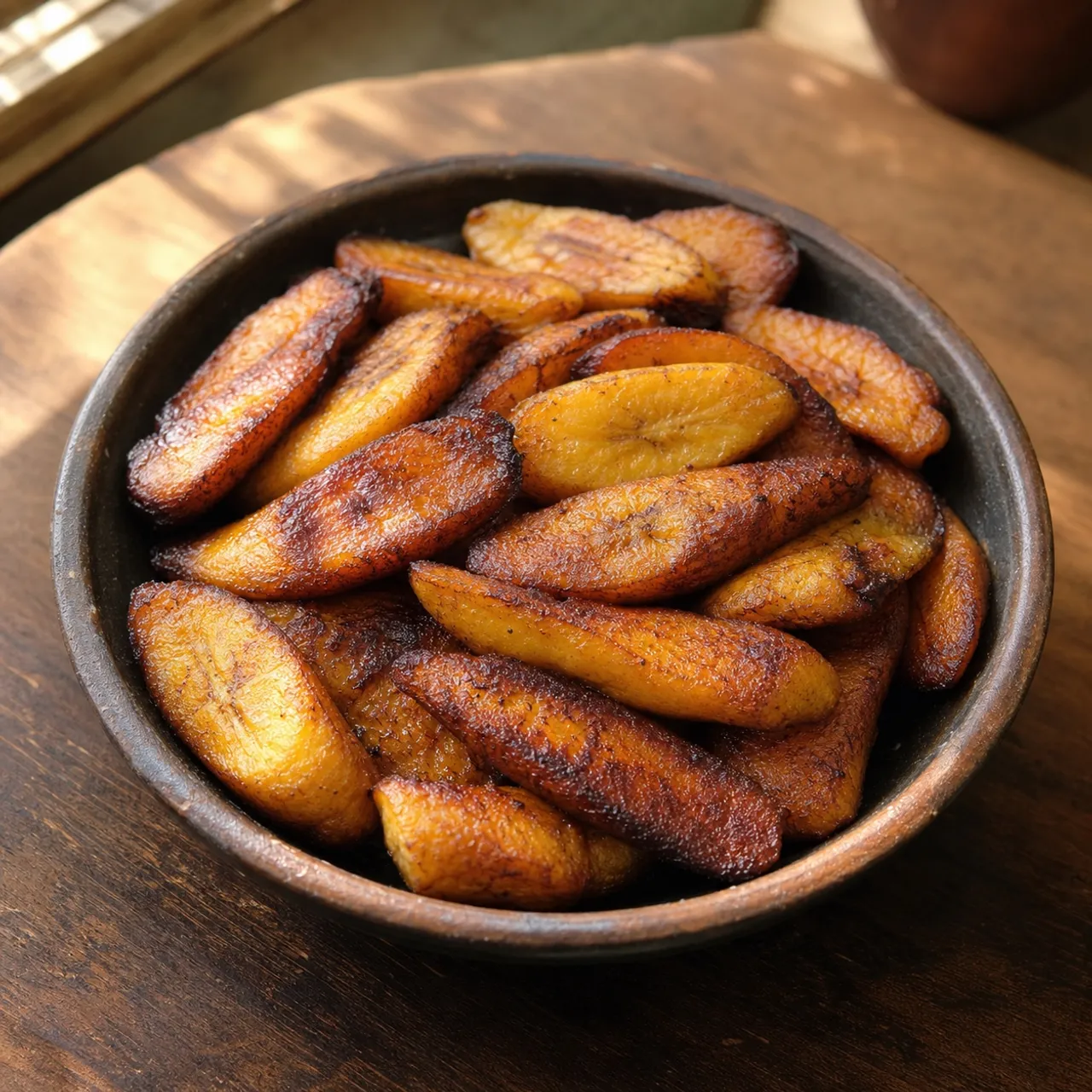
 West African Images are for illustrative purposes only, may be inaccurate, and do not guarantee the presence or absence of specific ingredients.
 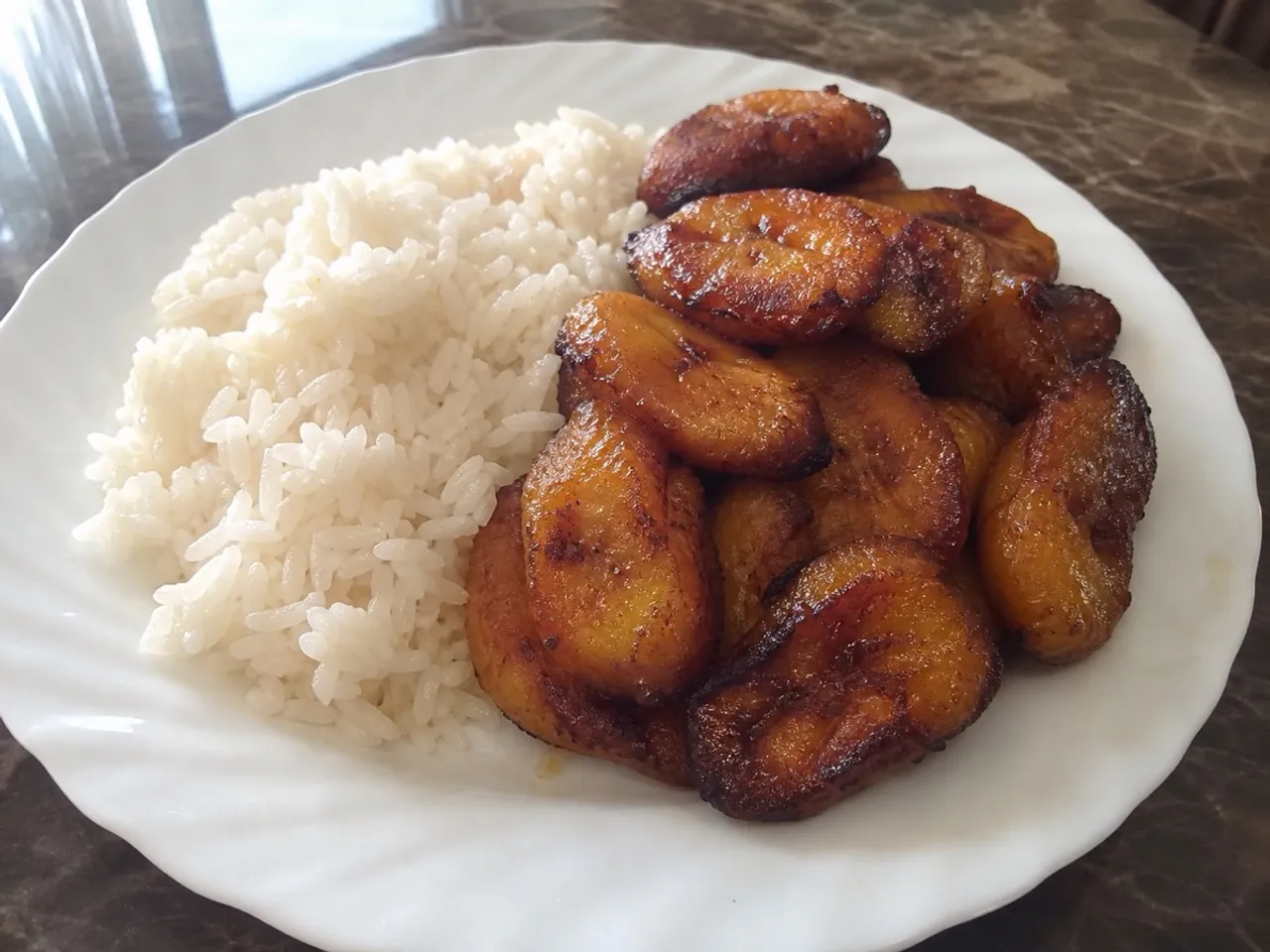 Serving Images are for illustrative purposes only, may be inaccurate, and do not guarantee the presence or absence of specific ingredients.
 Dodo
Ripe plantains fried in hot oil until golden-edged and caramelized — sweet, soft, and slightly yielding, a beloved West African side dish that pairs with almost everything.
No common allergens detected
Based on this recipe's ingredient list. Always verify with your own brands and labels.
Good to know
- Ready in under 30 minutes
Matched from this dish's own ingredients and timing. Browse more: 30-minute meals
Instructions
6 steps- 1
Slice the peeled plantains diagonally into ovals about 1/3 inch thick.
- 2
Season the slices lightly with salt, and with the ginger and cayenne if using.
- 3
Heat about 1/2 inch of oil in a heavy skillet over medium heat until shimmering, around 325 to 350F.
- 4
Fry the plantain slices in a single layer, in batches, for 2 to 3 minutes per side, until deep golden and caramelized at the edges.
- 5
Remove with a slotted spatula and drain on paper towels.
- 6
Serve hot and soft, as a side dish alongside jollof rice, beans, or a main stew.
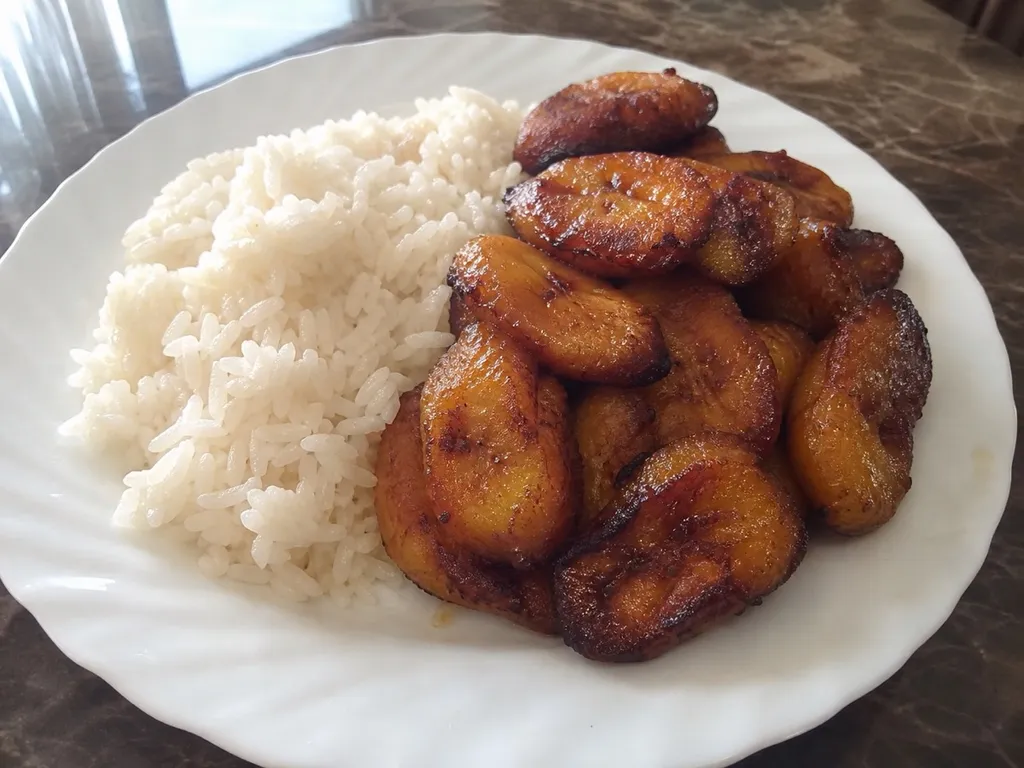 Images are for illustrative purposes only, may be inaccurate, and do not guarantee the presence or absence of specific ingredients.
 Listahan Family Score™
71/100
Good fit for most families
Score reflects how well this recipe fits a typical busy household. In the app, your Family Score is personalized to your household's allergens, kids, and pantry.
Nutrition
per serving1180
Calories
2 g
Protein
57 g
Carbs
110 g
Fat
Estimated per serving. Actual values depend on the brands and portions you use.
Listahan cooking guide
Chef notes & practical guide
Technique notes, ingredient swaps, serve-alongside ideas, storage guidance, and equipment for this recipe.
Cultural context
Dodo is fried ripe plantain, a near-universal side dish across Nigeria and much of West Africa, beloved for the way frying turns ripe plantain sweet, soft, and caramelized at the edges. It accompanies everything from jollof rice to beans to stews, and few Nigerian plates feel complete without it. The simplicity belies how much the timing of the plantain's ripeness controls the result.
Listahan note
This version insists on plantains ripe to the point of being heavily speckled, fried until the edges caramelize, so the sweetness fully develops. It is a quick, crowd-pleasing side that pairs with nearly anything.
Technique cues
- Use plantains that are yellow turning black; properly ripe plantain fries up sweet and soft, while underripe stays bland and starchy.
- Fry in oil hot enough to caramelize the edges quickly without the centers turning greasy, around medium-high heat.
- Salt the plantain lightly right after frying so it sticks to the hot surface and balances the sweetness.
Kitchen flow
- Parallel prep
- Slice all the plantain before the oil heats so you can fry in steady batches without scrambling.
- Make-ahead
- Dodo is best fresh and crisp at the edges, so fry it close to serving rather than far ahead.
- Leftover move
- Fold leftover dodo into a plantain frittata or chop it into a rice bowl the next day.
- Cleanup rhythm
- Let the frying oil cool, strain it for reuse, and wipe the pan while the residual sugar is still soft.
Ingredient brief
Role, handling, and swap guidance for each key ingredient.
ripe plantains
the dish itself
Purpose: Heavily ripe plantains caramelize into the sweet, soft fried side that defines dodo.
Handling: Peel and slice on a diagonal or into rounds about half an inch thick.
Adaptation: There is no real substitute; ripeness, not type, is what matters.
vegetable oil
frying medium
Purpose: A neutral oil at the right temperature gives dodo its caramelized edges without greasiness.
Handling: Heat to medium-high before adding the plantain so it sears rather than soaks.
Adaptation: Any neutral high-heat oil such as canola or sunflower works.
salt
seasoning
Purpose: A light sprinkle of salt balances the plantain's sweetness and makes the flavor pop.
Handling: Season immediately after frying while the surface is still hot and slightly oily.
Adaptation: A pinch of cayenne with the salt adds a sweet-heat version.
cayenne or ground chili
optional heat
Purpose: A light dusting of cayenne turns sweet dodo into the spicy-sweet version many Nigerian cooks prefer.
Handling: Toss the hot plantain with the chili right out of the oil so it clings.
Adaptation: Leave it out entirely for a kid-friendly, purely sweet side.
Technique notes
- Do not crowd the pan; frying in batches keeps the oil hot so the plantain caramelizes instead of steaming.
- Drain on paper towel right out of the oil so the pieces stay tender inside without turning soggy.
- Watch closely near the end, since the natural sugars can go from caramelized to burnt in seconds.
Ingredient swaps
- Lower-fat direction
- Roast or air-fry the plantain slices with a light oil coat for a less oily dodo.
- Sweet-heat direction
- Toss the hot dodo with a little cayenne and salt for a spicy-sweet version.
- Weeknight shortcut
- Air-fry pre-sliced plantain for a hands-off side that frees the stovetop for the main dish.
Serve alongside
- Jollof rice
- Ewa agoyin (mashed beans)
- Stewed beans (ewa riro)
- Pepper stew with fish
- Chilled zobo
- Cold malt drink
- Fresh fruit juice
Serving suggestions only — check pairings for your household's allergens.
Storage & reheating
- Refrigerate cooled dodo in an airtight container for up to two days. Reheat in a hot oven or air fryer to bring back the caramelized edges, since microwaving leaves it soft. It does not freeze well, as the texture turns mushy on thawing.
Equipment
- Frying pan or skillet
- Slotted spoon or spider
- Paper towels for draining
- Sharp knife for slicing
Make this household-aware
Listahan Pro checks this recipe against your household's allergens, finds pantry-aware swaps, builds the shopping list, and helps you plan the week around it.
Plan it in Listahan
Add Dodo to your week, check it against your household's allergens, and build the shopping list automatically.
More West African recipes
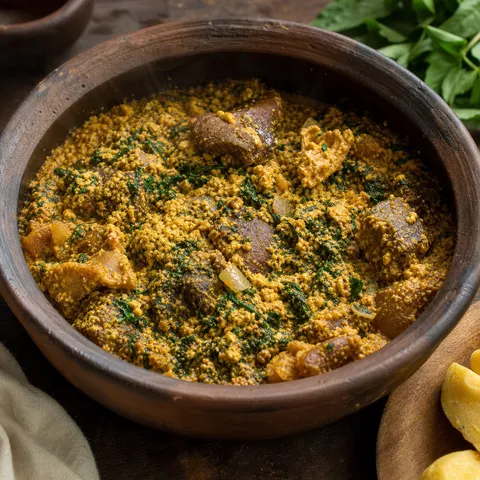 West African Lens Verified Images are for illustrative purposes only, may be inaccurate, and do not guarantee the presence or absence of specific ingredients.
 Egusi Soup
Ground melon seeds simmered with palm oil, leafy greens, and bold spices into a rich, nutty stew that's a cornerstone of Nigerian home cooking.
 West African Lens Verified Images are for illustrative purposes only, may be inaccurate, and do not guarantee the presence or absence of specific ingredients.
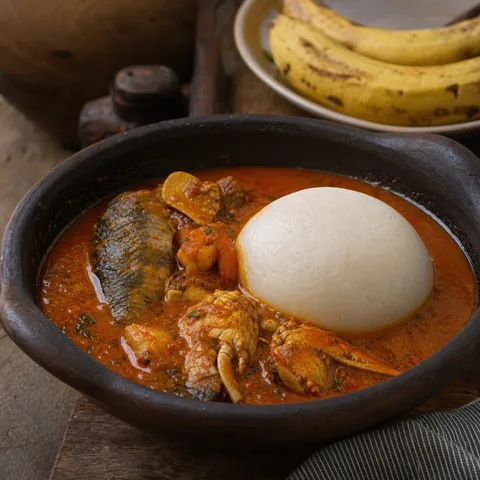
 Banku
A smooth, slightly tangy Ghanaian dough of fermented corn and cassava, cooked to a stretchy consistency — the perfect partner for okra stew or grilled tilapia.
 West African Lens Verified Images are for illustrative purposes only, may be inaccurate, and do not guarantee the presence or absence of specific ingredients.
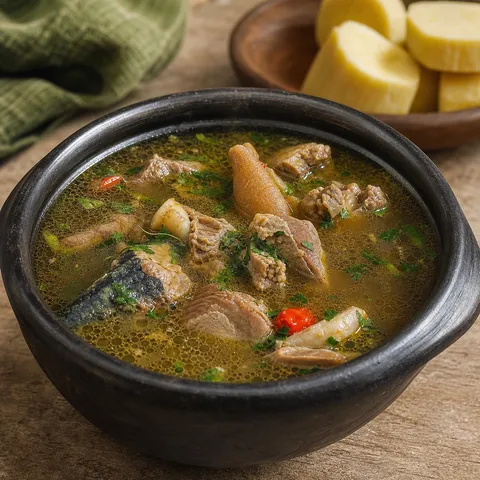
 Pepper Soup
A piercingly spiced, crystal-clear broth simmered with goat meat or catfish and a blend of earthy Nigerian spices — warming, restorative, and intensely aromatic.