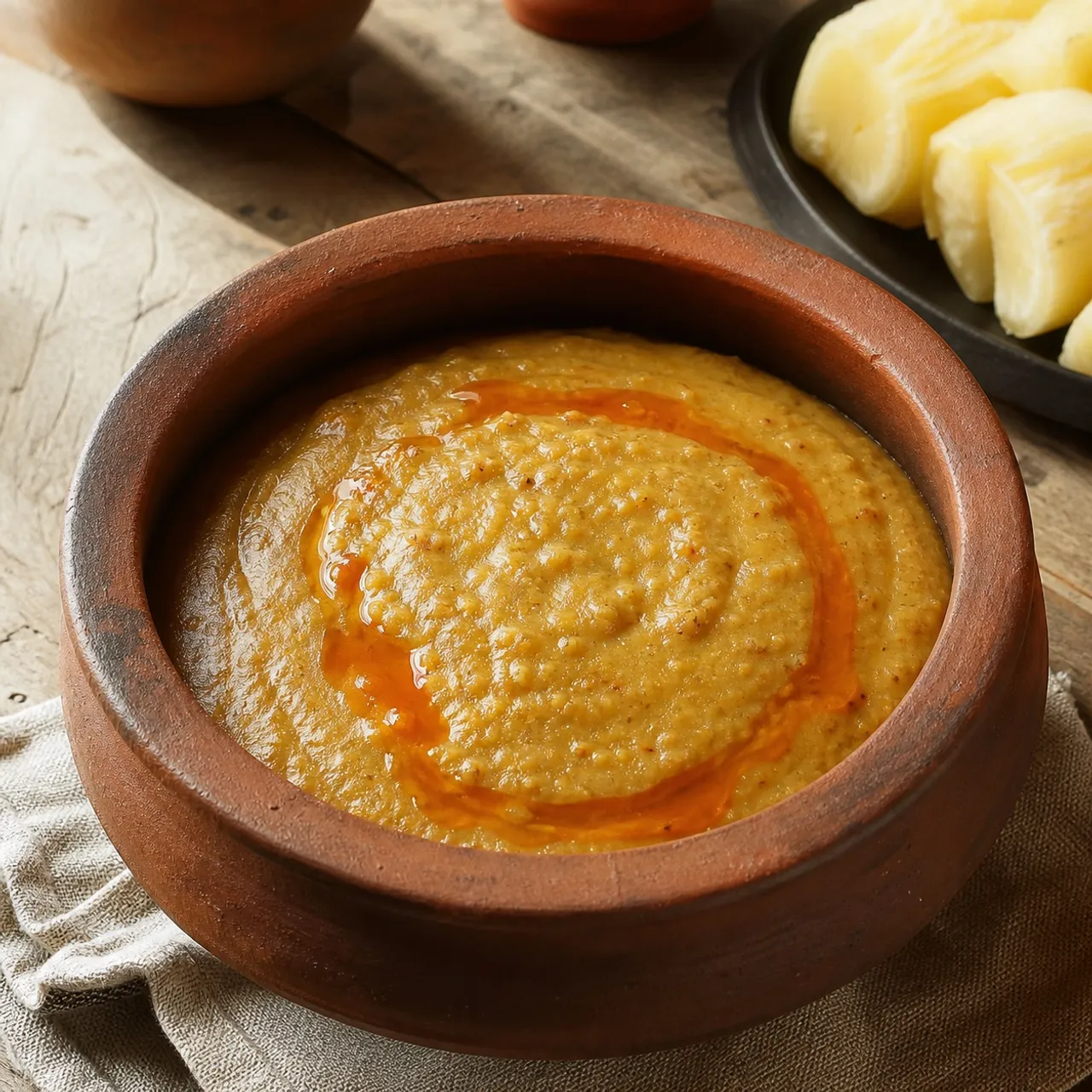
 West African Images are for illustrative purposes only, may be inaccurate, and do not guarantee the presence or absence of specific ingredients.
 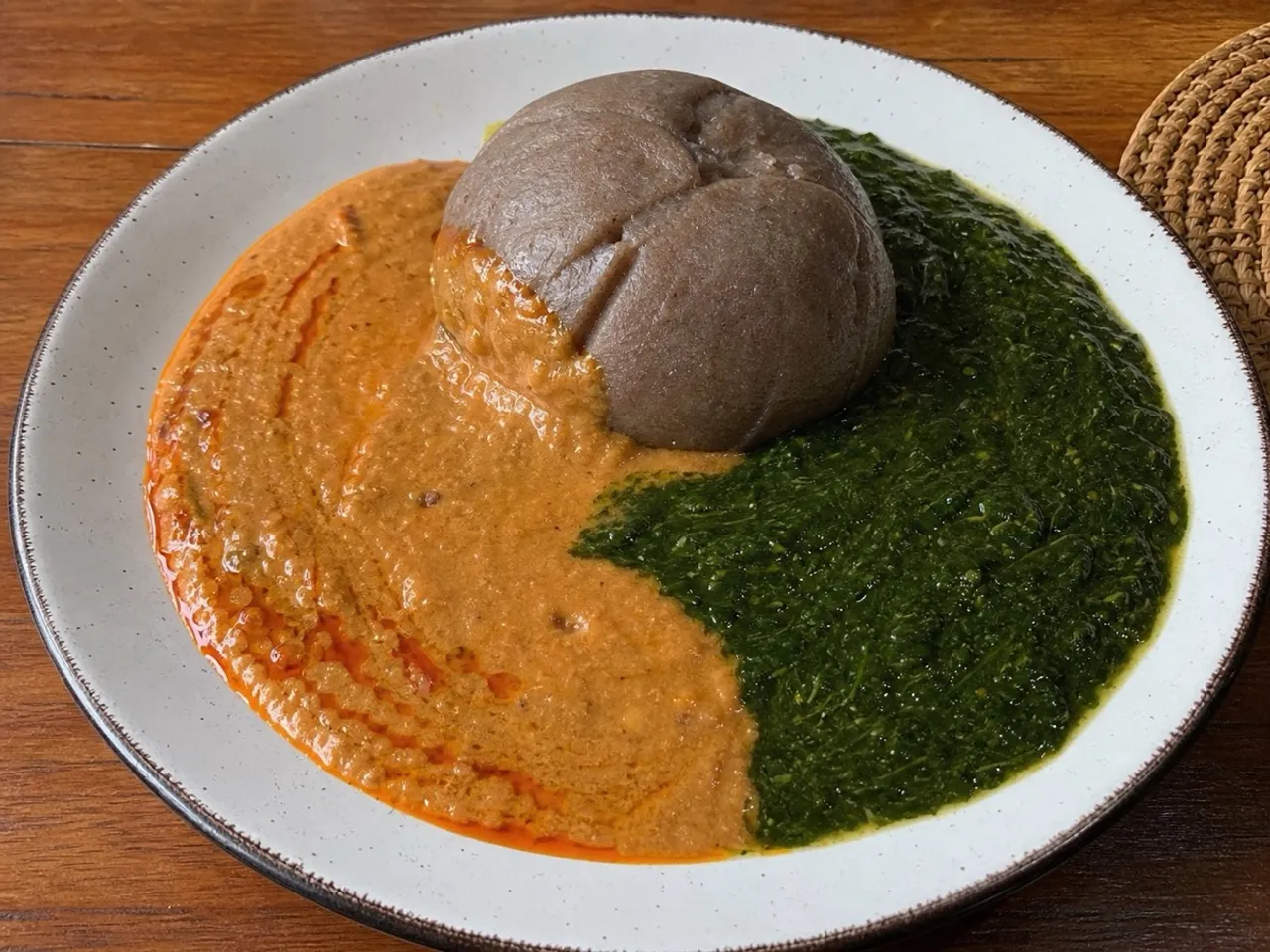 Serving Images are for illustrative purposes only, may be inaccurate, and do not guarantee the presence or absence of specific ingredients.
 Gbegiri
Smooth, creamy bean soup made from peeled black-eyed peas cooked down until velvety — mild, nourishing, and the perfect trio partner alongside ewedu and amala.
Contains common allergens
In the app, Listahan checks these against your household automatically.
Good to know
- One-pot
Matched from this dish's own ingredients and timing. Browse more: one-pot dinners
Instructions
7 steps- 1
Rinse the peeled black-eyed peas and place them in a pot with the water; bring to a boil, then reduce to a simmer.
- 2
Cook the beans, covered, for 45 to 50 minutes, skimming off foam occasionally and adding water as needed, until completely soft and falling apart.
- 3
Mash the beans in the pot with a wooden spoon or blend briefly with an immersion blender until smooth and creamy.
- 4
Stir in the palm oil, onion, crayfish, pepper, and seasoning cubes.
- 5
Return the pot to low heat and simmer for 10 to 15 minutes, stirring frequently, until the soup is smooth, glossy, and lightly thickened.
- 6
Season with salt to taste; the finished gbegiri should be mild, nourishing, and velvety.
- 7
Serve hot, traditionally combined with ewedu and amala.
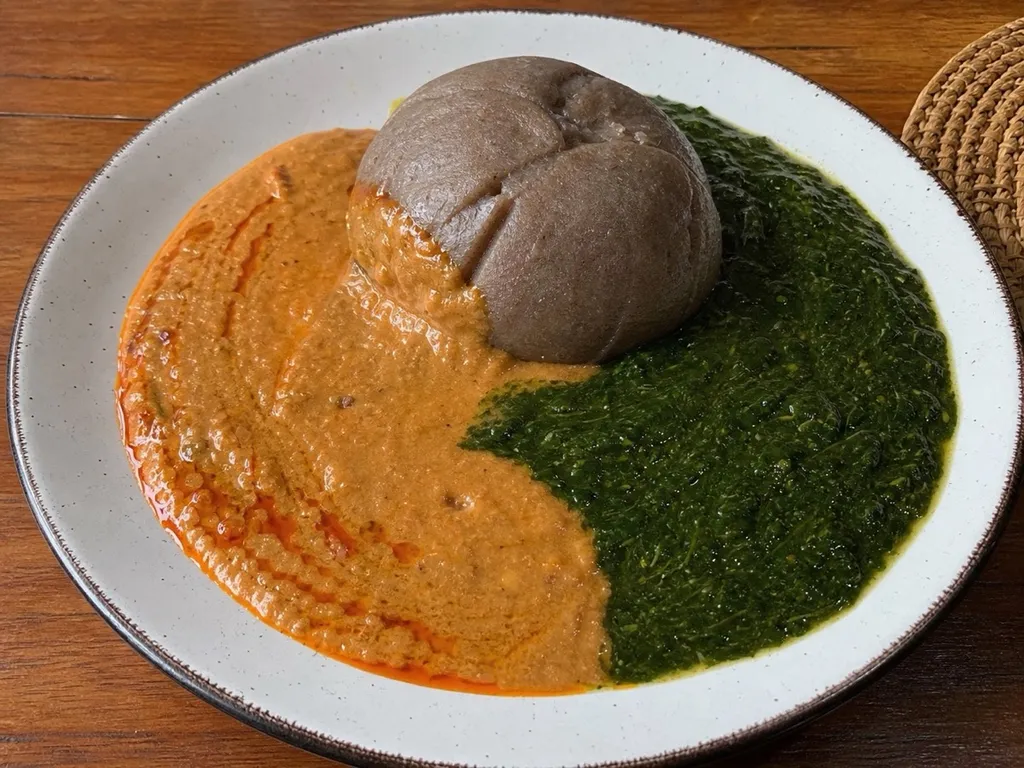 Images are for illustrative purposes only, may be inaccurate, and do not guarantee the presence or absence of specific ingredients.
 Listahan Family Score™
64/100
Works for many families
Score reflects how well this recipe fits a typical busy household. In the app, your Family Score is personalized to your household's allergens, kids, and pantry.
Nutrition
per serving120
Calories
0 g
Protein
0 g
Carbs
14 g
Fat
Estimated per serving. Actual values depend on the brands and portions you use.
Listahan cooking guide
Chef notes & practical guide
Technique notes, ingredient swaps, serve-alongside ideas, storage guidance, and equipment for this recipe.
Cultural context
Gbegiri is a smooth, pale-yellow Yoruba soup made from peeled and cooked beans, usually brown or black-eyed beans, blended into a velvety puree enriched with palm oil. It is the bean half of the iconic amala, ewedu, and gbegiri combination of southwestern Nigeria, where the two soups are often spooned side by side in a swirl affectionately called abula. Its silkiness comes from patiently cooking the beans soft and sieving out the skins.
Listahan note
This version cooks the beans until fully tender and blends them silky, then loosens with stock so the soup pours rather than sits stiff. It is built to be swirled with ewedu over amala.
Technique cues
- Peel or sieve the beans so the finished soup is smooth and velvety rather than grainy with skins.
- Cook the beans until completely soft before blending, since underdone beans leave a chalky texture no amount of blending fixes.
- Loosen the puree with stock to a pourable consistency and finish with palm oil for the traditional color and richness.
Kitchen flow
- Parallel prep
- Cook the beans while you make ewedu and the pepper stew so the whole abula plate comes together at once.
- Make-ahead
- Gbegiri keeps and reheats beautifully; make it a day or two ahead and loosen with stock when reheating.
- Leftover move
- Thin leftover gbegiri with stock into a hearty bean soup, or swirl it with leftover ewedu over fresh amala.
- Cleanup rhythm
- Rinse the blender immediately, since pureed beans dry into a stubborn paste, and soak the pot to lift any palm oil film.
Ingredient brief
Role, handling, and swap guidance for each key ingredient.
brown or black-eyed beans
the base of the soup
Purpose: Blended cooked beans give gbegiri its body, protein, and characteristic pale-yellow color.
Handling: Soak, peel or sieve off the skins, then simmer until completely soft before pureeing.
Adaptation: Yellow split peas cook faster and give a similar smooth, mild result.
palm oil
richness and color
Purpose: It enriches the soup and deepens the color toward the traditional warm yellow-orange.
Handling: Stir in warmed palm oil near the end so it blends smoothly into the puree.
Adaptation: A neutral oil plus a pinch of paprika gives some color without the distinctive palm flavor.
locust beans (iru)
umami seasoning
Purpose: Fermented locust beans add the savory depth that keeps the mild bean base from tasting flat.
Handling: Add a rinsed spoonful while the soup simmers so it melts in.
Adaptation: A little miso or a dash of fish sauce stands in for the umami.
ground crayfish
savory accent
Purpose: Dried ground crayfish lends the briny, savory note typical of the region's soups.
Handling: Stir it in as the soup simmers to bloom its flavor.
Adaptation: Omit for a vegetarian version and lean harder on locust beans and stock for depth.
Technique notes
- Pass the blended beans through a sieve if you want the glassiest texture, catching any stray skins.
- Adjust thickness deliberately; gbegiri should pour and swirl, not sit in a stiff mound.
- Taste before salting since locust beans and crayfish both season the pot as they dissolve.
Ingredient swaps
- Vegetarian direction
- Skip the crayfish and use vegetable stock plus extra locust beans or miso for the savory depth.
- Faster direction
- Use yellow split peas, which need no peeling and cook soft quickly, for a weeknight gbegiri.
- Lower-oil direction
- Reduce the palm oil and add a pinch of paprika for color, leaning on the beans and stock for body.
Serve alongside
- amala
- ewedu soup
- buka-style pepper stew with assorted meats
- chilled zobo hibiscus drink
- palm wine
- cold water
Serving suggestions only — check pairings for your household's allergens.
Storage & reheating
- Refrigerate gbegiri in an airtight container for up to four days; it thickens as it sits, so loosen with stock when reheating. Warm it gently and stir to keep it smooth. It freezes well for up to three months in portions and reheats from frozen over low heat.
Equipment
- heavy pot
- blender or immersion blender
- fine sieve for skins
- wooden spoon
Make this household-aware
Listahan Pro checks this recipe against your household's allergens, finds pantry-aware swaps, builds the shopping list, and helps you plan the week around it.
Plan it in Listahan
Add Gbegiri to your week, check it against your household's allergens, and build the shopping list automatically.
More West African recipes
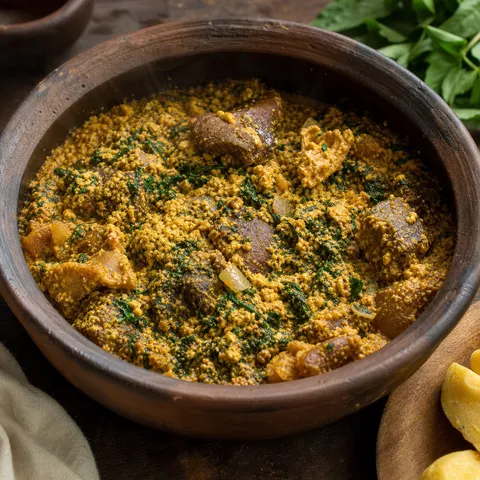 West African Lens Verified Images are for illustrative purposes only, may be inaccurate, and do not guarantee the presence or absence of specific ingredients.
 Egusi Soup
Ground melon seeds simmered with palm oil, leafy greens, and bold spices into a rich, nutty stew that's a cornerstone of Nigerian home cooking.
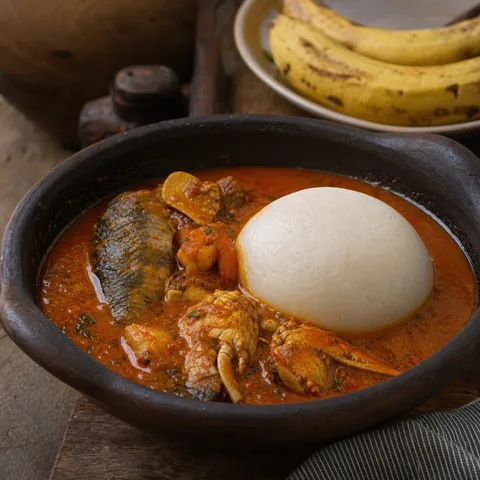 West African Lens Verified Images are for illustrative purposes only, may be inaccurate, and do not guarantee the presence or absence of specific ingredients.
 Banku
A smooth, slightly tangy Ghanaian dough of fermented corn and cassava, cooked to a stretchy consistency — the perfect partner for okra stew or grilled tilapia.
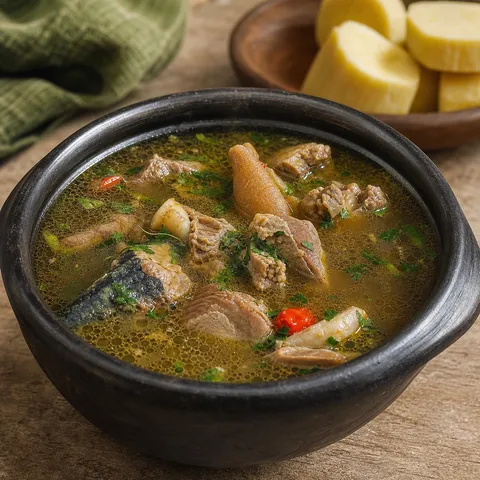 West African Lens Verified Images are for illustrative purposes only, may be inaccurate, and do not guarantee the presence or absence of specific ingredients.
 Pepper Soup
A piercingly spiced, crystal-clear broth simmered with goat meat or catfish and a blend of earthy Nigerian spices — warming, restorative, and intensely aromatic.