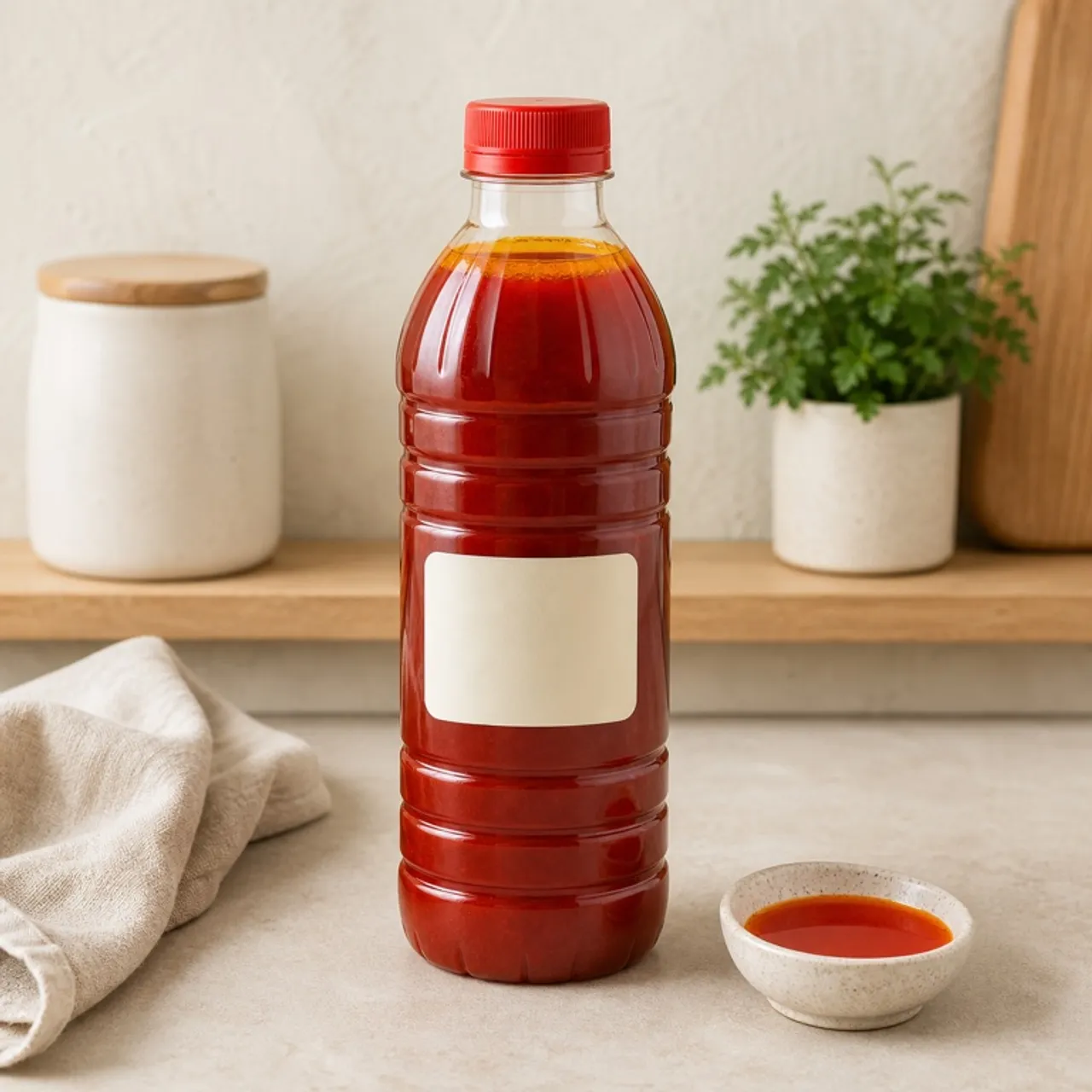
 Food Lens Images are for illustrative purposes only, may be inaccurate, and do not guarantee the presence or absence of specific ingredients.
 Food Lens · Recipe ingredients
Palm Oil
Unrefined red palm oil: earthy, rich, faintly savory with a distinctive buttery undertone and a deep orange hue that colors dishes dramatically. Refined palm oil: neutral and flavorless.
Lens VerifiedPalm oil is a bright orange-red cooking oil extracted from the fruit of the oil palm tree (Elaeis guineensis), with a distinctive earthy, faintly savory flavor in its unrefined form that is foundational to West African, Central African, Southeast Asian, and Brazilian cooking. Refined palm oil is nearly flavorless and cream-colored, used widely in processed foods.
Where it comes from
Palm oil has been produced in West Africa for at least 5,000 years, with archaeological evidence of palm oil in ancient Egyptian tombs. European colonizers recognized its value and the oil palm was transplanted to Southeast Asia in the 19th century, eventually becoming a massive global commodity crop in Malaysia and Indonesia. For West African and Afro-Caribbean communities in North America, red palm oil has been available through specialty African grocery stores and increasingly through mainstream international aisles.
Varieties — Red/unrefined palm oil (palmfruit oil) retains its deep orange-red color, earthy flavor, and fat-soluble carotenoids — this is the cooking oil used in traditional West African recipes. Refined palm oil is pale, odorless, and flavorless — used industrially and in some commercial cooking.
In Yoruba, Igbo, and other West African culinary traditions, red palm oil is not a neutral fat — it is a flavor ingredient with cultural significance, the way olive oil is to Mediterranean cooking. Substituting it fundamentally changes the character of the dish.
In a modern kitchen — Palm oil is a topic of environmental conversation: large-scale cultivation in Malaysia and Indonesia has been linked to deforestation. Sustainably certified palm oil (RSPO) exists; look for it if this context matters to your household. West African red palm oil used in diaspora cooking is a different tradition from the industrial commodity.
Buying it
Find red (unrefined) palm oil at West African, Afro-Caribbean, and some pan-African grocery stores. Look for 'palm oil,' 'red palm oil,' or 'palmfruit oil' — the deep orange-red color is the indicator of the unrefined version. Imported Nigerian or Ghanaian brands are typically what West African recipes intend.
Storing it
Store tightly capped in a cool, dark cupboard away from the stove. It naturally solidifies and turns opaque in cooler temperatures — that's normal and reverses once it warms back up.
Keeps about 1 year in the pantry.
Smoke point
430–455°F
commonly cited around 430-455°F for palm oil, with variation by refining level.
Out of palm oil? Good swaps
- Coconut oil + annatto (achiote) for color — Approximates the color; flavor will be different (tropical-sweet vs earthy). Heat coconut oil with achiote seeds, then strain.
- Sunflower oil (for refined palm oil applications) — Neutral substitute in any recipe calling for refined palm oil as a flavorless fat.
General cooking guidance — always check the labels on the products you use. Listahan’s allergen checks run automatically when you plan a recipe in the app. Not medical advice.
Recipes that use palm oil
Common questions about palm oil
Is palm oil vegan?
Palm Oil is generally plant-based and suitable for a vegan diet, but brands differ — confirm on the label.
What can I use instead of palm oil?
Good swaps include Coconut oil + annatto (achiote) for color, Sunflower oil (for refined palm oil applications). Each behaves a little differently — see the swaps above for notes, and always check labels for allergens.
How do I store palm oil?
Store tightly capped in a cool, dark cupboard away from the stove. It naturally solidifies and turns opaque in cooler temperatures — that's normal and reverses once it warms back up. It keeps about 1 year in the pantry.
More recipe ingredients
See all


Make palm oil about your kitchen — with Listahan Pro
Everything above is free, forever. Pro adds the Household Lens — the same food, seen for your family:
-
Checked for each member
Flags palm oil per person against your household's allergies and school rules — not just a generic "contains" tag.
-
Pantry-aware
Knows whether you already have it, what is running low, and the best swap from what is in your kitchen tonight.
-
What it costs near you
A real price from the Presyo community index, so you can plan the budget — not guess.
-
Your household memory
Who likes it, plus your own private notes — brand, where you keep it, who skips it.
Allergen safety is always free — Pro adds the automation, never the safety.
Cook with palm oil — safely
Plan a recipe in Listahan and the household allergen check runs automatically — every plan, every swap, every lunchbox. Safety is never paywalled.