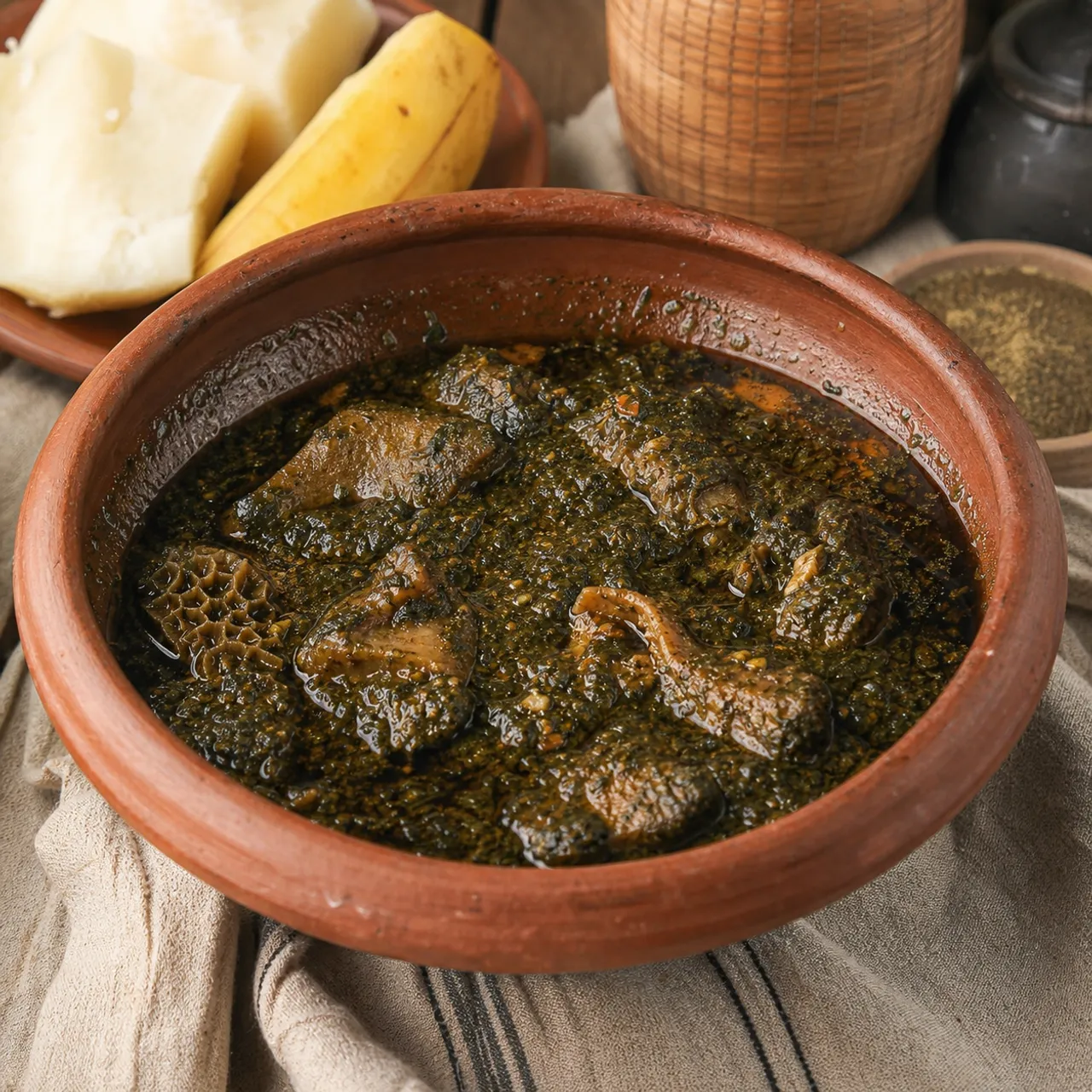
 West African Images are for illustrative purposes only, may be inaccurate, and do not guarantee the presence or absence of specific ingredients.
 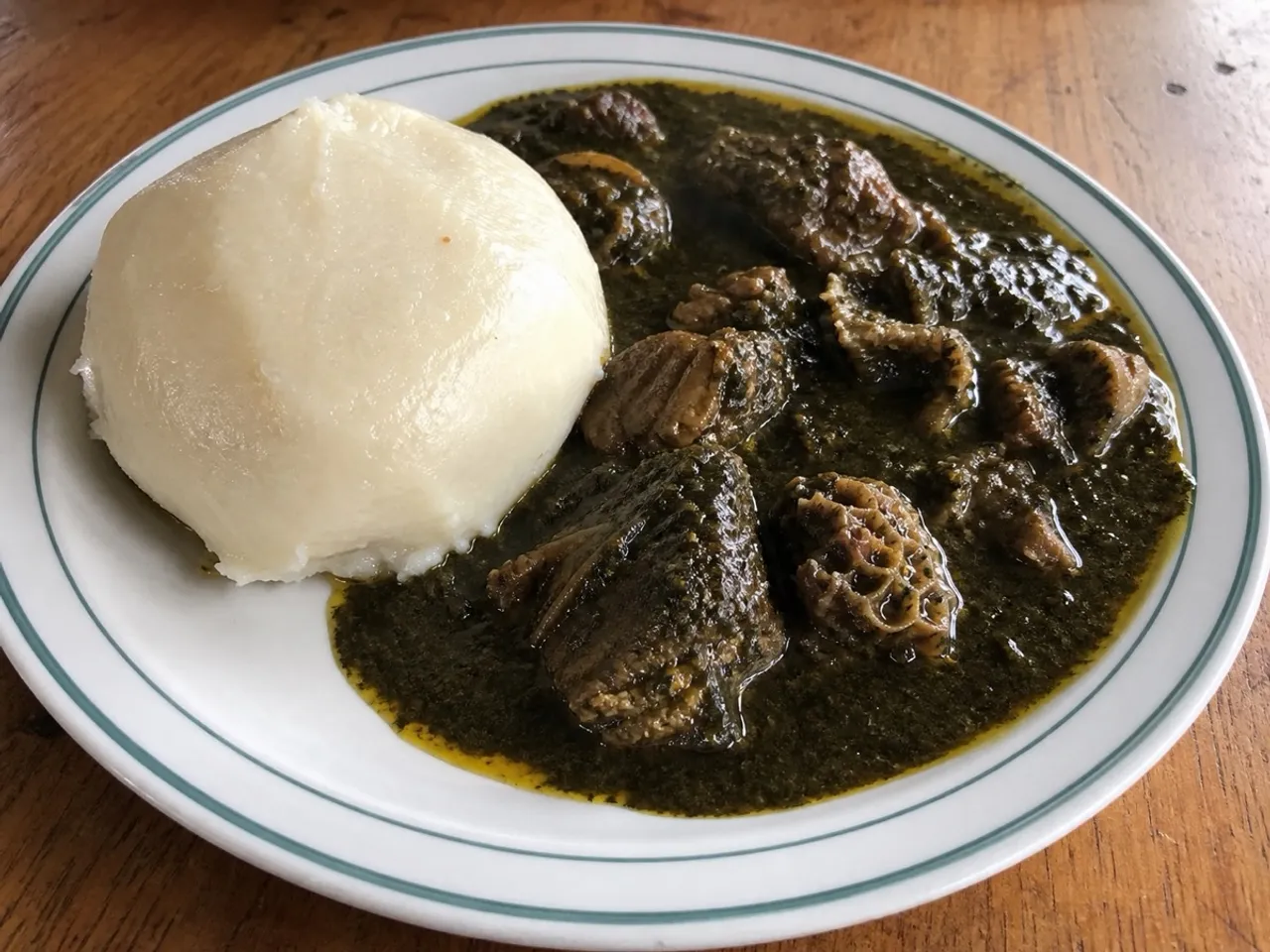 Serving Images are for illustrative purposes only, may be inaccurate, and do not guarantee the presence or absence of specific ingredients.
 Miyan Kuka
A silky Northern Nigerian soup made from powdered baobab leaves with dried fish and dawadawa, lending it a distinctive earthy, slightly sour depth.
Contains common allergens
In the app, Listahan checks these against your household automatically.
Good to know
- One-pot
- Ready in under 30 minutes
Matched from this dish's own ingredients and timing. Browse more: one-pot dinners30-minute meals
Instructions
8 steps- 1
Place the beef or goat meat in a pot with the onion, one seasoning cube, and enough water to cover, and simmer for 25 to 30 minutes until tender.
- 2
Add the dried fish, crayfish, dawadawa, scotch bonnet, and remaining seasoning cube to the pot and simmer for another 5 minutes to let the flavors meld.
- 3
In a small bowl, whisk the kuka powder with about 1/2 cup of the hot broth until it forms a smooth, lump-free slurry.
- 4
Stir the palm oil into the simmering pot and let it melt into the broth.
- 5
Reduce the heat to low and whisk the kuka slurry into the pot in a slow stream, stirring constantly to avoid clumping.
- 6
Simmer gently, stirring often, for 5 to 8 minutes, until the soup thickens to a silky, slightly ropy consistency.
- 7
Season with salt to taste and remove from the heat; the soup should be earthy, faintly sour, and just thick enough to coat a spoon.
- 8
Serve hot alongside tuwo shinkafa or another swallow for scooping.
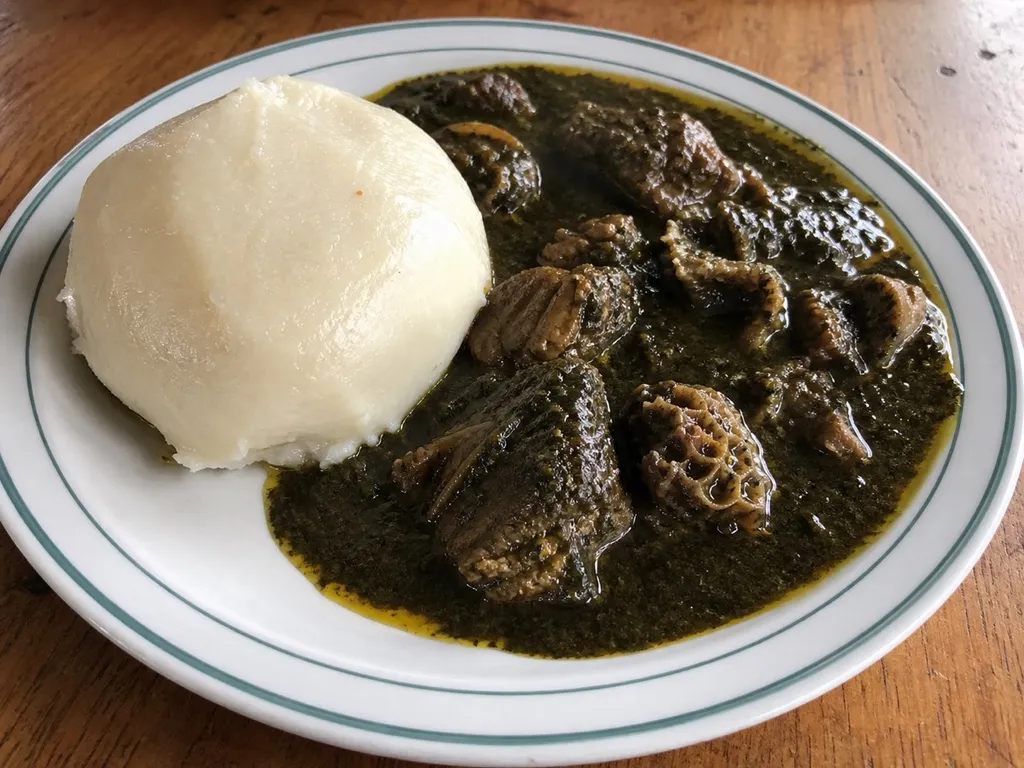 Images are for illustrative purposes only, may be inaccurate, and do not guarantee the presence or absence of specific ingredients.
 Listahan Family Score™
60/100
Works for many families
Score reflects how well this recipe fits a typical busy household. In the app, your Family Score is personalized to your household's allergens, kids, and pantry.
Nutrition
per serving315
Calories
31 g
Protein
7 g
Carbs
19 g
Fat
Estimated per serving. Actual values depend on the brands and portions you use.
Listahan cooking guide
Chef notes & practical guide
Technique notes, ingredient swaps, serve-alongside ideas, storage guidance, and equipment for this recipe.
Cultural context
Miyan Kuka is a dark, draw-textured soup from northern Nigeria made from powdered dried baobab leaves, a defining ingredient of Hausa cooking. The baobab tree is central to the savanna landscape and diet, and its dried, ground leaves give the soup both its blackish-green color and its slightly slippery body. It is typically eaten with tuwo shinkafa or tuwo masara and built on a base of meat, dried fish, and a fermented locust-bean seasoning called dawadawa.
Listahan note
This version leans on quality kuka powder for body and dawadawa for that funky, savory depth, simmered with meat and dried fish. It is a true northern soup meant to be scooped with a rice or corn swallow.
Technique cues
- Whisk the kuka powder in gradually and let it cook a few minutes; added all at once it clumps, and undercooked it tastes raw and grassy.
- Build the broth first with meat, dried fish, and dawadawa so the soup has depth before the baobab powder thickens it.
- Keep the simmer gentle once the kuka goes in, since baobab thickens fast and a hard boil can make the texture gluey.
Kitchen flow
- Parallel prep
- Simmer the meat and build the broth while you sieve the kuka powder and crush the dawadawa, so the thickening step goes smoothly.
- Make-ahead
- Make the meat broth a day ahead and refrigerate; finish with the kuka powder fresh, since it can over-thicken on standing.
- Leftover move
- Reheat gently with a splash of water to loosen, and serve with fresh tuwo or rice the next day.
- Cleanup rhythm
- Soak the pot promptly, as the baobab-thickened soup clings to the sides and bottom once cool.
Ingredient brief
Role, handling, and swap guidance for each key ingredient.
kuka powder (baobab leaf)
thickener and signature flavor
Purpose: Ground dried baobab leaf gives the soup its dark color, slippery body, and characteristic earthy taste.
Handling: Sieve, then whisk in gradually to avoid lumps.
Adaptation: There is no close substitute; ground dried okra leaf is the nearest in texture but differs in flavor.
dawadawa (fermented locust bean)
umami seasoning
Purpose: Fermented locust bean gives miyan kuka its deep, funky savoriness that defines northern soups.
Handling: Crush and stir into the simmering broth to dissolve.
Adaptation: A little miso or fish sauce loosely approximates the fermented depth.
beef or goat meat
protein base
Purpose: Bone-in meat builds the savory broth the soup is layered on.
Handling: Season and simmer until tender, reserving the stock.
Adaptation: Chicken works for a lighter version.
dried fish
smoky umami
Purpose: Dried or smoked fish adds the smoky savoriness traditional to the soup.
Handling: Soak briefly to soften, debone, and add to the simmer.
Adaptation: Stockfish or extra dawadawa boosts depth if dried fish is unavailable.
ground crayfish
umami seasoning
Purpose: Dried ground crayfish rounds out the savory profile.
Handling: Grind and stir into the broth.
Adaptation: Additional dried fish gives similar depth for a shellfish-free pot.
Technique notes
- Taste before adding salt, since dawadawa, dried fish, and crayfish all bring their own saltiness.
- If the soup thickens too much as it sits, loosen with hot stock rather than water to keep the flavor intact.
- Bloom the kuka powder a few minutes off any rolling boil so it hydrates evenly without clumping.
Ingredient swaps
- Shellfish-free direction
- Use extra dried fish in place of ground crayfish to keep the umami without shellfish.
- Poultry direction
- Build the soup on chicken instead of beef or goat for a lighter, faster-cooking version.
- Lower-sodium direction
- Use unsalted dried fish and add salt only at the end after the salty dawadawa is in.
Serve alongside
- Tuwo shinkafa (rice swallow)
- Tuwo masara (corn swallow)
- Fufu
- Steamed white rice
- Chilled kunu (millet drink)
- Cold zobo
- Plain water
Serving suggestions only — check pairings for your household's allergens.
Storage & reheating
- Refrigerate miyan kuka in an airtight container for up to three days. Reheat gently with a little water or stock to loosen, since the baobab thickener stiffens when cold. It freezes for up to a month, though the texture may need loosening on thaw.
Equipment
- Heavy soup pot
- Fine sieve for the kuka powder
- Whisk for blending in the powder
- Spice grinder for crayfish and dawadawa
Make this household-aware
Listahan Pro checks this recipe against your household's allergens, finds pantry-aware swaps, builds the shopping list, and helps you plan the week around it.
Plan it in Listahan
Add Miyan Kuka to your week, check it against your household's allergens, and build the shopping list automatically.
More West African recipes
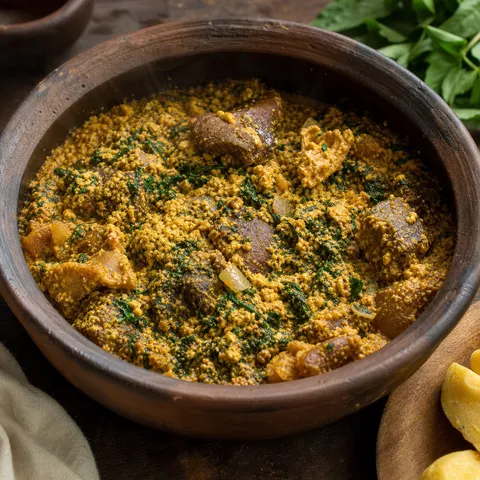 West African Lens Verified Images are for illustrative purposes only, may be inaccurate, and do not guarantee the presence or absence of specific ingredients.
 Egusi Soup
Ground melon seeds simmered with palm oil, leafy greens, and bold spices into a rich, nutty stew that's a cornerstone of Nigerian home cooking.
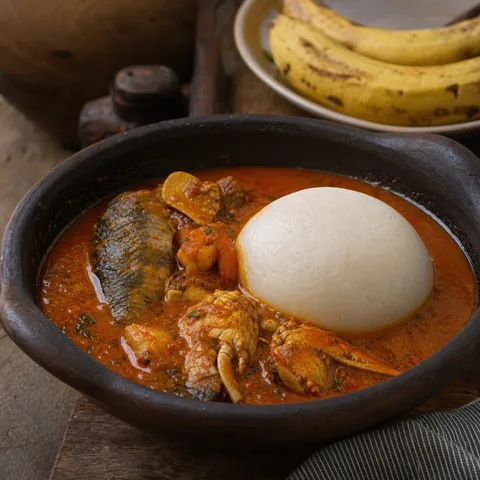 West African Lens Verified Images are for illustrative purposes only, may be inaccurate, and do not guarantee the presence or absence of specific ingredients.
 Banku
A smooth, slightly tangy Ghanaian dough of fermented corn and cassava, cooked to a stretchy consistency — the perfect partner for okra stew or grilled tilapia.
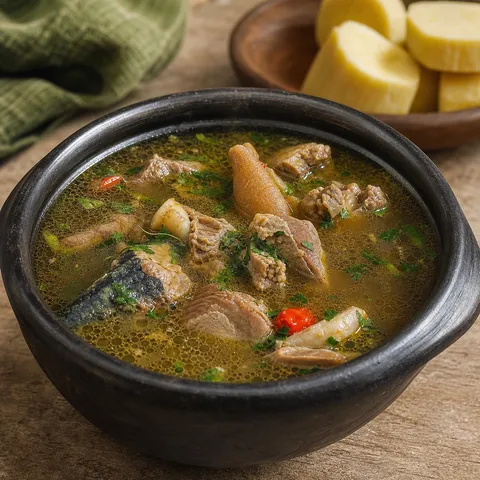 West African Lens Verified Images are for illustrative purposes only, may be inaccurate, and do not guarantee the presence or absence of specific ingredients.
 Pepper Soup
A piercingly spiced, crystal-clear broth simmered with goat meat or catfish and a blend of earthy Nigerian spices — warming, restorative, and intensely aromatic.